
A brain injury changes how a person thinks, remembers, speaks, sleeps and feels, and often it changes the whole household around them. The questions that follow are the ones families in Queens bring to us most often, in roughly the order they come up. Each answer is short and plain. Where the law has a specific rule, we cite it. Where the answer depends on your facts, we say so rather than guessing.
Part 1: Understanding the injury
What counts as a traumatic brain injury?
A traumatic brain injury, or TBI, is damage to the brain caused by an outside force: a blow to the head, a jolt that moves the brain inside the skull, or an object that penetrates it. The CDC’s traumatic brain injury pages describe the range from mild injuries, including concussions, to severe injuries involving bleeding, swelling or skull fractures.
How do these injuries usually happen in Queens?
The causes we see most are falls and traffic crashes. In Queens that means things like a pedestrian struck at an intersection on Queens Boulevard, a cyclist doored on a busy avenue, a rear-end crash on the Van Wyck, a worker falling from a ladder on a renovation in Flushing, or an older adult going down an unlit apartment stairway in Jamaica. Assaults where security was inadequate, and objects falling from buildings or scaffolds, are other causes.
Mild, moderate, severe: what do those labels mean?
Doctors often use the Glasgow Coma Scale, along with how long someone was unconscious or confused, to classify a brain injury at the start. The labels describe how the injury looked at first, not how it will affect a life. A “mild” brain injury can leave lasting problems with memory and concentration, and some people with “moderate” injuries recover well. That is why a brain injury case is judged by how the person is actually doing over time.
What symptoms should we watch for?
Family members are often the first to notice. Common signs include:
- Headaches that do not go away or keep coming back
- Memory problems, especially with recent events and conversations
- Trouble concentrating, following instructions or finding words
- Slower thinking, or seeming “foggy”
- Dizziness, balance problems, or sensitivity to light and noise
- Changes in sleep
- Irritability, mood swings, anxiety or depression
- Personality changes that friends and family notice before the injured person does
Any new or worsening symptom after a head injury deserves medical attention. Some, such as repeated vomiting, worsening headache, confusion or weakness on one side, call for emergency care right away.
Part 2: The medical record
The CT scan was normal. Does that mean there is no brain injury?
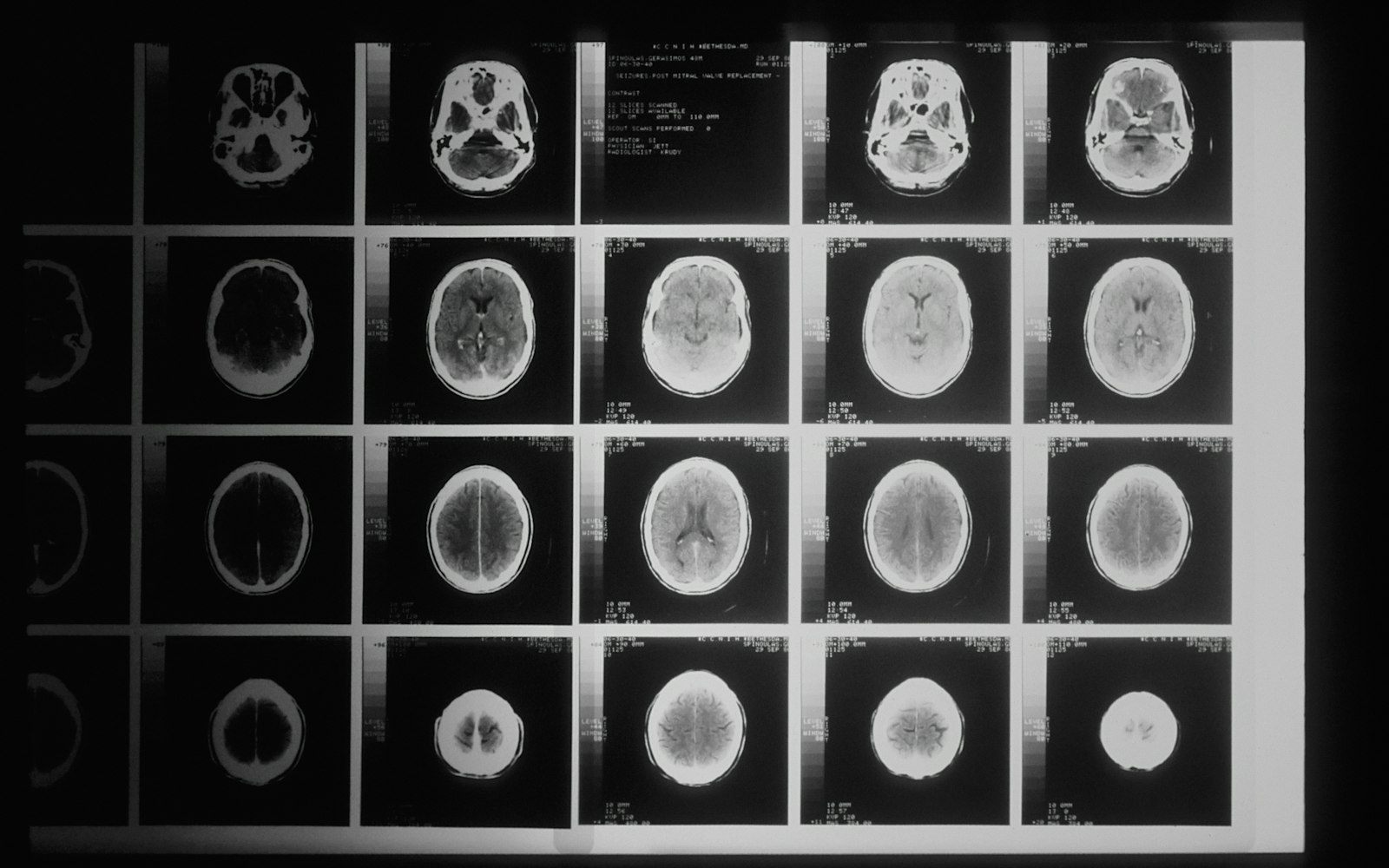
No. CT scans are very good at finding bleeding and fractures that need emergency treatment. Many brain injuries, especially concussions and diffuse injuries, do not appear on a CT or a standard MRI. A normal scan rules out certain emergencies. It does not prove the brain is fine. Our article on concussion claims after a crash covers the milder end of this in detail.
Then how is a brain injury proven?
Usually through several kinds of evidence together:
- Emergency and hospital records noting loss of consciousness, confusion, memory gaps or other signs at the time
- Neurology follow-up tracking symptoms, balance, vision and reflexes over months
- Neuropsychological testing, which uses structured tests to measure memory, attention, processing speed and problem solving
- Advanced imaging in some cases, when a doctor believes it is appropriate
- Therapy records from speech, occupational, cognitive or vestibular therapy
- Observations from family, coworkers and teachers about how the person has changed
Why does consistent treatment matter so much?
Because the insurance company will read the records looking for gaps. Months without a visit can be described as months without symptoms. If treatment stopped because coverage ran out, transportation was a problem or appointments were hard to get, make sure that reason is written down somewhere, ideally in the medical chart.
Should we keep notes at home?
Yes. A short daily or weekly record of headaches, forgotten conversations, missed bills, trouble at work and mood changes helps doctors and helps the claim. Memory problems make it hard for the injured person to report these accurately later. Our guide on keeping an injury diary offers a simple format.
Part 3: The legal side
Who pays the medical bills right away?
It depends on how the injury happened:
| How it happened | Who usually pays first |
|---|---|
| Car, truck, motorcycle or pedestrian crash | No-fault insurance, generally up to $50,000 in basic economic loss, regardless of fault; the application is generally due within 30 days |
| Injured on the job | Workers’ compensation, with possible claims against non-employer parties such as property owners or contractors |
| Fall on someone else’s property | Your own health insurance at first, with the property owner’s liability coverage at the end of a successful claim |
For crash cases, our no-fault claims guide explains the forms and deadlines.
Does a brain injury meet New York’s “serious injury” rule in a car crash case?
Often, but not automatically. To sue the at-fault driver for pain and suffering, New York generally requires a “serious injury” under Insurance Law § 5102(d). A skull fracture is on the list. Other brain injuries usually fit categories like significant limitation of a body function or system, a permanent consequential limitation, or an injury that kept the person from most usual activities for 90 of the first 180 days. Objective evidence, such as neuropsychological results and a doctor’s explanation of how they connect to the crash, is what carries that argument.
The serious injury rule does not apply to falls on property, construction accidents or most other non-vehicle cases.
Who can be held responsible?
Whoever’s carelessness caused the injury: a negligent driver and the vehicle’s owner, a property owner who ignored a broken stair or dark hallway, a contractor or building owner on a construction site, a business that failed to provide reasonable security, or a manufacturer of a defective product. In construction cases, New York’s Labor Law can put responsibility on owners and general contractors for certain falls and falling-object injuries.
What can a brain injury claim include?
Depending on the case:
- Past and future medical care, therapy and medication
- Home care, supervision or residential care if the person cannot live safely alone
- Lost earnings, and the loss of future earning capacity if the person cannot return to the same work
- Pain and suffering, including the loss of enjoyment of life
- A spouse’s claim for the loss of companionship and services
For serious injuries, a life care plan, prepared by a qualified expert, often lays out the care a person will need over a lifetime and what it will cost. That plan becomes the backbone of the damages case. Our article on the long-term effects of a brain injury explains why future needs matter so much.
How long do we have to file?
Generally three years from the injury for most negligence cases under CPLR § 214. A claim against New York City or another public body generally requires a notice of claim within 90 days and a lawsuit within one year and 90 days. Medical malpractice has its own shorter period. There are also special rules when the injured person is a child or lacks capacity, but those rules are narrow and should not be relied on without advice.
What if the injured person can’t manage the case?
That happens with severe injuries. A family member may need to act for them, sometimes through a power of attorney signed before the injury, and sometimes through a court-appointed guardian. Settlements for people who lack capacity, and for children, often require court approval, and money may be placed in protected arrangements such as a supplemental needs trust so that it does not end eligibility for benefits like Medicaid.
What about going back to work or school?
Many people with brain injuries try to return too soon, often because bills are piling up. Screens, noise, bright lights and long stretches of concentration can make symptoms flare, and a failed return can set recovery back. Follow the treating doctor’s guidance, and ask for written restrictions if you need reduced hours, breaks or a quieter workspace. Those notes protect your health and also document how the injury affects your ability to work.
For students, schools can provide accommodations such as extra time on tests, reduced workloads or rest breaks, and a doctor’s note is usually the starting point. For workers, the question in a claim is not only whether you went back, but whether you can do the same job at the same level. Our guide to proving you could not work after an injury explains the kind of proof that helps.
Can a brain injury cause emotional or psychological problems?
Yes. Depression, anxiety and changes in emotional control are common after brain injuries, both because of the injury itself and because of what it does to a person’s life. These effects belong in the medical record and in the claim. Our article on PTSD and psychological injuries after an accident covers how those effects are documented.
Part 4: Practical questions
Should we talk to the other side’s insurance company?
You are not required to give a recorded statement to the at-fault party’s insurer. With memory and concentration affected, it is especially reasonable to let a lawyer handle those conversations.
Should we settle quickly?
Brain injuries often take months to show their true shape. A release usually ends the claim permanently, including for problems that appear later. Settling before doctors can describe the long-term picture risks leaving the injured person without the resources they will need.
Where can families get support outside the legal process?
The Brain Injury Association of New York State offers information, support groups and help navigating services for survivors and caregivers. Caregivers carry a heavy load, and support for them matters too.
Can a lawyer meet us at the hospital or rehab center?
Yes. Many families cannot leave a loved one’s bedside. We regularly meet families at home, in the hospital or in rehabilitation, or by video.
How a Queens brain injury lawyer helps
A brain injury case is built on medicine as much as law. The work usually involves gathering every record from the first ambulance call forward, making sure the right specialists and testing are part of the picture, working with life care planners and economists to measure future needs, identifying every responsible party and insurance policy, and presenting the injury in a way that a jury, or an insurer worried about a jury, can understand.
Yakov Mushiyev & Associates represents brain injury survivors and their families across Queens, the rest of New York City and Nassau County. For a broader look at serious head injuries, see our article on traumatic brain injury claims in NYC. If the injury followed a crash, our car accident practice page explains how we handle those cases, and if it followed a fall, our premises liability page covers property owners’ responsibilities.
Talk to a Queens brain injury lawyer today
Yakov Mushiyev & Associates has recovered over $80 million for injured New Yorkers across the five boroughs and Nassau County. Consultations are free, available in English, Russian and Spanish, and there is no fee unless we win.
Call 718.775.3110 or contact us online for a free case review.
This article is general information, not legal advice. Every case is different. Attorney Advertising.