
Falls are among the most common injuries in Queens, and among the most misunderstood legal claims. A broken wrist on a cracked Main Street sidewalk, a torn knee on a wet supermarket floor in Jackson Heights, a fractured hip on a dark stairwell in a Jamaica apartment building: each of these can support a claim, but only if you can show the property owner was responsible for the condition that caused the fall. This guide from a Queens slip and fall lawyer explains what New York law actually requires and how to gather the proof before it disappears.

The core rule: notice
A property owner in New York isn’t automatically liable because someone fell on its property. You generally have to show one of three things:
- The owner created the hazard, for example by mopping without a sign or installing a loose mat.
- The owner had actual notice: it knew about the condition, through a complaint, an employee report or a prior fall.
- The owner had constructive notice: the hazard was visible and apparent and existed long enough that a reasonable owner would have found and fixed it.
Constructive notice is where most Queens slip and fall cases are won or lost. A puddle that formed thirty seconds before you stepped in it usually isn’t enough. A spill with cart tracks through it, a broken step reported for weeks, or a light that has been out for a month often is.
Sidewalk falls: who’s responsible in Queens
New York City shifted sidewalk responsibility to adjacent property owners under Section 7-210 of the NYC Administrative Code. The owner of a commercial building or a larger residential building must keep the sidewalk in front of it reasonably safe, including cracks, raised flags and snow and ice.
There’s an important exception: owner-occupied one-, two- and three-family homes that are used exclusively as residences. For a fall in front of one of those houses, the claim may run against the city instead, which requires a notice of claim within 90 days under General Municipal Law § 50-e. Figuring out which category a property falls into is one of the first things we do, because the deadline depends on it.
Store and restaurant falls
Supermarkets, pharmacies and restaurants along Roosevelt Avenue, Queens Boulevard and Jamaica Avenue handle heavy foot traffic, deliveries and wet entrances. The evidence that matters most is often inside the store’s own systems:
- Security camera footage, which many stores record over within days or weeks
- Inspection or sweep logs showing when the aisle was last checked
- Incident reports filled out by the manager
- Records of prior complaints or falls in the same spot
A prompt preservation letter from a lawyer asks the store to keep that footage and those records. Once video is erased, it’s usually gone for good.
Apartment building falls
Landlords must keep common areas such as stairways, lobbies, hallways and walkways reasonably safe, and New York’s multiple dwelling rules require adequate lighting and sound stairs and handrails. Falls on broken treads, missing handrails, loose carpet and dark stairwells are common in older Queens buildings. Tenant complaints to the super or management, 311 reports and HPD violations can all help prove notice. If the building is NYCHA housing, the 90-day notice of claim rule applies. See our premises liability page for more on property owner responsibility.
Snow and ice
Winter falls come with a special defense. Under New York’s “storm in progress” doctrine, an owner generally isn’t liable for snow or ice that accumulates while a storm is still going on, and has a reasonable time after it ends to clear it. After that window, an owner who leaves ice untreated, or who shovels in a way that creates a new hazard, can be responsible. Weather records, photographs of the surface and the timing of the fall are critical in these cases.
What to do after a fall
- Get medical care. Hip, wrist, knee and head injuries are common and sometimes worse than they first appear.
- Photograph the hazard from several angles before it’s cleaned or repaired, with something in frame for scale.
- Photograph your shoes and keep them as they are.
- Report the fall to the store manager or building management, and ask for a copy of the report.
- Get names of witnesses and employees who responded.
- Don’t give a recorded statement to the owner’s insurer before talking to a lawyer.
- Write down exactly where and when you fell while you still remember.
Comparative fault and what a claim can recover
Insurers routinely argue that the injured person wasn’t watching where they were going. Under New York’s pure comparative fault rule, CPLR § 1411, your share of fault reduces your recovery but doesn’t bar it. A successful claim can include medical bills, future care, lost wages, and pain and suffering. You generally have three years to sue under CPLR § 214, but the 90-day notice rule for city and public housing claims is far shorter.
For more, visit our slip and fall practice page or read about comparative negligence in New York.
Frequently asked questions
How much is a Queens slip and fall case worth?
It depends on the injury, the treatment, any lost income and how strong the proof of notice is. A fractured hip that needs surgery is valued very differently from a sprained wrist. A Queens slip and fall lawyer can give you a realistic range once the medical picture is clearer.
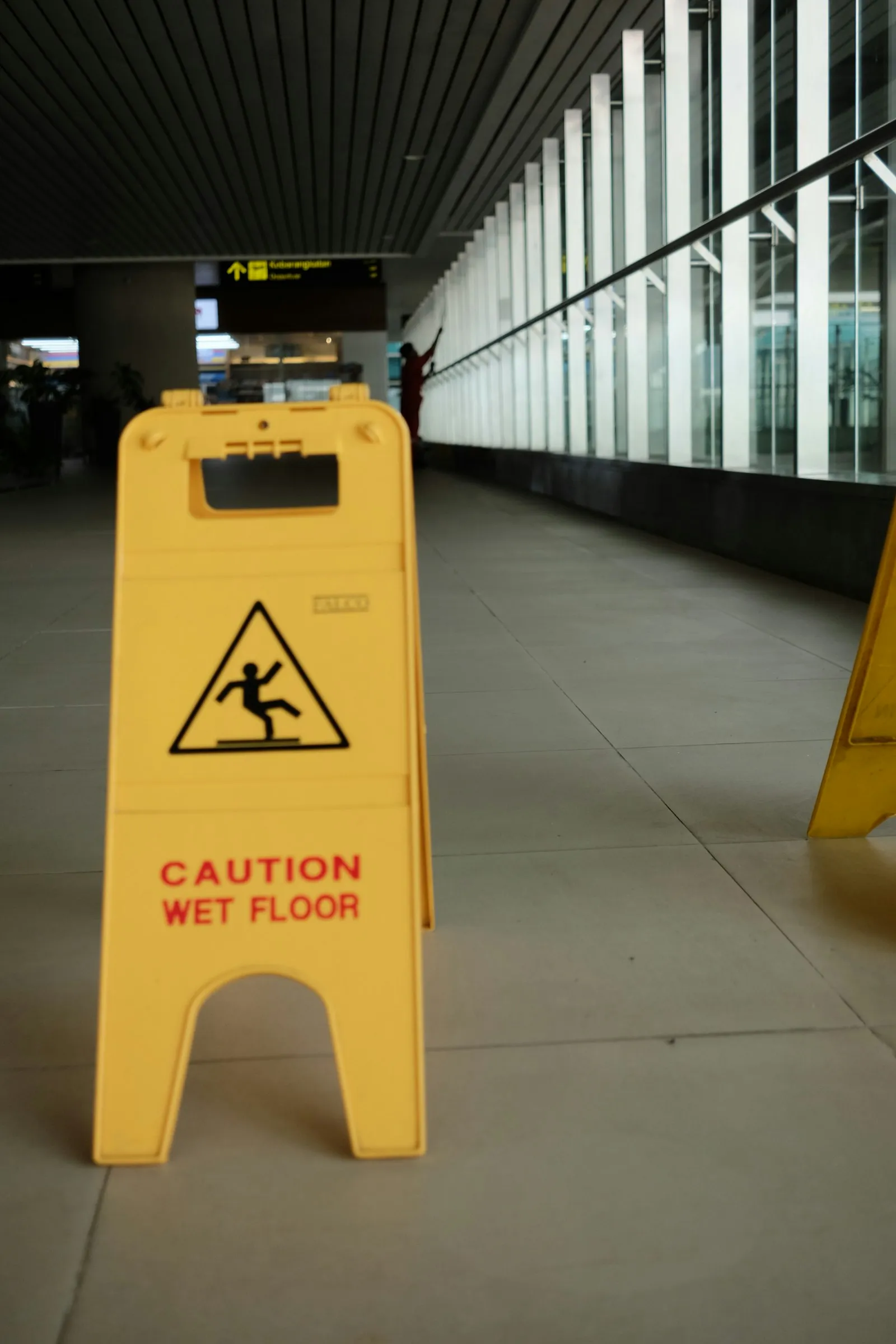
What if there was a wet floor sign?
A warning sign can help the owner’s defense, but it doesn’t end the case. Where the sign was placed, whether it was visible, and how long the hazard was left in place all still matter.
I fell in front of a house. Who do I sue?
If the house is an owner-occupied one-, two- or three-family home used only as a residence, the claim may be against the city, with a 90-day notice deadline. Other properties are usually responsible for their own sidewalks.
Visit Yakov Mushiyev & Associates
Our office is at 1 Cross Island Plaza, Suite 325, Rosedale, NY 11422, just off the Cross Island Parkway on the Queens–Nassau border. If you can’t come to us, we’ll come to you: at home, in the hospital or by video.

Talk to a Queens slip and fall lawyer today
Yakov Mushiyev & Associates has recovered over $80 million for injured New Yorkers across the five boroughs and Nassau County. Consultations are free, available in English, Russian and Spanish, and there is no fee unless we win.
Call 718.775.3110 or contact us online for a free case review.
This article is general information, not legal advice. Every case is different. Attorney Advertising.