
Rear-end crashes are the kind of accident almost every driver in eastern Queens has either been in or narrowly avoided. Traffic bunches up on Hillside Avenue, stops short at the lights on Jamaica Avenue, and crawls on the Cross Island Parkway at rush hour. When the car behind you does not stop in time, the result can be anything from a cracked bumper to a spinal injury. People who call us looking for a Rear End Collision Lawyer in Bellerose tend to ask the same questions in roughly the same order. So we have written this page the way those first conversations actually go: your questions, our straight answers.
“Isn’t the Driver Who Hit Me From Behind Automatically at Fault?”
Q: Everyone says the car in the back is always at fault. Is that true?
A: It is close to true, but not quite. New York courts have long held that a rear-end collision with a stopped or stopping vehicle creates a presumption that the rear driver was negligent. Drivers are required to keep a safe distance and a safe speed so they can stop. That presumption is a big advantage for you. But the rear driver is allowed to try to rebut it with a non-negligent explanation.
Q: What kinds of explanations do they try?
A: The ones we see most often are:
- “The car in front stopped suddenly for no reason.”
- “Their brake lights weren’t working.”
- “They cut in front of me and slammed on the brakes.”
- “The road was slick and I couldn’t stop,” which courts generally do not accept on its own, because drivers are expected to adjust for conditions.
- “I was pushed into them by the car behind me,” which can be true in a chain-reaction crash and shifts the focus to another driver.
A sudden stop by itself is often not enough to excuse the rear driver, especially in heavy stop-and-go traffic, where sudden stops should be expected. But these arguments can be used to assign you a share of fault, so evidence matters.
“I Feel Sore, But Is This a Real Injury?”
Q: The impact didn’t seem that hard. Do I really need to see a doctor?
A: Yes. Rear-end impacts are known for neck and back injuries that show up hours or days later. The sudden forward-and-back motion of the head can strain or tear soft tissue and can injure discs in the neck and lower back. Some people also suffer concussions without ever striking their head. Get checked the same day or the next day, and tell the provider exactly how the crash happened. Long Island Jewish Medical Center in New Hyde Park, right on the Queens–Nassau line, is the nearby trauma hospital for much of Bellerose.
Q: Why does it matter so much legally?
A: Because New York requires you to prove a “serious injury” under Insurance Law §5102(d) before you can recover pain and suffering from the driver who hit you. Insurance companies love rear-end cases where the injured person waited three weeks to see a doctor, because the delay gives them an argument that something else caused the pain.
“Who Pays My Medical Bills Right Now?”
Q: The other driver’s insurance should pay my doctors, right?
A: Not at first. New York is a no-fault state. Your own auto policy’s personal injury protection pays your medical bills and a portion of lost earnings regardless of who caused the crash. Basic no-fault coverage is $50,000. You must file your no-fault application within 30 days. If you were a passenger, the policy on the car you were riding in usually pays. The Department of Financial Services oversees no-fault insurance.
Q: I was in an Uber when we got rear-ended. Is that different?
A: For trips that start in New York City, TLC-licensed vehicles carry higher minimums. Since March 1, 2026, TLC rules require $100,000 per person in no-fault (PIP) coverage and liability limits of $100,000/$300,000. Trips that start in Nassau follow different rules. The NYC Taxi & Limousine Commission has more on licensed vehicles.
“What Can I Actually Recover?”
Q: Besides medical bills, what does a rear-end claim cover?
A: It depends on which bucket the loss falls into:
| Type of loss | Usually paid by | Notes |
|---|---|---|
| Medical bills and part of lost wages | No-fault (PIP) | Up to policy limits; 30-day application |
| Car repair, towing, rental | At-fault driver’s property damage coverage, or your collision coverage | No serious injury threshold for property damage |
| Lost wages beyond no-fault | At-fault driver’s liability insurer | Requires proof of fault and serious injury |
| Pain and suffering | At-fault driver’s liability insurer | Requires a “serious injury” |
| Excess damages beyond their limits | Your SUM coverage, if you have it | Check your own policy |
Q: Can my own mistakes reduce what I get?
A: Yes. Under CPLR 1411, your share of fault reduces your recovery. In a rear-end case, the defense may argue you stopped without reason, changed lanes abruptly, or had a broken brake light.
Update for 2026: The motor-vehicle tort reform New York signed in late May 2026 changes the rules for motor-vehicle lawsuits filed on or after its effective date (not death cases). If a plaintiff’s fault is greater than 50%, there is no recovery. The 90/180-day serious-injury category is eliminated, which matters a great deal in rear-end cases where people were out of work for a few months but healed. Juries decide fault before serious injury, and pain-and-suffering damages are capped at $100,000 for plaintiffs who were driving uninsured, convicted of impaired driving, or committing a felony.
Q: My car is only a few years old, but the shop says the frame is bent. What about the lost value?
A: Property damage claims are handled separately from injury claims and do not require a serious injury. You can usually pursue repair costs, towing, storage and a rental car from the at-fault driver’s insurer, or use your own collision coverage and let your insurer pursue the other side. Keep every estimate, invoice and receipt. If the car is declared a total loss, ask how the valuation was calculated and compare it to similar vehicles for sale in the area before accepting it. Do not sign a release that mentions bodily injury when you are only settling the car claim.
“What If It Was a Pileup?”
Q: I was the middle car in a chain reaction on the Cross Island. Who is responsible?
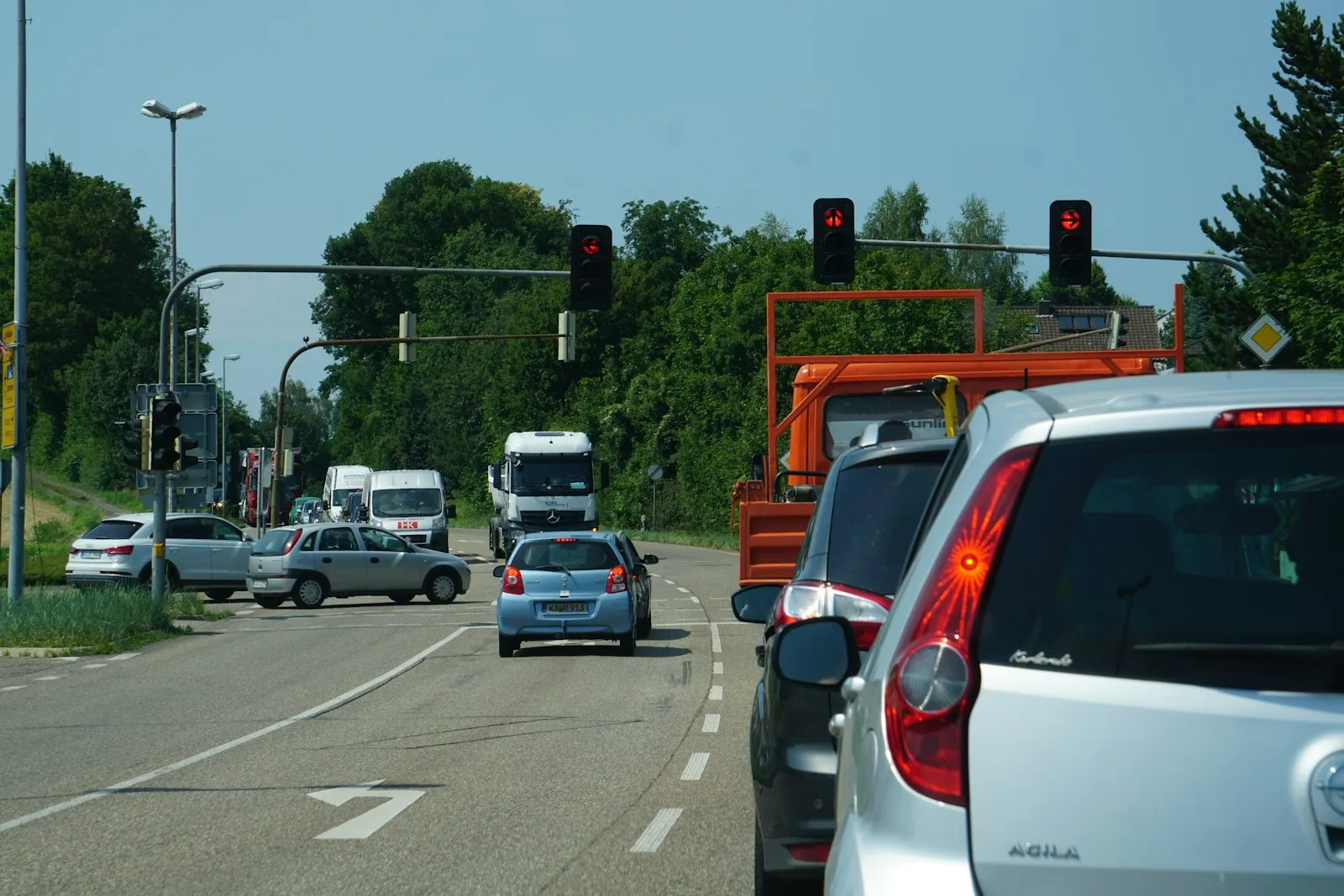
A: Chain-reaction crashes are common on the Cross Island Parkway and the Grand Central near the interchange, where traffic can go from moving to stopped in seconds. Often the driver at the back who started the chain bears most of the responsibility. But it is not always that simple. A middle driver who was following too closely may share fault for hitting the car ahead, separate from being pushed. Sorting this out means looking at the damage to the front and rear of each car, witness accounts, and where the vehicles came to rest.
Q: What if the car that hit me was a truck or a work van?
A: Then the vehicle’s owner or the driver’s employer may also be responsible, and there may be larger commercial insurance policies. Heavier vehicles also need more distance to stop, which often explains why they rear-end smaller cars. See our Bellerose truck accident lawyer page for more.
“How Do You Prove What Happened?”
Q: It’s my word against theirs. What evidence helps?
A: A lot more than people expect:
- Photos of both vehicles, especially the rear of yours and the front of theirs
- The police report from the NYPD’s 105th Precinct, or Nassau police if the crash was across the county line
- Dashcam footage from your car or another driver’s
- Video from storefronts on Hillside, Jamaica or Braddock Avenue
- Vehicle event data showing speed and braking before impact
- Phone records, if the other driver may have been distracted
Distraction is behind a large share of rear-end crashes. Our distracted driving guide for Bellerose walks through how phone evidence is used.
“Should I Talk to the Adjuster? How Long Do I Have?”
Q: The other driver’s insurance company keeps calling. Do I have to give a statement?
A: You are generally not required to give a recorded statement to the other driver’s insurer. Adjusters are trained to ask questions that minimize injuries, such as “So you’re feeling better?” We recommend you speak with a lawyer first. You do have to cooperate with your own insurer under your policy, including on your no-fault claim.
Q: What are the deadlines?
A: The no-fault application is due within 30 days. A personal injury lawsuit generally must be filed within three years under CPLR 214. If a city vehicle, such as a Sanitation truck or an MTA bus, rear-ended you, a Notice of Claim is generally required within 90 days, with suit within one year and 90 days. Those city deadlines are short, so don’t wait.
“Why Hire a Rear End Collision Lawyer in Bellerose?”
Q: If fault is so clear, why do I need a lawyer?
A: Because in most rear-end cases, the fight is not about fault. It is about the injury. Insurers routinely argue that neck and back injuries are pre-existing, degenerative, or not serious enough to meet the threshold. A Rear End Collision Lawyer in Bellerose builds the medical proof, works with your doctors to document limitations properly, and makes sure no-fault keeps paying while the injury claim moves forward.
At Yakov Mushiyev & Associates, P.C., consultations are free and there is no fee unless we win. We consult in English, Russian and Spanish and can visit you at home, in the hospital or by video. You can read about attorney Yakov Mushiyev, visit our Bellerose personal injury lawyer page and our Bellerose car accident lawyer page, or see our broader car accident practice.
Getting to Our Office From Bellerose
Our office is at 1 Cross Island Plaza, Suite 325, Rosedale, NY 11422. From Bellerose, head south on the Cross Island Parkway toward the Belt Parkway; 1 Cross Island Plaza sits right off the Cross Island in Rosedale. It is roughly a 15 to 20 minute drive, depending on traffic. We are open Monday through Friday, 9 a.m. to 6 p.m.
Call 718.775.3110 or contact us online to set up a free consultation.
Frequently Asked Questions
Can I be found partly at fault if I was rear-ended?
Yes, though it is less common. If the defense proves you stopped suddenly without reason, cut in front of the other driver, or had non-working brake lights, a jury could assign you a share of fault. That share reduces your recovery, and under the 2026 reform a plaintiff more than 50% at fault in a newly filed motor-vehicle case recovers nothing.
Is whiplash a “serious injury” in New York?
It can be, depending on the medical evidence. Soft-tissue neck injuries that cause a significant or permanent limitation, documented with objective findings such as range-of-motion testing and imaging, may meet the threshold. Minor strains that resolve quickly usually do not.
Who handles rear-end crashes on Hillside Avenue in Bellerose?
On the Queens side, the NYPD’s 105th Precinct in Queens Village covers Bellerose. If the crash happened past the city line in Bellerose Village or Floral Park, Nassau County police usually respond.
Do I need a lawyer for a property-damage-only rear-end crash?
Often not. If nobody was hurt, many people handle the car repair claim directly with the insurers. If you have any pain, or if symptoms appear in the following days, get medical care and talk to a lawyer before signing any release.
Where would my case be filed?
Cases arising in Bellerose are often filed in Queens County Supreme Court at 88-11 Sutphin Boulevard in Jamaica, though the proper court can depend on where the parties live and other factors. Most cases resolve without trial, but we prepare every case as if it will go to court.
This article is general information, not legal advice. Attorney Advertising. Prior results do not guarantee a similar outcome.