
Slip and fall cases are won by the side with better evidence, and in the first hours after a fall, the property owner usually has a head start. The store has the cameras. The landlord has the maintenance log. The snow contractor has the invoice showing when the lot was plowed. You have a sore back, a ruined pair of shoes and, if you are lucky, a few photos on your phone.
This is a playbook for closing that gap. It is organized by time: what to do in the first hour, the first day, the first week and the first 90 days after a fall anywhere in Suffolk County, from a supermarket in Commack to an icy walkway in Port Jefferson. Along the way, we explain what a Suffolk County slip and fall accident attorney has to prove under New York law. If you would rather talk now, call Yakov Mushiyev & Associates at 718.775.3110.
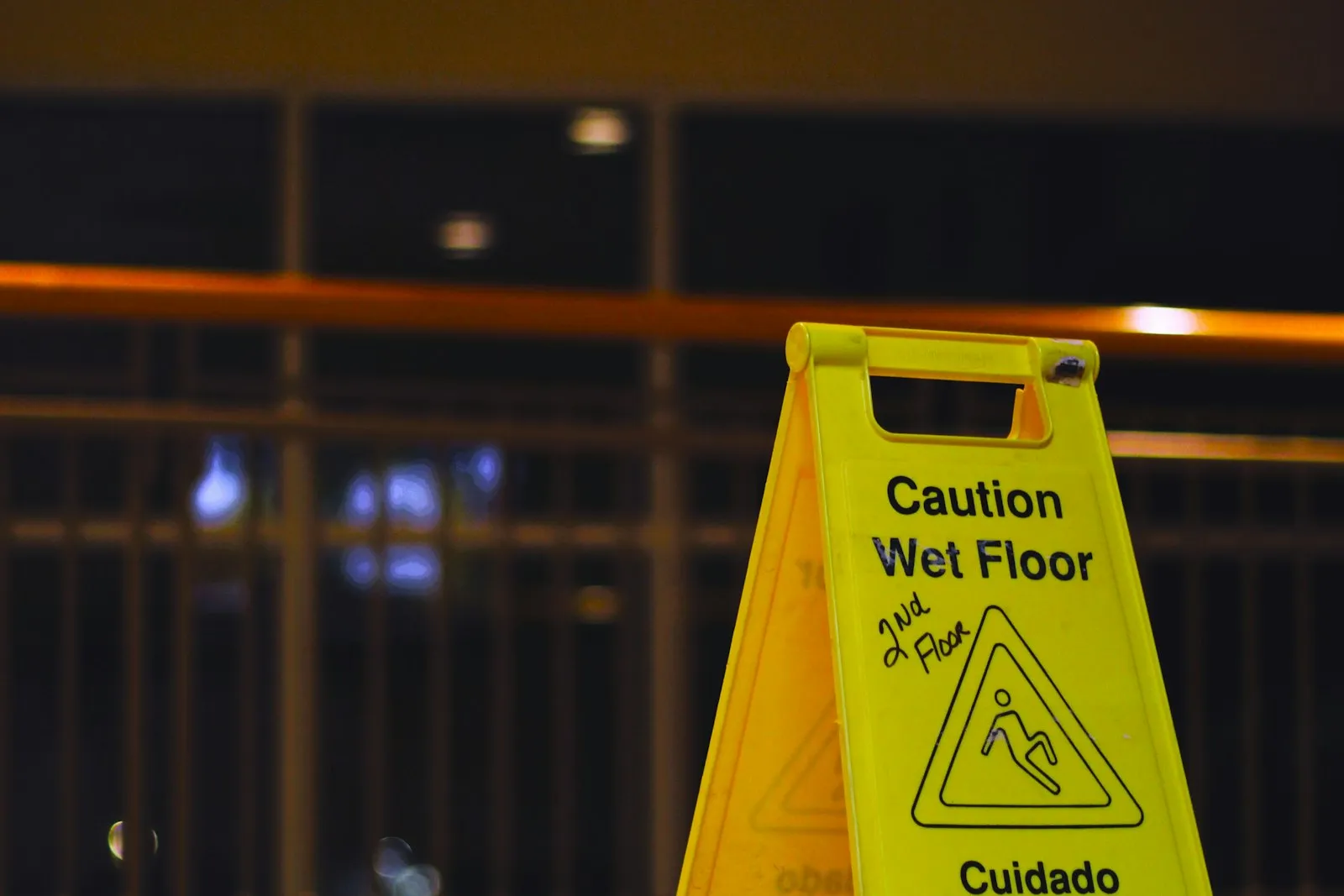
What You Have to Prove (The Short Version)
New York does not make property owners responsible for every fall. To win a premises liability claim, you generally need to show:
- A dangerous condition existed, such as a spill, ice, a broken step, a torn mat or poor lighting.
- The owner created it or had notice of it. Notice can be actual (someone told them or they saw it) or constructive (it was visible and apparent and existed long enough that reasonable inspections should have found and fixed it).
- The condition caused your fall and your injuries.
The notice element is where most cases are fought, and it is also why timing evidence, such as how long that puddle had been on the floor, matters so much. Our longer article on proving negligence in a slip and fall case goes into the case law.
The First Hour: Protect Your Health, Then the Scene
- Stay put if you are badly hurt and ask someone to call 911. Hip, wrist, ankle and head injuries are common in falls.
- Look at what you slipped on before it disappears. Is it liquid, ice, a loose tile, a raised edge? Is there a track mark, a footprint or a cart wheel line through a spill? Those details help show how long it was there.
- Photograph everything: the hazard close up and from a distance, the lighting, any warning signs (or their absence), your shoes and your injuries.
- Report the fall to a manager or the property owner and ask for a copy of the incident report. If they will not give you one, write down the manager’s name and the time.
- Get witness names and phone numbers. Employees who saw the hazard before you fell are especially valuable.
- Note the cameras. Look up and write down where they are.

The First Day: Medical Care and Your Own Record
Get evaluated the same day if at all possible, at an emergency room, urgent care center or your doctor’s office. Tell the provider exactly how you fell. Medical records created the day of the fall carry real weight, and a gap of days or weeks invites the argument that something else caused your injury.
That evening, write down everything you remember: the time, what you were doing, what you saw on the ground, what employees said (“we’ve been meaning to fix that” is the kind of comment that matters), and who was there. Save your shoes and clothing in a bag. Do not post about the fall on social media.
The First Week: Lock Down the Evidence
This is the week when a Suffolk County slip and fall accident attorney earns their keep. Store video is often overwritten within days or weeks unless someone demands it be saved. Within the first week, we typically:
- Send preservation letters to the property owner, store, management company and any snow removal or cleaning contractor demanding they keep video, incident reports, inspection and sweep logs, and maintenance records.
- Request certified weather data for the date and time of the fall if snow, ice or rain was involved.
- Identify the property owner, which is not always the business you were visiting. Shopping centers, office buildings and apartment complexes often involve separate owners, managers and tenants.
- Photograph and measure the scene ourselves before it is repaired.

Special Rules That Can Make or Break a Suffolk Fall Case
The storm-in-progress rule
New York generally does not require property owners to clear snow and ice while a storm is still going on, and gives them a reasonable time after it ends to address the conditions. Defense lawyers raise this rule in nearly every winter case. Certified weather records, along with evidence that the ice was old or that the owner made the condition worse with poor plowing or drainage, are how we respond.
Trivial defects
Owners often argue that a small height difference, crack or gap was too trivial to be dangerous. New York courts look at all the circumstances, including the size, shape, location, lighting and whether the defect was a trap or snare, rather than applying a fixed minimum measurement.
Public sidewalks and prior written notice
Falls on town or village property in Suffolk carry extra hurdles. Many municipalities have adopted laws under provisions like Town Law § 65-a that bar claims for sidewalk and roadway defects unless the municipality received prior written notice of the specific defect, with limited exceptions, such as when the municipality created the defect. On top of that, a Notice of Claim generally must be served within 90 days under General Municipal Law § 50-e.
Who owns the sidewalk?
Outside New York City, adjacent property owners usually are not liable for ordinary sidewalk defects unless they created the defect, made a special use of the sidewalk, or a local law expressly shifts liability to them. These rules differ from the ones in Queens, which is why a fall on a sidewalk in Smithtown is analyzed differently from a fall on a sidewalk in Jamaica.
The First 90 Days: Treatment, Deadlines and Patience
- Follow your treatment plan. Physical therapy, follow-up imaging and specialist visits document the injury and help your recovery.
- Track lost time from work, with pay stubs and a letter from your employer.
- Watch the 90-day clock if a public entity might be involved.
- Do not give recorded statements to the property owner’s insurer without advice.
- Remember the long deadline, too. Most premises liability lawsuits against private owners must be filed within three years, but waiting that long makes cases harder.

Three Suffolk Landmarks and the Falls That Happen Around Them
1. Smith Haven Mall, Lake Grove
One of the largest shopping centers in Suffolk, Smith Haven Mall sits near the intersection of Route 347 and the Nesconset Highway corridor. Large malls involve layered responsibility: the mall owner for common areas and parking lots, individual retailers for their stores, and outside contractors for cleaning and snow removal. Identifying the right party, and the right video system, is step one in any mall fall case.
2. Port Jefferson Village and Ferry Terminal
Port Jefferson’s harbor-front village is steep, historic and busy, with hilly sidewalks, older buildings and the Bridgeport & Port Jefferson Steamboat Company ferry terminal at the bottom of the hill. Uneven brick and stone surfaces, wet ramps and crowded boarding areas create real fall risks. Falls on village property raise the prior written notice and 90-day issues described above, while falls on private property or a ferry operator’s premises follow the general rules.
3. Stony Brook Village Center
The colonial-style Stony Brook Village Center on the harbor draws visitors for shopping, dining and seasonal events. Older-style walkways, steps between shops and outdoor seating areas are charming but demand careful maintenance, particularly when leaves, rain or ice are in play. Restaurants and shops are responsible for their entrances and interiors, while landlords often control common walkways.

How We Handle Suffolk Slip and Fall Cases
Our premises liability team handles falls in supermarkets, hotels, apartment buildings, office buildings, parking lots and public property. Attorney Yakov Mushiyev works on a contingency fee, so there is no fee unless we recover compensation. For other kinds of Suffolk accidents, see our overview for anyone seeking an accident lawyer in Suffolk County. If your fall happened in Queens, our Queens slip and fall page covers the city’s different sidewalk rules.
Directions From Lake Grove to Our Office
Our office is at 1 Cross Island Plaza, Suite 325, Rosedale, NY 11422. From Lake Grove, take the Long Island Expressway west to the Cross Island Parkway south. Expect about an hour without heavy traffic. Because many fall injuries make travel painful, we routinely start with a phone or video consultation and can visit you when needed.
Open turn-by-turn directions from Lake Grove, NY in Google Maps
Suffolk County Slip and Fall FAQs
How long do I have to file a slip and fall lawsuit in Suffolk County?
Most claims against private property owners must be filed within three years. Claims against a town, village or the county generally require a Notice of Claim within 90 days and a lawsuit within one year and 90 days.
The store had a wet floor sign. Do I still have a case?
Possibly. A sign is evidence the owner knew about the hazard, and the question becomes whether the warning and the cleanup were reasonable. A sign placed far from the spill, or a spill left for a long time, may still support a claim.
I slipped on ice in a parking lot. Is the owner responsible?
It depends on the timing and the condition. Owners generally have a reasonable time after a storm ends to clear snow and ice. If the ice was left from an earlier storm, or plowing or drainage created it, the owner or its contractor may be responsible.
Can I sue the town if I tripped on a broken sidewalk?
Sometimes, but many Suffolk municipalities require prior written notice of the specific defect before they can be held liable, and a Notice of Claim must usually be served within 90 days. Speak with an attorney quickly.
What if I was looking at my phone when I fell?
New York’s comparative negligence rule may reduce your recovery by your share of fault, but it does not bar the claim. Owners still have a duty to keep their property reasonably safe.
Speak With a Suffolk County Slip and Fall Accident Attorney
The property owner is already building its file. Start building yours. Call Yakov Mushiyev & Associates at 718.775.3110 or contact us online for a free case review.
This article is general information, not legal advice, and reading it does not create an attorney-client relationship. Every case turns on its own facts. Attorney Advertising. Prior results do not guarantee a similar outcome.