
The first week after a taxi accident in Elmhurst is a blur for most people. There are doctor visits, missed shifts, phone calls from numbers you do not recognize and forms that seem to arrive in a language written for lawyers. For many families here, there is also the extra weight of handling all of it in a second or third language. This guide walks through that first week, day by day, so you know what matters, what can wait and what absolutely cannot.
We wrote it for passengers, pedestrians, cyclists and drivers alike. If you would rather talk it through, Yakov Mushiyev & Associates, P.C. offers free consultations in English, Russian and Spanish. Call 718.775.3110, any hour. If you are looking for representation now, our Elmhurst taxi accident lawyer page explains how we handle these cases.

Day 1: At the Scene and the Same Evening
Your health comes first. If you or anyone else is hurt, call 911. Beyond that, a few small actions on the first day can save a great deal of trouble later.
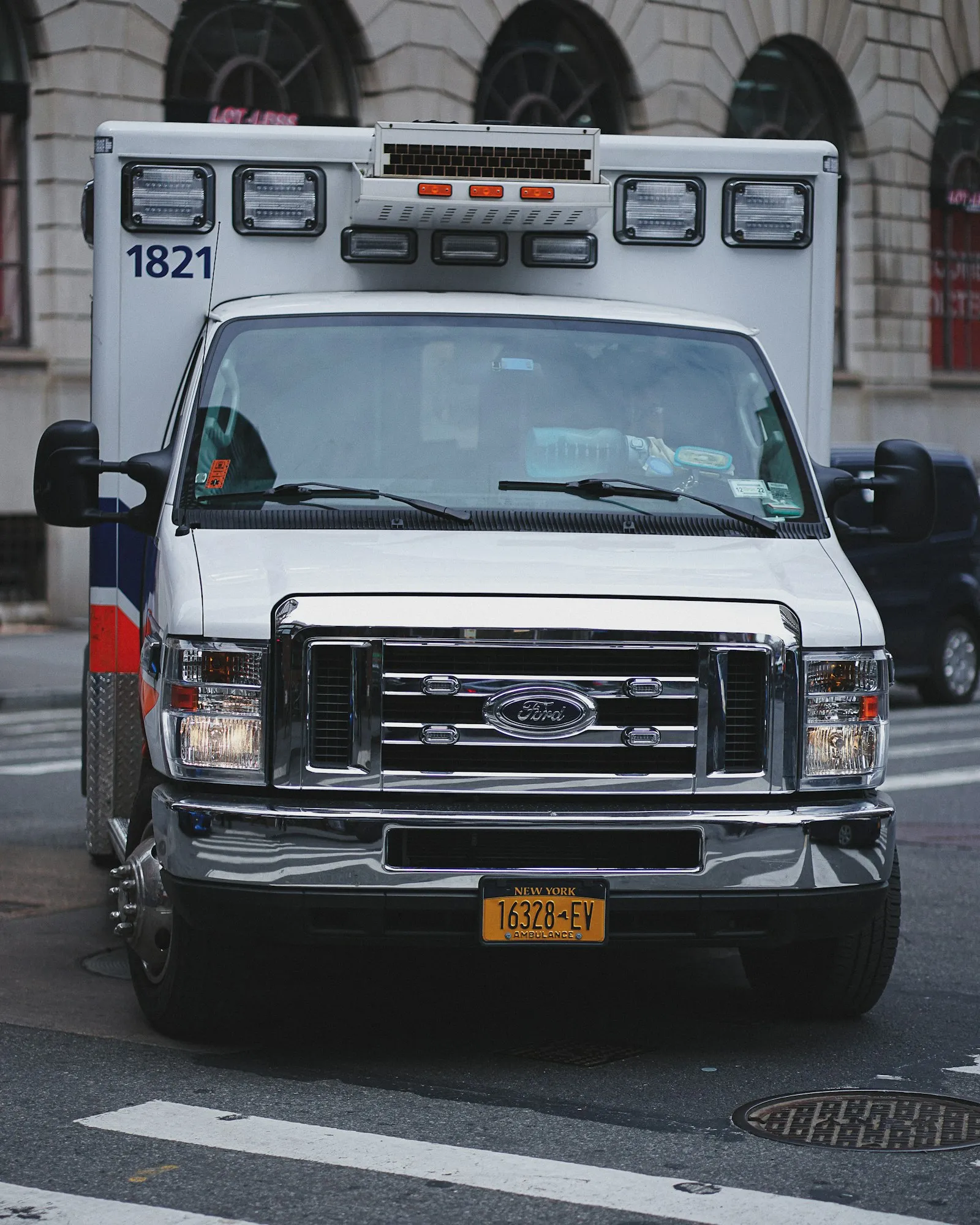
- Get the cab’s identifying details. For a yellow or green taxi, write down the medallion or license number on the roof light, the hood or the doors, plus the driver’s name and TLC license number displayed inside. For an Uber or Lyft, screenshot the trip in the app before you close it.
- Ask for the police. A police report creates an independent record. Note the officers’ names and the precinct.
- Photograph everything. The vehicles, the street, traffic signals, any skid marks and your injuries.
- Collect names. Witnesses at a bus stop or outside a store can disappear quickly. A phone number is enough.
- Get checked by a doctor the same day, even if you feel “just shaken up.” Some injuries take hours to show.
If you are not comfortable speaking English with the officer or the driver, it is fine to ask for help or to say you will provide a full statement later. Short, accurate facts are better than a long account given under stress in an unfamiliar language.

Days 2 and 3: Medical Care and Your Records
The second and third days are often when pain sets in. Stiffness in the neck and back, headaches, numbness and trouble sleeping are all worth mentioning to a doctor. Follow-up care matters for your recovery first, and it also matters for any claim.
Why? Because a claim for pain and suffering beyond basic no-fault benefits requires a “serious injury” under Insurance Law § 5102(d). In 2026 the state budget narrowed that definition to eight categories: death; dismemberment; significant disfigurement; fracture; loss of a fetus; permanent loss of use of a body organ, member, function or system; permanent consequential limitation of use of a body organ or member; and significant limitation of use of a body function or system. The old category based on days of missed activity was removed. With a narrower list, clear medical records from the start carry more weight.
- Tell every provider that your injuries came from a vehicle accident.
- Describe every symptom, including ones that seem small.
- If you need an interpreter at a medical visit, ask for one, so your symptoms are recorded accurately.
- Keep every discharge sheet, prescription receipt and referral in one folder.
Days 4 and 5: Insurance Calls and the No-Fault Application
By now an adjuster may have called. Before you speak with anyone, know which insurer you are dealing with and what they are entitled to ask.
| Your role in the crash | Where no-fault benefits usually come from |
|---|---|
| Passenger in a taxi, Uber, Lyft or black car | The vehicle you were riding in |
| Pedestrian or cyclist struck by a cab | The vehicle that struck you |
| Driver of your own car | Your own auto policy |
No-fault (PIP) pays medical bills, lost earnings and other basic economic loss regardless of who caused the crash. The state minimum is $50,000 per person. For TLC-licensed vehicles, the required PIP was lowered to $100,000 per person effective March 1, 2026. The Department of Financial Services has consumer information on how no-fault works, and the Taxi and Limousine Commission oversees the cabs and app cars themselves.
Your no-fault application is due within 30 days of the accident. Missing it can cost you benefits you would otherwise be owed. If the first week has gotten away from you, this is the deadline to protect next.
On adjuster calls, be polite and brief. You do not have to give a recorded statement right away, and you can ask that future calls go through your lawyer. If a city or MTA vehicle was involved, such as a bus, a separate notice of claim is due within 90 days.
Days 6 and 7: Reports, Evidence and a Second Look at Fault
Toward the end of the first week, turn to the paperwork that tells the story of the crash.
- Accident report. Drivers may need to file an MV-104 with the New York DMV after certain crashes. If you were driving, check whether it applies to you.
- Video. Stores along Broadway and Queens Boulevard, buses and other drivers’ dashboard cameras may have captured the crash, but footage is often recorded over. Ask early, or have a lawyer send a preservation request.
- Your own notes. Write down what you remember in whatever language you think in. Details fade quickly.
Fault deserves careful thought now because the rules changed in 2026. Under new CPLR 1411(b), in a motor-vehicle injury lawsuit filed on or after May 26, 2026, a claimant whose fault is greater than the defendant’s (or the defendants’ combined) recovers nothing; a claimant at 50% or less has the award reduced in proportion. Under Insurance Law § 5104, fault is decided before the question of serious injury. These rules apply to lawsuits filed on or after that date no matter when the accident occurred.
A hypothetical example
Hypothetical: Imagine a woman leaving a medical appointment on Broadway who steps into a crosswalk as a green cab turns. The driver tells the officer she was “on her phone.” Under the 2026 rule, that comment could become the center of the case. Her photographs of the signal, a witness from the bus stop and video from a nearby storefront would all help answer it. This example is invented for illustration only and does not describe any real client or result.

Why Queens Center and Elmhurst Hospital Shape So Many First Weeks
Two places come up again and again in Elmhurst taxi stories. Queens Center, the large shopping mall on Queens Boulevard near Woodhaven Boulevard, draws shoppers from across the borough, particularly on weekends and during the holidays. Many come by the M and R trains, but plenty arrive or leave by cab or rideshare, and the curbs and service roads around the mall see constant pickups, drop-offs and drivers circling back toward Woodhaven Boulevard. The Broadway and Queens Boulevard corridor connects it all, with buses, delivery trucks and pedestrians sharing busy crossings.
Elmhurst Hospital, the NYC Health + Hospitals facility on Broadway, is where many people injured nearby are taken. It is also a place where taxis and app cars constantly drop off and pick up patients and visitors, often people with limited mobility. Someone who was in a crash may find themselves, on day one, both a patient inside the hospital and a pedestrian navigating the busy curb outside it. If you are recovering there, ask a family member to start gathering the details from Day 1 for you.
Questions People Ask in the First Week
Do I need a lawyer in the first week?
Not always, but an early call can help protect the 30-day no-fault deadline and any video evidence. A consultation with us is free, and there is no fee unless we win.
I feel fine. Should I still see a doctor?
Yes. Some injuries are not obvious right away, and a record made soon after the crash is far more useful than one made weeks later.
What if I was in an Uber or Lyft rather than a yellow cab?
Uber and Lyft cars operating in New York City are TLC-licensed, so the same first-week steps apply. Screenshot the trip details in the app as soon as possible.
How long do I have to sue?
Generally three years under CPLR 214(5). Wrongful death claims must be brought within two years. Earlier deadlines, such as the 30-day no-fault application and the 90-day notice of claim for public vehicles, come first.
Can I talk to your office in Russian or Spanish?
Yes. We offer consultations in English, Russian and Spanish, at your home, in the hospital or by video. Our FAQ page answers more general questions.
Should I post about the crash on social media?
It is best not to. Insurers may look at public posts, and a casual photo or comment can be taken out of context.
Getting Around Elmhurst: Neighborhood FAQs
How do I get to Queens Center without a car?
Take the M or R train to Woodhaven Boulevard, which is right by the mall. Grand Avenue–Newtown is one stop west. Several bus routes also run along Queens Boulevard and Woodhaven Boulevard; check the MTA for current service.
Which train stops near Elmhurst Hospital?
The Elmhurst Avenue station on the M and R lines is a short walk from the hospital, and the 7 train runs above Roosevelt Avenue a few blocks north.
Which precinct would have my accident report?
The NYPD’s 110th Precinct covers Elmhurst and neighboring Corona.
What major roads run through Elmhurst?
Queens Boulevard, Broadway, Woodhaven Boulevard, Grand Avenue and Junction Boulevard, with the Long Island Expressway along the southern edge and Roosevelt Avenue to the north.
Any tips for parking or traffic near the mall?
Weekend afternoons and the holiday season are the busiest times around Queens Center. If you are being picked up by a cab or app car, choose a legal curb spot away from the main entrances, and step out on the sidewalk side.
What neighborhoods are next to Elmhurst?
Jackson Heights, Corona, Rego Park, Woodside, Maspeth and Middle Village. We also handle cases in nearby Jackson Heights and Rego Park, and throughout the area through our Elmhurst accident lawyer page.
After the First Week: Let Us Carry Some of the Weight
By the end of the first week, you should have medical care underway, a folder of records, the cab’s details and a plan for the 30-day no-fault deadline. If any of those pieces are missing, or if you simply want someone to explain your options in your own language, we are here.

- Free case review: call 718.775.3110, 24/7
- Write to us through our contact page
- Office: 1 Cross Island Plaza, Suite 325, Rosedale, NY 11422 (Monday to Friday, 9 to 6), or we can come to you
- See how we approach other crashes on our car accident page and our settlements page
Attorney Advertising. This is general information about New York law, not legal advice, and reading it does not create an attorney-client relationship. Every case depends on its own facts. Prior results do not guarantee a similar outcome.