
Changing lawyers doesn’t automatically mean starting your injury case over. If you’re asking, “can I switch lawyers in the middle of a personal injury case,” the answer in New York is yes, even after a lawsuit has been filed. The transition does need attention to deadlines, fees, and pending court matters so that important work continues without interruption.
If your lawyer isn’t keeping you informed, you don’t understand the case strategy, or you feel pressured to accept a settlement, it may be time to consider your options. Before making a change, identify any active deadlines, upcoming court dates, or settlement response dates. Switching lawyers doesn’t pause those deadlines.
This article explains when a change may make sense, what to consider before moving forward, and how a transition works in New York. It covers the paperwork for a pending lawsuit, the transfer of your case file, and questions to raise about fees. A clear plan can help make changing representation an organized transition rather than a disruption to your claim.
Key Takeaways
- You can ask to change attorneys during a New York injury case. If a lawsuit is pending, a court filing may be needed to formalize the change.
- Identify whether your concern involves communication, strategy, or a possible case-handling mistake. A direct conversation may resolve some problems.
- To keep the transition organized, preserve key records and coordinate the transfer of your file, upcoming dates, and case responsibilities.
- When weighing “can I switch lawyers in the middle of a personal injury case,” consider the case’s current stage, pending deadlines, and how the existing retainer may affect fee handling.
- Reviewing your case status, documents, and deadlines can help you understand your options and protect the claim’s next steps.
Can You Switch Lawyers in the Middle of a New York Injury Case?
Yes. You can discharge your lawyer and choose different counsel at any point, even after a lawsuit has been filed. If you’re asking, “can I switch lawyers in the middle of a personal injury case,” the answer is yes, but the process depends on the case’s status. If litigation is pending, the change generally requires a signed Consent to Change Attorney filed with the court. If your current lawyer won’t consent, new counsel can ask the court to approve the substitution.
Changing attorneys transfers your representation; it doesn’t reset your claim. Whether your case involves a car crash, a fall, or another event covered by personal injury law, the next steps depend on what has happened so far, what remains due, and whether the case is in court.
This video offers additional perspective on how legal representation can affect an injury claim:
When is changing a personal injury lawyer worth considering?
Repeated unanswered requests for updates, unexplained inactivity, or a strategy you can’t understand are reasons to ask for clear answers. Find out what has been done, what happens next, and whether any deadlines or settlement discussions are active. A disagreement about one tactic doesn’t necessarily mean the relationship has failed. A continuing breakdown in communication or trust is more serious, especially if you can’t get a meaningful explanation of how your claim is being handled.
If you suspect a mistake, don’t assume it ruined your case or that it can be ignored. Preserve relevant messages and documents, then seek a prompt, independent review of what happened and its possible effect. Timing matters: an upcoming filing, court appearance, or settlement response may need attention while you consider your options.
Does changing lawyers automatically hurt your claim?
No automatic restart occurs. Pleadings already filed and discovery already completed generally remain part of the case, but new counsel will need to review the record and coordinate upcoming work. The impact depends on the case stage, open discovery, court requirements, and scheduled commitments. A change close to trial or during active settlement negotiations calls for particular care.
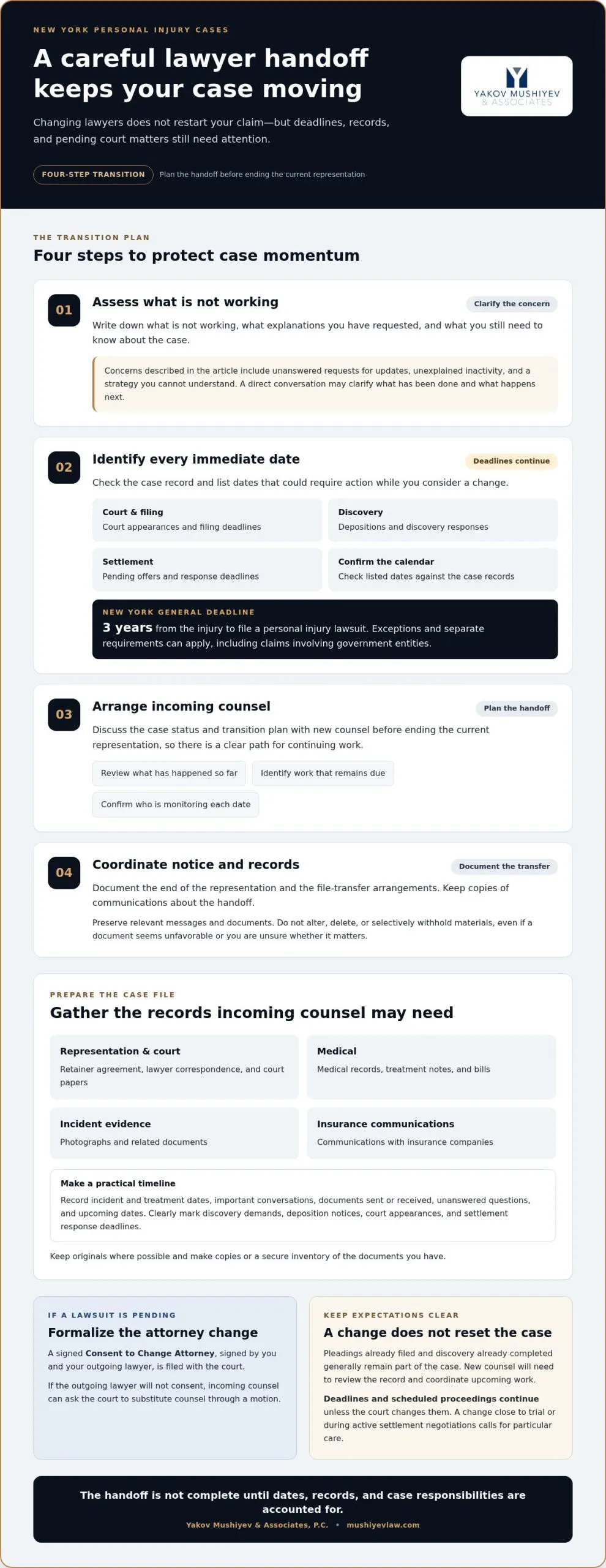
Changing lawyers doesn’t pause legal deadlines. In New York, the general deadline for a personal injury lawsuit is three years from the injury, but exceptions and separate requirements can apply, including in claims involving government entities. Before initiating a transition, list every known filing deadline, court date, discovery deadline, and pending offer or response date. Confirm the dates against the case records. A written timeline helps protect the claim while you decide who should represent you.
How to Switch Personal Injury Lawyers Without Losing Case Momentum
A careful handoff starts before you end the attorney-client relationship. If you’re asking, “can I switch lawyers in the middle of a personal injury case,” start with the calendar and the case record. New counsel may need time to review the file, but deadlines and scheduled proceedings continue unless the court changes them.
Follow these steps in order:
- Assess your concerns. Write down what isn’t working, what explanations you’ve requested, and what you still need to know about the case.
- Identify immediate dates. Check for court appearances, depositions, discovery responses, filing deadlines, and settlement deadlines. Flag anything approaching.
- Arrange new counsel. Discuss the case status and handoff plan before ending the current representation, so there’s a clear path for continuing work.
- Coordinate notice and records. Document the end of the representation and the file-transfer arrangements. Keep copies of communications about the handoff.
Organizing these materials can also help you understand the New York personal injury claim process and where your matter stands.
What should you gather before changing counsel?
Collect the retainer agreement, lawyer correspondence, court papers, medical records, treatment notes, bills, photographs, and communications with insurance companies. Keep originals where possible and make copies or a secure inventory of the documents you have. Don’t alter, delete, or selectively withhold relevant materials, even if a document seems unfavorable or you’re unsure whether it matters.
Build a timeline of incident and treatment dates, important conversations, documents received or sent, unanswered questions, and upcoming dates. Clearly mark discovery demands, deposition notices, court appearances, and settlement response deadlines. This gives incoming counsel a practical starting point and helps identify urgent tasks before they are missed.
How does a lawyer change happen in a pending New York lawsuit?
In a pending lawsuit, the change is formalized through a Consent to Change Attorney signed by you and your outgoing lawyer and filed with the court. If the outgoing attorney won’t consent, incoming counsel can ask the court to substitute counsel through a motion. The paperwork doesn’t suspend case obligations, so confirm who is monitoring each deadline and appearance during the substitution process.
This differs from an attorney withdrawing. You are choosing to end the relationship and retain different counsel; withdrawal is when your lawyer seeks to leave the case. If your lawyer initiates withdrawal, don’t assume another attorney automatically takes over. Clarify the status of your representation, obtain information about active dates, and take prompt steps to avoid a gap in attention.
Keep notices professional and factual. Ask for the complete case file and confirm how it will be transferred, including any electronic records. The Yakov Mushiyev & Associates website provides information about the firm’s New York personal injury practice.
Should You Stay With Your Lawyer or Make a Change?
Compare what’s happening in the case with what you need from your attorney. If you’re asking, “can I switch lawyers in the middle of a personal injury case,” remember that new counsel can offer a fresh review but cannot guarantee a better outcome. Consider whether your concerns are being addressed, whether the case is moving forward, and whether the timing allows an orderly transition.
| Factor | Staying may make sense if… | Consider another assessment if… |
|---|---|---|
| Communication | Your lawyer responds, explains delays, and gives useful updates. | Repeated requests go unanswered or you can’t get a clear account of case activity. |
| Strategy clarity | You understand the plan, even if you disagree with a particular decision. | Important choices or risks remain unexplained after you ask for clarification. |
| Case activity | You can identify meaningful steps taken and what comes next. | There appears to be unexplained inactivity or missed follow-through. |
| Trust | A candid conversation restores confidence and answers your questions. | Concerns persist and you no longer feel able to work with your lawyer. |
| Timing | There’s time to discuss the issue and plan next steps. | A court date, filing, deposition, or settlement deadline makes prompt action important. |
A single disagreement may call for a direct conversation rather than an immediate change. Repeated problems deserve a closer look. Consider the case stage, the work that remains, and whether new counsel can review the file in time to address upcoming events. No lawyer should promise that changing counsel will produce a particular settlement or verdict.
What questions can help clarify your concerns?
Ask specific, neutral questions: What has happened in the case so far? What is the next planned step? Which deadlines or scheduled proceedings matter now? Request plain-language explanations of the strategy, the risks, and any unanswered questions. Record the date of each conversation and the response you received. Keep notes factual, and avoid conclusions about motive that you can’t support.
How can a lawyer’s mistake affect an injury case?
Some procedural problems may be correctable; a missed filing deadline could have more serious consequences. The effect depends on the record, the applicable rules, and the facts. Don’t conclude that malpractice occurred based on one event or an incomplete explanation. Seek an independent review promptly if you suspect an error, especially if a deadline may be involved.
Protecting the underlying injury claim and evaluating a lawyer’s conduct are separate questions. A review can examine what happened, whether the issue can still be addressed, and what steps may protect the claim. Don’t let a dispute about past representation distract from active case obligations.
Discuss fees before making assumptions. Review your retainer and ask how the case stage and work already performed may affect the transition. In New York, a former attorney may assert a lien for legal work, but that doesn’t automatically mean you owe two separate contingency fees. Fee allocation between attorneys is generally resolved from the fee at the end of the case. Ask for an explanation of the arrangement and applicable terms.
What to Check About Deadlines, Fees, and Your Case File
Separate the lawsuit’s filing deadline from dates already set in the case. The filing deadline limits how long you generally have to start a lawsuit; court scheduling orders and claim-specific requirements create additional dates that may apply after a case is filed. In New York, the general personal injury filing period is three years from the injury, but exceptions apply. Claims involving government entities, for example, can have a much shorter notice requirement. Don’t use a general rule to calculate your deadline. Verify the dates that apply to your claim and check every pending task against the case record.
If you’re weighing “can I switch lawyers in the middle of a personal injury case,” review the signed retainer and written fee disclosures before assuming how a transition will affect your finances. The agreement and work already completed can matter. New York law also allows an outgoing attorney to assert a lien for legal work, which may attach to a future settlement or verdict. Fee allocation can depend on the facts and governing rules. Don’t assume you’ll owe two full contingency fees or that a fee dispute will be resolved in a particular way.
Could changing lawyers affect fees or settlement funds?
Ask how the former and new attorneys will address any fee claim, and request an explanation in writing. Keep a copy of the retainer, amendments, and fee disclosures, and note questions about expenses or a lien. The case stage and each attorney’s work may affect fee handling. If settlement funds are involved, make sure the proposed allocation is explained before you agree to terms or authorize distribution.
Fee questions shouldn’t distract from protecting the claim. Clarify who is responsible for open work during the transition, including responding to a demand or preparing for a scheduled appearance. The firm’s website has information about its personal injury representation.
Which records and dates need immediate attention?
Identify dates that could require action soon, then confirm who will handle each one. A missed discovery response, deposition, or settlement deadline can create problems independent of the general lawsuit filing period. Keep treatment schedules and records organized, and flag any gaps in care or missing documentation for incoming counsel to review.
Preserve the retainer, court notices, pleadings, discovery, medical records and bills, photographs, and all insurer and attorney communications.
- Court and litigation records: notices, orders, filed papers, discovery requests, response dates, and deposition notices.
- Claim and treatment records: medical appointments, bills, treatment documents, photographs, and insurer correspondence, including settlement offers and response dates.
- Handoff details: a list of open questions, missing records, upcoming events, and the person responsible for each pending task.
Request the complete case file and document what has been transferred and what remains outstanding. If a record or explanation is missing, identify the gap rather than filling it with a guess. A clear inventory helps new counsel spot unfinished work, understand the case history, and address urgent dates without relying on memory alone.
How Yakov Mushiyev & Associates Can Help You Assess a Lawyer Change
Uncertainty about your attorney can add stress to an already difficult recovery. Yakov Mushiyev & Associates, P.C. represents injured people in New York accident cases, including car, truck, motorcycle, pedestrian, construction, and slip-and-fall matters. If you’re wondering, “can I switch lawyers in the middle of a personal injury case,” reviewing the case record can help you understand the issues and consider a practical next step.
The firm represents injured people in Queens communities including Rosedale and Rochdale. You can discuss where your case stands, what concerns you about the current representation, and which dates or procedural requirements may need attention. A review does not promise that changing attorneys is right for you or that a particular result will follow. The goal is to understand the situation before making a decision.
What information can help make an initial case review useful?
Bring the records you have, even if the file is incomplete. A clear picture of the documents and your questions can make the discussion more focused. Helpful materials include:
- Your signed retainer agreement and any written fee disclosures or amendments.
- Case papers, correspondence with your current lawyer, and communications from insurers.
- Medical records, bills, photographs, and other documents related to the accident and injuries.
- A brief timeline of key events, including conversations, filings, treatment, and unanswered questions.
- Known upcoming dates, such as court appearances, discovery deadlines, depositions, or settlement response dates.
Be direct about your main concern. For example, explain that you haven’t received updates, don’t understand the proposed strategy, or are worried about a particular filing. Separate what you know from what you suspect. An informed discussion depends on the case record and procedural posture, including whether a lawsuit has been filed and what activity is pending.
What happens after you ask for help?
A discussion can focus on the available facts, your questions about ongoing representation, and the immediate demands on the case. Potential next steps depend on the deadlines, court status, and New York procedures that apply. If you’re considering a transition, identify time-sensitive tasks first so the decision accounts for the case calendar. You can ask questions without having already decided to change counsel.
Take time to understand the options discussed. A careful review of the record can help identify what needs attention without promising a recovery or treating a change as the only answer.
Contact Yakov Mushiyev & Associates, P.C. to discuss your injury case and concerns about representation.
Take the Next Step With a Clear Plan
Uncertainty about representation shouldn’t leave you feeling powerless in your own case. Asking “can I switch lawyers in the middle of a personal injury case” is a starting point, not a commitment to change counsel. First, understand your options in light of your case’s status and the concerns you want addressed.
Yakov Mushiyev & Associates, P.C. represents injured people in New York, including clients in Queens communities such as Rosedale and Rochdale. A focused conversation can help you frame your concerns, identify unanswered questions, and consider a practical path forward. Make your decision with the case facts and upcoming dates in view. No review can guarantee a particular result.
Contact the firm to discuss your injury case, concerns about representation, and practical next steps.
Frequently Asked Questions
Can I change personal injury lawyers after filing a lawsuit?
Yes. If you’re asking, “can I switch lawyers in the middle of a personal injury case,” filing a lawsuit doesn’t take that choice away. The transition must account for the court record and current schedule. If a motion is pending or a conference is approaching, incoming counsel needs to know promptly. The change affects who represents you; it doesn’t erase the lawsuit already filed.
Do I need my current lawyer’s permission to switch attorneys?
No. You have the right to end the attorney-client relationship, but formal substitution in a pending lawsuit may require your outgoing lawyer’s signature on a consent form. If that lawyer won’t sign, new counsel can ask the court to approve the substitution. Keep written records of your decision and communications about the change. In Queens, including Rosedale and Rochdale, make sure the attorney taking over knows which court is handling the case.
Will switching lawyers delay my personal injury case?
Not automatically, though incoming counsel will need time to review the file and understand prior decisions. The practical effect depends on what is underway. A case with a motion awaiting a decision may need different immediate attention than one between scheduled events. Ask what tasks are pending and who will handle them during the handoff. The case doesn’t return to the beginning, but coordination is essential.
Can my old lawyer keep part of my settlement if I switch?
An outgoing lawyer may assert a lien for legal work performed, which can relate to a future settlement or verdict. That doesn’t mean the lawyer simply takes an amount without regard to the retainer, work performed, and applicable rules. Before funds are distributed, request a written explanation of any claimed interest and how it would be addressed. A disagreement between firms over fees is separate from deciding whether to accept a settlement offer.
What if my lawyer made a mistake in my personal injury case?
Ask for a prompt review of the specific event, relevant documents, and any dates involved. A filing that can still be corrected is different from a missed deadline that may affect available options, but the impact can’t be determined by assumption alone. Preserve emails, court notices, and documents related to the issue. Continue protecting the injury claim while a qualified attorney evaluates whether the prior lawyer’s conduct raises a separate concern.
Can I change lawyers if my injury claim is close to settlement?
Possibly, but timing deserves careful thought. If negotiations are active, new counsel will need to review the offer, supporting records, and prior communications before advising you. Don’t accept or reject an offer solely because you’re considering a change. Ask for the response deadline and whether any settlement terms have been put in writing. A prompt review can help you weigh the representation concern against the status of negotiations.
Will I have to pay two personal injury lawyers?
Not necessarily. In many New York injury matters, the former and new lawyers address how the attorney fee should be allocated based on their work, rather than automatically charging you two separate full contingency fees. The signed retainer, case history, and any fee dispute can affect the details. Ask each attorney to explain the proposed arrangement in writing, including whether expenses or a lien are at issue, before assuming how settlement funds will be handled.