
If you’re reading this, you or someone you love probably got hurt at work. Maybe it was a fall from a ladder in a Rego Park apartment renovation. Maybe it was a scaffold on a facade job along Queens Boulevard, or something dropped from above on a new building site. Maybe you’re worried about your job, about rent, or about whether you’re even allowed to make a claim.
Let’s take those worries one at a time. This guide is written for workers, not lawyers. It explains what New York law gives you, what you should do now, and what mistakes to avoid. If you’d rather talk it through, call Yakov Mushiyev & Associates, P.C. at 718.775.3110. Phone intake is open 24/7.

You Probably Have Two Kinds of Claims, Not One
Most injured construction workers in New York have two separate paths to compensation, and many never hear about the second one.
1. Workers’ compensation. This comes through your employer’s insurance. It pays your medical treatment and a portion of your lost wages, regardless of who was at fault. In exchange, you generally can’t sue your own employer, except in rare cases involving a “grave injury” as defined in the Workers’ Compensation Law.
2. A lawsuit against other companies on the job. The property owner, the general contractor and other subcontractors are not your employer. Under New York’s Labor Law, they can be held responsible for your injuries. This lawsuit can recover what workers’ comp doesn’t: full lost wages, future earnings and pain and suffering.
The two work together. Workers’ comp covers you now. The lawsuit is where full compensation comes from.
The Scaffold Law: New York’s Strongest Protection for Workers
New York’s Labor Law § 240(1), known as the Scaffold Law, is one of the strongest worker-safety laws in the country. It applies to elevation-related risks: falling from a height, or being hit by something that falls because it wasn’t properly secured.
Here’s what makes it powerful. If an owner or contractor didn’t provide proper protection, like a safe scaffold, a secured ladder, a harness with a proper anchor point, or a hoist or netting for materials, they can be held responsible for your injury even if you were partly careless. Your own comparative negligence is generally not a defense under § 240(1). The main exception is when the worker’s own conduct was the sole cause of the accident, which is a hard argument for an owner to win when safety devices were missing or inadequate.
Typical § 240(1) cases include:
- A ladder that slipped, shifted or collapsed because it wasn’t secured
- A fall from a scaffold without guardrails
- A fall through an unprotected floor opening or off a roof edge
- Materials or tools falling because they weren’t hoisted or secured properly

Other Labor Law Protections
Not every injury involves height. Two other sections cover most of the rest:
- Labor Law § 241(6) requires owners and contractors to follow specific safety rules in the state’s Industrial Code. A violation of a specific rule, like rules on tripping hazards, slippery surfaces, power tools or trench protection, can support a claim. Here, your own share of fault can reduce the recovery.
- Labor Law § 200 codifies the general duty to provide a reasonably safe workplace. It usually applies when an owner or contractor controlled the work or knew about a dangerous condition.
“Can I Make a Claim If…?”
…I’m not a union worker?
Yes. These laws protect workers on covered construction, demolition, renovation, repair and painting work, union or non-union.
…I was paid in cash or off the books?
You may still have rights. Workers’ compensation can be available even when an employer didn’t follow the rules, and the Labor Law claim is against the owner and contractors, not your employer.
…I’m worried about my immigration status?
New York’s highest court held in Balbuena v. IDR Realty (2006) that injured workers may recover lost wages under the Labor Law regardless of immigration status. A lawyer’s conversations with you are confidential.
…I was partly at fault?
Under § 240(1), your own carelessness is generally not a defense when proper safety devices weren’t provided. Under § 241(6) and § 200, it can reduce what you recover but doesn’t automatically end the claim. Construction injury cases on the job site are also not affected by New York’s 2026 change to CPLR § 1411, which applies to motor vehicle cases governed by the no-fault article of the Insurance Law.
Rego Park Job Sites: What We See
Rego Park doesn’t look like a construction zone the way Long Island City does, but the work never stops:
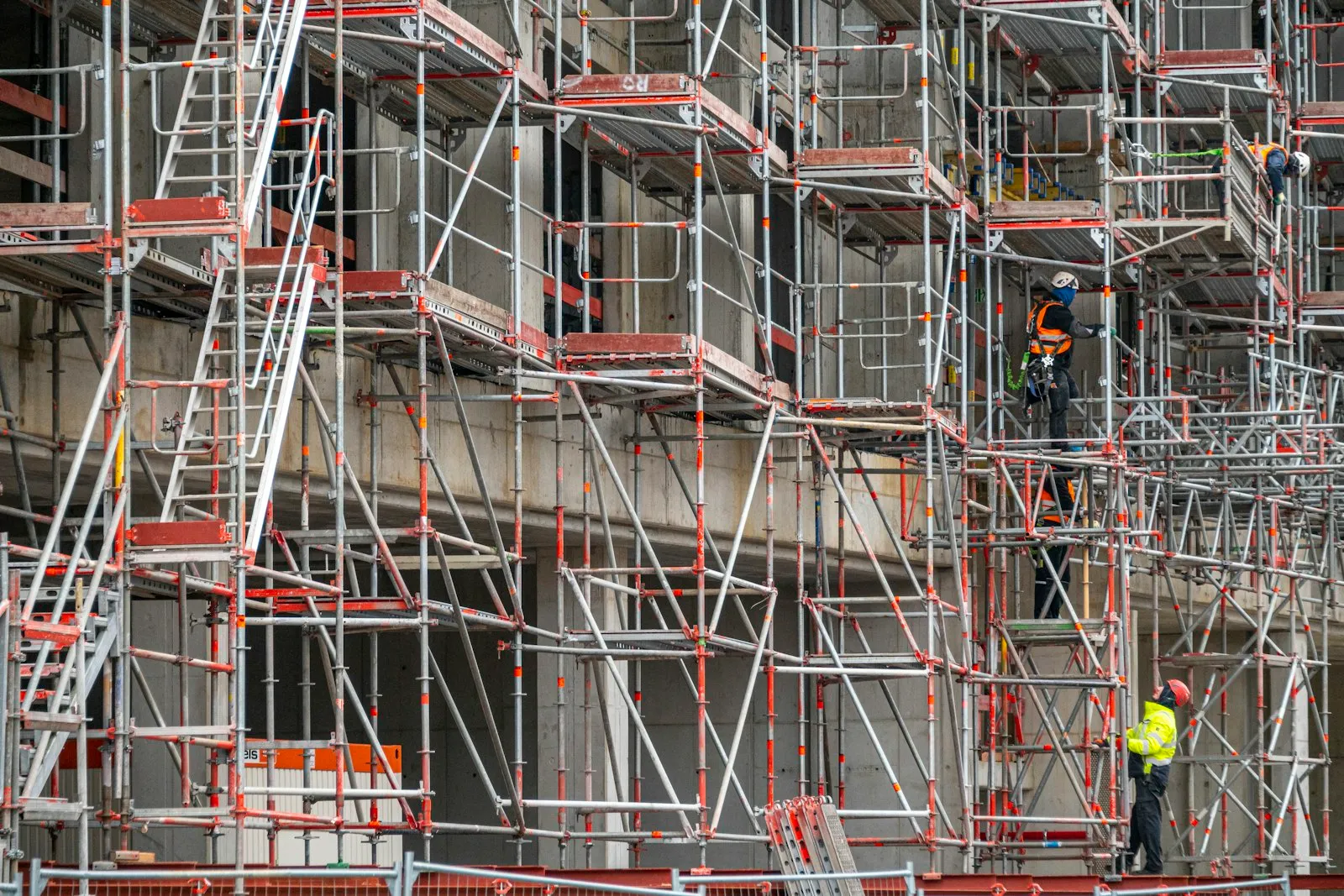
- Facade work on apartment buildings and co-ops. New York City’s facade inspection program requires periodic inspections and repairs on taller buildings, which means scaffolds, sidewalk sheds and swing stages across the neighborhood’s large pre-war and post-war buildings.
- New mid-rise development near Woodhaven Boulevard and Queens Boulevard.
- Retail and restaurant renovations along Queens Boulevard, 63rd Drive and Junction Boulevard, often fast-paced with tight deadlines.
- Apartment renovations, where small crews work on ladders without proper equipment.
Our Rego Park construction accident lawyer page describes the cases we handle in the neighborhood.
What To Do Now
- Get medical care and tell the doctor you were hurt at work. This starts the workers’ comp record.
- Tell your employer in writing. Under the Workers’ Compensation Law, you should notify your employer within 30 days. A text or email you keep a copy of is better than a conversation.
- File your workers’ compensation claim. The deadline is generally two years, but don’t wait. The New York State Workers’ Compensation Board handles claims.
- Write down what happened while you remember: who your boss was, what company ran the site, what equipment was there and what was missing.
- Take photos of the scaffold, ladder, opening or area where you got hurt, if you can do it safely, and of your injuries.
- Get coworkers’ names and phone numbers. Crews change fast and people move on.
- Don’t sign anything from an insurance company or contractor without advice.

Deadlines
| Deadline | What it covers |
|---|---|
| 30 days | Written notice of injury to your employer (Workers’ Compensation Law) |
| 2 years | Filing a workers’ compensation claim |
| 3 years | Labor Law lawsuit against the owner and contractors (CPLR § 214) |
| 90 days | Notice of claim if a city agency owned the property or ran the project |
| 2 years | Wrongful death lawsuit (EPTL § 5-4.1) |
How a Labor Law Case Usually Unfolds
Knowing what comes next makes the process less stressful. Most construction injury cases follow a similar path:
- Investigation. Your lawyer identifies the property owner, the general contractor and every subcontractor on the site, often through building permits, Department of Buildings records and contracts.
- Evidence preservation. Letters go out demanding that the companies keep incident reports, site safety logs, photos, video, and the ladder or scaffold itself.
- Workers’ comp runs in parallel. Your medical care and partial wage benefits continue while the lawsuit moves forward.
- Filing the lawsuit. The claim names the owner and contractors under Labor Law §§ 240(1), 241(6) and 200, as the facts support.
- Discovery. Both sides exchange documents and take depositions. Your lawyer prepares you for yours.
- Summary judgment. In clear § 240(1) cases, a lawyer may ask the court to decide liability early, which often changes how the defense approaches settlement.
- Settlement or trial. Most cases settle once the medical picture is clear. Some go to a jury.
The Injuries We See Most From Job Sites
Construction injuries are rarely minor. The ones that come up most often in our Queens practice include:
- Fractures of the heel, ankle, leg, wrist and spine from falls
- Traumatic brain injuries from falls and falling objects, even when a hard hat was worn
- Shoulder and knee tears that need surgery and keep workers off the job for months
- Back and neck injuries, including herniated discs
- Crush injuries and amputations from equipment and materials
- Burns and electrical injuries
Each of these can end a career in the trades. A claim should be valued with that in mind, including the wages you would have earned over the rest of your working life.
What Compensation Can Cover
- Medical treatment, surgery and rehabilitation
- Lost wages, both past and future
- Loss of earning capacity if you can’t return to construction work
- Pain and suffering
- For families of workers killed on the job, wrongful death damages; see our guide to wrongful death claims in Queens
If workers’ comp paid some of your bills or wages, it generally has a lien on the lawsuit recovery. A lawyer handles that so you’re not paying anyone twice.
Not a Worker? Hurt by Construction?
Pedestrians are injured by construction too: falling debris, collapsing sidewalk sheds, blocked sidewalks that force people into the street, and tripping hazards around sites. Those cases follow different rules. See our Rego Park slip and fall guide and Rego Park pedestrian accident guide.
About Our Firm
Yakov Mushiyev & Associates, P.C. represents injured workers across Queens. Learn more about our construction accident practice and specific injuries like falls from height and electrocution. Our Rego Park page lists every type of case we handle in the neighborhood.
Getting to Our Office From Rego Park
Our office is at 1 Cross Island Plaza, Suite 325, Rosedale, NY 11422. By car, take the Van Wyck Expressway south to the Belt Parkway east. By transit, take the M or R to Forest Hills–71st Avenue, the E or F to Jamaica and the LIRR to Rosedale. If you’re injured and can’t travel, call first and ask about a phone or video consultation.
Open turn-by-turn directions in Google Maps · 1 Cross Island Plaza, Suite 325, Rosedale, NY 11422 · 718.775.3110
More Questions Workers Ask
Will I get fired for making a claim?
New York law prohibits employers from retaliating against workers for filing a workers’ compensation claim. If that happens, it is a separate violation with its own remedies.
My employer says to use my own health insurance instead. Should I?
Work injuries should go through workers’ compensation. Using private health insurance for a work injury can create problems later, including bills being denied.
What if I was hurt on a small job, like a house renovation?
The Labor Law has an exemption for owners of one- and two-family dwellings who don’t direct or control the work. Contractors on those jobs can still be responsible, so get advice.
Do I need to keep going to the workers’ comp doctor?
Yes. Keep every appointment and follow the treatment plan. Missed visits can interrupt your benefits and give the defense in your Labor Law case an argument that you weren’t seriously hurt.
How long will my case take?
Workers’ comp benefits can start relatively quickly. A Labor Law lawsuit takes longer, often more than a year, especially if the case goes through discovery and expert review.
Talk to a Queens Construction Accident Lawyer
If you were hurt on a job site in Rego Park, call Yakov Mushiyev & Associates, P.C. at 718.775.3110 or contact us online.
General information, not legal advice. Attorney Advertising. Prior results do not guarantee a similar outcome.