
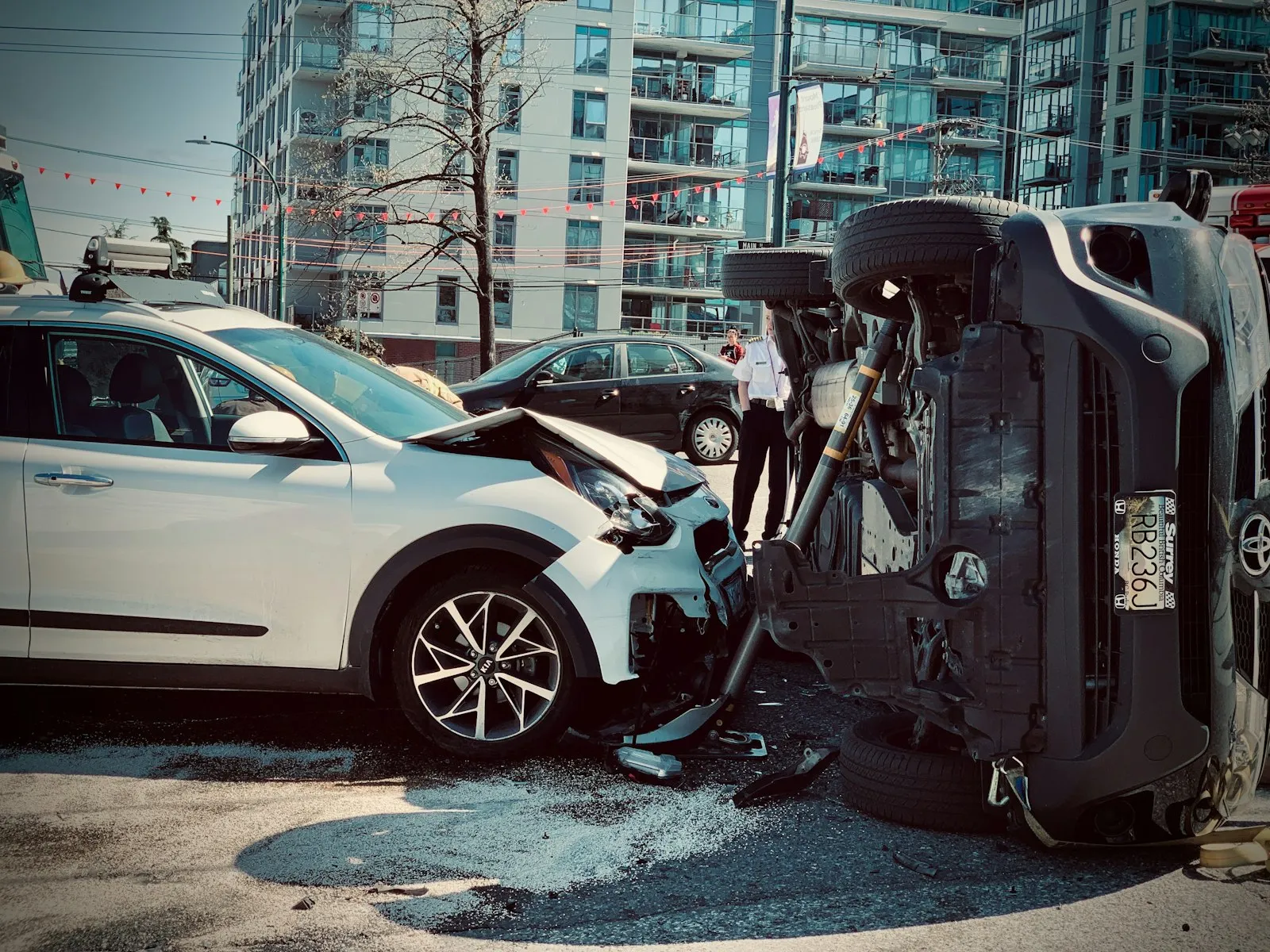
Picture a Saturday evening in Elmont. The last race at Belmont Park has just ended, or perhaps a concert at UBS Arena has let out, and thousands of people are spilling toward their cars, the bus stops and the rideshare pickup spots at once. You ease out of a crowded lot onto Hempstead Turnpike, the light turns green, and a driver who is checking a phone instead of the road slams into your passenger door. This post walks through what usually happens next, step by step, the way an Elmont accident lawyer would explain it to someone sitting across the kitchen table a few days after a crash like that one.

The First Hour: Flashing Lights on Hempstead Turnpike
Imagine the scene a few minutes later. Because Elmont sits in Nassau County, inside the Town of Hempstead, the officers who arrive are generally from the Nassau County Police Department rather than the NYPD. That detail matters later, because the police report you will eventually need comes from Nassau, not from a Queens precinct, even though the Queens line is only a short drive away across the Cross Island Parkway.
In this story, you are shaken but able to talk. The most useful things to do in that first hour are simple, even though they feel hard in the moment:
- Get medical help first. If anything hurts, say so to the officers and the EMTs. Adrenaline after a crash often hides pain that shows up hours later.
- Photograph both cars, the intersection, the traffic signals, skid marks and anything that blocked the view, such as parked vehicles or event signage.
- Collect the other driver’s name, insurance details and plate number.
- Ask bystanders for a phone number. Event crowds scatter fast, and a witness who walks off toward the train is very hard to find a week later.
- Note the time and which event had just ended. Heavy post-event traffic can help explain how the crash happened.
We wrote a broader checklist for exactly this moment in our guide to the steps to take after a personal injury in Elmont, which is worth keeping on your phone if you drive to the track or the arena often.
The Next Ten Days: Paperwork Nobody Mentions
Now picture yourself at home the following Monday. This is when the deadlines quietly begin to run.
The first one belongs to the Department of Motor Vehicles. In New York, each driver involved in a crash generally must file a DMV Form MV-104 within 10 days if anyone was injured or if property damage was more than $1,000. A police report does not replace your own form.
The second deadline is your no-fault application. New York’s no-fault system pays medical bills and part of your lost wages regardless of who caused the collision, and the application to your own insurer is generally due within 30 days. Our New York no-fault insurance claims guide explains how those benefits work and what the insurer will ask you for.
When the Story Changes: Pedestrians, Rideshares and Parking Lots
Let us rewind and change the story a few times, because event-night crashes in Elmont do not always look like a simple two-car collision.
Version one: you were on foot
Imagine instead that you were walking across Hempstead Turnpike toward a bus stop when a car turning out of the crowd struck you. Pedestrians hit by a car are generally covered by no-fault through the car’s policy, under Insurance Law § 5103, even though you were not in the vehicle and may not own a car at all. Our pedestrian accident page goes deeper into these cases, and our neighbors in Queens face similar problems, which we covered in a post on pedestrian crashes along Jamaica Avenue and Springfield Boulevard in Queens Village.
Version two: you were in the back seat of a rideshare
Picture yourself climbing into a rideshare after the show, and the driver, rushing to grab the next fare, rear-ends someone at a light. As a passenger, you are rarely at fault for anything. Your claim may involve the rideshare driver’s coverage, the other driver’s coverage, or both. Our pages on Uber and Lyft accidents and on taxi accidents in Elmont explain how passengers in hired vehicles are usually handled.
Version three: it happened in the lot
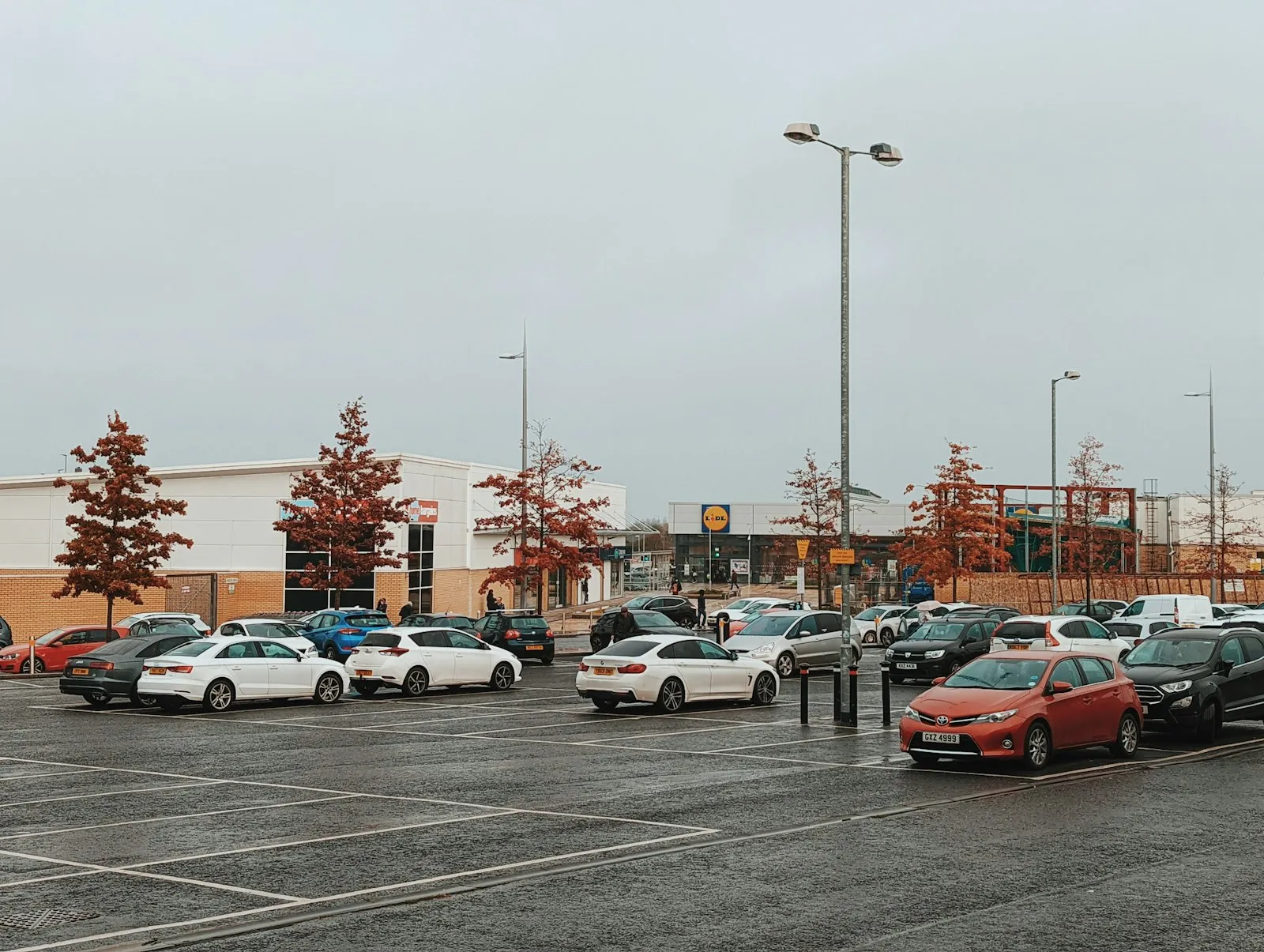
Finally, imagine you never reached the road. A driver backing out of a space in a packed event lot plows into you, or into your parked car with you beside it. These cases often turn on who had the right of way in the aisle and whether lighting, signage or the layout of the lot played a role. If a dangerous condition on the property contributed, a property owner may share responsibility, since an owner or occupier is generally liable when it created a hazard or had actual or constructive notice of it. Our premises liability page explains that idea more fully.
What If the Other Driver Is Partly Right?
Back to the original story. A week later, the other driver’s insurer calls and says you pulled out too fast and share the blame. That is a common move, and it is worth understanding before you respond.
Partial blame doesn’t sink the claim: CPLR § 1411 reduces the award by your share instead. In plain terms, being partly responsible generally does not wipe out your claim. Your recovery is reduced by your share of fault, but you can still recover the rest. Our guide to comparative negligence in New York walks through how insurers try to inflate your share and how that gets pushed back.
The Serious Injury Threshold
Here the story takes a turn that surprises many people. No-fault pays your medical bills and part of your wages, but it does not pay anything for pain and suffering. To pursue that kind of compensation from the at-fault driver, New York generally requires that you have a “serious injury” as defined in Insurance Law § 5102(d).
That definition includes things like a fracture, a significant limitation of use of a body function or system, or an injury that keeps you from performing substantially all of your usual daily activities for 90 of the first 180 days after the crash. In our hypothetical, suppose the side impact left you with a fractured collarbone. A fracture is one of the categories named in the law, which changes the conversation with the insurer considerably. For a closer look at those cases, see our article on fracture claims and the serious injury rule.
If your injuries are soft-tissue injuries to the neck or back, the threshold can still be met, but the medical records do much of the work. This is one reason a written record of your symptoms helps; our post on keeping an injury diary shows what to write down each day.
A Pothole, a Broken Signal, or a Town Truck
Picture one more twist. Suppose the reason the other driver swerved was a deep pothole on a local road, or a traffic signal that was dark, or perhaps the vehicle that hit you was a municipal truck. Now a government body may be involved, and the rules shift sharply.
Claims against the Town of Hempstead, Nassau County or a village generally require a written notice of claim within 90 days of the incident under General Municipal Law § 50-e. A lawsuit then generally has to be filed within one year and 90 days. The municipality may also demand a 50-h hearing, which is a sworn question-and-answer session before any suit goes forward. Our guides to filing a notice of claim in Nassau County and to the 50-h hearing explain both steps. Because the clock is so short, this is the point where calling an Elmont accident lawyer early tends to matter most.
Where the Case Goes from Here
Most crash claims end in a negotiated settlement with an insurer. Some do not. If the insurer will not make a fair offer, the next chapter is a lawsuit. For most personal injury cases in New York, that suit generally must be filed within three years of the crash under CPLR § 214. Because Elmont is in Nassau, lawsuits arising from crashes there are typically filed in Nassau County Supreme Court in Mineola.
From there, the case moves through exchanges of records, depositions and, often, an exam by a doctor chosen by the insurer. Our explainer on how a car accident lawsuit works in New York lays out the stages in order, and our Elmont car accident lawyers page covers the local picture.
Why an Office Next Door Helps
Our office sits at 1 Cross Island Plaza, near the Cross Island Parkway, a short drive from Belmont Park and UBS Arena. If leaving home is hard, attorney Yakov Mushiyev and our team can meet you at home, in the hospital or by video. We speak English, Russian and Spanish, and the firm has recovered over $80 million for injured New Yorkers. Consultations are free, and there is no fee unless we win.
When you are ready to talk about your own version of this story, reach us through our contact page or call 718.775.3110.
Frequently Asked Questions About Elmont Crashes
Do I need an Elmont accident lawyer if the crash happened in a parking lot?
Not every lot collision needs a lawyer, but if you were hurt, the questions about right of way, the property owner’s role and no-fault benefits can get tangled quickly. A short free consultation can tell you whether the claim is worth pursuing.
Which police department handles crashes in Elmont?
Elmont is in Nassau County, so the Nassau County Police Department generally responds and prepares the report, not the NYPD. You will request your report through Nassau, even if you live in Queens.
I was hurt as a passenger in a rideshare after an event. Who pays my medical bills?
No-fault coverage generally pays medical bills and part of lost wages regardless of fault. Which policy applies first can depend on the vehicles involved, and if your injury meets the serious injury threshold, you may also have a claim against the driver who caused the crash.
What if the driver who hit me left the scene or had no insurance?
You may be able to turn to the uninsured motorist coverage on a policy in your household. If no such policy applies, the Motor Vehicle Accident Indemnification Corporation (MVAIC) may be an option.
How long do I have to file a claim?
Most injury lawsuits generally must be filed within three years. Claims against the Town of Hempstead, Nassau County or another municipality are much shorter: a notice of claim is generally due within 90 days, and suit within one year and 90 days. The no-fault application is generally due within 30 days.
Visit Yakov Mushiyev & Associates
Our office is at 1 Cross Island Plaza, Suite 325, Rosedale, NY 11422, just off the Cross Island Parkway on the Queens–Nassau border. If you can’t come to us, we’ll come to you: at home, in the hospital or by video.

Talk to an Elmont accident lawyer today
Yakov Mushiyev & Associates has recovered over $80 million for injured New Yorkers across the five boroughs and Nassau County. Consultations are free, available in English, Russian and Spanish, and there is no fee unless we win.
Call 718.775.3110 or contact us online for a free case review.
This article is general information, not legal advice. Every case is different. Attorney Advertising.