
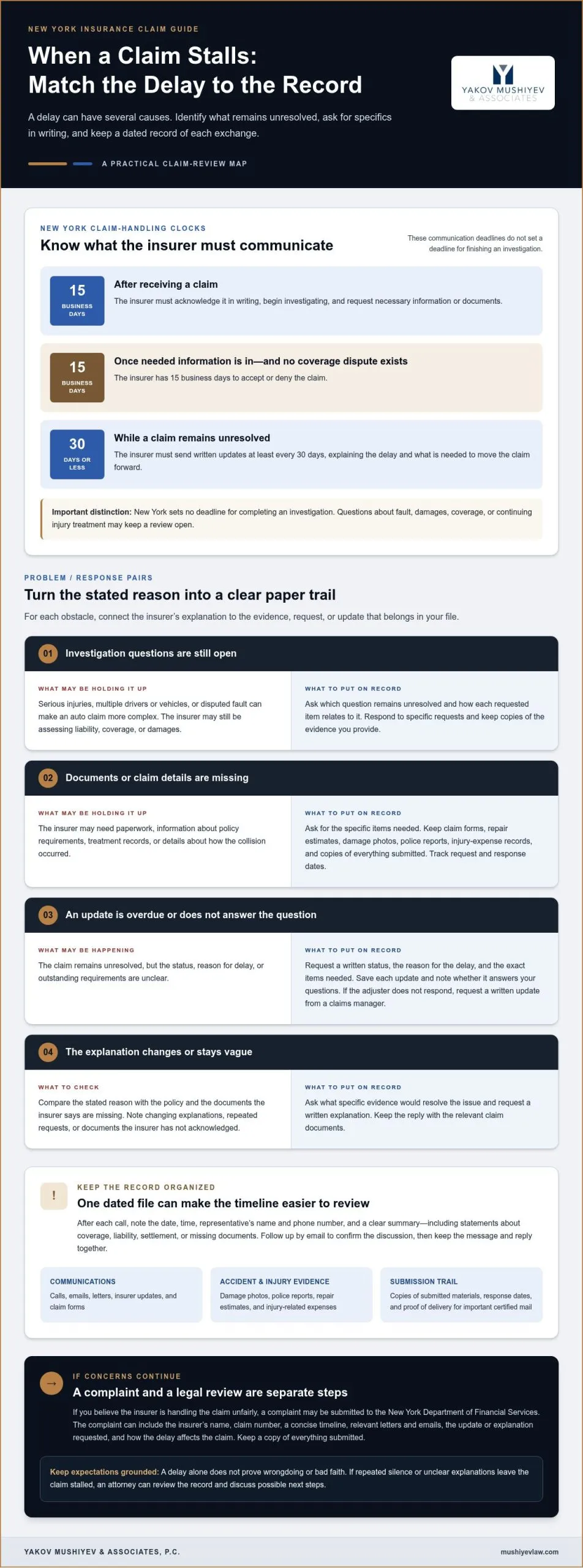
In New York, an insurer must acknowledge your claim in writing, begin investigating, and request necessary information or documents within 15 business days of receiving it. If the claim remains unresolved, the insurer must send written updates at least every 30 days explaining the delay and what is needed to move it forward. If you are wondering what if the insurance company delays my claim in Rosedale, Rochdale, and Queens, start by requesting a clear written status update.
A delay can be frustrating, but it does not automatically mean the insurer acted improperly. Questions about fault, coverage, damages, or ongoing medical treatment may extend an investigation. When you ask what if the insurance company delays my claim in Rosedale, Rochdale, and Queens, this guide covers common reasons for delays, how to document communications, and when ongoing inaction may warrant legal review. It also explains how reviewing your claim history and seeking guidance from Yakov Mushiyev & Associates, P.C. can help you assess your next steps.
Key Takeaways
- Log each insurer conversation, save written exchanges, and follow up in writing so you can track what was promised and what remains outstanding.
- In New York, insurers must acknowledge a claim and begin investigating within 15 business days; unresolved claims require written updates at least every 30 days.
- Delays may stem from questions about fault, coverage, damages, medical treatment, or missing documents. Identify what the insurer says it still needs.
- If repeated silence or unclear explanations leave an accident claim stalled, legal representation can help review the record and assess possible next steps.
Keeping records of insurer communications
Keep a dated file of every call, email, letter, and document related to your claim. Save evidence of your injury and expenses, too. What records should you keep when an insurance claim is delayed? Note who you spoke with, when you spoke, what they said, and what the insurer still needs.
Document claim-related communications
- After each call, record the date, time, representative’s name and phone number, and a clear summary. Note statements about coverage, liability, the settlement amount, or missing documents. Then email the representative to confirm the discussion, for example: “You said the damage photos are under review.” Keep the message and any reply together in your claim file. Do not rely on memory or record only the insurer’s conclusions.
Request claim updates
- Ask the adjuster in writing for the claim’s current status, the reason for any delay, and the specific items needed to move the review forward. In New York, insurers must send written updates at least every 30 days on unresolved claims, explaining the delay and what is needed. Save each update and note whether it answers your questions. If the adjuster doesn’t respond, request a written status update from a claims manager.
Keep delay records and evidence
- Keep insurer letters, emails, claim forms, repair estimates, damage photos, police reports, and records of injury-related expenses in one dated folder. Save copies of everything you submit, along with proof of delivery for important correspondence sent by certified mail. Track each request and your response date in a simple log. This record can help show repeated requests, missed updates, or changing explanations without mixing up events.
Can I Sue the Insurance Company for Delaying a Claim?
A delay alone does not prove wrongdoing: insurers may need to investigate coverage, liability, and damages. New York has specific communication and decision deadlines, but an unreasonable delay may warrant closer review.
-
Review claim investigation deadlines
Compare the insurer’s actions with New York’s claim-handling deadlines. Within 15 business days after receiving a claim, the insurer must acknowledge it in writing, begin investigating, and request necessary information or documents. Once it has the information needed and finds no coverage dispute, it has 15 business days to accept or deny the claim. For unresolved claims, it must send written updates at least every 30 days, explaining the delay and what is needed.
New York sets no deadline for completing an investigation. Questions about fault, damages, coverage, or continuing personal injury treatment may keep the review open. Florida’s property-claim rules are different: insurers must acknowledge a claim within 14 days, and within 90 days of receiving completed proof of loss, pay, deny, or explain in writing why more time is needed. Those Florida deadlines don’t govern a Valley Stream claim.
-
File a complaint with the New York Department of Financial Services
If you believe the insurer is handling your claim unfairly, you can submit a complaint to the New York Department of Financial Services. Include the insurer’s name, claim number, a concise timeline, relevant letters and emails, and the update or explanation you requested. Describe how the delay affects your claim, and keep a copy of everything you submit.
Do claim procedures differ for auto, homeowners, health, and life insurance in New York? Applicable rules can depend on the type of insurance and policy, so do not assume one deadline applies to every claim. Ask the insurer to identify the rule or policy term behind its position. If missed updates or unexplained silence continue, an attorney can review the record and discuss whether legal action may help protect your rights.
Common reasons insurance payments are delayed
Identify the specific reason the insurer gives, then compare it with the accident evidence and any outstanding claim requirements. A delay may reflect a complex investigation, missing paperwork, or a coverage dispute, but a denial alone does not establish bad faith.
-
Identify reasons investigations take longer
Ask what is keeping the investigation open and relate the answer to the accident’s circumstances. An auto claim involving serious injuries, multiple drivers or vehicles, or disputed fault may take months to investigate. The insurer may need to assess liability, determine whether coverage applies, and evaluate damages before paying. Each issue may require different evidence, such as treatment records or details about how the collision occurred. Respond promptly to specific requests, and ask how each item relates to the unresolved question. If requests are repeated or unclear, ask for a written explanation.
-
Review reasons for claim denial or delay
Compare the insurer’s stated reason with your policy and the documents it says are missing. Repeated paperwork requests, questions about policy requirements, or disputes over damages can delay payment. An insurer may also prolong a review or dispute coverage in hopes that financial pressure will lead to a lower settlement. That possibility makes written explanations and a complete record important, but delay alone does not prove bad faith.
Check whether the insurer’s explanations change, whether it acknowledges documents you submitted, and whether its requests relate to the accident or injury. If its reason remains vague, ask what specific evidence would resolve the issue. A complaint to the New York Department of Financial Services may address concerns about unfair handling, while a lawsuit is a separate legal step. The key question is whether the insurer is investigating a genuine unresolved issue or failing to explain its handling. Document the claim’s status, requests, and responses so any pattern is clear.
Legal representation in insurance delay cases
Legal help can turn scattered claim documents into a clear record of the delay. An attorney can review the insurer’s communications, request a status update and timeline, document patterns, and prepare the claim for possible legal action.
- Bring the claim file, policy, insurer letters, and communication log to an attorney. Include records showing when you submitted requested documents and any responses or explanations you received. This helps counsel assess whether the delay involves an unresolved coverage or damages question, repeated requests, or silence after follow-ups.
- Ask the attorney to identify what remains disputed and what evidence could address it. For an accident claim, that might include information about liability, injury, treatment, or damages. A focused review can distinguish an active investigation from an unexplained delay and clarify what to ask the insurer.
- Ask your attorney to request a written status update and specific next steps from the insurer. The letter can list outstanding items, summarize the timeline, and ask when the insurer expects to act. Written communication creates a clear record and helps keep key questions and previous submissions from being lost during adjuster handoffs.
- Discuss your options before deciding whether to accept an offer, dispute the insurer’s position, or pursue a lawsuit. An attorney can prepare the claim for possible legal action and explain what the evidence supports. In a case involving an improper delay, a claimant may seek consequential damages and interest; attorney fees and court costs may also be sought if the claimant wins.
- Use a consultation to review the insurer’s tactics, the documented timeline, and the practical next step. If the claim concerns an accident injury, talk with an attorney about your accident claim before pressure to settle pushes you into accepting terms without understanding their effect.
Yakov Mushiyev & Associates, P.C: Car Accident Legal Representation
Yakov Mushiyev & Associates, P.C provides car accident legal representation for injured people facing a stalled accident claim. If the insurer’s delay leaves you uncertain about the accident case, an attorney can review the claim communications and accident-related issues, then explain possible next steps. The firm also represents people injured in truck and motorcycle accidents, slip and falls, and construction accidents. This representation focuses on injury claims, not every dispute involving an insurance policy. Bring your claim correspondence and key accident records to discuss how they relate to your case. If you need legal guidance about an accident injury claim, contact Yakov Mushiyev & Associates, P.C.
Choose Your Next Step With Clarity
If you’re asking, “What if the insurance company delays my claim in Valley Stream?” take a deliberate next step. Identify what you need clarified before responding to another offer or request. A focused conversation about your priorities can help you understand which choices protect your interests and which may limit them. Make decisions with a clear view of the consequences, not under pressure or in confusion.
For an accident injury claim, legal guidance can help you assess the insurer’s position and determine a practical path forward. Yakov Mushiyev & Associates, P.C. handles car accident, truck accident, and slip and fall legal representation. If you want to discuss how your accident claim has been handled, contact Yakov Mushiyev & Associates, P.C. Take the next step at your pace, with your questions and priorities at the center.
Frequently Asked Questions
Is there a time limit for insurance claim settlements?
New York sets no deadline for an insurer to complete its claim investigation, so there is no single settlement deadline for every claim. The response may depend on unresolved questions about coverage, liability, or damages. For example, an injury claim may remain under review while treatment continues. Check your policy and written claim updates to understand the requirements that apply. This is general information, not legal advice for your specific case.
When Should I Talk to an Insurance Dispute Attorney?
Talk to an attorney if the insurer’s explanations conflict, it stops responding after follow-ups, or you’re being pressed to accept a settlement before understanding its terms. An attorney can review the claim history and explain what the documents show before you decide how to respond. For accident claims in Rosedale, Rochdale, or Queens, bring the policy, correspondence, and any proposed release. This is general information, not legal advice for your specific case.
Is a denied insurance claim automatically bad faith?
No. A denial alone does not establish bad faith; the insurer may dispute coverage or whether the claim meets the policy terms. Read the denial letter carefully and identify the policy language and evidence the insurer relies on. If its reasons change or fail to address the records you submitted, preserve those communications for review. This is general information, not legal advice for your specific case.
Is it normal for an insurance adjuster to keep asking for more documents?
An adjuster may request documents needed to evaluate a claim, but repeated requests for items you have already submitted can point to a communication problem. Keep copies of what you provide and note when you submitted it. If a request seems duplicative, reply in writing with the earlier submission details and ask what remains outstanding. This is general information, not legal advice for your specific case.
What counts as an unreasonable insurance claim delay in New York?
No single delay automatically proves unreasonable handling in New York. Look for a pattern, such as unexplained silence, missed written updates, repeated requests for irrelevant or duplicate records, or inconsistent reasons for holding the claim. Compare the insurer’s actions with the questions it says remain unresolved. A denial or delay alone does not establish bad faith. This is general information, not legal advice for your specific case.
How long does a New York insurer have to acknowledge and investigate a claim?
Within 15 business days after receiving a claim, a New York insurer must acknowledge it in writing, begin investigating, and request necessary information or documents. That period is not a deadline to finish the investigation. The investigation may continue while questions about coverage, fault, damages, or ongoing treatment remain open. This is general information, not legal advice for your specific case.