
An intersection is where two streams of traffic are invited to share the same pavement, and New York resolves that conflict with a short list of priority rules. When a collision happens at a corner in Queens, the central question is which of those rules applied and who broke it. This chapter-style guide explains the rules section by section, then applies them to the crashes an intersection accident lawyer most often sees on corridors such as Hillside Avenue, Merrick Boulevard, Francis Lewis Boulevard, Springfield Boulevard and Linden Boulevard.
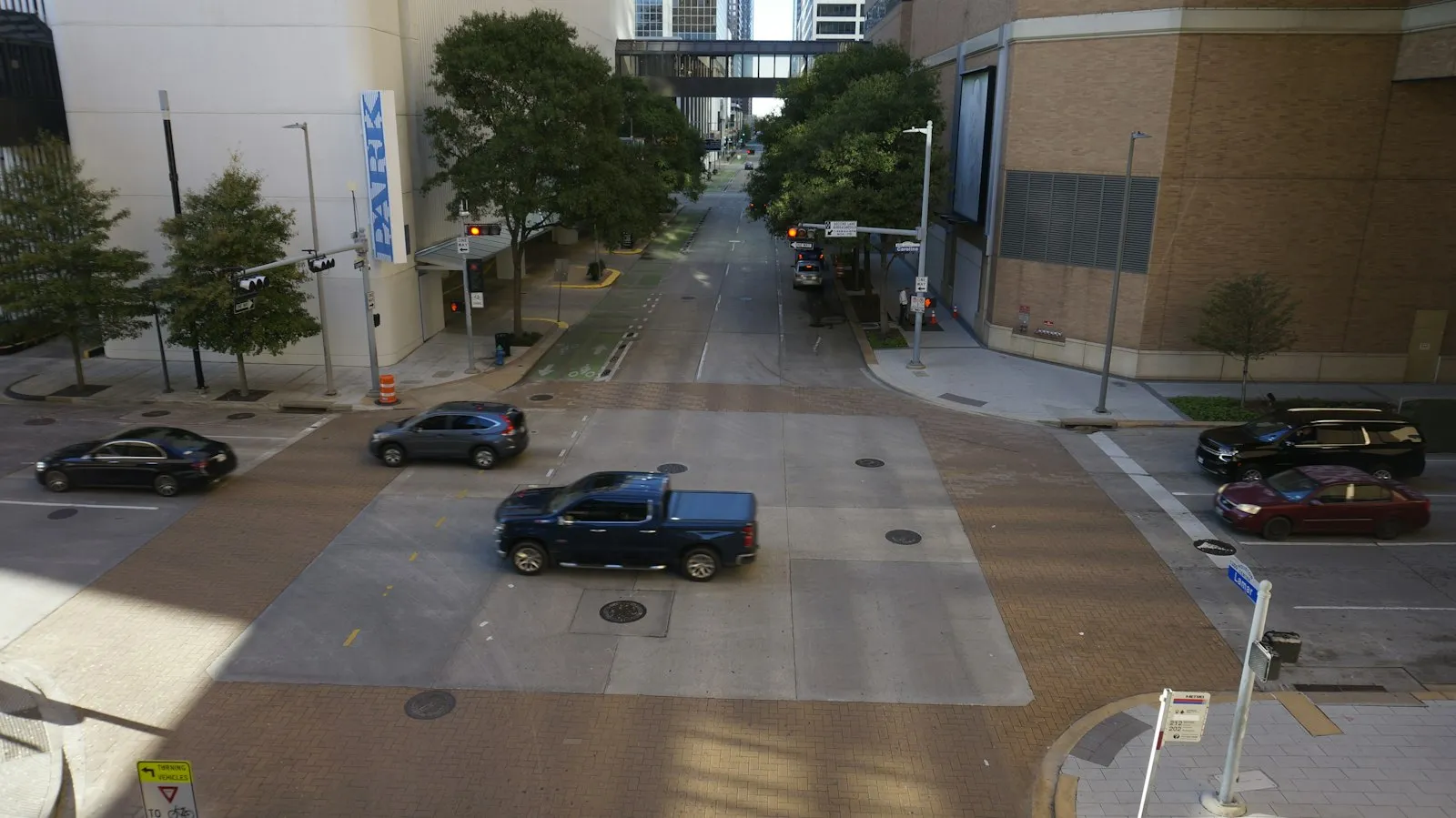
Why Intersections Are Analyzed Rule by Rule
Most corner collisions turn on one concept: the right of way. The Vehicle and Traffic Law (VTL) assigns a duty to yield to one party in each configuration, while still requiring reasonable care from everyone.
That structure matters for a claim. Under New York case law, an unexcused violation of a VTL rule is generally treated as negligence in itself. The analysis therefore tends to follow a predictable sequence:
- Identify the type of intersection and the traffic controls present (signal, stop sign, yield sign or none).
- Identify the VTL section that governs that configuration.
- Determine which driver, cyclist or pedestrian that section required to yield.
- Ask whether the party with priority also acted reasonably, since speed, inattention or a late reaction can shift part of the fault.
Comparing Intersection Types, Governing Rules and Duties to Yield
The table below summarizes the main configurations. Signage, lane markings and each party’s conduct can change the result in a given case.
| Intersection type | Governing VTL section | Who generally must yield |
|---|---|---|
| Signal-controlled (traffic light) | VTL § 1111 | Drivers facing a red signal must stop; drivers on green must still yield to vehicles and pedestrians lawfully within the intersection or crosswalk |
| Any intersection, driver turning left | VTL § 1141 | The left-turning driver yields to oncoming traffic within the intersection or close enough to be an immediate hazard |
| Stop sign or yield sign | VTL § 1142 | The driver facing the sign stops or slows as required and yields to traffic on the through road |
| Uncontrolled (no signal or sign) | VTL § 1140 | When two vehicles arrive at about the same time, the driver on the left yields to the vehicle on the right |
| Marked or unmarked crosswalk | VTL § 1111 and related pedestrian provisions | Turning drivers generally yield to pedestrians lawfully crossing |
Signal-Controlled Intersections: VTL § 1111
The text of VTL § 1111 sets out what each signal indication requires. A steady red means stop at the marked line, or before the crosswalk or intersection if no line exists, and remain stopped until the signal permits movement. A green permits travel but does not cancel the duty to yield to vehicles and pedestrians already lawfully in the intersection.
Right Turns on Red in New York City
Outside the five boroughs, many drivers are used to turning right on red after a full stop. Inside New York City, the general rule runs the other way: a right turn on red is not allowed unless a sign specifically permits it.
Applying the Rule
When one vehicle enters on a green and the other against a red, the driver who ran the light is ordinarily the primary focus of fault. The harder cases involve competing accounts, where each driver insists the light was green; an intersection accident lawyer will usually resolve those with signal data, video and witnesses rather than recollection.
Left Turns: VTL § 1141 and the Oncoming-Traffic Problem
The rule in VTL § 1141 is brief: a driver intending to turn left within an intersection must yield to any vehicle approaching from the opposite direction that is within the intersection or so close to it as to constitute an immediate hazard. The duty sits with the turning driver.
This explains why, in a left turn accident, the left-turning driver is often found primarily at fault. The turning driver crosses the path of oncoming traffic and is legally responsible for judging the gap. On wide roads like Francis Lewis Boulevard, an oncoming car can be hidden by a vehicle waiting to turn the other way, and a driver who turns without a clear view takes on that risk.
When Fault Shifts Toward the Oncoming Driver
The oncoming driver’s priority is not unconditional. Several circumstances can move some or most of the fault the other way:
- The oncoming driver was traveling well above the speed limit, so that a turn which looked safe at the moment it began became unsafe.
- The oncoming driver entered the intersection against a red signal, while the turning driver was finishing the turn on a changing light.
- The oncoming driver was distracted, for example by a phone, and failed to react to a turning vehicle that was plainly visible. (Phone-use evidence is examined in our article on texting and distracted-driving crashes.)
- A protected green arrow gave the turning driver priority over opposing traffic, which faced a red.
Left-turn collisions frequently produce side impacts. The specific injury patterns and proof issues in those crashes are covered further in our guide to T-bone and side-impact claims.
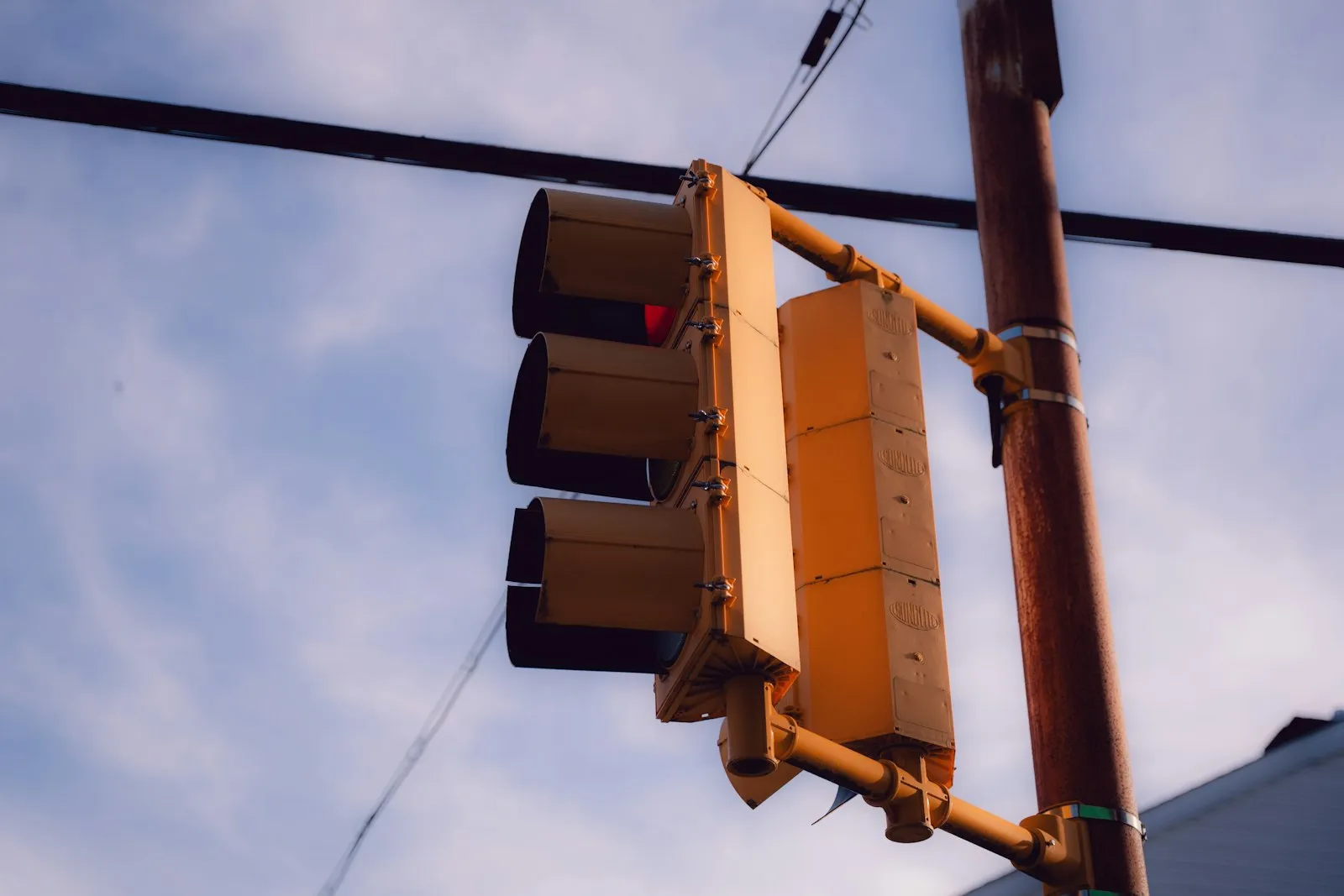
Stop and Yield Signs: VTL § 1142
Many residential cross streets in Queens meet the major boulevards at stop signs. Under VTL § 1142, a driver facing a stop sign must stop and then yield to vehicles that have entered the intersection or are approaching closely enough to be an immediate hazard. A yield sign requires the driver to slow down, stop if necessary, and yield in the same way.
Stopping is not the whole obligation: a driver who stops fully and then pulls into the path of an approaching car has still failed to yield. The through-road driver may generally assume the sign will be obeyed, but must still use reasonable care.
Uncontrolled Intersections: VTL § 1140
Where no signal or sign controls the intersection, VTL § 1140 supplies the default rule. When two vehicles approach from different roads and arrive at about the same time, the driver on the left yields to the vehicle on the right.
The phrase “about the same time” carries weight. If one vehicle was clearly in the intersection first, the vehicle-on-the-right rule may not decide the case at all, and the analysis turns to ordinary care, speed and lookout. A missing or blocked sign can itself become an issue, discussed in the section on city liability below.
Pedestrians in the Crosswalk
An intersection serves people on foot as well as vehicles. A driver turning on a green signal generally must yield to pedestrians lawfully within the crosswalk, and the same caution applies at stop-controlled corners.
Crossing against a “Don’t Walk” signal or outside a crosswalk does not necessarily bar a claim, but it may reduce recovery under the comparative fault rule described below. Additional information appears on our pedestrian accident practice page and in a neighborhood-focused article on crossings near Jamaica Avenue and Springfield Boulevard.
Evidence That Decides Intersection Cases
Because the rules above are clear, most disputes are factual: what color the light was, how fast each car was going, and who reached the intersection first. An intersection accident lawyer will usually look for several categories of proof, ideally before they disappear.
Signal Timing and Camera Footage
Signal timing records show how long each phase lasted and in what sequence, which can test a driver’s claim about a “yellow” light. Red-light cameras and traffic cameras may have recorded the crash or the moments before it. Video from businesses along Hillside Avenue or Merrick Boulevard is often the most useful footage, but private systems frequently record over it quickly, so prompt requests matter.
Witnesses and Physical Evidence
Independent witnesses, including other drivers, bus passengers and pedestrians waiting at the corner, can confirm the signal phase. Vehicle damage patterns, such as front-end damage on one car and side damage on the other, can suggest angle and speed.
Reports and Public Data
Each driver must file a DMV Form MV-104 within 10 days if anyone was injured or property damage exceeds $1,000. Patterns at a particular corner can sometimes be explored through NYC Open Data collision records, which can be relevant when the design of an intersection is in question.
Shared Fault Under Pure Comparative Negligence
Intersection crashes often involve fault on both sides: a left-turning driver who misjudged the gap and an oncoming driver who was speeding, for example. New York applies pure comparative fault under CPLR § 1411. An injured person’s recovery is reduced by his or her own percentage of fault but is not barred, even if that share is substantial. A driver found partly responsible for a left turn accident can therefore still recover the portion of damages attributable to the other driver’s negligence. A fuller treatment appears in our explanation of comparative negligence.
No-Fault Benefits and the Serious Injury Threshold
Compensation after an intersection crash generally moves through two stages. The first is no-fault insurance, which pays medical bills and part of lost wages regardless of who caused the collision. The application is generally due within 30 days. A pedestrian struck by a car generally receives no-fault benefits through the car’s policy. The process is described in our no-fault claims guide.
The second stage is a claim against the at-fault driver for pain and suffering and losses that no-fault does not cover. That claim generally requires a “serious injury” as defined in Insurance Law § 5102(d). The categories include death, dismemberment, significant disfigurement, a fracture, loss of a fetus, permanent loss of use of a body organ, member, function or system, a permanent consequential limitation, a significant limitation, and a medically determined injury that prevents the person from performing substantially all usual activities for 90 of the first 180 days after the crash. Seeing a doctor promptly and following up helps document the injury.
City Vehicles and Dangerous Intersection Design
Some intersection claims involve a government defendant. A city-owned vehicle, such as a sanitation truck or an agency car, may be the vehicle that ran the light or turned across traffic. In other cases the question is the intersection itself: a signal that malfunctioned, a stop sign that was missing or blocked, or a layout that left sight lines dangerously short.
Claims against New York City or another municipality follow a different timetable. Under General Municipal Law § 50-e, a notice of claim generally must be served within 90 days, and a lawsuit generally must be filed within one year and 90 days. In New York City, claims go to the NYC Comptroller, and the city may demand a 50-h hearing, which is a sworn examination before suit. Bus crashes raise related issues, covered in our article on being hit by a bus in New York.
For claims against private drivers, the general deadline for most personal injury suits is three years under CPLR § 214. A wrongful death claim generally must be brought within two years of the death.
How the Firm Approaches Intersection Claims
Yakov Mushiyev & Associates represents people injured in Queens, throughout New York City and in Nassau County from an office at 1 Cross Island Plaza in Rosedale, near the Cross Island Parkway. Its recoveries for injured clients now total more than $80 million. Consultations are free, there is no fee unless the firm wins, and the team works in English, Russian and Spanish.
In an intersection case, the work typically begins by identifying which rule in the table above applies, then gathering the evidence that proves who violated it. More on how these matters are handled appears on the car accident practice page, and an overview of the litigation stages is available in how a car accident lawsuit works in New York. To discuss a specific crash, the firm can be reached through its contact page or at 718.775.3110.
Intersection Crash Questions
Is the left-turning driver always at fault?
No. VTL § 1141 places the duty to yield on the left-turning driver, so that driver is often found primarily responsible. However, evidence that the oncoming driver was speeding, ran a red light or was not paying attention can shift part or most of the fault to that driver.
Can a driver turn right on red in Queens?
Generally not. In New York City, a right turn on a red signal is not allowed unless a sign at the intersection specifically permits it. A driver who turns right on red without such a sign may be found to have violated VTL § 1111.
Who has the right of way at an intersection with no signs or signals?
Under VTL § 1140, when two vehicles arrive at about the same time, the driver on the left generally yields to the vehicle on the right. If one vehicle was plainly in the intersection first, the analysis usually turns on ordinary care rather than this rule.
What if both drivers claim they had a green light?
Competing accounts are common. They are generally resolved with signal timing records, red-light or traffic camera footage, video from nearby businesses, independent witnesses and the damage patterns on each vehicle. When to consult an intersection accident lawyer often depends on how quickly that evidence needs to be preserved.
Does a different deadline apply if a city vehicle or a defective signal was involved?
Yes. A claim against New York City or another municipality generally requires a notice of claim within 90 days under General Municipal Law § 50-e, and a lawsuit generally within one year and 90 days. Other lane-change crashes near intersections are discussed in our article on sideswipe and lane-change collisions.
Visit Yakov Mushiyev & Associates
Our office is at 1 Cross Island Plaza, Suite 325, Rosedale, NY 11422, just off the Cross Island Parkway on the Queens–Nassau border. If you can’t come to us, we’ll come to you: at home, in the hospital or by video.

Talk to a Queens intersection accident lawyer today
Yakov Mushiyev & Associates has recovered over $80 million for injured New Yorkers across the five boroughs and Nassau County. Consultations are free, available in English, Russian and Spanish, and there is no fee unless we win.
Call 718.775.3110 or contact us online for a free case review.
This article is general information, not legal advice. Every case is different. Attorney Advertising.