
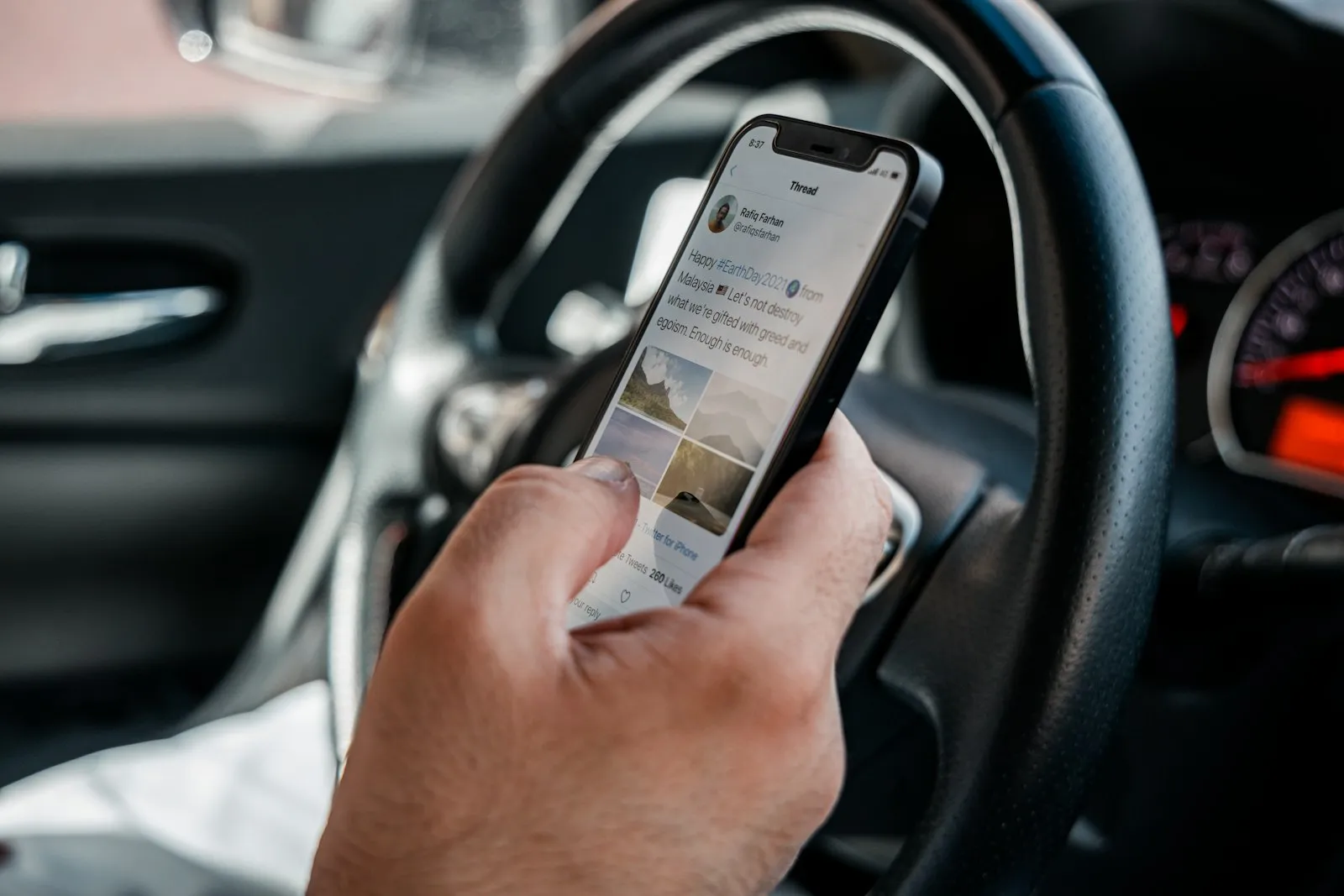
The crash takes about two seconds. Building the proof of what caused it can take months. When a driver in Queens or Nassau County looks down at a phone and rear-ends a stopped car, sails through a crosswalk, or drifts across the double yellow on Northern Boulevard, the phone is often the whole story. The trouble is that phones do not show up in photographs of a wreck. Nobody finds a text message lying in the road. A distracted driving accident lawyer spends much of the case reconstructing a few seconds that the at-fault driver would prefer to forget, and that work follows a fairly predictable trail.
This article walks that trail from start to finish: what the law says about phones behind the wheel, what counts as distraction, where the evidence lives, who can be held responsible, and which deadlines govern a claim in New York.
What New York Law Says About Phones Behind the Wheel
Two sections of the Vehicle and Traffic Law do most of the work. VTL § 1225-c deals with holding a mobile phone to talk while the vehicle is in motion. VTL § 1225-d is broader. It covers portable electronic devices and the things people do with them: composing or reading texts, browsing, viewing or taking images, playing games, and similar activity.
Why does a traffic statute matter in an injury case? Because New York courts generally treat an unexcused violation of a Vehicle and Traffic Law rule as negligence. Often it is treated as negligence in itself. That changes the shape of the argument. Instead of debating whether a careful driver would have glanced at a screen, the question becomes narrower: was the driver using the device in a way the statute prohibits, and did that use contribute to the collision?
Three Kinds of Distraction, One Collision
The National Highway Traffic Safety Administration describes distracted driving as any activity that diverts attention from driving. Investigators commonly sort it into three categories:
- Visual: eyes off the road. Reading a text, checking a map, looking at a notification.
- Manual: hands off the wheel. Holding the phone, typing, scrolling, reaching for a device that slid onto the floor.
- Cognitive: mind off the task. A heated call, even hands-free, can pull attention away from traffic.
Texting while driving is the example everyone cites because it hits all three at once. The driver looks down, uses a thumb, and thinks about the message. Apps do the same thing. So does a delivery driver accepting the next order, or a rideshare driver tapping through a fare screen at a red light that turns green.
The Evidence Trail Starts at the Scene
The first layer of proof is created in the minutes after the crash, often before anyone involved has thought about a claim.
The police report and any summons
Officers who respond to a Queens or Nassau crash write up what they see and what they are told. If an officer issued a summons under § 1225-c or § 1225-d, that is a strong early signal. The report may also record statements. Drivers also have their own paperwork: each driver generally must file a DMV Form MV-104 within 10 days when anyone was injured or damage exceeds $1,000. What the other driver writes on that form can become evidence too.
Admissions
People say surprising things at crash scenes. “I just looked down for a second.” “I was checking the GPS.” Those words, if a witness or officer heard them, can be repeated later. Admissions tend to be most candid in the first few minutes.
Witnesses
A passenger in the other car, a pedestrian waiting at the corner of Merrick Boulevard, a bus driver stopped in the next lane. Witnesses who saw a phone in a driver’s hand, or saw a face lit by a screen at night, can carry a case. Names and phone numbers collected at the scene are worth more than almost anything else in the first hour.
Video: Dashcams, Doorbells and Storefronts
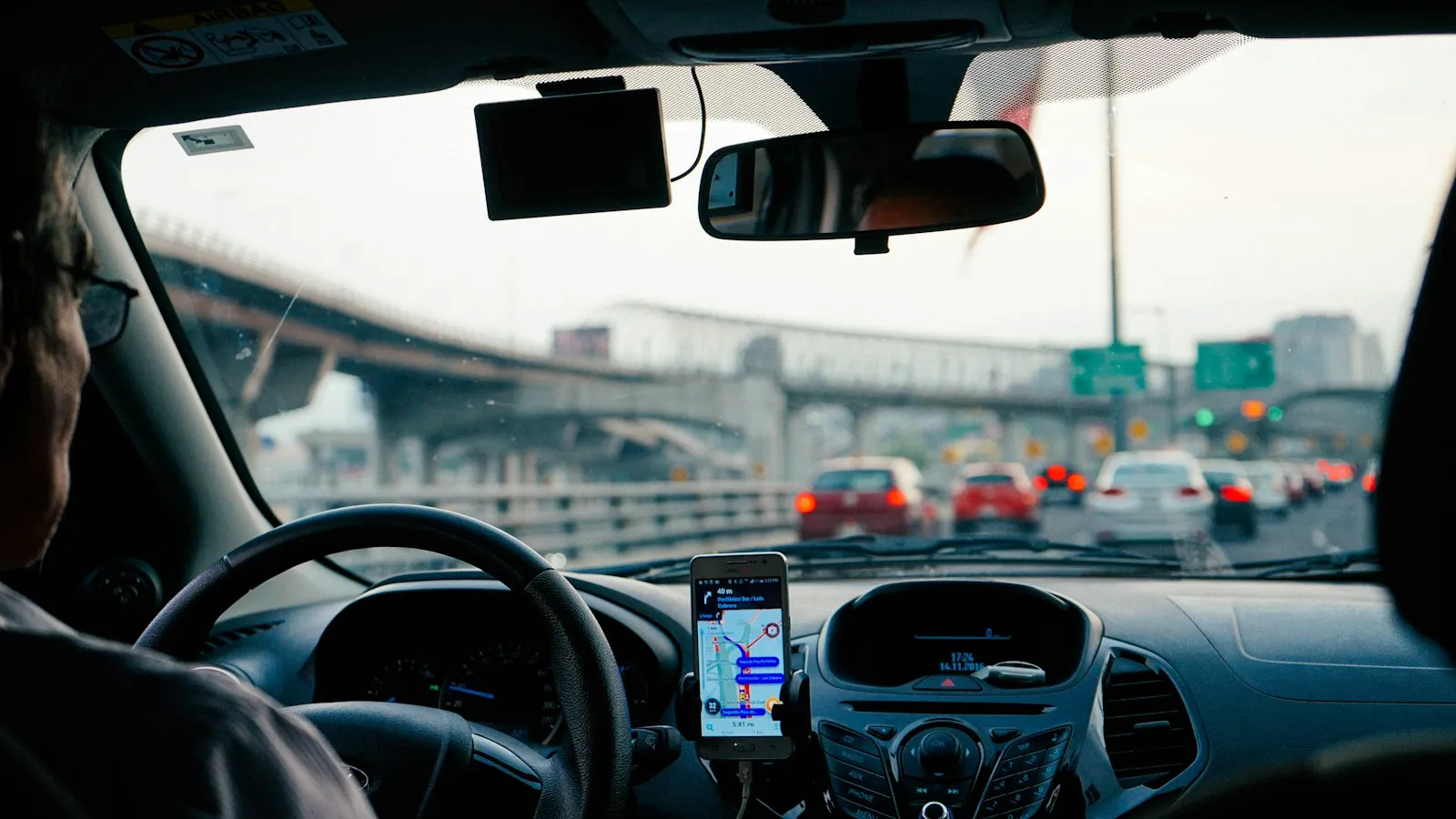
Queens is full of cameras. Delis, gas stations, auto body shops, apartment lobbies and private homes all record the street. Some vehicles carry dashcams, including many commercial fleets.
The catch is time. Much of this footage is overwritten on a short cycle, sometimes within days. That is why investigators canvass the block early and why identifying every camera with a view of the intersection is one of the first tasks in a serious case. Footage that no one asks for is footage that disappears.
Video also helps reconstruct the sequence of events at intersections and during lane changes. Our separate guides on left-turn and red-light crashes and lane-change sideswipes look at how footage gets used in those specific collision types.
Phone Records: The Center of the File
If the case has a spine, it is usually the phone records. Carrier records can show whether a call was connected and whether messages were sent or received around the time of the crash. Data usage logs can suggest whether an app was active. Placed side by side with the crash time from the police report or video, those entries can put a phone in use at the critical moment.
These records do not come from asking politely. The at-fault driver’s records are generally obtained through discovery once a lawsuit is filed, by demand or subpoena. The defense will often object on privacy grounds, and courts take that concern seriously. In practice, judges generally limit disclosure to a narrow window around the time of the crash rather than handing over months of personal history. A request that is targeted and supported by some reason to believe the phone was in use, such as a witness account or an admission, tends to fare better than a fishing expedition.
The broader mechanics of how a case moves from complaint to discovery are covered in our explainer on how a car accident lawsuit works in New York. Document demands, which often travel alongside phone record requests, are discussed in our piece on requests for production of documents.
App, rideshare and vehicle data
Phones are not the only devices keeping time stamps. Rideshare and delivery platforms log when a driver accepts a trip, marks a pickup, or interacts with the app. Many newer vehicles store event data that can show speed, braking and steering inputs in the seconds before impact. A car that never slowed before a rear-end collision tells its own story. When these sources line up with phone activity, the picture becomes difficult to argue with.
Preservation Letters: Stopping the Clock on Deletion
Every one of these sources has a shelf life. Video gets recorded over. Fleet telematics may be purged on a schedule. Vehicles get repaired, salvaged or crushed. Phone data held by carriers is retained for limited periods.
A preservation letter is the standard countermeasure. It is a written demand, sent early, putting the driver, the vehicle owner, an employer, or a business with a camera on notice that the evidence is relevant to a claim and must not be destroyed. It does not guarantee cooperation, but it creates a record. If evidence later goes missing after notice, that can have consequences for the party who lost it. For a distracted driving accident lawyer, these letters are often among the first things that go out the door.
Who Pays: The Driver, the Owner, the Employer
The person holding the phone is not always the only one responsible.
Owner liability. Under VTL § 388, a vehicle owner is generally liable for the negligence of someone driving with permission. If a teenager was texting in a parent’s car, or a friend borrowed a vehicle, the owner’s policy is usually in play.
Employer liability. Employers are generally responsible for an employee’s negligence on the job, a doctrine known as respondeat superior. A delivery van driver checking a route, a contractor answering a dispatcher, a sales rep on a call between appointments: if the driver was working, the employer may answer for the crash. Commercial vehicles also tend to carry more evidence, including dispatch logs, fleet tracking and company phone policies. Crashes involving work trucks are covered on our truck accident practice page, and app-based drivers on our Uber and Lyft accident page.

Insurance Comes First: No-Fault, Then the Serious-Injury Threshold
New York’s system routes an injured person through their own coverage before any fault-based claim. No-fault benefits generally pay medical bills and part of lost wages regardless of who caused the crash. The application is generally due within 30 days, which makes it one of the earliest deadlines in the process. Our no-fault claims guide walks through it.
Stepping outside no-fault to sue the distracted driver for pain and suffering generally requires a “serious injury” as defined in Insurance Law § 5102(d). The list includes:
- death, dismemberment or significant disfigurement
- a fracture
- loss of a fetus
- permanent loss of use of a body organ, member, function or system
- permanent consequential limitation or significant limitation of use of a body organ or member
- a medically determined injury that prevents substantially all usual activities for 90 of the first 180 days after the crash
Proof here is medical, not technological. Records from treating doctors, imaging and consistent follow-up carry the weight. Injured people who see a doctor promptly and keep their appointments generally leave a clearer record. A daily log helps as well; our article on keeping an injury and symptom diary explains what to write down.
When the Defense Points Back at You
Insurers defending a phone-distracted driver rarely concede the point. A common move is to argue that the injured person also contributed: stopped short, changed lanes abruptly, crossed against a signal. Shared blame is handled through pure comparative fault, codified in CPLR § 1411. A share of fault reduces recovery by that percentage. It does not bar the claim.
That is one more reason the evidence trail matters. Video and phone records that fix the other driver’s attention at the moment of impact make it harder to shift blame. Our guide to comparative negligence in New York goes further into how fault gets divided.
Deadlines That Shape the Case
Most personal injury suits in New York must generally be filed within three years under CPLR § 214. That sounds generous. It is not, once you count the time needed to gather records, treat, and evaluate an injury.
Crashes involving a city vehicle run on a much shorter clock. If the distracted driver was operating a vehicle owned by New York City or another municipality, a notice of claim is generally due within 90 days under General Municipal Law § 50-e, and suit generally within one year and 90 days. In New York City, claims are filed with the Comptroller’s office, and the city may demand a 50-h hearing, a sworn examination, before a lawsuit moves forward. If the crash caused a death, a wrongful death claim generally must be brought within two years of the death.
How Our Firm Approaches a Phone-Distraction Case
Yakov Mushiyev & Associates handles injury claims from an office at 1 Cross Island Plaza in Rosedale, near the Cross Island Parkway, for clients across Queens, the rest of New York City and Nassau County. Our recoveries for clients exceed $80 million. Consultations are free, there is no fee unless we win, and the team works in English, Russian and Spanish. Meetings can happen at home, in the hospital or by video.
For a crash caused by a driver on a phone, the work tracks the trail described above: lock down the scene evidence, send preservation letters, find the cameras, identify every party who may be responsible, and pursue the phone records through discovery. More on the firm’s motor vehicle work is on our car accident practice page. To talk through a specific crash, use the contact page or call 718.775.3110.
Frequently Asked Questions
Can I get the other driver’s phone records myself?
Generally not. Carriers do not release a customer’s records to strangers. A distracted driving accident lawyer usually obtains them in discovery after a lawsuit is filed, and courts tend to limit the request to a short window around the time of the crash.
Does a hands-free call still count as distraction?
It may not violate the handheld rules in VTL § 1225-c, but cognitive distraction is real, and a driver’s attention can still be at issue under ordinary negligence. Records showing an active call at the moment of impact can be relevant either way.
What if the driver denies being on the phone?
Denials are common. That is why the case relies on independent sources: witnesses, video, the police report, app logs, vehicle data and phone records. When several of those point in the same direction, a denial carries less weight.
The driver who hit me was making deliveries. Who is responsible?
If the driver was working at the time, the employer is generally responsible for the employee’s negligence on the job. The vehicle owner may also be liable under VTL § 388. A distracted driving accident lawyer will typically look at every one of those parties early, since each may carry its own insurance and its own records.
How soon should evidence be preserved?
As soon as possible. Surveillance footage is often overwritten within days, and vehicles get repaired or scrapped. Preservation letters sent early put the other side on notice to keep what it has.
Visit Yakov Mushiyev & Associates
Our office is at 1 Cross Island Plaza, Suite 325, Rosedale, NY 11422, just off the Cross Island Parkway on the Queens–Nassau border. If you can’t come to us, we’ll come to you: at home, in the hospital or by video.

Talk to a Queens distracted driving accident lawyer today
Yakov Mushiyev & Associates has recovered over $80 million for injured New Yorkers across the five boroughs and Nassau County. Consultations are free, available in English, Russian and Spanish, and there is no fee unless we win.
Call 718.775.3110 or contact us online for a free case review.
This article is general information, not legal advice. Every case is different. Attorney Advertising.