
Most of the evidence in a Lyft accident case fits in your pocket. That is the good news. The bad news is that people lose it all the time, usually in the first few days, and usually without realizing it. This article is about how to keep it.
To make it concrete, here is a hypothetical. Sharmila spends a Friday evening shopping on Liberty Avenue, then requests a Lyft to her apartment a few blocks north. Under the J train on Jamaica Avenue, her driver slows for a light and a van behind them does not. The jolt snaps her head forward and back. Everyone seems fine, the drivers trade information, and she walks the last block home. By Saturday morning her neck is stiff and her right hand tingles. Her phone is at 4 percent, the Lyft app is asking her to rate the ride, and her first instinct is to tap five stars, close it and try to forget the whole thing.
We understand that instinct. A crash is frightening even when it looks minor, and nobody wants to relive it. But if Sharmila’s neck turns out to be more than a sprain, what is on that phone could matter more than anything she remembers. Below is a calm, step-by-step guide for anyone in Richmond Hill or South Richmond Hill dealing with a Lyft accident: what to save, why it matters, and the deadlines that keep running while you heal.
Why Your Phone Is the Best Witness You Have
When a yellow cab crashes, much of the record lives with the cab company and the police. A Lyft ride is different: it is booked, tracked and receipted through an app, and the rider holds a copy of key records from the moment the trip starts. That copy can answer questions that otherwise turn into arguments months later:
- Which car, which driver, and which TLC plate were involved?
- Exactly when and where did the trip begin, and where was the car when it ended?
- Were you actually a passenger at the time, and had the trip started inside New York City?
- What was the driver doing in the app at that moment?
That last question is easy to overlook. The app tracks the driver’s status: offline, waiting for a request, on the way to a pickup, or carrying a passenger. Status can affect which coverage is in play, so it is worth documenting rather than assuming.

The Screenshot Checklist
Once you are safe and have been checked out, sit down with your phone, plug it in, and work through this list. It takes about ten minutes.
- The ride receipt. Open your ride history and screenshot the full receipt, scrolling so nothing is cut off.
- The trip ID. It ties every other record to this specific ride.
- Driver name and plate. Capture them exactly as the app displayed them, along with the car’s make and color if shown.
- Start and end time, and the route map. The map often shows where the trip stopped, which helps place the crash.
- Your in-app crash report. Report the collision through the app’s safety or help section, and screenshot what you submitted and any reply.
- Messages with the driver. Any chat or call log from the pickup can confirm timing.
Then email the screenshots to yourself or save them to cloud storage, so a broken or replaced phone does not take them with it. Lyft’s safety page has more on its rider safety features.
Do not delete the Lyft app, close your account, or clear your ride history, even if you never plan to ride again. Rate the trip honestly or not at all, and keep your comments to the facts.
Evidence That Lives Outside the App
The app tells you who and when. The street tells you how. Under New York’s 2026 fault rule, “how” can decide whether a pedestrian, cyclist or driver recovers anything, so these records matter too.
Police and DMV reports
Call the police from the scene if you can, and write down the report number. Drivers may also have to file an accident report with the state; the New York DMV explains when the MV-104 report is required.
Camera footage
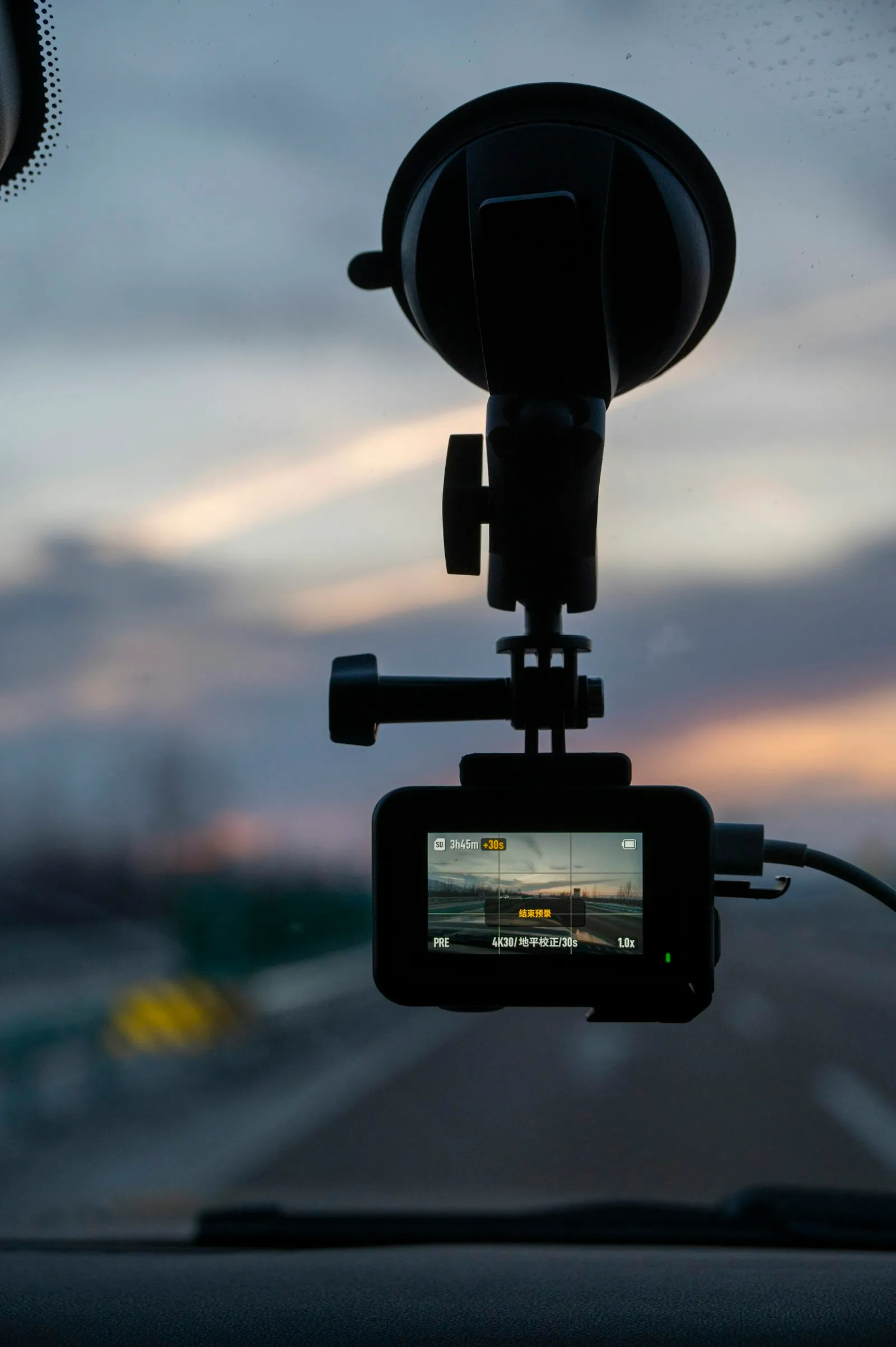
Many stores on Liberty Avenue and Jamaica Avenue have cameras pointed at the sidewalk, and some drivers run dashboard cameras. Footage can be overwritten quickly, so the request needs to go out early. Write down the nearest cross street and the names of the closest storefronts while they are fresh.
Photos and medical records
Photograph both vehicles, the TLC plate, the intersection, and anything that blocked a view, such as el columns or double-parked trucks. Then see a doctor promptly and keep every appointment. In Sharmila’s hypothetical, the tingling in her hand is exactly the kind of symptom that needs to be on paper early.
What Each Record Proves
| Record | Where it comes from | What it helps show |
|---|---|---|
| Ride receipt and trip ID | Lyft app | That you were a passenger on this ride, and when |
| Driver name and plate | Lyft app | Which TLC vehicle and commercial policy to claim against |
| Route map and times | Lyft app | Where the trip started and roughly where the crash happened |
| In-app safety report | Lyft app | That you reported the crash promptly |
| Police report number | NYPD | Official account of the scene and the parties |
| Video | Storefronts, dashcams | How the collision actually happened |
| Medical records | Your doctors | Whether the injury meets New York’s serious injury standard |
Why the Starting Point of the Trip Matters
Your route map does more than place the crash. It shows where the ride began, and that decides which insurance rules apply. In New York City, Lyft cars are TLC-licensed for-hire vehicles, and the Taxi and Limousine Commission’s minimums govern: $100,000 per person and $300,000 per occurrence in liability coverage, and $100,000 per person in no-fault coverage since March 1, 2026. A crash before that date may still fall under the policy then in force.
A ride that starts outside the city is a different story. New York State’s rideshare law, with its $1.25 million liability requirement while a passenger is aboard, applies to trips that begin in places like Nassau or Westchester, but it exempts New York City. Sharmila’s trip from Liberty Avenue falls under the TLC rules. Lyft may carry additional coverage above the TLC minimums on some trips; whether it applies, and how much, has to be confirmed from the insurer and the trip record. That is one more reason to keep every screen.

Deadlines Keep Running While You Collect
Gathering evidence should never push a deadline past its date. These are the ones that apply most often:
- 30 days: file the no-fault application. A passenger files with the insurer of the Lyft car; a pedestrian or cyclist files with the insurer of the vehicle that hit them.
- 90 days: file a notice of claim if a New York City or MTA vehicle was involved.
- 3 years: file a personal injury lawsuit, under CPLR 214(5).
- 2 years: file a wrongful death action, which in New York allows pecuniary damages only.
For lawsuits filed on or after May 26, 2026, the judge or jury decides fault before deciding whether an injury is serious, and a claimant whose fault is greater than the defendant’s recovers nothing. Passenger fault is rarely an issue in a Lyft case, but the rule weighs heavily on pedestrians, cyclists and drivers, which is why the street evidence above matters. The serious injury list itself is now limited to eight categories, including fracture and significant limitation of use of a body function or system. Our Richmond Hill Lyft accident lawyer page explains these 2026 changes in more depth.
Forest Park and Liberty Avenue: Two Common Lyft Settings
Forest Park. One of the largest parks in Queens, Forest Park borders Richmond Hill to the north, with trails, ballfields and a golf course that draw people from Woodhaven, Glendale and Kew Gardens as well. Riders are dropped off and picked up along Park Lane South and Myrtle Avenue, often at the end of a game or a walk, when many requests come in at once. Cars wait at the edge of the park, and traffic from the nearby Jackie Robinson Parkway moves quickly. If your crash happened here, the pickup pin in your app and the nearest park entrance are the details to save.
Liberty Avenue. Known as “Little Guyana,” the avenue runs under the A train past restaurants, bakeries, sari and jewelry shops and groceries, with stations at 104th Street, 111th Street and Lefferts Boulevard. Shoppers like Sharmila call rides from the curb, drivers stop in the travel lane when trucks hold the curb, and riders load bags into trunks beside moving traffic. Storefront cameras are everywhere here, which makes a fast footage request especially worthwhile.
Lyft Accident FAQs
I already deleted the app. Is my claim ruined?
Not necessarily. Reinstall it and sign in to check whether your ride history is still there. Your card statement and any receipt email can also help confirm the trip, and the trip record can be requested.
Does reporting the crash in the app replace calling the police?
No. Report it in both places. The in-app report and the police report serve different purposes.
Whose insurer gets my no-fault application?
As a passenger, the insurer of the Lyft car you were riding in, within 30 days. If a Lyft car hit you while walking or biking, the insurer of that car.
What if the Lyft driver was the one hurt?
Lyft drivers in New York City are generally covered for their own work injuries through the New York Black Car Fund. That is separate from a passenger’s claim.
Should I post about the crash on social media?
It is wiser not to. Insurers can read public posts, and a casual comment can be taken out of context. More common questions are on our FAQ page.
About Richmond Hill: Local FAQs
How do people get around Richmond Hill without a car?
Mostly by the two elevated lines: the A over Liberty Avenue and the J over Jamaica Avenue, plus buses and app rides.
Is South Richmond Hill a separate area?
It is the southern part of the neighborhood, generally covered by ZIP code 11419, while Richmond Hill proper is mainly 11418.
Which main roads carry the most traffic?
Liberty Avenue, Jamaica Avenue and Lefferts Boulevard carry local traffic, while Woodhaven Boulevard on the west and the Van Wyck Expressway on the east carry heavier through traffic.
What hospital is near Richmond Hill?
Jamaica Hospital Medical Center, by the Van Wyck Expressway near Jamaica Avenue. Call 911 in any emergency.
Which court handles injury cases from here?
Richmond Hill is in Queens County, so cases are typically filed in Queens County Supreme Court in Jamaica. The state court system’s website has general information.
You Do Not Have to Sort This Out Alone
In our hypothetical, Sharmila saves her screenshots, sees a doctor, and makes one phone call. You can do the same. Yakov Mushiyev & Associates, P.C. handles car accident claims across Queens, including Lyft crashes in Richmond Hill and nearby, such as through our South Ozone Park Lyft accident page and our Richmond Hill hub. Hurt in a yellow or green cab instead? See our Richmond Hill taxi accident page.
Call 718.775.3110 for a free case review, any time, or contact us online. We speak English, Russian and Spanish, and we can meet at home, in the hospital or by video. Our office is at 1 Cross Island Plaza, Suite 325, Rosedale, NY 11422. No fee unless we win.

Attorney Advertising. This is general information about New York law, not legal advice, and reading it does not create an attorney-client relationship. Every case depends on its own facts. The rider described in this article is hypothetical. Prior results do not guarantee a similar outcome.