
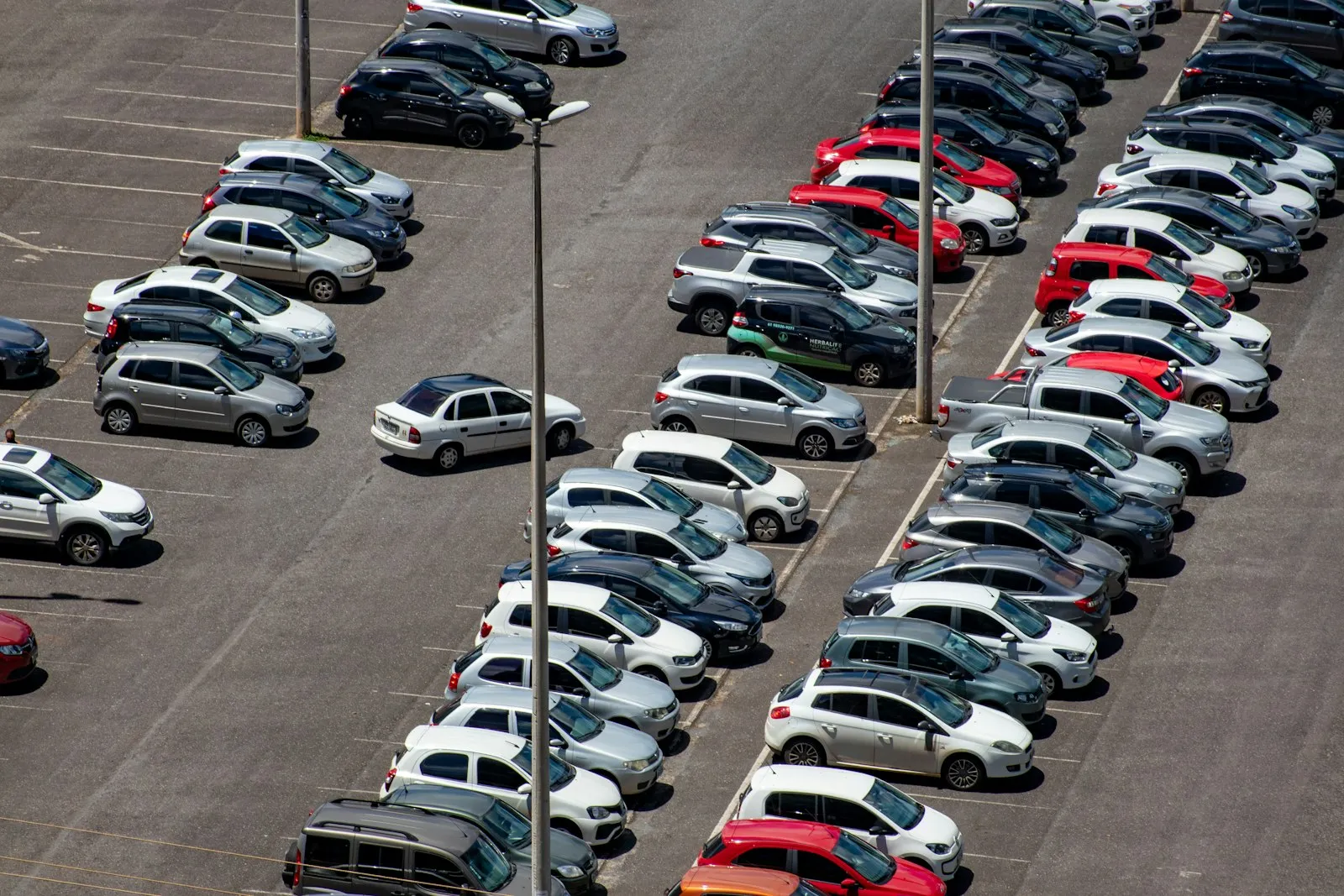
Picture a Saturday at a Queens supermarket lot, a little before noon. One driver is reversing out of a space while watching the side mirror, another is rolling down the aisle hunting for an opening, and a third has decided the empty row to the left is a shortcut. Two bumpers meet at walking speed, and everyone climbs out insisting the other person came out of nowhere. That is ordinary business for a parking lot accident lawyer, and the low speeds involved fool a lot of people into thinking the legal side must be simple too. It usually isn’t.
A Lot Is Not a Street, and the Law Knows It
Most people assume the rules of the road switch off once you leave the curb and pull into a shopping center. They don’t, but they also don’t apply in quite the same way. Vehicle and Traffic Law § 1100 says the traffic title covers public highways, private roads open to public traffic and any other parking lot. So the lot outside a big-box store on private property is not a lawless zone.
There is a catch, though, and it shapes almost every case. Under subdivision (b) of that same section, the traffic-control and turning rules apply inside a parking lot only where the local legislative body has adopted them. In practice, that means the painted arrows, the stop bar at the end of an aisle and the “one way” sign bolted to a light pole may or may not carry the force of the statute. When they don’t, fault tends to turn on general negligence: what a careful driver would have done in that spot, at that moment, with that much visibility.
The Usual Suspects: How Lot Crashes Happen
After enough of these files, the patterns become predictable. The strip-mall lot on Hillside Avenue on a weekday evening, the mall garage ramp on a December weekend, the commuter lot near a Nassau train station at 7:40 in the morning: different settings, the same handful of moves.
- Backing out into a passing car. The most common one by a wide margin. The reversing driver has limited sightlines, especially when boxed in by an SUV or a van on either side.
- Two cars backing at once. Two drivers in facing spaces reverse at the same time and meet in the middle of the aisle, each convinced the other should have waited.
- Pulling out of a space into a thru lane. A driver noses forward or swings out of a spot and into the path of someone traveling the main lane along the front of the stores.
- Cutting diagonally across empty spaces. When a section of the lot is half empty, drivers ignore the aisles entirely and slice across, arriving at angles nobody expects.
- Pedestrians walking to or from the store. People pushing carts, loading trunks, or stepping out from between parked cars are hit by drivers who were looking for a space instead of looking for people.
- Garage ramps and blind pillars. In multilevel garages, concrete columns and tight turns on the ramps hide oncoming cars until the last second.
Shopping-cart corrals and speed bumps show up in these stories too. A corral placed at the end of a row can block the view of the aisle, and a driver bracing for a speed bump is often watching the pavement instead of the crosswalk.
The Two Statutes That Follow You Into Every Lot
Whatever the local rules about arrows and stop signs, two provisions speak directly to the most common lot collisions.
VTL § 1211 says no driver may back a vehicle unless it can be done safely and without interfering with other traffic. It puts the burden on the person in reverse to make sure the move is safe before making it. Backing crashes are therefore often an uphill climb for the driver who was reversing.
VTL § 1162 covers the other half of the problem: no one may move a stopped, standing or parked vehicle until it can be done with reasonable safety. That reaches the driver who pulls forward out of a spot, the driver who eases away from the curb in the fire lane.
Pedestrians get their own protection. Under VTL § 1146, every driver must exercise due care to avoid colliding with a pedestrian and sound the horn when necessary. In a parking lot, where people are walking in the same space cars are driving, that duty is front and center. Breaking one of these rules without a valid excuse is generally enough to establish negligence in a New York courtroom.
Thru Lanes, Feeder Lanes and How Insurers Split the Pie
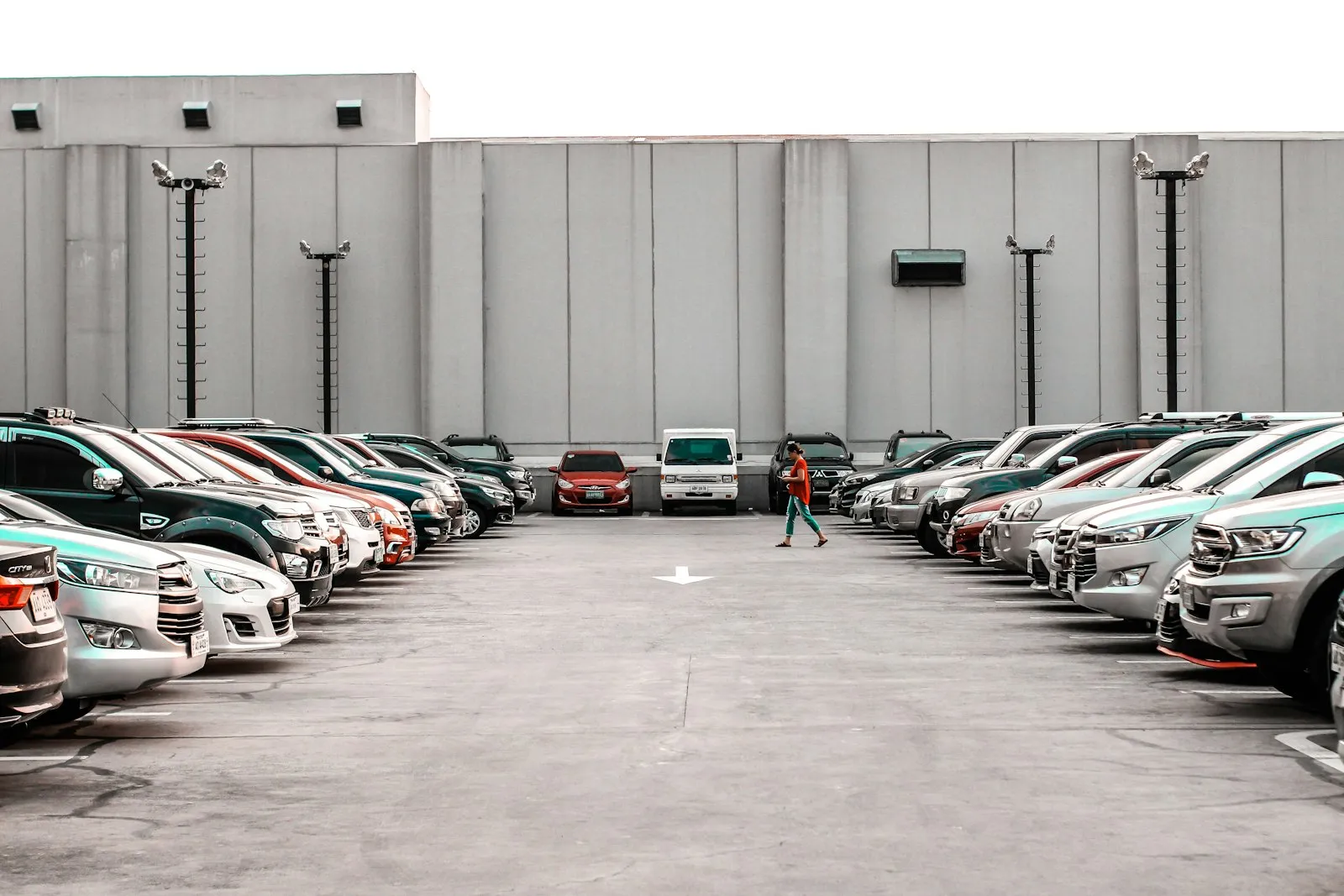
Here is something you won’t find in the statute book. Many insurance adjusters sort parking lot crashes using an informal distinction between thru lanes and feeder lanes. A thru lane is the main artery, typically running along the storefronts or around the perimeter. Feeder lanes are the aisles between rows of parked cars that empty into it.
The common practice is to treat the driver in the thru lane as having something like the right of way, and to put more of the blame on a driver exiting a feeder lane or a parking space into it. This is a habit of the claims industry, not a rule of law, and it bends with the facts. A speeding or distracted thru-lane driver gets no free pass.
Myth vs. Reality
Parking lot claims attract a surprising amount of folklore. A few of the most persistent beliefs, and what tends to be true instead:
Myth: “Parking lot accidents are always 50/50.”
Reality: there is no such rule. The state uses a pure comparative fault system, set out in CPLR § 1411, so a driver who was partly careless still collects, just trimmed in proportion to the mistake. The percentage could be 50, but it could just as easily be 10 or 90, depending on who was backing, who was moving through, how fast, and what each driver could see. Our guide to how shared fault is divided in New York walks through the math.
Myth: “The police won’t come, so the paperwork doesn’t matter.”
Reality: officers often don’t respond to a minor lot crash on private property, but that doesn’t relieve you of the reporting duty. When someone got hurt, or the repair bill on any car climbs past $1,000, each motorist in the collision owes the DMV a DMV Form MV-104 no later than 10 days after the crash.
Myth: “If they drove off, there’s nothing I can do.”
Reality: VTL § 600 requires a driver who knows or has cause to know of an accident causing injury or property damage to stop and exchange information, and that applies in a lot as much as on a boulevard. A driver who rolls away has made a separate problem for themselves. If they vanish for good, the uninsured motorist portion of a policy in your household, or MVAIC, may cover the gap.
No-Fault and the Serious Injury Line Still Apply
A crash on private property is still a motor vehicle accident for insurance purposes. No-fault coverage handles treatment costs and a slice of missed paychecks without asking which driver erred, and the application generally has to reach the insurer inside 30 days. Someone on foot who is clipped between rows generally turns to the insurer of the striking vehicle for those benefits, as our no-fault claims guide lays out.
For compensation beyond those economic benefits, though, the law generally demands an injury that clears the “serious injury” bar in Insurance Law § 5102(d). Qualifying categories include fractures, significant disfigurement, permanent consequential or significant limitations in how a body part or system works, and a medically documented injury that stops you from doing nearly everything you normally do for at least 90 of the 180 days after the crash. Low-speed crashes can produce qualifying injuries, but the medical records have to show it.
Is a fractured wrist from a pedestrian knockdown worth pursuing? Very often, yes, and fractures appear on the statutory list by name. For more on how pedestrian claims are valued, see our piece on what drives the value of a pedestrian settlement.
When the Lot Itself Is the Problem
Sometimes the drivers are only part of the story. A lot is private property, and the owner, the management company, or a hired security or maintenance contractor may bear responsibility when the layout or upkeep helps cause a crash. Situations that can raise those questions include:
- Lighting so poor that a pedestrian in dark clothing is invisible at dusk
- Faded or missing lane markings and crosswalks that leave everyone guessing about the traffic pattern
- Potholes and broken pavement that cause a driver to swerve or a walker to stumble into a lane
- A stop sign that was knocked down and never replaced at a busy aisle exit
These are premises claims rather than driving claims, and they come with a different burden. Generally, the hurt person has to prove the owner caused the defect, knew about it, or should have known because it sat in plain view for a stretch of time in which a reasonable manager would have caught and repaired it. The motor-vehicle serious injury threshold applies to the claim against a driver; a separate claim against the property owner is analyzed under premises law.
The Camera Was Watching, But Not for Long
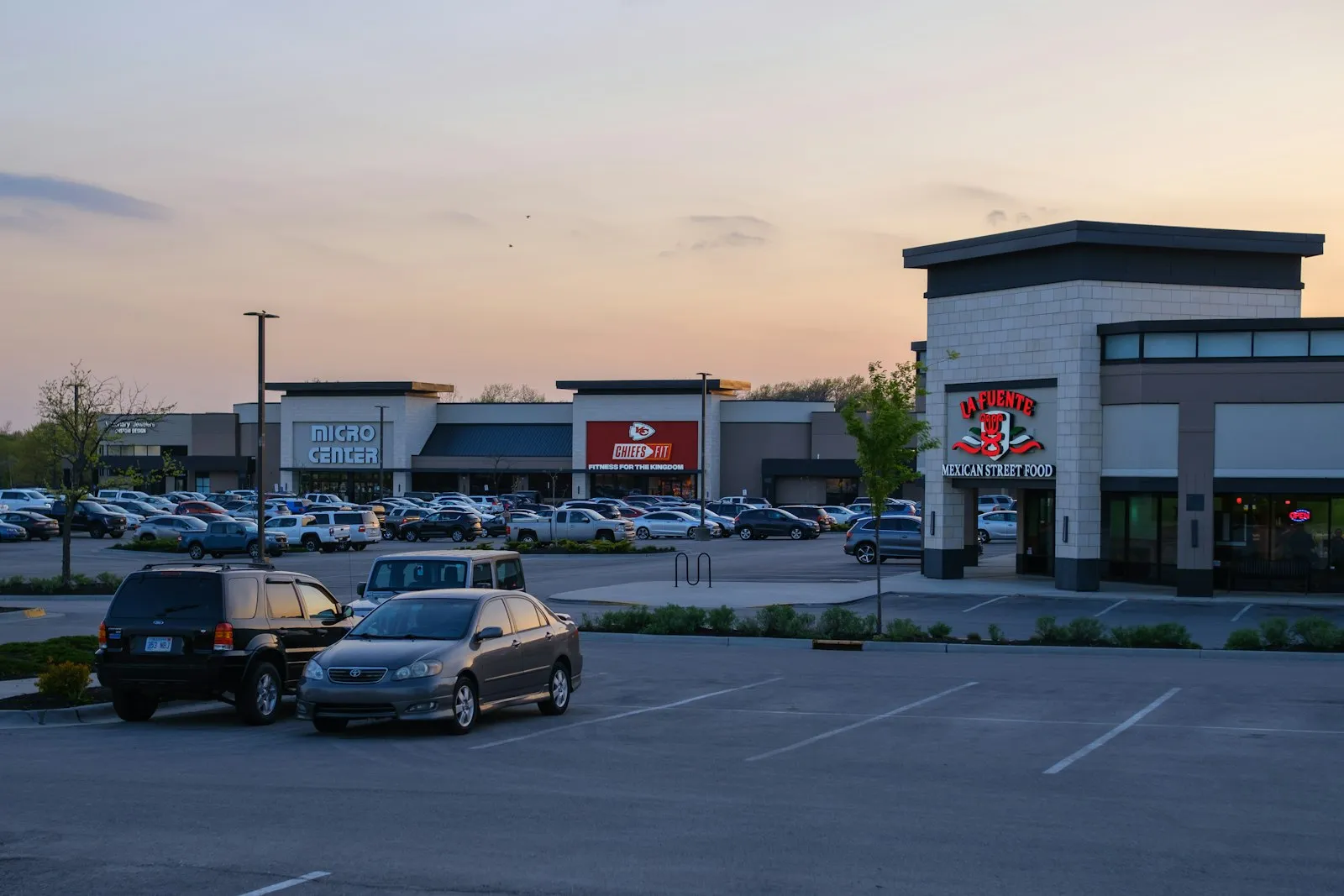
Here is the good news about modern parking lots: they are full of cameras. Store entrances, light poles, garage ramps and pay stations frequently have them. The bad news is that many systems loop and erase older video automatically, sometimes within days, and nobody at the store is going to save the clip on your behalf.
If you were hurt, a prompt written request to the store or property manager, followed by a formal preservation letter, can make the difference between a case built on footage and a case built on two conflicting memories. Our article on getting security camera footage before it disappears covers the steps in detail.
What to Do Before You Leave the Lot
- Check for injuries and call 911 if anyone is hurt; ask for police even if they may not come.
- Photograph both cars where they came to rest, the lane markings, signs, lighting and any pavement defects.
- Get the other driver’s name, license, plate, insurance card and the vehicle owner’s name if different.
- Note the store names nearest the crash and any visible cameras.
- Collect contact information from anyone who saw it happen, including employees gathering carts.
- See a doctor promptly and follow up, even if the pain seems minor that afternoon.
How Our Firm Handles These Cases
We see these collisions from Rosedale outward: lots along Merrick Boulevard, the shopping centers off Sunrise Highway, the garages near the Green Acres area and the busy retail strips of eastern Queens. We have also written about parking lot crashes along Old Country Road in Westbury, a corridor where the lots seem to stretch for miles.
A good parking lot accident lawyer spends the first days chasing evidence that won’t last, then sorting out whether the claim runs against a driver, an owner, a property company, or more than one of them. Yakov Mushiyev & Associates, a Rosedale office a short drive from countless such lots, represents people injured in parking lot and garage crashes throughout New York City and Nassau County. The firm’s results for people hurt across the region total more than $80 million. Talking with us about your crash costs nothing, we are paid only out of a win, and Attorney Yakov Mushiyev and the staff converse in English, Russian or Spanish, whether by video, in your kitchen or beside a hospital bed. You can learn more about our broader car accident practice and our representation of injured pedestrians, or simply send us a message about what happened.
On timing: a lawsuit over a lot crash with a private driver or a private property owner generally has to be filed within three years. If the lot belongs to the City or another public entity, that changes sharply, with a notice of claim generally owed within 90 days.
Parking Lot Crash FAQ
Do I need a parking lot accident lawyer for a low-speed crash?
Not every dented bumper calls for one. But if anyone was hurt, if fault is disputed, or if the property’s condition played a part, a parking lot accident lawyer can preserve footage, deal with the insurers and identify every party who may share responsibility.
Who is at fault when two cars back into each other?
Often both drivers share responsibility, since each had a duty under VTL § 1211 to back only when it was safe. The split depends on timing, speed and visibility, and under pure comparative fault each driver’s recovery is reduced by their own share.
Can I sue the store or property owner?
Possibly, if a condition on the private property such as poor lighting, a missing stop sign or broken pavement contributed to the crash, and the owner created it or had notice of it. That claim is separate from the claim against the driver.
Does no-fault cover a pedestrian hit in a parking lot?
Generally yes. A pedestrian struck by a car usually claims no-fault benefits through that car’s policy, which pays for treatment and a portion of missed income whoever was to blame, subject to the 30-day application deadline.
Visit Yakov Mushiyev & Associates
Our office is at 1 Cross Island Plaza, Suite 325, Rosedale, NY 11422, just off the Cross Island Parkway on the Queens–Nassau border. If you can’t come to us, we’ll come to you: at home, in the hospital or by video.

Talk to a Queens parking lot accident lawyer today
Yakov Mushiyev & Associates has recovered over $80 million for injured New Yorkers across the five boroughs and Nassau County. Consultations are free, available in English, Russian and Spanish, and there is no fee unless we win.
Call 718.775.3110 or contact us online for a free case review.
This article is general information, not legal advice. Every case is different. Attorney Advertising.