
There is a particular kind of phone call every parent dreads. It comes in the middle of a workday, the caller ID shows your child’s daycare, and the first words are “Everyone is okay, but…” Sometimes what follows is a scraped knee and a sticker for bravery. Sometimes it is a fall from a climbing structure, a burn from a kitchen that should have been closed off, a bite from another child that went unnoticed for too long, or a choking incident that ends in an ambulance ride to Elmhurst Hospital or Long Island Jewish.
If you are reading this, there is a good chance you have already had that call. This guide is written for you, parent to parent as much as lawyer to client. It explains what a Queens daycare injury attorney actually looks at, what New York law expects from child care providers, which deadlines are different when the injured person is a child, and what you can do this week to protect your son or daughter. If you would rather talk it through, call Yakov Mushiyev & Associates at 718.775.3110. The consultation is free, and we will tell you plainly whether we think you have a claim.

First, Take a Breath: Not Every Injury Is Someone’s Fault
Toddlers fall. Preschoolers bump heads. A good daycare can do everything right and a child can still trip on a rug and need a stitch. New York law does not make child care providers insurers of every bump and bruise, and an honest lawyer will tell you that up front.
What the law does require is reasonable supervision and a reasonably safe environment. Courts in New York generally ask whether the provider watched the children with the care a reasonably prudent parent would use in the same situation, and whether the injury was the kind of thing that adequate supervision would likely have prevented. A child who falls while running across a properly padded play area under a teacher’s eye is a very different case from a child who wanders into an unlocked kitchen, climbs an unanchored bookshelf, or is left alone with a much older group.
So the real question is not “Was my child hurt at daycare?” It is “Was my child hurt because someone at the daycare fell short of what they were supposed to do?”
How Daycares Are Regulated in Queens
Child care in Queens sits under two layers of rules, and knowing which one applies helps us figure out where the records are.
- Group child care centers in New York City are permitted and inspected by the NYC Department of Health and Mental Hygiene under Article 47 of the city Health Code. The city publishes inspection results and violations, which you can look up on the NYC Health Department child care page.
- Family day care and group family day care homes, usually run out of a provider’s residence, are licensed or registered by the New York State Office of Children and Family Services (OCFS), which also keeps a searchable record of inspections and violations.
- School-based programs, such as 3-K and Pre-K run inside public schools, bring the Department of Education into the picture, which changes the deadlines dramatically (more on that below).
These regulations cover staff-to-child ratios, background checks, safe sleep for infants, medication handling, playground surfaces, gates and outlet covers, and incident reporting. A violation of those rules does not automatically win a case, but it is often powerful evidence that the provider was not doing what it promised the state it would do.
The Injuries We See Most Often
Every case is different, but certain patterns come up again and again in daycare injury claims across Queens, from Flushing and Jackson Heights to Jamaica and Rosedale:
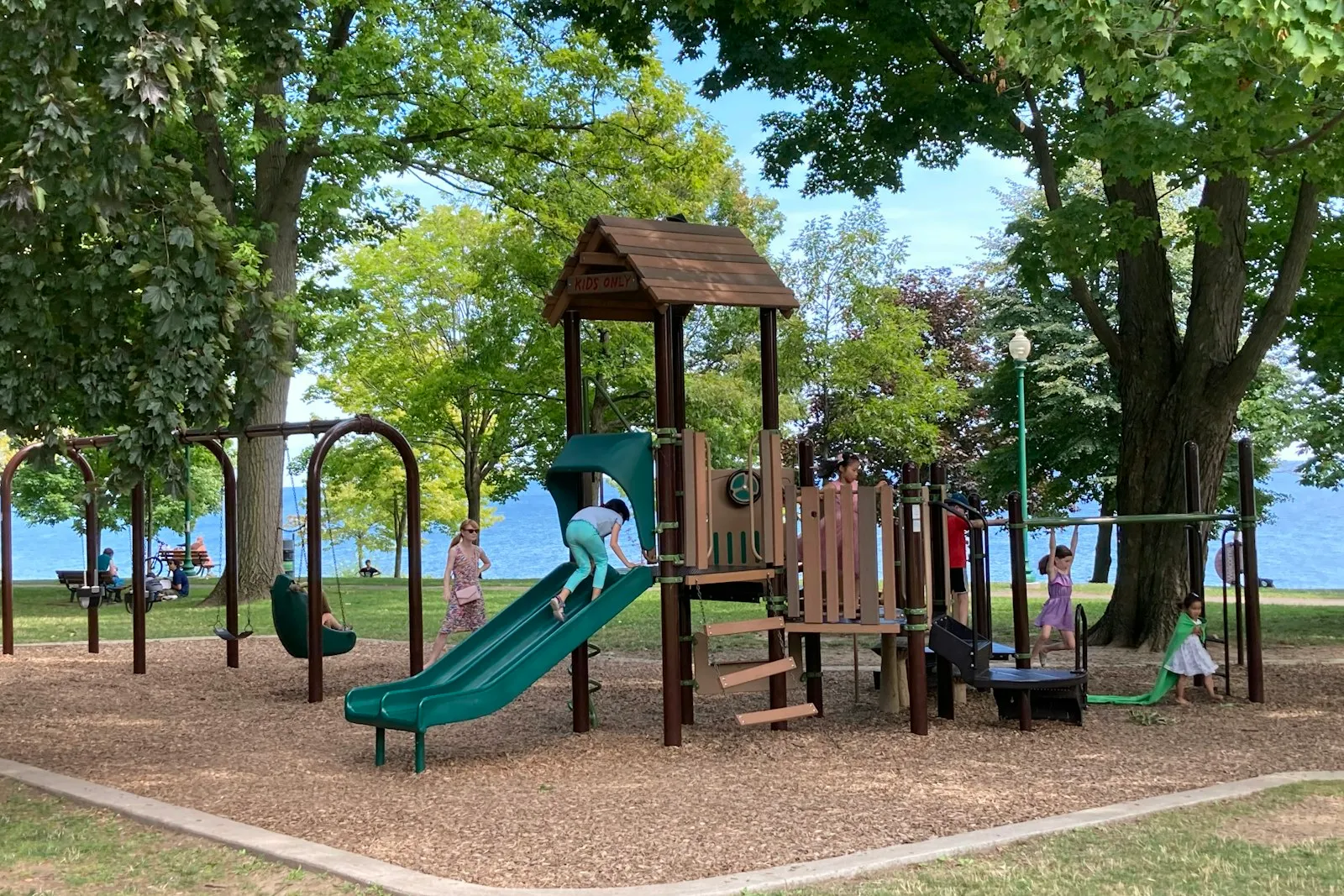
- Falls from playground equipment, changing tables or high chairs, especially when a child was left unattended for “just a second.”
- Head injuries and concussions that were not reported to the parent right away, so the child went home without being checked.
- Burns and scalds from hot liquids, radiators or kitchens that young children could reach.
- Choking and food allergy reactions, where a known allergy or a choking-hazard food was not handled according to the child’s plan.
- Bites, scratches and injuries from other children that point to inadequate staffing or a known pattern that was ignored.
- Fractures, particularly broken arms and collarbones, which can come from falls that a properly supervised room would have prevented.
- Injuries on field trips or walks, including traffic incidents and drowning risks near water.
More serious cases involve suspected abuse. Daycare staff are mandated reporters under New York’s Social Services Law, which means they must report reasonable suspicion of abuse or maltreatment. If you suspect abuse, call 911 if your child is in danger and report it to the New York Statewide Central Register. Then call a lawyer, because those cases need careful handling on several fronts at once.
What to Do in the First Few Days
Parents tend to do two things after a daycare injury: focus entirely on their child, which is right, and assume the daycare will be straight with them, which is not always right. Here is a short list that protects both your child and your claim:
- Get your child checked by a doctor, even if the daycare says it was minor. Young children cannot always describe what hurts, and some head and abdominal injuries show up late. Tell the doctor exactly how you were told the injury happened.
- Ask for the written incident report. Licensed and permitted providers are expected to document injuries. Ask for a copy the same day if you can. If they refuse, write down who refused and when.
- Write your own timeline: when you were called, who called, what they said, what time you picked up your child, and what you saw.
- Photograph the injury every day as it heals, with a date on each photo.
- Ask whether there is video. Many centers have cameras. Footage is often overwritten within days or weeks, so a written request to preserve it should go out quickly, ideally from a lawyer.
- Get names of the teachers in the room and any other parents who were at pickup and saw something.
- Do not sign anything from the daycare’s insurance company, and avoid long recorded statements until you have advice.

Deadlines Are Different When the Injured Person Is a Child
This is where a lot of families get confused, and where a short conversation with a Queens daycare injury attorney can save a case.
For most personal injury cases in New York, the statute of limitations is three years under CPLR 214. When the injured person is a minor, CPLR 208 generally pauses (or “tolls”) that clock until the child turns 18. That is a real protection, but it comes with three important catches:
- The parents’ own claim is not paused. Parents have a separate claim for the child’s medical bills and related losses, and that claim usually follows the regular three-year clock.
- Evidence does not wait. Video gets erased, staff move on, and centers close or change owners. Waiting until a child is a teenager almost always makes the case harder.
- Public programs have a 90-day notice rule. If the injury happened in a program run by the city or the Department of Education, a Notice of Claim under General Municipal Law § 50-e is generally required within 90 days. Courts can sometimes allow late notice for a child, but you do not want to depend on that.
There is also a rule that surprises parents at the end of a case: any settlement for a minor must be approved by a judge in what is called an infant compromise. The court reviews whether the amount is fair, approves the attorney’s fee, and usually orders the child’s share placed in a protected account until the child turns 18. It is an added layer of oversight designed to protect children, and we walk families through it step by step.
Who Can Be Held Responsible?
Depending on the facts, a daycare injury claim may involve more than one party:
- The daycare operator or company, for negligent supervision, negligent hiring or training, or failure to follow its own safety policies.
- The property owner or landlord, if the injury came from a building defect such as a broken step, loose railing or faulty window guard. Those claims overlap with our premises liability practice.
- A manufacturer, if a crib, high chair, gate or toy failed in a way it should not have.
- A transportation company, if the injury happened on a van or bus ride to or from the program.
Most licensed providers carry liability insurance, and in our experience the claim is usually paid by that insurer rather than by an individual teacher. Many parents feel guilty about “suing” a place their child loved. Remember that the claim is about paying for your child’s care and making sure the same thing does not happen to the next family.

A Family Day Out in Queens: Three Landmarks and What They Teach About Supervision
Many Queens daycares take children on outings, and many parents spend weekends at the same places. Each of these landmarks is a great day out, and each is a reminder of what good supervision looks like in practice.
1. Flushing Meadows Corona Park
Home of the Unisphere and the site of two World’s Fairs, Flushing Meadows Corona Park is one of the biggest parks in the city and a favorite field-trip destination. Its wide open lawns, lakes and busy pathways shared with bikes and scooters mean teachers need a head count system, a buddy system and enough adults for the group. When a child is hurt on an outing, we look at the program’s trip plan, the ratio of adults to children and whether parents signed permission forms that accurately described the activity.
2. The Queens Zoo
Tucked inside the same park, the Queens Zoo is small enough for toddlers and full of animals native to the Americas. It is also a place where little ones press against railings, climb benches to get a better look and wander off toward the next exhibit. A good chaperone plan keeps every child within sight. If an injury happens because a group was simply too large to watch, that is a supervision problem, not bad luck.
3. Queens Botanical Garden
A few minutes away on Main Street in Flushing, the Queens Botanical Garden offers gentle paths, a children’s garden and plenty of water features. Water is the hidden risk on any outing with young children. Programs should know where every fountain, pond and stream is before they arrive and plan accordingly. Drowning and near-drowning injuries are among the most serious we ever handle, and almost every one is preventable.
How We Build a Daycare Injury Case
When a family hires us, we usually start with a preservation letter demanding that the daycare keep its video, incident reports, attendance sheets, staff schedules and any prior complaints. We then request the provider’s inspection history from the city or OCFS, collect your child’s medical records, and speak with the doctors about what the injury means for the future.
For more serious injuries, such as fractures involving growth plates, traumatic brain injuries or scarring, we may bring in pediatric specialists to explain long-term effects. Children heal remarkably well in many cases, but some injuries affect development, school performance or appearance for years, and a fair settlement has to account for that.
Attorney Yakov Mushiyev and our team handle these cases on a contingency fee, which means you do not pay a fee unless we recover compensation. You can learn more about our broader personal injury practice or simply call.

Visiting Our Office From Flushing and Across Queens
Our office is at 1 Cross Island Plaza, Suite 325, in Rosedale, right off the Belt Parkway and the Cross Island Parkway. From Flushing, most drivers take the Van Wyck Expressway south to the Belt Parkway east, or the Cross Island Parkway south. If you are coming by transit with a little one in tow, the LIRR to Rosedale station is often the easiest option. We are also happy to meet by phone or video so you do not have to arrange child care just to talk to a lawyer.
Open turn-by-turn directions from Flushing, Queens in Google Maps
Frequently Asked Questions About Daycare Injuries in Queens
Can I sue a daycare in Queens if my child was hurt?
Yes, if the injury was caused by negligence such as inadequate supervision, unsafe equipment or a failure to follow safety rules. Not every injury is the provider’s fault, so the key question is whether reasonable supervision would likely have prevented it. A free consultation can help you sort that out.
How long do I have to file a daycare injury claim for my child?
For the child’s own claim, New York generally pauses the three-year deadline until the child turns 18. The parents’ claim for medical expenses usually runs on the regular three-year clock, and claims against city-run programs generally require a Notice of Claim within 90 days. Acting early protects evidence.
Did the daycare sign-in or enrollment waiver take away my rights?
Usually not entirely. Waivers and enrollment forms are read narrowly in New York, and they generally cannot excuse a provider from responsibility for its own negligence toward a young child. Bring the paperwork to your consultation so it can be reviewed.
Will my child have to testify?
Rarely, especially with very young children. Most daycare cases are proven with incident reports, video, staff testimony, inspection records and medical evidence. If testimony is ever needed, courts take special care with child witnesses.
What happens to settlement money for a child in New York?
A judge must approve any settlement for a minor through an infant compromise order. The court usually directs that the child’s share be held in a protected account until age 18, while certain medical expenses and the approved legal fee are paid at the time of settlement.
Talk to a Queens Daycare Injury Attorney Today
You trusted someone to care for your child, and something went wrong. You do not have to figure out the next steps alone. Call Yakov Mushiyev & Associates at 718.775.3110 or send us a message. We will listen, review the incident report with you, and give you an honest answer about your options.
This article is general information, not legal advice, and reading it does not create an attorney-client relationship. Every case turns on its own facts. Attorney Advertising. Prior results do not guarantee a similar outcome.