
A T-bone crash is over in a fraction of a second, but the questions it leaves behind can take months to answer. Whose light was it? Who had the right of way? Why did the side of your car fold in the way it did? If you were hurt when another vehicle drove into your door at a Bellerose intersection, a T-bone accident lawyer in Bellerose can help you turn those questions into evidence. This explainer walks through the physics, the New York traffic rules and the insurance law that decide side-impact cases, with a comparison table you can use to see where your crash fits.
We are Yakov Mushiyev & Associates, P.C., a personal injury firm based at 1 Cross Island Plaza in Rosedale, a short drive down the Cross Island Parkway from Bellerose. Consultations are free, we work on a no-fee-unless-we-win basis, and we meet clients in English, Russian and Spanish, at home, in the hospital or by video.
What Makes a T-Bone Crash Different
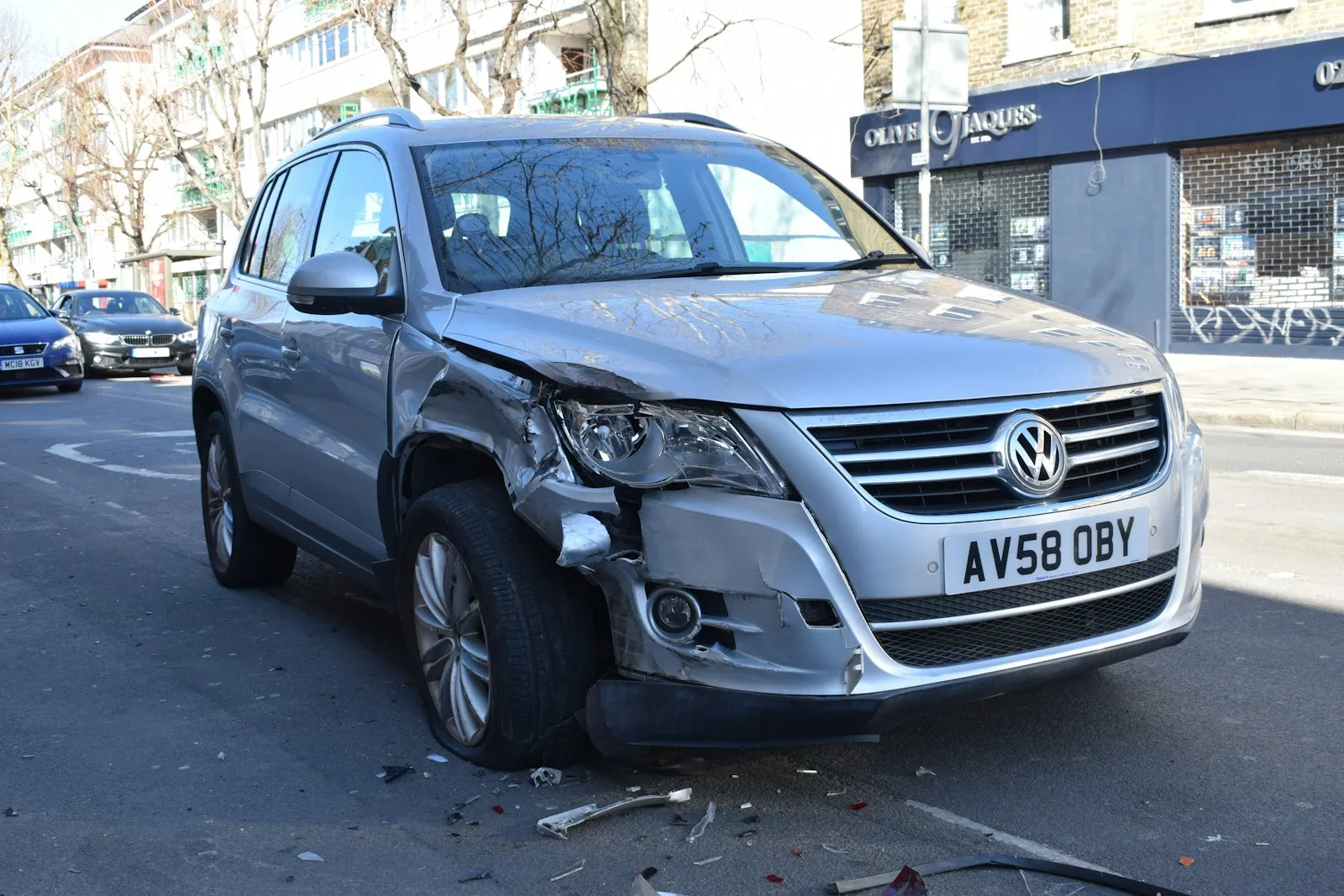
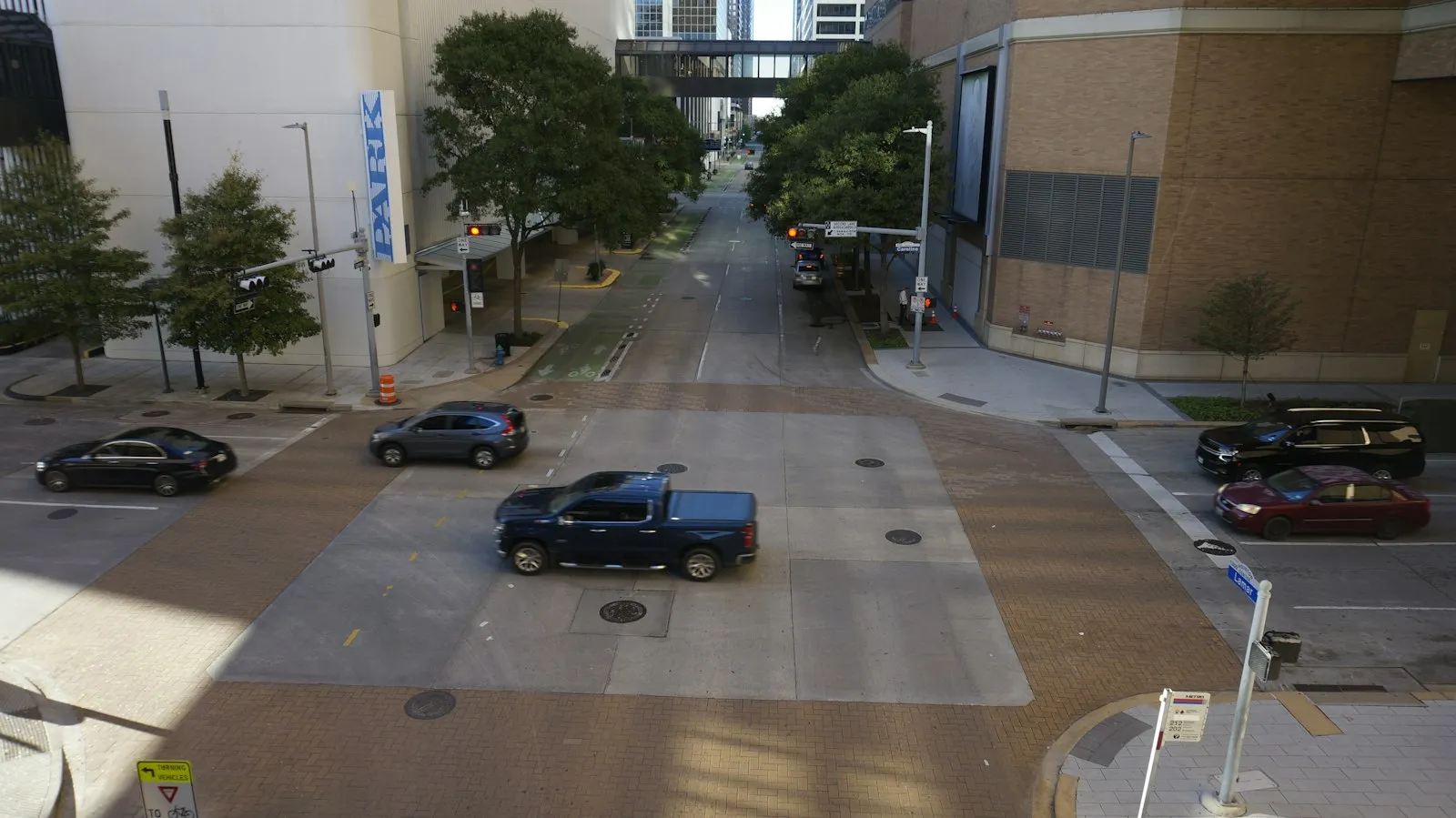
A T-bone (also called a broadside or side-impact collision) happens when the front of one vehicle strikes the side of another, forming the shape of the letter T. In eastern Queens, these crashes cluster where a busy avenue meets a residential cross street: think of drivers crossing Hillside Avenue or Jamaica Avenue from a side block, turning left across Braddock Avenue, or nosing out of a driveway onto Hempstead Avenue or Union Turnpike.
The engineering problem is simple. In a frontal or rear crash, the car has a hood or trunk, an engine bay and a crumple zone between the occupants and the other vehicle. In a side impact, the only things between you and the striking bumper are a door, a pillar, a side airbag if the car has one, and a few inches of air. Federal safety researchers at the National Highway Traffic Safety Administration have long treated side impacts as one of the most dangerous crash configurations for exactly that reason, and side-impact protection is part of federal crash testing.
Injuries we commonly see in side-impact claims
- Traumatic brain injuries and concussions from the head striking the side window or B-pillar
- Neck and back injuries, including herniated discs, from sudden lateral whipping motion
- Shoulder, rib and pelvis fractures on the side nearest the impact
- Hip and femur injuries when the door intrudes into the seating area
- Internal injuries, including spleen and liver damage, from intrusion and seat-belt loading
- Injuries to rear-seat passengers, especially children in car seats placed on the struck side
Near-side occupants (the people sitting on the side that was hit) usually take the worst of it. Far-side occupants can still be hurt as their bodies move toward the impact. That matters legally because each injured person in the car has a separate claim, and passengers almost never share any fault for how the crash happened.
Comparison Table: T-Bone vs. Other Crash Types
People often assume every crash case works the same way. It does not. The configuration of the collision changes how fault is argued, what evidence matters most and which injuries the insurer will dispute. Here is a side-by-side view.
| Factor | T-bone / side impact | Rear-end | Head-on |
|---|---|---|---|
| Typical fault picture | Disputed; turns on signal phase, stop signs and right of way | Usually presumed against the rear driver | Usually the driver who crossed the center line |
| Key New York rules | VTL §1111 (signals), §1140–§1142 (right of way, left turns, stop/yield signs) | Following too closely and safe-speed rules | Keep-right and lane rules |
| Most valuable evidence | Signal timing, video, event data recorder, witness position | Rear damage photos, dashcam | Scene measurements, debris field, EDR |
| Common injury pattern | Head, pelvis, ribs, near-side fractures | Neck and back soft-tissue and disc injuries | Severe multiple trauma |
| Common insurer argument | “Both drivers ran the light” or “you were speeding through” | “Low-impact” or “pre-existing condition” | “Sudden emergency” or medical event |
| How comparative fault shows up | Frequently, as a split-fault argument | Less often (sudden stop claims) | Sometimes (speed, lane position) |
If your crash was more of a straight-on collision, our sibling guide on head-on collisions in Bellerose covers that pattern, and the rear-end collision guide explains why those cases usually start with a presumption of fault. If the real issue is a confusing signal or turning lane, read our intersection accident guide.
The Law Behind Right of Way in a Broadside Collision
Fault in a side-impact case usually comes down to which driver had the legal right to be in the intersection. New York’s Vehicle and Traffic Law answers that in a handful of sections:
- Traffic signals (VTL §1111). A steady red means stop and stay stopped. A driver who enters on red and strikes a car crossing on green is typically the at-fault driver, but the timing must be proven.
- Uncontrolled intersections (VTL §1140). When no sign or signal controls the crossing, a driver must yield to a vehicle already in the intersection, and to the vehicle on the right when they arrive at about the same time.
- Left turns (VTL §1141). A driver turning left must yield to oncoming traffic close enough to be a hazard. Left-turn T-bones are among the most common broadside crashes on wide two-way avenues.
- Stop and yield signs (VTL §1142). A driver at a stop sign must stop and then yield to traffic on the through street. Side streets crossing Hillside or Jamaica Avenue often work this way.
Having the right of way is not a blank check. New York courts also expect every driver to use reasonable care, which means insurers will look for any sign that the driver with the green light was speeding, distracted or could have avoided the crash. That is where comparative fault comes in.
Comparative Fault, Shared Blame and the 2026 Reform
Under CPLR 1411, New York has long followed pure comparative fault: your compensation is reduced by your share of the blame, but you can still recover even if you were mostly at fault. In T-bone cases, insurers lean on this heavily, arguing that a driver who had a green light should still have seen the red-light runner coming.
Update for 2026: New York’s 2026 motor-vehicle tort reform, signed in late May 2026, changes the rules for motor-vehicle lawsuits filed on or after that date (death cases are treated differently). Under the amended CPLR 1411(b), a plaintiff whose share of fault is greater than 50%, more than the defendants’, cannot recover. The 90/180-day category of “serious injury” in Insurance Law §5102(d) was eliminated. Juries now decide fault before they decide serious injury. And pain-and-suffering damages are capped at $100,000 for plaintiffs who were driving uninsured, were convicted of impaired driving, or were committing a felony at the time. Pure comparative fault still applies to non-motor-vehicle cases such as slip and fall and construction claims.
For a broadside crash, the practical lesson is that the fault fight now matters more than ever. A split-fault argument that once only trimmed a recovery can, if the jury puts more than half the blame on you, end it. Building the right-of-way proof early is the best protection.
No-Fault First, Then the Serious Injury Threshold
New York is a no-fault state. After a T-bone crash, your own auto policy’s personal injury protection (PIP) pays reasonable medical bills and a portion of lost earnings regardless of who caused the collision, up to the basic $50,000 limit. The application must be filed within 30 days, which is one of the easiest deadlines to miss when you are recovering from a broken pelvis or a concussion. The New York Department of Financial Services regulates no-fault insurers and publishes consumer information on the process.
To step outside no-fault and sue the at-fault driver for pain and suffering, you must meet the “serious injury” threshold in Insurance Law §5102(d). Side impacts frequently produce injuries that clearly qualify, such as fractures, and others that require careful medical documentation, such as significant limitation of use of a body function or system after a disc injury.
What helps prove a serious injury
- Prompt treatment, ideally the same day, at an emergency room such as nearby Long Island Jewish Medical Center or with your own doctor
- Imaging that matches your symptoms (X-ray, CT, MRI)
- Range-of-motion testing with objective measurements
- Consistent follow-up without long unexplained gaps
- A treating physician willing to explain the link between the crash and your limitations
The Evidence That Decides Side-Impact Cases
Because a T-bone case is often a “my light versus your light” dispute, the winning file is usually the one with the most objective proof. Here is what we look for, roughly in order of how quickly it can disappear:
- Video. Storefront cameras along Hillside and Jamaica Avenues, home doorbell cameras on residential blocks, dashcams and MTA bus cameras can capture the signal phase or the moment of impact. Many systems overwrite footage within days or weeks.
- Signal timing data. The NYC Department of Transportation maintains signal records that can show the timing plan at a given intersection.
- Event data recorders. Most modern cars store pre-crash speed, braking and throttle data. A “green-light” driver doing well over the limit, or a “stopped” driver who never braked, often shows up in that data.
- Crash geometry. Where the damage sits on each car, how far the vehicles traveled after impact and where the debris landed help reconstruct speed and angle.
- Witness statements. A witness waiting at a bus stop who saw the light turn is worth more than a witness who only heard the crash.
- The police report. Officers from the NYPD 105th Precinct, which covers Bellerose, usually prepare the MV-104AN report. It is helpful, but it is not the final word on fault.
The simple version: if you were broadsided, the other side’s insurer will start building its version of the light cycle the same week. Your version should start just as early.
A Hypothetical Bellerose Broadside, Step by Step
Here’s a hypothetical to show how the pieces fit together. It is not a real case. A driver heading east on Hillside Avenue has a green light at a cross street near the Nassau line. A second driver, coming off the side street, rolls through what she later claims was a fresh green and strikes the eastbound car in the driver’s door. The eastbound driver suffers a fractured pelvis and a concussion.
- Day 1: The driver is taken to the hospital and the 105th Precinct writes a report that lists “unknown” for the signal.
- Days 2–10: Counsel sends preservation letters to nearby businesses and requests signal timing information. A doorbell camera on the side street shows the second driver passing a stop line while cross traffic is still moving.
- Week 3: No-fault forms are filed and medical bills begin flowing through PIP.
- Months 2–6: Treatment continues and records document the fracture and resulting limitations, satisfying the serious injury threshold.
- Later: With video, data and medical proof in hand, the claim against the second driver’s liability policy is presented, or a lawsuit is filed in Queens County Supreme Court at 88-11 Sutphin Boulevard in Jamaica.
In this hypothetical, the outcome hinges on footage that would have been erased within a couple of weeks. That is the most common pattern we warn people about.

Deadlines You Should Know
| Deadline | What it covers | Source |
|---|---|---|
| 30 days | No-fault (PIP) application to your auto insurer | No-fault regulations |
| 90 days | Notice of Claim if a City vehicle, MTA/NYC Transit bus or other public entity is involved | General Municipal Law §50-e |
| 1 year and 90 days | Lawsuit against a public entity after a timely Notice of Claim | GML §50-i |
| 2 years from death | Wrongful death claim | EPTL §5-4.1 |
| 3 years | Most personal injury lawsuits against private drivers | CPLR §214 |
The three-year limit under CPLR 214 sounds generous, but cases are won or lost in the first few weeks, when evidence is fresh. If a city vehicle or bus was involved, the 90-day Notice of Claim deadline under General Municipal Law §50-e is much tighter.
How Our Firm Handles a T-Bone Claim
Every side-impact case is different, but our approach follows a predictable path. We start by listening to how the crash happened and where. We send preservation requests for video and vehicle data. We help you get your no-fault claim in on time so your medical care keeps moving. We coordinate with your doctors so that your records describe your injuries accurately and completely. Then we deal with the insurers so you do not have to.
You can learn more about our broader car accident practice, see the Bellerose car accident page or start at our Bellerose personal injury hub. Common general questions are answered on our FAQ page.
Getting to Our Office from Bellerose
Our office is at 1 Cross Island Plaza, Suite 325, Rosedale, NY 11422, open Monday through Friday, 9 to 6. From Bellerose, take the Cross Island Parkway south toward the Belt Parkway. 1 Cross Island Plaza sits right off the Cross Island in Rosedale, roughly a 15 to 20 minute drive depending on traffic. If you cannot travel after a side-impact crash, that is fine: we regularly visit clients at home, in the hospital, or meet by video.
Talk to a T-Bone Accident Lawyer in Bellerose Today
If you were broadsided at a Bellerose, Glen Oaks, Queens Village or Floral Park intersection, you do not need to sort out signal phases and insurance thresholds on your own. Call a T-bone accident lawyer in Bellerose at Yakov Mushiyev & Associates, P.C. at 718.775.3110 or send us a message. The consultation is free, there is no fee unless we win, and we can speak with you in English, Russian or Spanish.
Frequently Asked Questions
Who is usually at fault in a T-bone crash in New York?
There is no automatic rule. Fault usually falls on the driver who failed to yield the right of way, such as a driver who ran a red light, ignored a stop sign or turned left in front of oncoming traffic. The other driver can still be assigned a share of fault if he or she was speeding or not paying attention, which is why evidence about signal timing and speed is so important.
Can I recover if the other driver says I ran the light?
Yes, that dispute is common in side-impact cases and does not end your claim. Video, event data recorder downloads, witness accounts and the damage pattern on both vehicles can show which story fits the physical evidence. For lawsuits filed after the 2026 reform, the stakes are higher because a plaintiff found more than 50% at fault in a motor-vehicle case cannot recover.
Does no-fault insurance cover me if I was a passenger in a car that got T-boned?
Generally yes. Passengers are usually covered by the no-fault benefits of the vehicle they were riding in, or their own household policy, depending on the circumstances. Passengers also typically have a strong liability claim, because they had no control over either car.
Which hospital is closest to Bellerose after a serious side-impact crash?
Long Island Jewish Medical Center in New Hyde Park sits right on the Queens–Nassau line and is a major trauma hospital near Bellerose. Wherever you are treated, keep copies of your discharge papers and follow-up instructions, and tell every provider that your injuries came from a car crash.
Do I have to come to Rosedale to meet with you?
No. Our office is an easy drive down the Cross Island Parkway from Bellerose, but many people with broadside injuries cannot drive for a while. We can meet at your home, at the hospital or by video, in English, Russian or Spanish.
This article is general information, not legal advice. Attorney Advertising. Prior results do not guarantee a similar outcome.