
Here is a hypothetical that plays out in some form every week around JFK. Maria works the early ramp shift. She catches an app car from her block near 130th Street, and on the approach to the airport another vehicle drifts into her driver’s lane. The impact is not dramatic, but her neck locks up and her wrist swells. Her first thoughts are not about lawyers. They are about her shift, her supervisor, and whether she can afford to miss a day. Across the terminal, a visitor from Ohio is in the back of a yellow cab when it rear-ends a car on the Van Wyck. His first thought is his connecting flight.
Neither of them is thinking about the 30-day no-fault deadline, or about which insurer pays, or about the 2026 changes to New York’s fault rules. This article is for people like them: the airport workers who live in South Ozone Park and the travelers who pass through it. It is a practical guide to what a taxi accident in South Ozone Park means when your life is tied to a flight schedule. For the full legal overview, see our South Ozone Park taxi accident lawyer page.
Two Kinds of Riders, One Set of Rules
Airport workers and airport travelers experience a cab crash very differently, but New York law treats them the same way at the start. Both are usually passengers. Both generally claim no-fault benefits, called Personal Injury Protection or PIP, from the vehicle they were riding in. PIP pays medical bills, lost earnings and other basic economic loss regardless of who caused the crash, under Insurance Law § 5102.
Because yellow cabs, green cabs, Uber and Lyft cars, black cars and limousines in New York City are licensed by the Taxi & Limousine Commission, their insurance follows TLC rules. Since March 1, 2026, TLC vehicles must carry $100,000 per person in PIP, reduced from the earlier requirement. That number matters for anyone with a long recovery ahead.
Where the two groups split is in the practical problems that follow:
| Issue | JFK worker living locally | Traveler passing through |
|---|---|---|
| Biggest immediate worry | Missing shifts, keeping the job | Missing a flight, getting home |
| Where treatment happens | Local doctors in Queens | Often back in another state |
| Hardest deadline to meet | 30-day no-fault application while working | 30-day no-fault application from out of town |
| Evidence risk | Waiting too long to report | Leaving the city before collecting details |
| Lost wages proof | Employer records and pay stubs | Out-of-state employer letters |
If You Work at the Airport: Protecting Your Paycheck and Your Claim
A lot of people in South Ozone Park build their week around JFK. Shift work, overtime and early starts mean a crash rarely happens at a convenient time, and the pressure to get back to work is real. That pressure leads to a few common mistakes.
Mistake 1: Working through the pain
Gaps in treatment are one of the first things an insurer points to. If you skip the doctor for two weeks because you could not get time off, the record looks like you were fine. Get checked the same day or the next, and keep your follow-up visits.
Mistake 2: Assuming workers’ compensation covers it
Whether a crash on your commute is work-related depends on the facts, and that question is outside the scope of this article. What matters here is that a taxi crash may open a no-fault claim and possibly a liability claim against the at-fault driver. Do not assume one system replaces the other without asking a lawyer.
Mistake 3: Missing the 30-day window
The no-fault application is due within 30 days of the accident. Between double shifts, that month disappears fast. Put it on your calendar the day of the crash, or call us and let us track it.
If You Were Flying In or Out: A Traveler’s Checklist
Travelers face a different trap. The crash happens, the cab gets towed or waved on, and twenty minutes later you are walking to a gate. By the time you are home in another state, the driver’s name, the medallion number and any witnesses are hard to find. Before you leave the scene, if you are able:
- Call 911 and ask for police and, if you have any pain, medical help.
- Photograph the taxi’s TLC license number, medallion or plate, the driver’s license card, and the damage to every vehicle.
- Screenshot your app trip if you were in an Uber or Lyft, including the driver’s name and the route.
- Get names and numbers of anyone who saw it.
- Keep your boarding pass and receipts. They help show when and where you were, and any travel costs the crash caused.
- See a doctor before you fly if you can, and as soon as you land if you cannot.
Living out of state does not stop you from bringing a New York claim. The crash happened here, and New York’s rules generally govern it. We work with out-of-town clients by phone and video, and your doctors back home can document your injuries.
The most valuable five minutes in a taxi case are the ones right after the crash. A photo of a license number taken at the curb can save weeks of searching later.
The Airport Approaches and the Racetrack: Where These Rides Happen
South Ozone Park’s two big destinations, JFK International Airport and the Resorts World / Aqueduct Racetrack complex, sit on opposite corners of the neighborhood and generate very different kinds of taxi traffic.
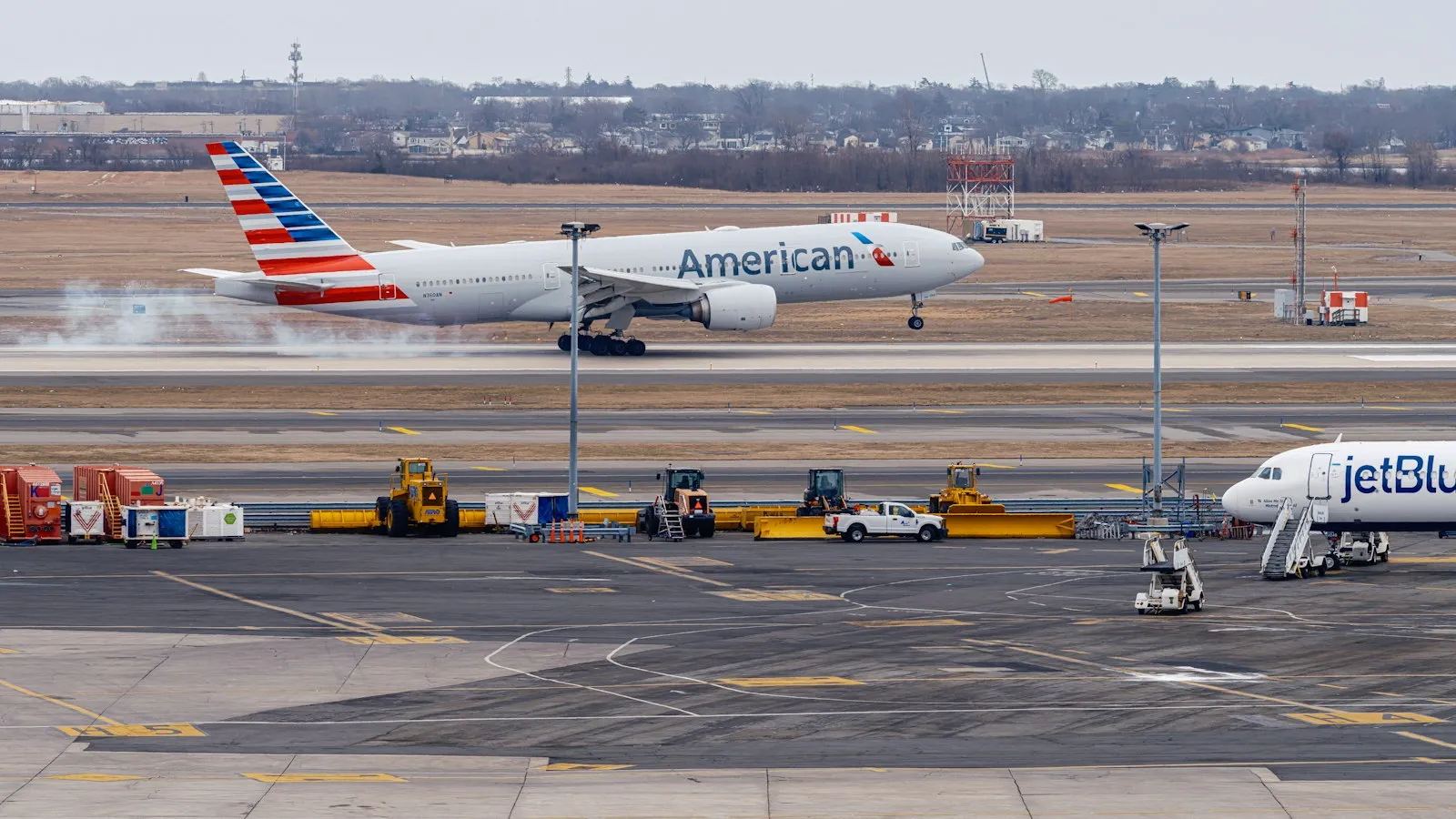
JFK International Airport is New York’s main international gateway and a major workplace for southeast Queens. Travelers come for flights; workers come for shifts that run around the clock. Taxis queue at terminal stands, app cars wait nearby for requests, and much of the traffic flows north on the Van Wyck Expressway along the neighborhood’s east side or east and west on the Belt Parkway and Conduit Avenues to the south. Merges, lane changes near exits and sudden curbside stops are the typical hazards.
Resorts World Casino and Aqueduct Racetrack, on the western side, attract people for racing, gaming, dining and shows. The A train serves the racetrack area, but many visitors ride cabs and app cars, often late at night. Pickups and drop-offs along Rockaway Boulevard and the North Conduit Avenue side bring pedestrians, idling cars and impatient drivers together on wide roads.
After the Ambulance Leaves: The Weeks That Shape Your Case
No-fault pays for your basic economic losses, but pain and suffering is a separate claim. To bring it, you must show a serious injury under Insurance Law § 5102(d). The 2026 state budget removed the old category based on missing a set number of days of normal activity. What remains are eight categories, including fracture, significant disfigurement, permanent consequential limitation of use of a body organ or member, and significant limitation of use of a body function or system.
For airport workers in particular, that change is worth understanding. Being out of work for a stretch is no longer, on its own, a path to a pain-and-suffering claim. The medical evidence has to show the nature and extent of the injury itself. That puts more weight on imaging, specialist exams and consistent treatment notes.
Fault matters more now too. For motor-vehicle lawsuits filed on or after May 26, 2026, CPLR 1411(b) bars recovery if your fault is greater than the defendant’s, and reduces it proportionally if your fault is 50% or less. As a passenger, you are rarely at fault, but if you were the driver of a car struck by a cab, or a pedestrian crossing near a terminal road, expect the insurer to argue about it.

Deadlines worth writing down
- 30 days to file the no-fault application.
- 90 days to serve a notice of claim if a city or MTA vehicle, such as a bus, was involved.
- 3 years to file a personal injury lawsuit under CPLR 214(5).
- 2 years for a wrongful death lawsuit, which in New York covers pecuniary (financial) losses only.
To report the crash yourself, the New York State DMV handles the MV-104 accident report. For background on the 2026 insurance changes, the Department of Financial Services publishes consumer guidance on auto insurance.
Questions We Hear About Airport Taxi Accidents
I live in another state. Do I need to come back to New York for my case?
Usually not for the early stages. We handle intake, records and negotiations by phone, email and video. If a case goes to trial or a deposition is required, travel may come up, and we would discuss it with you well in advance.
The cab driver said the other car caused it. Does that change who pays my medical bills?
No. As a passenger, you generally claim PIP from the vehicle you were in, whoever was at fault. Fault becomes important later, for a liability claim beyond no-fault.
How much no-fault coverage does a taxi or Uber have?
TLC-licensed vehicles, including yellow cabs and app cars, must carry $100,000 per person in PIP as of March 1, 2026.
I missed two weeks of work but have no broken bones. Can I sue?
Lost time alone is no longer a serious injury category after the 2026 changes. You may still qualify under another category, such as a significant limitation of use of a body function or system, depending on your medical findings. No-fault should still cover lost earnings within its limits.
I was hit by an MTA bus near the airport, not a taxi. Is anything different?
Yes. Claims against NYC or MTA vehicles require a notice of claim within 90 days, which is far shorter than the general three-year lawsuit deadline.
How long do I have to sue the taxi driver?
Generally three years from the crash for personal injury. Do not wait that long, though; evidence like video and trip data can disappear much sooner. Our general FAQ page covers more timing questions.
South Ozone Park Neighborhood Questions
How close is South Ozone Park to JFK?
Very close. The neighborhood lies directly north of the airport, separated from it by the Belt Parkway and the Conduit Avenues.
How do people get to the airport without a car?
Many take the A train, buses, or a cab or app car. The AirTrain JFK connects to the A train at Howard Beach and to the subway and LIRR at Jamaica.
What neighborhoods are next to South Ozone Park?
Ozone Park to the north, Richmond Hill and South Richmond Hill to the northeast, Jamaica to the east across the Van Wyck, and Howard Beach to the southwest. If you were hurt in Jamaica, see our Jamaica taxi accident page.
What are the busiest roads for taxis here?
The Van Wyck Expressway, the Belt Parkway, North and South Conduit Avenues, Rockaway Boulevard and Lefferts Boulevard carry most of the cab and app-car traffic.
Which hospital is nearby?
Jamaica Hospital Medical Center, on the Van Wyck north of the neighborhood, is one of the closest major hospitals. In an emergency, call 911.
Where would a lawsuit be filed?
South Ozone Park is in Queens County, so cases are typically filed in Queens County Supreme Court. Learn more about our borough-wide work on our Queens accident lawyer page.
Let Us Handle the Paperwork While You Handle Recovery

Whether you are back on the ramp next week or back home three states away, you should not have to chase insurers on your own. Yakov Mushiyev & Associates, P.C. offers a free case review, consultations in English, Russian and Spanish, home, hospital and video visits, and no fee unless we win. Our office is at 1 Cross Island Plaza, Suite 325, Rosedale, NY 11422, just on the other side of JFK.
Call 718.775.3110 any time, day or night, or send us a message. You can also read more about our car accident practice.
Attorney Advertising. This is general information about New York law, not legal advice, and reading it does not create an attorney-client relationship. The scenarios described in this article are hypothetical. Prior results do not guarantee a similar outcome.