
A crash can damage your vehicle and injure you, but those losses involve different claims. Understanding property damage versus personal injury claims starts with the distinction: a property damage claim may seek payment for repairs or destroyed property, while a personal injury claim may seek compensation for medical expenses, lost wages, and pain and suffering. Both may arise from the same accident.
It’s natural to focus first on getting your vehicle repaired and managing the immediate disruption. But vehicle damage and effects on your health involve different losses, evidence, and insurance considerations. Resolving one claim does not automatically resolve the other.
This article explains what each claim may cover, how liability can affect compensation, and which records may help document your losses. It also explains how property damage and injury claims can proceed together, giving you a clearer picture before deciding what to do next.
Key Takeaways
- Separate vehicle and other property losses from harm to your health; each follows a different path to compensation.
- Repair costs or a vehicle’s pre-accident value may shape property compensation, while injury claims can account for medical care, missed work, and pain and suffering.
- Fault affects both types of claims, so preserve records that help show how the accident happened and what it cost you.
- Medical records and repair documentation serve different purposes, but together they can help present the full impact of a crash.
- When an accident causes injuries and property damage, legal representation can help address both parts of the claim.
What Types of Compensation Are Available for Personal Injury & Property Damage Claims?
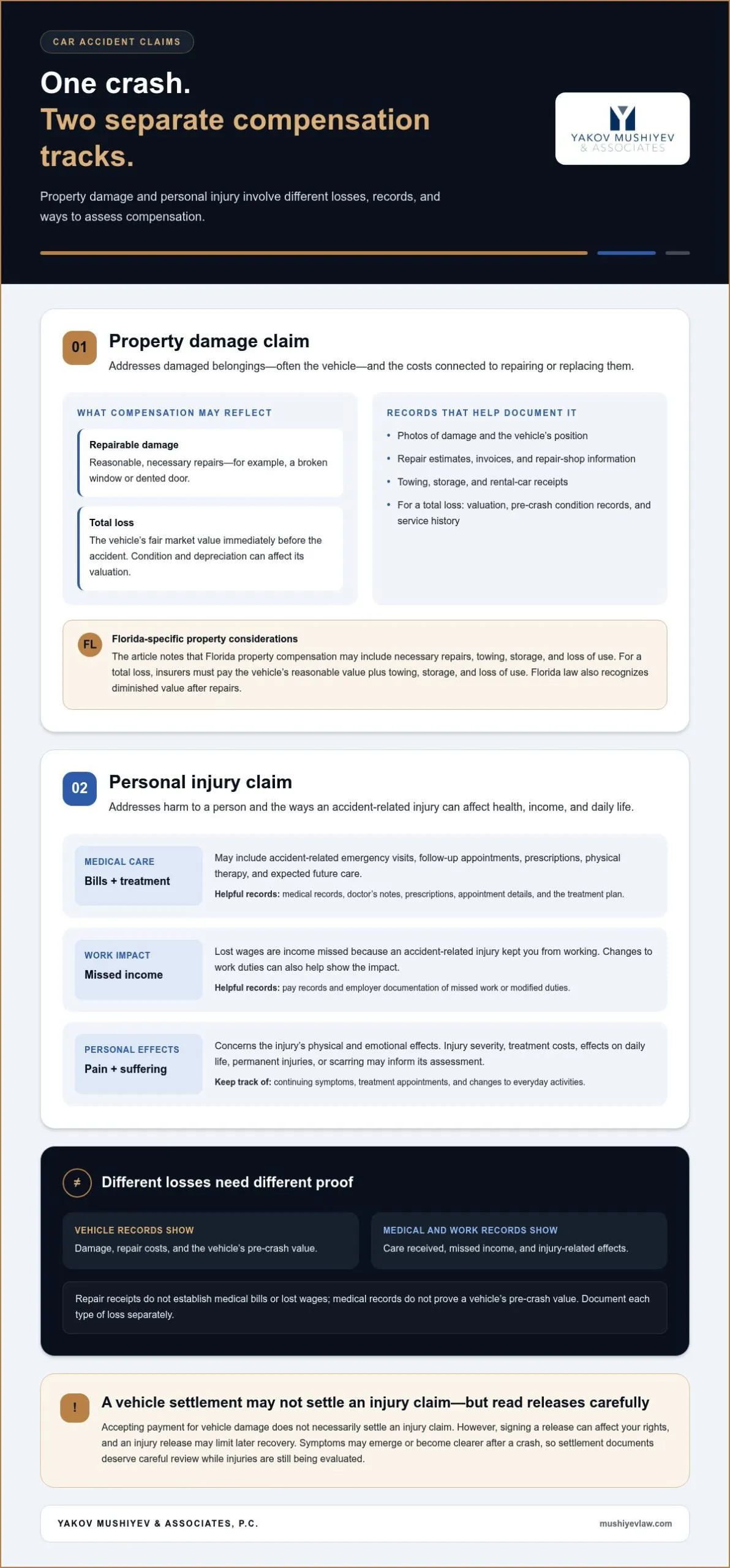
A collision can lead to separate losses, including vehicle damage, medical bills, missed work, and physical pain. A property claim addresses damaged belongings; an injury claim addresses harm to a person.
Vehicle Repair and Replacement Costs
A property damage claim may seek reasonable repair costs or the vehicle’s fair market value. The distinction matters when repair estimates approach or exceed the vehicle’s pre-crash value.
For repairable damage, such as a broken window or dented door, the claim may focus on necessary repairs. If the vehicle is a total loss, compensation may instead reflect its fair market value immediately before the accident. The vehicle’s condition and depreciation can affect its valuation. An insurer may consider estimates, photographs, and repair-shop information when evaluating the damage.
In Florida, a repaired vehicle’s claim may include necessary repairs, towing, storage, and loss of use. For a total loss, Florida insurers must pay the vehicle’s reasonable value, plus towing, storage, and loss of use. Florida law also recognizes diminished value after repairs. These state-specific rules show why location can affect what property compensation covers.
Property compensation is distinct from injury compensation. Repair receipts do not establish medical bills or lost wages, just as medical records do not prove a vehicle’s pre-crash value. Document each type of loss separately.
Documenting Vehicle Damage and Costs
Documentation helps connect the claimed amount to the collision. Photograph dents, scratches, broken windows, and the vehicle’s position, then save repair estimates, invoices, towing bills, and storage receipts.
If an insurer considers the vehicle a total loss, keep the valuation and records describing its pre-crash condition. Service records can show its maintenance history, while photographs may capture damage an estimate does not fully explain. Save rental-car receipts and other costs directly related to the damage.
Deadlines depend on the state and claim type. In Ohio, the Ohio Legislature provides a general two-year limit for personal injury claims from a car accident and a general two-year limit for property damage claims. A settlement discussion does not remove the need to understand the applicable filing deadline.
Accepting payment for vehicle damage does not necessarily settle an injury claim, but signing a release can affect your rights. Read settlement documents carefully before signing, especially while injuries are still being evaluated. Symptoms may emerge or become clearer after a crash, and an injury release may limit later recovery.
Consider legal representation when fault is disputed, injuries need ongoing care, or an insurer challenges the value or scope of your losses. An attorney can negotiate over injury and property compensation and represent you in court if needed. A free consultation should not be assumed; focus on whether the claim’s evidence, settlement terms, and deadlines need legal attention.
Compensation for medical bills, lost wages, and pain and suffering
A car accident can affect your health, income, and daily life long after your vehicle is repaired. An injury claim may seek compensation for personal losses connected to another party’s negligence.
Medical Bills and Treatment
Medical expenses are costs for care related to an accident injury. Prompt treatment helps document the connection. An emergency visit, follow-up appointments, prescriptions, and physical therapy can each generate records and bills that show what care you received and how the injury affected you.
Seek medical attention promptly, even if symptoms seem minor after a collision. Some injuries, including concussions and whiplash, may not be immediately apparent. Keep medical records, doctor’s notes, prescriptions, and appointment details together. Follow-up visits and your doctor’s treatment plan can also document continuing symptoms and care.
Future Injury-Related Losses
Future injury-related losses include expected medical expenses and other effects that continue after initial treatment. They matter because settling before understanding an injury’s longer-term effects may leave important costs out of the claim.
A treatment plan may involve future procedures, rehabilitation, or ongoing care. Medical records and treatment history can help explain how those needs relate to the accident. For example, a person with a broken bone may need follow-up care after leaving the emergency room. The full course of treatment can affect how the claim is assessed.
Injuries can also affect your ability to work or manage everyday tasks. Keep records of changes, such as missed shifts, modified duties, and treatment appointments. An injury settlement should account for available information about current needs and future effects, not just the first bill.
Lost Wages and Pain and Suffering
Lost wages are income missed because an accident-related injury kept you from working. Pain and suffering concerns the injury’s physical and emotional effects. Both matter because an accident’s costs can extend beyond medical bills.
Evidence of lost income can include pay records and employer documentation of missed work. Injury severity, treatment costs, and effects on daily life may inform the broader assessment. Permanent injuries or scarring may also affect how the harm is evaluated. For example, someone recovering from a concussion may have treatment needs and miss work.
The evidence for property losses differs from the evidence for injury losses: repair invoices document vehicle damage, while medical records and income documents relate to a person. Keep records organized by claim. If treatment is ongoing, understand the extent of the injury before signing a settlement release, because a full release may limit further claims arising from the accident.
Differences between personal injury and property damage claims
One crash can lead to two distinct claims: one for harm to a person and another for damaged property. Knowing which losses belong in each claim helps you organize evidence and understand what an insurer is evaluating.
A property damage claim seeks compensation for physical damage to a vehicle or other belongings. It may involve repair or replacement costs and personal items damaged in the crash. A bodily injury claim concerns injuries to people in a vehicle or elsewhere. Depending on the harm, it may include medical bills, lost wages, and pain and suffering.
For example, if a driver’s car is damaged and a passenger sustains a concussion, the vehicle estimate supports the property claim. The passenger’s medical records and evidence of missed work support the injury claim. Both claims arise from one accident, but involve different losses and documentation.
Insurers may assign separate adjusters to property and injury claims. A vehicle settlement may resolve repair costs while the injury claim remains open. Read any release carefully because its wording can affect which claims you may pursue later. The written agreement defines the scope of the settlement.
Auto insurance requirements vary by state and coverage type. Property damage liability coverage addresses damage to someone else’s property, while bodily injury liability coverage addresses injuries to other people. Policy limits cap the insurer’s payment under that coverage; they do not determine the total value of every claim.
A property damage claim arising from an accident that also caused injuries seeks compensation for damaged property, such as a vehicle, phone, or other personal items. It remains distinct from the bodily injury claim, even when both involve the same driver, crash, and insurers.
Keeping records for each claim separate can make settlement discussions clearer. Label repair estimates, towing invoices, and photographs as property evidence; keep medical bills, doctor’s notes, and wage records with injury documents. A personal injury attorney can help assess how the claims interact when liability is disputed, a release covers multiple losses, or an offer leaves some harm unresolved.
Investigating fault and gathering evidence
Evidence helps establish how a collision happened, which losses followed, and how liability may be assessed. Property and injury claims rely on some of the same facts, but each needs records tied to its specific losses.
Evidence for Each Claim
Evidence for both claims combines details of the accident with records of the resulting damage or injury. A police report, witness statement, or available video may help explain how the crash happened. Medical records, doctor’s notes, and prescriptions document injury and treatment, while photographs and repair invoices document property loss.
For example, a witness may describe a driver running a stop sign, while medical records document treatment after the collision. Together, these records may support liability and the link between the crash and an injury. Evidence of pain and suffering can include documented symptoms and treatment.
Investigators may compare witness accounts, police reports, traffic laws, and available footage to assess how the collision occurred. A lawyer can evaluate whether these records support liability and identify unanswered questions, such as which vehicle entered an intersection first.
Proving Property Losses
Evidence of property loss shows what was damaged and the reasonable cost of repair or replacement. Photograph each damaged area, then keep repair estimates, invoices, and receipts for towing or storage. These records help connect claimed expenses to the collision.
If the vehicle may be a total loss, keep valuation information and records describing its pre-crash condition. An insurer may review photographs, repair-shop details, and estimates when deciding whether repairs are practical. For personal items damaged inside the vehicle, photograph each item and keep purchase or replacement records if available.
Clear records matter when the extent of damage is disputed. A close-up photograph of a broken window shows visible damage, while an invoice identifies the repair performed. Keep original files and copies together so dates, estimates, and payments are easy to compare.
Organizing Evidence and Protecting Claims
Organized evidence separates property costs from injury documentation and makes each claim easier to assess. After an accident, seek medical attention, photograph the scene and vehicle, collect witness details, and save related receipts. Keep medical records, treatment notes, and proof of missed income in a separate file.
Use a dated timeline to record appointments, repair estimates, insurer communications, and changes in symptoms. Don’t post about the accident, injuries, health, or case on social media. Set your accounts to private and ask friends not to tag you. Keep messages and letters from insurers, and don’t sign a release without understanding which losses it covers.
If someone’s account conflicts with yours, note the specific disagreement and identify evidence that may help resolve it, such as nearby video or an independent witness. A lawyer can gather records, examine evidence of liability, and connect the collision to claimed injuries. That work can clarify whether the available evidence supports both property and injury claims.
Attorneys handling injury and property damage claims together
Yes. Property damage and personal injury claims can be pursued at the same time after one accident. They address different losses, so an attorney may negotiate vehicle damage while gathering evidence for medical bills, lost wages, and pain and suffering.
Coordinating both claims helps keep the full impact of the crash in view. An insurer may offer payment for a damaged vehicle before you understand the extent of treatment you need. Property and injury settlements involve different records and may progress separately. A lawyer can review how proposed settlement language affects each claim before you sign.
An injury attorney can consider evidence across both claims without treating them as interchangeable. A police report may help establish how the collision occurred, while a repair estimate documents vehicle damage. Medical records and wage documentation support injury-related losses. Together, these records help explain what the accident caused and which compensation relates to each loss.
Insurance negotiations can raise issues that affect both claims. If the other driver disputes responsibility, witness statements, available video, and the police report may matter to both property and injury discussions. If you need the vehicle for work, repair delays may also affect daily life. An attorney can track those details while keeping vehicle costs distinct from injury damages.
Legal representation can be particularly useful when liability is contested, injuries require continuing care, or an insurer challenges the value of a loss. An attorney can negotiate with insurers and represent you in court if necessary. Most auto accident claims settle, but careful evidence preparation supports informed decisions if negotiations stall.
Ask what claims a proposed release resolves. A document settling only vehicle damage may differ from one that releases all claims arising from the crash. This is where the distinction between personal injury and property damage matters: one concerns harm to a person, the other damage to property. Keep copies of each offer, release, repair invoice, and medical record.
If you’re weighing an offer or managing both claims, discuss your accident claims with an attorney who can review the evidence, settlement terms, and injury-related losses.
Yakov Mushiyev & Associates, P.C: Car Accident Legal Representation
Yakov Mushiyev & Associates, P.C. represents people injured in car accidents. If you’re dealing with disputed liability, ongoing treatment, or insurance negotiations involving vehicle damage and bodily injury, the firm can help you understand your claims and settlement terms.
The firm also represents people injured in truck and motorcycle accidents, as well as slip and fall cases. Each situation calls for evidence connecting the incident to the losses claimed. Organizing medical records, repair documents, and insurer communications can support a clearer review of your case.
If you need help assessing an accident claim, contact Yakov Mushiyev & Associates, P.C to discuss your situation.
Take the Next Step With Clarity
Decisions after an accident can shape how you move forward. Understanding property damage versus personal injury claims can help you recognize when a settlement deserves closer attention and when legal guidance may help protect your interests.
Before agreeing to terms, consider what the document resolves and whether you understand its scope. If you have questions about responsibility, the value of your losses, or the effect of a release, you don’t have to interpret the language alone. A focused review can help you understand your options and decide how to proceed.
Yakov Mushiyev & Associates, P.C. can discuss your accident-related concerns and the options relevant to your situation. Contact Yakov Mushiyev & Associates, P.C. to start a conversation about your next steps. You deserve to make decisions with a clear view of what they mean, and to move ahead with confidence.
Frequently Asked Questions
What Is Bodily Injury?
Bodily injury means physical harm to a person, such as a fracture, concussion, or whiplash after a collision. An injury claim may also address emotional harm connected to the incident. Treatment records can document a broken bone, while notes about ongoing symptoms can show how recovery affects daily activities. The claim concerns harm to a person, not damage to a car or other belongings.
How Do I Prove My Losses?
Match each claimed loss with records showing its cause and impact. Organize medical bills with treatment notes, wage records with dates missed from work, and repair invoices with vehicle photographs. In Rosedale, Rochdale, or elsewhere in Queens, keep insurer communications and a dated timeline of appointments, repairs, and expenses. Clear records help explain how the accident led to each claimed loss.
What Counts Toward Property Damage Calculations?
Property damage calculations may include reasonable repair costs or, for a destroyed vehicle, its fair market value immediately before the accident. Related towing and storage costs may also matter, along with damaged personal items. An estimate for a cracked headlight supports repair costs, while photographs and receipts can document a broken phone. A vehicle’s condition and depreciation can affect its value, so keep records describing its pre-crash state.
Why do some attorneys handle one or the other, but not both?
Some attorneys focus on injury cases, property disputes, or particular accident types. Each claim requires different records and valuation work: medical documentation supports bodily harm, while repair estimates or property valuations support damage to belongings. An attorney’s practice focus may determine which matters they handle. Injury and property claims can still arise from one accident, and an attorney may negotiate over both when the representation covers those losses.
Why wouldn’t a lawyer handle both claims?
A lawyer may handle only one claim if the work falls outside the agreed scope of representation or the lawyer’s practice focus. Property damage may be addressed directly with an insurer, while injury negotiations involve medical and income records. Before hiring counsel, clarify in writing which claims the representation covers and who will manage any separate property discussions. This helps prevent confusion about the work being done and the losses being pursued.
What is a personal injury claim, and what damages can it cover?
A personal injury claim seeks compensation for harm to a person caused by another party’s negligence or wrongdoing. Depending on the injuries and supporting evidence, damages may include medical expenses, future treatment, lost wages, pain and suffering, and the effects of permanent injury or scarring. For example, a worker who misses shifts during recovery may document lost income alongside medical care. Evidence should connect each claimed loss to the injury.
How do property damage and personal injury claims differ?
Property claims address damage to belongings, while personal injury claims address harm to a person. The distinction affects both valuation and proof: a repair estimate concerns a vehicle, while treatment records support an injury claim. The claims can arise from the same crash yet proceed separately, with different documentation and timelines. Understanding property damage versus personal injury claims helps explain why a vehicle settlement does not necessarily resolve every injury-related loss.
What evidence is needed for property damage versus personal injury claims?
Property claims commonly rely on photographs, repair estimates, invoices, valuation information, and receipts for related expenses. Injury claims rely on medical records, doctor’s notes, prescriptions, witness accounts, and evidence of missed income. A police report or available video may help establish how the accident happened. Keep originals and organize documents by type and date, so a repair invoice is not confused with evidence of treatment or lost wages.
These answers provide general information, not legal advice for a specific case. The facts and applicable law may affect how an individual claim is evaluated.