
If a brown package car clipped your bumper on Hillside Avenue or a UPS tractor-trailer drifted into your lane on the Cross Island Parkway, you are suddenly dealing with words most people never had a reason to learn: respondeat superior, no-fault, serious injury, spoliation. A UPS Truck Accident Lawyer in Bellerose uses those words every day. You shouldn’t have to. This guide translates the vocabulary of a UPS crash claim into plain English, one term at a time, so you understand what is happening to your case and why each step matters.
We wrote it for people in Bellerose, Bellerose Manor, Glen Oaks, Floral Park and Queens Village — neighborhoods where UPS trucks are part of the daily traffic on Jamaica Avenue, Braddock Avenue and the side streets in between. Read it straight through or jump to the term you are wondering about.

Why a Glossary Approach Works for UPS Crash Claims
Insurance adjusters and defense lawyers speak a dialect. When an adjuster says your claim is “under review pending a threshold determination,” that sentence carries real consequences, but it is designed to sound routine. Once you know what the words mean, you can spot when someone is steering you toward a quick, low settlement, and you can ask better questions of your own lawyer.
A UPS case also has a few features that ordinary car-crash claims don’t. UPS is one of the largest private employers in the country, its package-car drivers are generally company employees rather than independent contractors, and its vehicles are loaded with telematics that record how the truck was driven. Each of those facts changes the vocabulary of the case. Let’s go through it.
Part One: Terms About Who Is Responsible
Respondeat superior
Latin for “let the master answer.” In plain English: an employer is legally responsible for the careless acts of an employee who is doing their job. Because UPS generally employs the drivers of its familiar brown package cars directly, a driver who runs a stop sign on 243rd Street while making deliveries is typically acting within the scope of employment. That usually means the claim runs against UPS itself — and its far larger insurance resources — not just the individual driver.
Scope of employment
The boundary of respondeat superior. If the driver was on the route, on the clock, or doing something reasonably connected to the job, the employer is on the hook. Defense lawyers sometimes argue a driver was on a “frolic” — a personal detour unrelated to work. With a marked UPS vehicle in the middle of a delivery day, that argument is usually a long shot, but it is one reason we collect route and timing data early.
Negligent hiring, training or supervision
A separate theory that focuses on the company’s own decisions: did it put a driver with a bad record behind the wheel, skip training, or ignore warning signs? These claims matter most when a driver’s conduct was so far outside the job that respondeat superior is disputed, or when the evidence shows a pattern rather than a one-time mistake.
Third-party defendant
Anyone besides UPS and its driver who may share fault — a contractor who loaded a trailer badly, a repair shop that did faulty brake work, another motorist who cut the truck off, or a property owner whose blind-corner hedge hid a stop sign. Identifying every responsible party is part of what a Bellerose truck accident lawyer does in the first weeks of a case.
Part Two: Terms About Insurance and Payment
No-fault (PIP)
New York is a no-fault state. Under Insurance Law §5102, Personal Injury Protection pays your reasonable medical bills and a portion of lost earnings regardless of who caused the crash, with a basic limit of $50,000. If you were in a car, your own policy is usually the starting point. If you were a pedestrian struck by a UPS truck, the truck’s coverage generally pays your no-fault benefits.
No-fault application (the 30-day form)
The application for no-fault benefits must generally be filed within 30 days of the crash. Missing it is one of the most common — and most avoidable — mistakes we see. Filing it does not waive your right to sue anyone; it just keeps your medical bills paid while the bigger case develops.
Serious injury threshold
The gate you must pass through to sue a driver in New York for pain and suffering. The statute lists categories such as fracture, significant disfigurement, permanent loss of use of a body part, and significant limitation of use of a body function or system. Medical documentation — MRI findings, range-of-motion testing, consistent treatment — is what proves it. The adjuster on a UPS claim will evaluate your file through this lens from day one.
Update for 2026: New York’s motor-vehicle tort reform, signed in late May 2026, changes several of these terms for motor-vehicle lawsuits filed on or after its effective date (it does not apply to death cases). The 90/180-day category of serious injury was eliminated; juries now decide fault before deciding serious injury; under amended CPLR 1411, a plaintiff whose share of fault is greater than 50% cannot recover; and pain-and-suffering awards are capped at $100,000 for plaintiffs who were driving uninsured, were convicted of impaired driving, or were committing a felony. If your crash happened before the change, ask us how timing affects your case.
Basic economic loss
The $50,000 bucket no-fault covers. Anything above it — say, lost wages from a long recovery, or medical bills after the PIP limit runs out — can be pursued from the at-fault party as “excess economic loss,” even if you do not meet the serious injury threshold for pain and suffering.
Self-insured retention / third-party administrator
Large companies often handle a slice of their own claims before commercial insurance kicks in, and they frequently use outside claims administrators to do it. Practically, it means the person calling you may not work for a household-name insurer and may not be in New York. Their job is the same as any adjuster’s: close the file for as little as possible. Be polite, take their name, and don’t give a recorded statement before talking to counsel.
Part Three: Terms About Evidence
Telematics
Data systems that track a vehicle’s speed, braking, seat-belt use, door openings, idling and location. UPS has been known for years for using this kind of technology to manage its fleet. For an injured person, telematics can show whether the driver was speeding down Jamaica Avenue, braked late, or was backing up without a spotter. That data does not last forever, which brings us to the next term.
Preservation (spoliation) letter
A formal written demand that a company keep specific evidence — telematics downloads, dash-camera footage, driver logs, maintenance records, the handheld delivery device’s timestamps. “Spoliation” is the destruction of evidence; if a company destroys material after it was put on notice, a court can impose penalties. Sending this letter early is one of the most valuable things a lawyer does in a truck case.
Hours of service (HOS) and ELD
Federal rules in 49 CFR Part 395 limit how long commercial drivers may drive and work. Electronic Logging Devices (ELDs) record that time. These rules apply most directly to UPS’s interstate tractor-trailers, the ones you see on the Cross Island and Grand Central. Driver qualification rules (Part 391) and inspection and maintenance rules (Part 396) round out the federal picture, and the FMCSA publishes all of them.
Police report (MV-104)
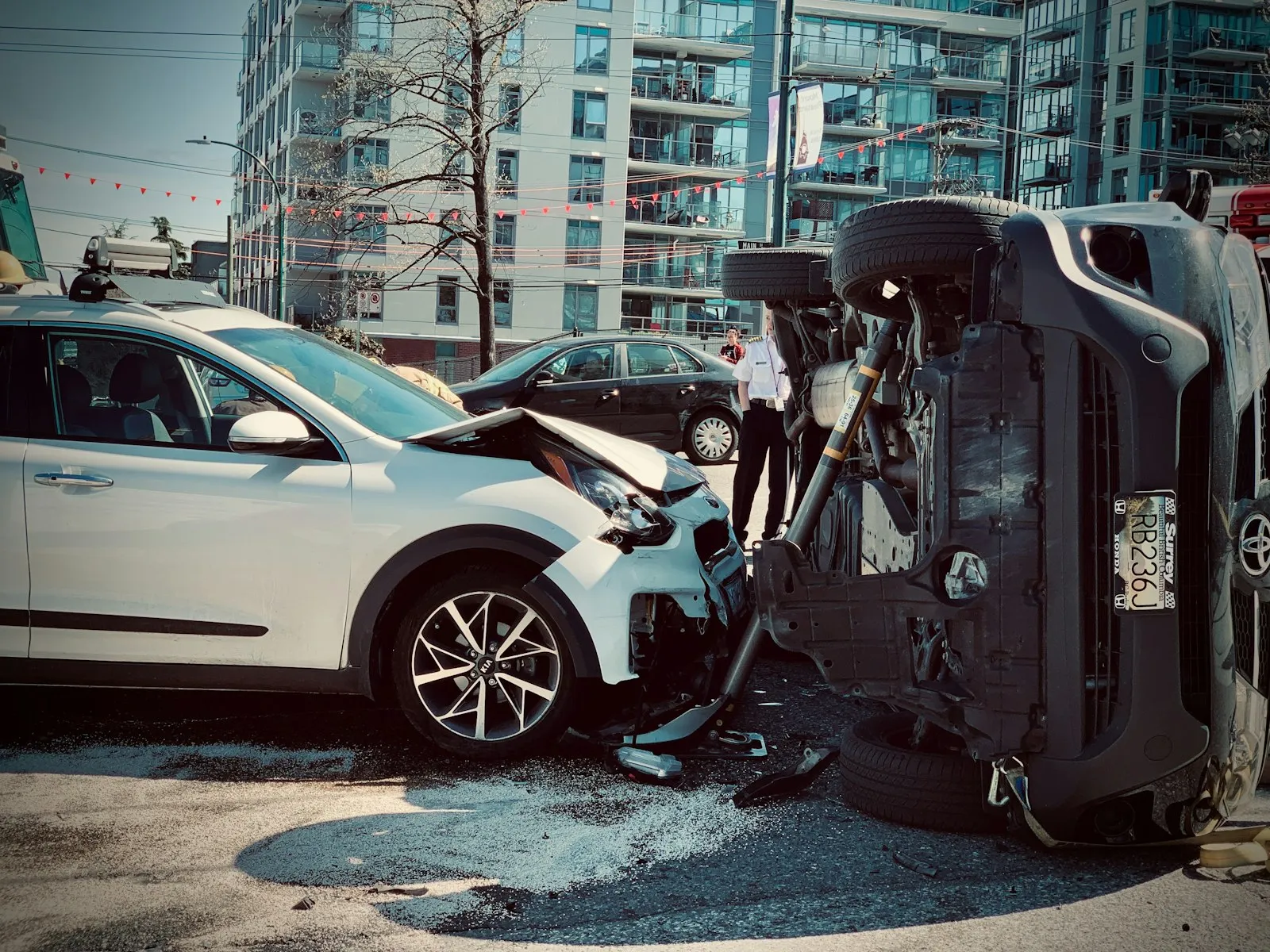
In Bellerose, the NYPD’s 105th Precinct in Queens Village typically responds. The police accident report records the officers’ observations and any statements. It is helpful, but it isn’t the final word on fault. Drivers also have their own reporting obligations with the New York DMV when there is injury or significant damage.
Part Four: Terms About Time Limits and Court
Deadlines are where good cases go to die. Here is a quick reference table. It is general; your specific facts can change the dates.
| Term | What it means | Typical deadline |
|---|---|---|
| No-fault application | Form to get PIP medical and wage benefits | 30 days from the crash |
| Statute of limitations (personal injury) | Last day to file a lawsuit against UPS or its driver | 3 years (CPLR 214) |
| Notice of Claim | Required if a city vehicle or city defect was also involved | 90 days |
| Wrongful death | Suit by the estate if the crash was fatal | 2 years from death |
Comparative fault
The rule that divides responsibility by percentage. If a jury finds UPS 80% at fault and you 20% at fault, your damages are reduced by 20%. Adjusters love to inflate your percentage — “you were going a little fast,” “you could have braked sooner.” Every point they shave off is money. (See the 2026 update above for the new rule in motor-vehicle cases.)
Venue
Which court hears the case. A crash in Bellerose, Queens, often ends up in Queens County Supreme Court at 88-11 Sutphin Boulevard in Jamaica. If the crash happened a block east, across the line in Bellerose Village or Floral Park, Nassau County may be in play instead. Venue choices affect the jury pool and timing.
Discovery, EBT and IME
Discovery is the exchange of evidence. An EBT (examination before trial) is New York’s name for a deposition — sworn questioning under oath, often in a conference room. An IME (“independent” medical examination) is an exam by a doctor the defense chooses. We prepare clients for both, because what you say in an EBT and how an IME report reads can move a case significantly.
Part Five: Terms About Common UPS Crash Types
- Double-parking strike: A package car stopped in the travel lane on Hillside or Jamaica Avenue forces traffic around it, or a driver steps out into the path of a cyclist. Sometimes the stop itself is unsafe; sometimes the truck pulls out without looking.
- Backing incident: Residential side streets near Braddock Avenue are narrow. Backing a truck without a clear view is a classic source of pedestrian and parked-car impacts.
- Wide right turn: Larger vehicles swing wide; a car or bicyclist on the right can be squeezed.
- Rear-end on the parkway: A loaded tractor-trailer needs far more distance to stop than a sedan. Following too closely on the Cross Island or Grand Central is a frequent cause of chain-reaction crashes.
- Door-zone and loading injuries: A driver swinging a door or ramp into a sidewalk path can injure a pedestrian.
Each pattern has its own evidence. Backing cases lean on rear-camera footage and telematics showing reverse gear. Parkway cases lean on ELD data and following-distance analysis. If another delivery company was involved, our sibling guides on FedEx truck crashes and Amazon delivery truck crashes explain how those companies’ different driver arrangements change who you sue.

Part Six: Terms About Your Damages
Economic damages are the losses with receipts: medical bills beyond no-fault, lost wages, reduced future earning capacity, the cost of household help you now need. Non-economic damages are the losses without receipts: pain, suffering, loss of enjoyment of life — not being able to walk Alley Pond Park on a Saturday, pick up your kids, or sleep through the night. Derivative claims belong to a spouse for loss of services and companionship.
Here’s a hypothetical to show how the vocabulary fits together: a Glen Oaks resident is rear-ended by a delivery truck on Union Turnpike, files a no-fault application within the 30 days, gets an MRI showing a herniated disc, and returns to work on light duty. No-fault pays her treatment and part of her lost wages. Her lawyer sends a preservation letter for telematics, gathers proof of a “significant limitation,” and pursues pain-and-suffering and excess wage loss from the company. That is an illustration only — every case is different, and we never promise an outcome.
What to Do in the First Week (in Plain English)
- Get checked out. Long Island Jewish Medical Center sits right on the Queens–Nassau line in New Hyde Park; urgent care is fine for minor symptoms, but tell the provider it was a vehicle crash.
- Photograph the truck, its number, the scene, and your injuries.
- Write down the names of witnesses — store owners on Jamaica Avenue often have cameras.
- File the no-fault application within 30 days.
- Decline recorded statements until you have counsel.
- Call a lawyer who can send a preservation letter before data is overwritten.
Getting to Our Office from Bellerose
Yakov Mushiyev & Associates, P.C. is at 1 Cross Island Plaza, Suite 325, Rosedale, NY 11422. From Bellerose, take the Cross Island Parkway south toward the Belt; our building sits right off the Cross Island in Rosedale. Depending on traffic, it is roughly a 15–20 minute drive. We are open Monday through Friday, 9 to 6, and if you can’t travel, we’ll come to you at home or in the hospital, or meet by video.
Talk to a UPS Truck Accident Lawyer in Bellerose
Knowing the vocabulary is a start. Using it to build a claim against one of the biggest delivery companies in the world is a different job. Our firm handles truck accident cases across Queens and Long Island, and our Bellerose personal injury practice knows these streets. Consultations are free, you pay no fee unless we win, and we speak English, Russian and Spanish.
Call 718.775.3110 or send us a message. A UPS Truck Accident Lawyer in Bellerose from our team will review what happened and explain your options — in plain English.

Frequently Asked Questions
Can I sue UPS directly, or only the driver?
In most cases involving a UPS package car, the driver is a company employee acting within the scope of employment, so UPS itself can be named under respondeat superior. We usually name both the company and the driver, and we look for any other party that shares responsibility.
How long do I have to file a claim after a UPS truck crash in Bellerose?
Generally three years to file a personal injury lawsuit, but the no-fault application is due within 30 days, and if a city vehicle or city road defect was involved, a Notice of Claim may be due in 90 days. Don’t wait on the short deadlines.
The crash happened just over the line in Floral Park. Does that change anything?
It can. A crash in Nassau County may be investigated by a different police agency and venued in Nassau courts. New York State law on no-fault and serious injury still applies. We handle cases on both sides of the line.
UPS’s claims representative already called me. Should I talk to them?
You can give basic contact information, but avoid recorded statements, guesses about speed or distance, and comments about your injuries until you’ve spoken with a lawyer. Those calls are part of evaluating — and limiting — the claim.
I was a pedestrian on Jamaica Avenue. Whose insurance pays my medical bills?
A pedestrian struck by a vehicle generally receives no-fault benefits through the striking vehicle’s coverage unless the pedestrian has their own household auto policy that applies. Either way, file the no-fault application within 30 days. Pain-and-suffering claims against UPS are separate.
This article is general information, not legal advice. Attorney Advertising. Prior results do not guarantee a similar outcome.