
When a cyclist gets hurt in Rego Park, the questions start right away, usually from a hospital bed or a couch with an ice pack. Who pays the ER bill when you don’t own a car? Does it matter that you weren’t in the bike lane? What if the person who doored you just walked away?
We’ve organized this guide around the questions Rego Park cyclists actually ask us, in roughly the order they come up. Each answer is short and practical. Where the law changed in 2026, we say so. If your question isn’t here, call Yakov Mushiyev & Associates, P.C. at 718.775.3110.

Part One: Right After the Crash
1. What should I do at the scene?
If you can, do these things in this order:
- Call 911 and ask for police and EMS. Even if you feel okay, head injuries and fractures often show up hours later.
- Get the driver’s name, license, plate number and insurance information. If they won’t give it, photograph the plate.
- Take photos of the car, your bike, the street, the bike lane markings, any signal and your injuries.
- Get names and phone numbers of witnesses. Other cyclists and delivery riders often stop and are great witnesses.
- Ask the officers for the police report number. Rego Park is covered by the NYPD’s 112th Precinct.
Then keep your bike, helmet and clothes exactly as they are. Don’t repair anything until it has been photographed and, if needed, inspected.
2. Where do bike crashes happen most in Rego Park?
From the cases and reports we see, a few patterns stand out:
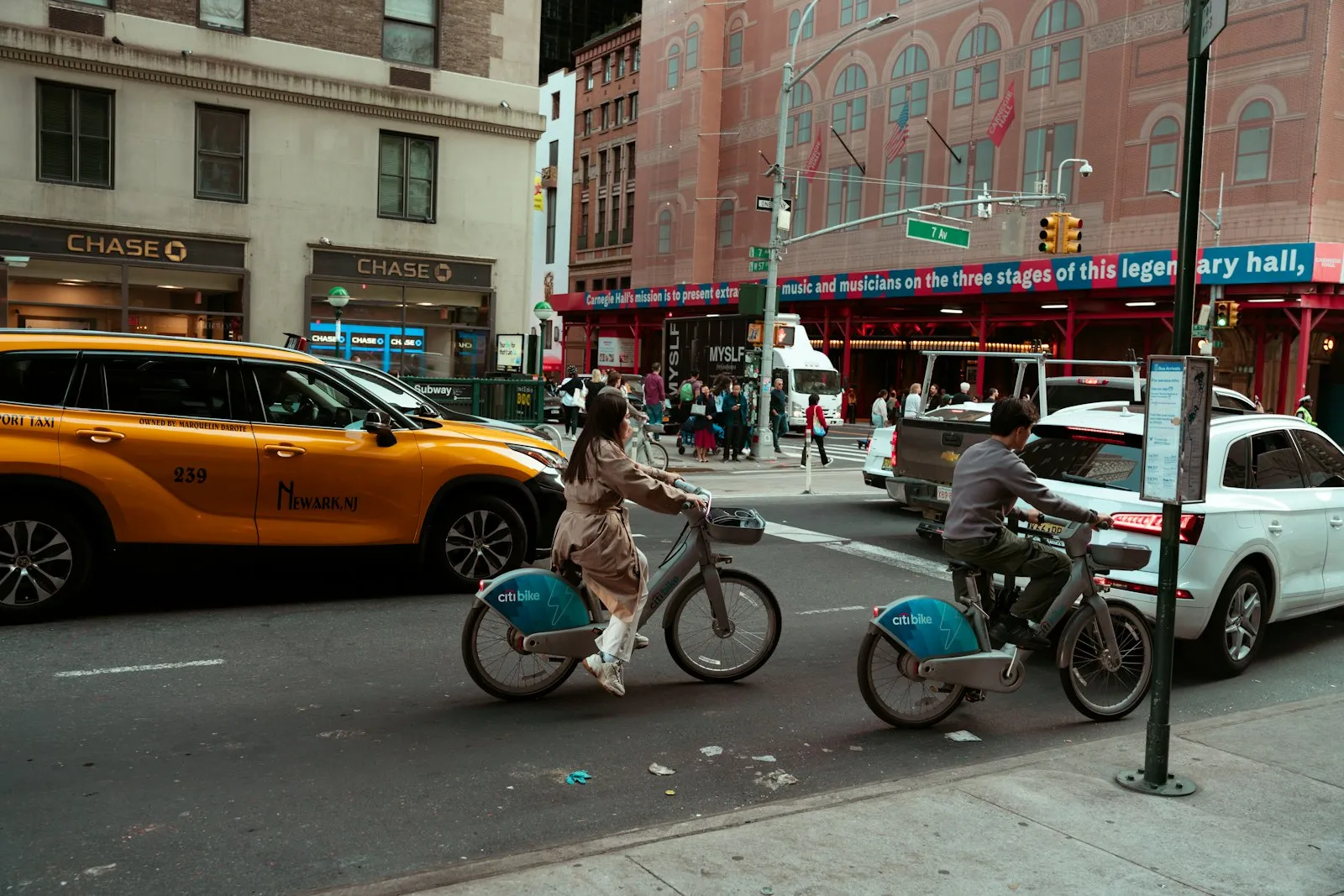
- The Queens Boulevard service roads. The redesign added bike lanes on the service roads through Rego Park, beginning around Eliot Avenue, as Streetsblog reported when the plan was approved. Lanes help, but drivers turning right across the lane, double-parked delivery trucks and car doors are still the big hazards.
- Woodhaven Boulevard. Fast traffic, bus lanes and long distances between signals make it one of the more dangerous roads in the area for riders.
- 63rd Drive and the streets around the subway. Heavy pedestrian and car traffic near the 63rd Drive–Rego Park station and Rego Center means lots of sudden stops and turns.
- Junction Boulevard and the LIE service roads. Cut-through traffic, merging and cars speeding to make the light.
3. Do I need to go to a doctor even if I feel fine?
Yes. Concussions, wrist fractures and shoulder injuries are common in bike crashes and are easy to underestimate in the moment. A same-day or next-day medical record also links your injuries to the crash. Gaps in treatment are one of the first things insurance adjusters look for.
Part Two: Who Pays
4. Who pays my medical bills if I don’t own a car?
New York is a no-fault state, and under the no-fault rules a cyclist struck by a car is generally treated like a pedestrian. That means your medical bills and part of your lost wages can be paid by no-fault insurance, up to $50,000, regardless of who caused the crash. The Department of Financial Services explains that a pedestrian claims through the insurer of the vehicle that struck them; if that vehicle is unknown or uninsured, through a household relative’s auto policy; and if there is none, through MVAIC.
Important: the no-fault application must be filed within 30 days of the crash. Late claims are accepted only with written proof of a clear and reasonable justification.
5. What if I fell on my own or crashed into another bike?
No-fault only applies when a motor vehicle is involved in the crash. If you crashed because of a pothole, broken pavement or a defect in the bike lane, the claim may be against the City of New York, and that comes with a strict 90-day notice of claim deadline. If another cyclist caused the crash, the claim may be against that rider personally, sometimes through a homeowner’s or renter’s insurance policy.
6. I was riding an e-bike. Is that different?
It can be. E-bikes, e-scooters and mopeds are classified differently under New York law, which can change insurance coverage and how fault is argued. New York City also set a 15 mph citywide speed limit for e-bikes and e-scooters in 2025. Our page on e-bike accidents in Rego Park covers those differences.
Part Three: Fault
7. I got doored. Whose fault is that?
Usually the person who opened the door. Vehicle and Traffic Law § 1214 says no one may open a vehicle door on the side of moving traffic unless it is reasonably safe to do so and doesn’t interfere with traffic. That includes passengers getting out of a cab, an Uber or a friend’s car. If a rideshare passenger doored you, both the passenger and the vehicle’s insurance may be involved; our Rego Park Uber accident guide explains how TLC insurance works.
8. I wasn’t in the bike lane. Do I still have a case?
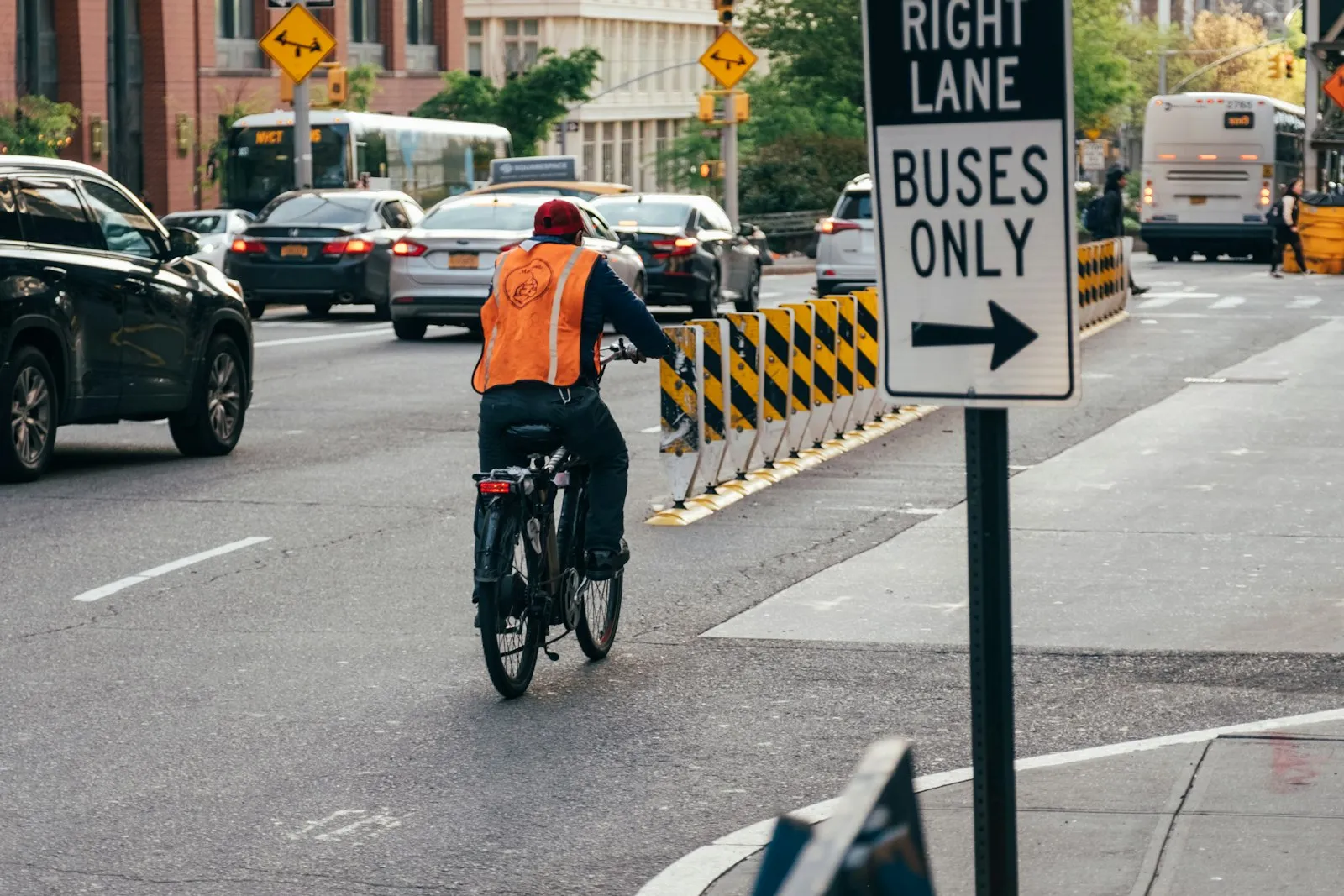
Often, yes. New York law generally requires cyclists to use a bike lane where one is provided, but there are exceptions, for example when the lane is blocked by a double-parked truck, when you’re preparing to turn or when it’s unsafe. And drivers owe everyone on the road, including cyclists, a duty of care. Riding outside the lane may be used to argue that you share some fault, which is why the next question matters.
9. How does the 2026 fault change affect cyclists?
Before 2026, New York used pure comparative fault: your damages were reduced by your share of fault, but you could still recover something even if you were mostly to blame. The state budget signed in late May 2026 added subdivision (b) to CPLR § 1411. In personal injury actions governed by the no-fault article of the Insurance Law, a claimant who is more at fault than the defendant now recovers nothing.
For a cyclist hit by a car, insurers will argue that the new rule applies. That raises the stakes on evidence: running a red light, riding the wrong way or riding at night without lights can now cost a cyclist the whole case instead of part of it. Video, witnesses and the driver’s own conduct (speed, phone use, failing to yield) are how that line is moved.
The same legislation removed the old “90/180-day” category from the serious-injury definition in Insurance Law § 5102(d). Cyclists claiming pain and suffering against a driver must generally show a serious injury under one of the remaining categories, such as a fracture or a significant limitation of use of a body function or system.
Part Four: Deadlines and Money
10. How long do I have to file?
| Deadline | What it applies to |
|---|---|
| 30 days | No-fault application |
| 90 days | Notice of claim against the City of New York (for example, a bike lane defect or a city vehicle) |
| 1 year and 90 days | Lawsuit against the city or a public authority |
| 3 years | Personal injury lawsuit against a private driver or owner (CPLR § 214) |
11. What can I be compensated for?
Depending on your injuries and the facts, a cyclist’s claim can include:
- Medical bills and future treatment beyond what no-fault pays
- Lost wages and lost earning capacity
- Pain and suffering and loss of enjoyment of life, if the serious-injury threshold is met
- The cost of your bike, helmet, phone and other damaged property
12. I was delivering food when I got hit. Does that change anything?
It might add a second claim. Delivery workers hurt on the job may be entitled to workers’ compensation benefits as well as a claim against the at-fault driver. How those claims interact, including who gets paid back from what, depends on your work arrangement. Tell your lawyer you were working at the time.
A Quick Example: How the Pieces Fit Together
Here’s a hypothetical that pulls the answers together. A Rego Park resident is riding east in the Queens Boulevard service-road bike lane on a weekday evening. A driver on the service road passes her, then turns right onto a side street directly across her path. She hits the side of the car, breaks her wrist and fractures her collarbone.
- Medical bills: she files a no-fault application with the insurer of the car that turned into her within 30 days. No-fault pays her ER visit, surgery and physical therapy up to the policy limits, plus part of her lost wages.
- Serious injury: her fractures fall within one of the remaining § 5102(d) categories, so she can pursue pain and suffering against the driver.
- Fault: the driver’s insurer claims she was riding too fast for the lane. A store camera shows the driver turning without signaling, and a witness confirms he never looked right. That evidence keeps her well below the 50 percent line under the new CPLR § 1411(b).
- Deadline: because a private driver caused the crash, she has three years to sue, but the camera footage would have been gone in about a week if no one had asked for it.
The lesson is that the deadlines and the evidence, not just the injuries, decide how these cases turn out.
The Evidence That Matters Most in Bike Cases
In our experience, these are the pieces that most often decide a cyclist’s case:
- Video. Storefront, building, bus and dashcam footage. Ask for it in writing as soon as possible.
- The police report, including any summons issued to the driver for failing to yield.
- Your bike and helmet, unrepaired, showing the point and force of impact.
- Ride data. Strava, Apple Watch, Garmin and bike-share trip records can show your speed and route.
- Medical records from the first visit forward, with no unexplained gaps.
- Witnesses, especially other riders and pedestrians who saw the driver’s conduct.
How We Help Rego Park Cyclists
Yakov Mushiyev & Associates, P.C. is a Queens personal injury firm that handles bicycle, e-bike and pedestrian cases across the borough. Our Rego Park practice page lists all the accident types we handle in the neighborhood, and you can learn more about attorney Yakov Mushiyev here. If someone else in your family was walking or riding a motorcycle, see our Rego Park pedestrian guide and Rego Park motorcycle guide.
Directions From Rego Park to Our Office
Our office is at 1 Cross Island Plaza, Suite 325, Rosedale, NY 11422. By car, the usual route is the Van Wyck Expressway south to the Belt Parkway east. By transit, take the M or R to Forest Hills–71st Avenue, the E or F to Jamaica, and the LIRR to Rosedale. If you can’t travel yet, call and ask about a phone or video consultation.
Open turn-by-turn directions in Google Maps · 1 Cross Island Plaza, Suite 325, Rosedale, NY 11422 · 718.775.3110
Bonus Questions
Should I post about my crash on social media?
It’s better not to. Insurance companies look at public posts, and a photo of you smiling at a family event can be used to argue that you weren’t really hurt.
The insurance company offered me money already. Should I take it?
Not without understanding what you’re giving up. A release usually ends the claim forever, including for injuries that turn out to be worse than they looked in the first few weeks.
What if a city bus hit me?
Claims against the MTA or New York City Transit generally require a notice of claim within 90 days. Our guide to MTA bus accidents in Queens explains the process.
Talk to a Queens Bicycle Accident Lawyer
If you were hurt riding in Rego Park, call Yakov Mushiyev & Associates, P.C. at 718.775.3110 or contact us online. Phone intake is available 24/7.
General information, not legal advice. Attorney Advertising. Prior results do not guarantee a similar outcome.