
If you or someone in your family was hurt on a job site, the first legal question is rarely "who was careless?" In New York construction cases, the better question is "which statute applies, and who owes the duty?" This guide is written the way a construction accident lawyer in Rosedale would brief a case file: issue by issue, with the rule, the defenses, and the practical consequences for a worker. It is meant for tradespeople, laborers and the families helping them make decisions after an injury.
We cover the three Labor Law sections that do most of the work in these cases (§ 240(1), § 241(6) and § 200), the exemption for one- and two-family homeowners that matters so much in a neighborhood like Rosedale, how OSHA fits in, and how the workers' compensation lien affects what you actually take home.
Short answer: three statutes, three different standards
Before the detail, here is the framework in one table. Most serious construction cases plead all three claims, because each one covers ground the others miss.
| Statute | What it covers | Standard of liability | Does the worker's own carelessness reduce recovery? |
|---|---|---|---|
| Labor Law § 240(1) | Gravity-related hazards: falls from a height and objects falling on a worker | Strict, non-delegable liability once a violation causes the injury | Generally no, unless the worker's conduct was the sole proximate cause |
| Labor Law § 241(6) | Construction, excavation and demolition areas; violations of specific Industrial Code rules | Non-delegable duty, but the violation is evidence of negligence, not automatic liability | Yes, comparative fault can generally reduce the award |
| Labor Law § 200 | Any unsafe workplace condition or work method | Ordinary negligence: control of the work or notice of the hazard | Yes |
The construction accident practice page gives the firm-level overview. What follows is the deeper, section-by-section analysis.
Issue 1: Labor Law § 240(1), the "Scaffold Law"
The rule
The text of Labor Law § 240 requires contractors, owners and their agents, in the erection, demolition, repairing, altering, painting, cleaning or pointing of a building or structure, to furnish scaffolding, hoists, ladders, braces and similar devices that are constructed, placed and operated so as to give proper protection to the worker.
Courts read the statute as limited to gravity-related hazards. In practice that means two families of accidents:
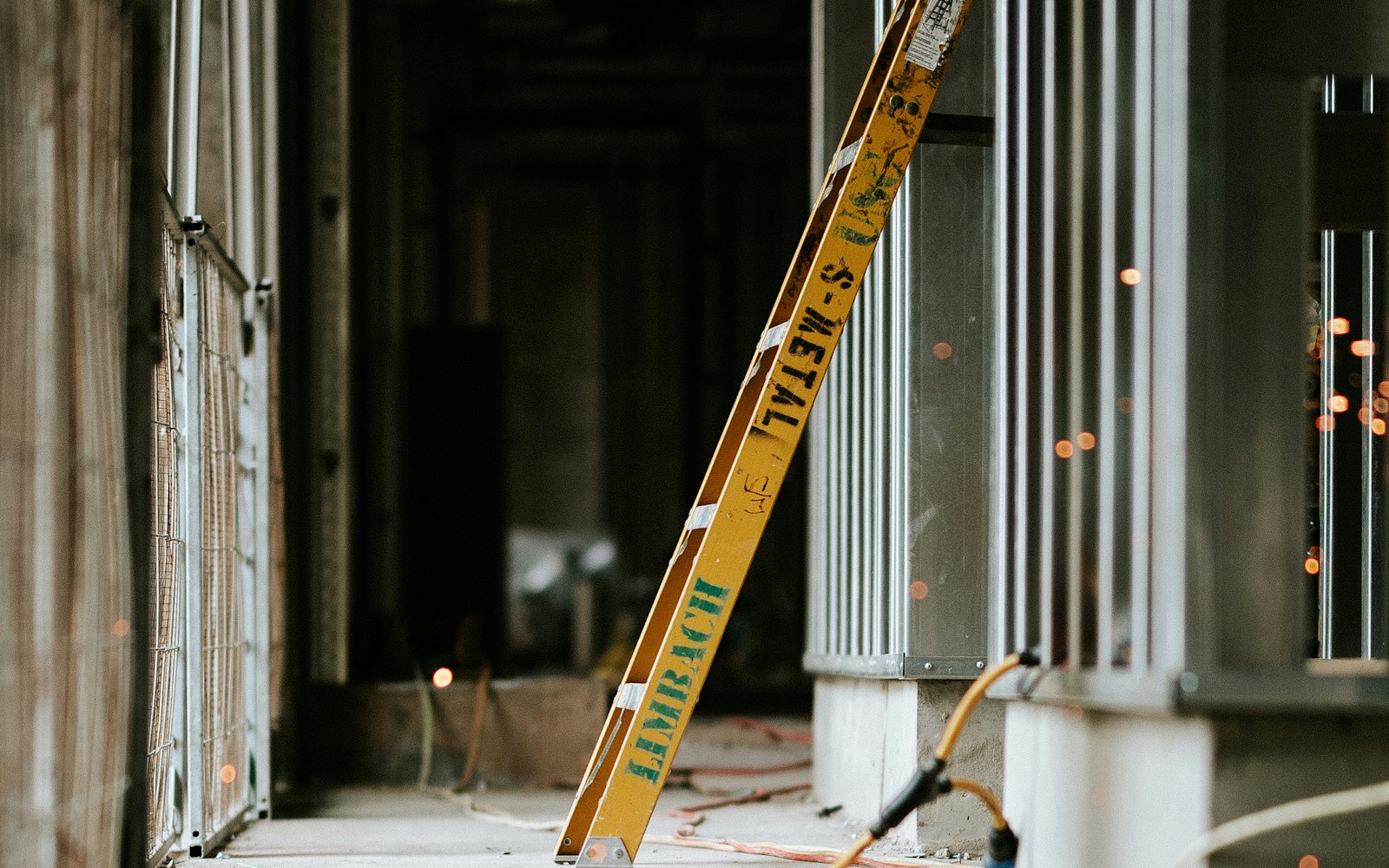
- Falling worker cases: a fall from a ladder, scaffold, roof, floor opening, stairway under construction or other elevated surface.
- Falling object cases: a load, beam, bundle of material or tool that falls because it was not properly hoisted or secured, and strikes a worker.
A slip on a level floor, by contrast, is generally not a § 240(1) case, though it may still be a § 241(6) or § 200 case. Courts have also drawn a line between "repairing" or "altering" a structure, which is covered, and routine maintenance, which generally is not. Where a job falls on that line is often the first fight in a case.
Why "non-delegable" matters
The Court of Appeals has described § 240(1) as imposing strict liability in two senses. First, the owner and general contractor cannot pass the duty to a subcontractor and walk away; they are liable for a violation even if they did not supervise the work and did not know about the danger. Second, once a statutory violation is a proximate cause of the injury, the worker's own negligence is not a defense. For an injured roofer or framer, that second point is the reason § 240(1) claims are so important.
The defenses: recalcitrant worker and sole proximate cause
Owners and contractors are not without arguments. The leading case is Cahill v. Triborough Bridge & Tunnel Authority (2004), which relied on the earlier decision in Blake v. Neighborhood Housing Services (2003). Under Cahill, there is no § 240(1) liability where a jury could find that:
- adequate safety devices were available;
- the worker knew they were available and that he was expected to use them;
- he chose, for no good reason, not to use them; and
- he would not have been injured if he had used them.
The older label for this is the "recalcitrant worker" defense, but the Court made clear that the real question is whether the worker's own conduct, rather than a statutory violation, was the sole proximate cause of the accident. If the ladder was defective, the harness had no anchor point, or no proper device was provided at all, the defense generally fails. That is why the evidence about what equipment was actually on site, and what the foreman actually said, matters so much.
Issue 2: Labor Law § 241(6) and Industrial Code specificity
Labor Law § 241(6) requires that all areas where construction, excavation or demolition work is performed be constructed, shored, equipped, guarded, arranged, operated and conducted to provide reasonable and adequate protection, and it requires owners and contractors to comply with the rules the Commissioner of Labor issues. Those rules are the State Industrial Code, found in Part 23 of Title 12 of the New York Codes, Rules and Regulations (12 NYCRR Part 23).
The technical point that decides many cases is specificity. To support a § 241(6) claim, the plaintiff must identify an Industrial Code provision that sets out a specific, concrete command, not a general instruction to keep things safe. In Rizzuto v. L.A. Wenger Contracting Co. (1998), for example, the Court of Appeals treated the rule on slippery foreign substances on walking surfaces (12 NYCRR 23-1.7(d)) as sufficiently specific. A general "be careful" style provision will not do.
Two more features distinguish § 241(6) from § 240(1):
- The duty is still non-delegable, so an owner or general contractor can be held responsible for a subcontractor's violation without proof that it controlled the work.
- A violation is only evidence of negligence for the jury to weigh, and the worker's comparative fault can reduce the award.
Section 241(6) is the workhorse for injuries that are not gravity-related: tripping hazards, unguarded saws, slippery surfaces, trench and excavation hazards, and electrical dangers.
Issue 3: Labor Law § 200 and common-law negligence
Labor Law § 200 codifies the general duty of owners and contractors to provide a reasonably safe place to work. It is ordinary negligence law, and courts generally analyze it in one of two ways:
- Dangerous premises condition (a hole, debris, a defective floor): the defendant is liable if it created the condition or had actual or constructive notice of it.
- Means and methods of the work (how a task was performed): the defendant is liable only if it had the authority to supervise or control the activity that caused the injury.
Section 200 matters most where the statutory claims fail, for example because a homeowner is exempt from §§ 240 and 241 (discussed next) but personally directed the dangerous work.
Issue 4: The one- and two-family homeowner exemption, and Rosedale renovation work
Both § 240(1) and § 241 exempt "owners of one and two-family dwellings who contract for but do not direct or control the work." For a construction accident lawyer in Rosedale, this is not a footnote. Rosedale is a residential neighborhood with many one- and two-family houses, and a large share of the trade work here is residential: roof replacements, siding, attic and basement conversions, extensions, gutter and chimney work, and interior renovation.
The map centers on the area where the Belt Parkway and Cross Island Parkway meet at the edge of Rosedale and Laurelton. Contractors, roofers and renovation crews use these parkways to reach the residential blocks on both sides of the Queens–Nassau line, which is why many of the job-site injuries we discuss with Rosedale families happen on homes rather than on high-rise sites.
How the exemption works in practice:
- Who owns the property? If it is a one- or two-family house, the exemption may apply. If it is a multi-unit building, a commercial property or a house owned by a developer for resale, the analysis is different.
- Did the owner direct or control the work? An owner who simply hired a contractor and let the crew do the job is generally exempt. An owner who told workers how to do the task, supplied the ladder, or supervised methods may lose the exemption.
- Is anyone else liable? The exemption protects the homeowner only. The general contractor, and sometimes other contractors or their agents, remain subject to §§ 240(1) and 241(6).
We go deeper on the homeowner question in our post on house renovation accidents and the one- and two-family exemption. Readers who want a broader overview of local job-site injuries can start with our Rosedale construction accident lawyer page or our guide on construction site accidents in Rosedale, Queens.
Issue 5: Where OSHA fits
The federal Occupational Safety and Health Administration sets workplace safety standards and publishes guidance specifically for residential construction, including fall protection. OSHA is relevant to an injury case, but in a narrower way than many workers expect:
- An OSHA citation is not the same as civil liability, and OSHA does not award money to injured workers.
- OSHA regulations are generally not the "specific Industrial Code" rules that § 241(6) requires; that claim must rest on the New York Industrial Code.
- OSHA inspection records, citations and the employer's own safety program can still be useful evidence of what equipment was required, what was missing, and who knew.
Issue 6: Workers' compensation, the exclusive remedy, and the comp lien
Comp comes first
An injured construction worker generally cannot sue his own employer. Workers' compensation is the exclusive remedy against the employer (Workers' Compensation Law § 11). Comp pays medical treatment and wage replacement at two-thirds of the average weekly wage, capped at $1,281.50 per week for injuries on or after July 1, 2026. You should generally notify your employer in writing within 30 days and file Form C-3 within two years. Our guide on what comp pays and when you can sue covers the benefit side in detail.
The Labor Law claim goes against someone else
The §§ 240(1), 241(6) and 200 claims are brought against third parties: the property owner (unless exempt), the general contractor, and sometimes other contractors. Those defendants often try to bring the employer back into the case for contribution, but § 11 generally bars that unless the worker suffered a statutory "grave injury" (such as death, amputation, paraplegia or quadriplegia, total and permanent blindness or deafness, or a permanently and totally disabling brain injury) or the employer signed a written indemnity contract before the accident.
The lien
Under Workers' Compensation Law § 29, the comp carrier has a lien on a third-party recovery for the benefits it paid, after a deduction for its fair share of the costs of obtaining the recovery, including attorney's fees. The statute also generally requires the carrier's written consent, or a court compromise order, before a third-party case is settled. Settling without addressing the lien can put future comp benefits at risk. See our guide on handling a workers' comp lien on your settlement.
Deadlines and evidence checklist
Most construction negligence suits must generally be filed within three years (CPLR 214). If a city agency or other public body owns the property, a notice of claim is generally due within 90 days, and the lawsuit generally within one year and 90 days. Those shorter clocks are a common trap on public works jobs.
Evidence worth preserving early:
- Photographs of the ladder, scaffold, opening or load, before anything is moved or repaired
- Names and phone numbers of co-workers and the foreman
- The name of the general contractor, your employer and the property owner
- Any incident report, toolbox-talk sign-in sheets and texts about the job
- Medical records from the first visit forward
For a broader, statewide look at how these sections play out on larger projects, see our Long Island construction accident guide to Labor Law 240 and 241, and for ladder injuries specifically, our ladder fall guide under Labor Law 240.
Frequently asked questions
I fell from a ladder while working on a house in Rosedale. Can I sue the homeowner?
Possibly not under §§ 240(1) or 241(6), if the house is a one- or two-family dwelling and the owner did not direct or control the work. But the general contractor may still be liable under those sections, and the homeowner may be liable under § 200 if he or she controlled the work or knew about a dangerous condition.
The insurer says the accident was my fault. Does that end a § 240(1) claim?
Generally no. Ordinary carelessness by the worker is not a defense once a violation is a proximate cause. The defense must show your own conduct was the sole proximate cause, which usually requires proof that proper safety devices were available, you knew you were expected to use them, and you chose not to.
Does an OSHA violation automatically win my case?
No. OSHA findings can be useful evidence, but liability under New York's Labor Law depends on the elements of §§ 240(1), 241(6) and 200, and § 241(6) must be tied to a specific Industrial Code rule.
Can I collect comp and also bring a lawsuit?
Generally yes. You can receive comp from your employer's carrier and pursue a third-party claim against the owner or general contractor. The carrier will usually assert a lien on the recovery under WCL § 29.
Talk with a construction accident lawyer in Rosedale
Yakov Mushiyev & Associates represents injured workers from our Rosedale office at 1 Cross Island Plaza, Suite 325. Yakov Mushiyev is a former head litigation attorney who grew up in Queens, and the firm has recovered over $80 million for clients. Consultations are free, in English, Russian and Spanish, at our office, by video, at your home or in the hospital, and there is no fee unless we win.
Call 718.775.3110 or contact us online to have your Labor Law claim reviewed.
This article is general information, not legal advice. Every case is different, and prior results do not guarantee a similar outcome. Attorney Advertising.