
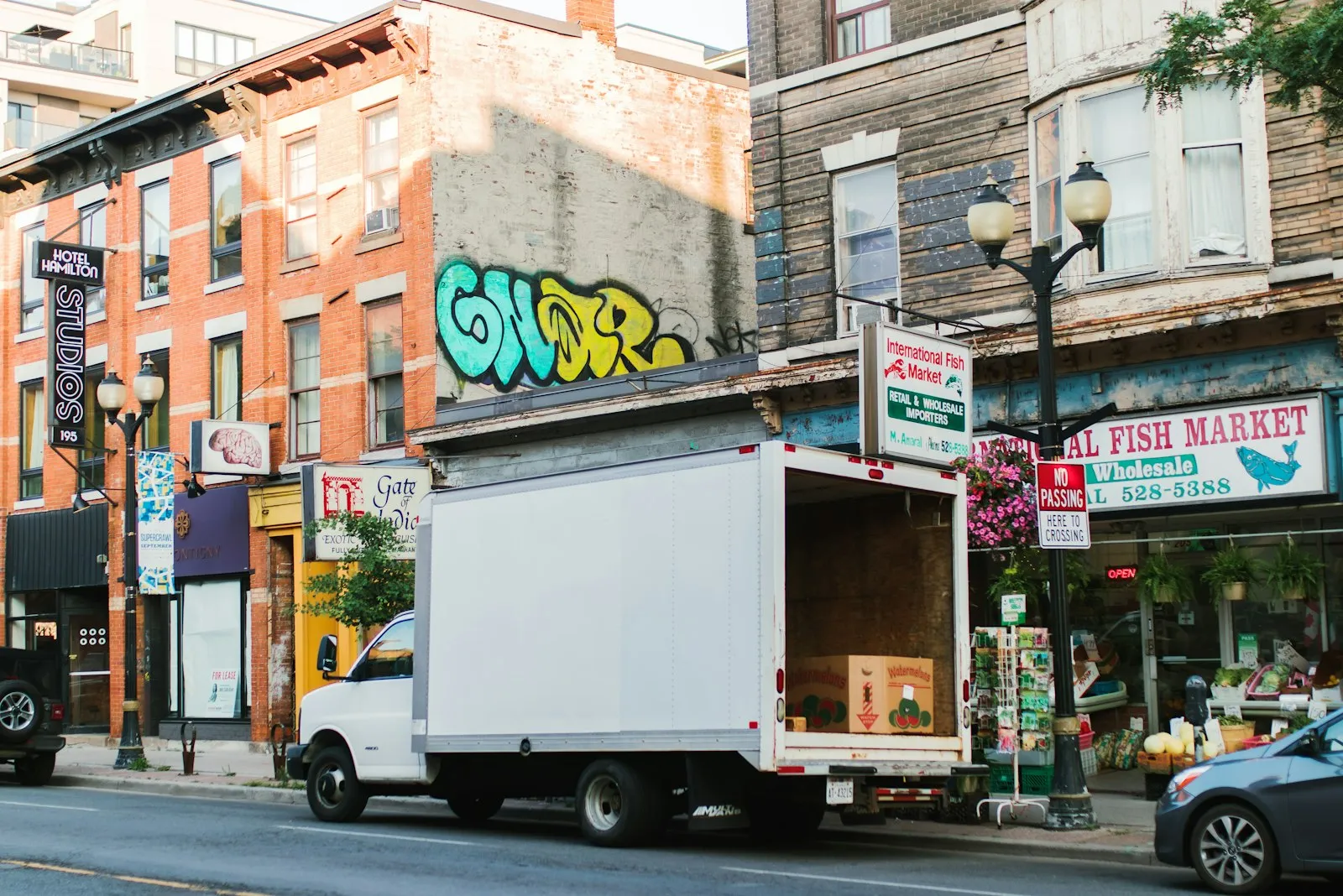
A van with a famous logo on the side clips you on Liberty Avenue, and the obvious assumption is that the company on the logo is the one you deal with. Sometimes it is. Often it isn’t. A good delivery truck accident lawyer starts by mapping who actually stands behind that vehicle: the person driving, the business that hired them, the company that owns or leased the van, and the brand whose packages are stacked in the back. Each link in that chain answers to a different insurer, and each one matters to what you can recover.
Below, we take that chain one link at a time, then cover common local crashes, fragile evidence and the New York rules that decide payment.
Why Delivery Van Crashes Keep Happening Here
Package volume in Queens and Nassau doesn’t slow down, and neither do the vans. The patterns repeat.
- Double-parked trucks. A van stopped in the travel lane on a commercial strip pushes cyclists out of the bike lane and makes drivers swing into oncoming traffic to get around it.
- Doors and ramps. A rear roll-up door or a side door swings open, or a loading ramp drops, right into the path of a bike, scooter or passing car.
- Backing without a spotter. Box trucks have limited rear visibility, and a driver reversing out of a tight block or alley without anyone guiding them can hit a pedestrian they never saw.
- Rushing the route. Drivers working against delivery quotas may speed between stops, roll through stop signs or make abrupt turns.
- Blind spots. Tall cargo bodies hide cyclists, motorcyclists and small cars, especially during right turns and lane changes.
- Sudden stops and rear-end hits. On the Van Wyck and Cross Bay Boulevard, a van braking hard for a missed exit, or plowing into stopped traffic, causes a lot of the chain-reaction wrecks we hear about.
Every one of those situations can involve a traffic rule. Under New York law, an unexcused violation of a Vehicle and Traffic Law rule is generally treated as negligence, which is a useful starting point when the van driver did something the statute forbids.
Who’s Who: Link One, the Driver
The person behind the wheel is the most direct defendant, since their conduct caused the crash.
What this means for you: you want the driver’s name, license and the name of the business they say they work for. Get it at the scene if you can do so safely, and make sure it ends up in the police report.
But the driver is rarely the one who pays. The real question is who stands behind them.
Link Two, the Delivery Contractor
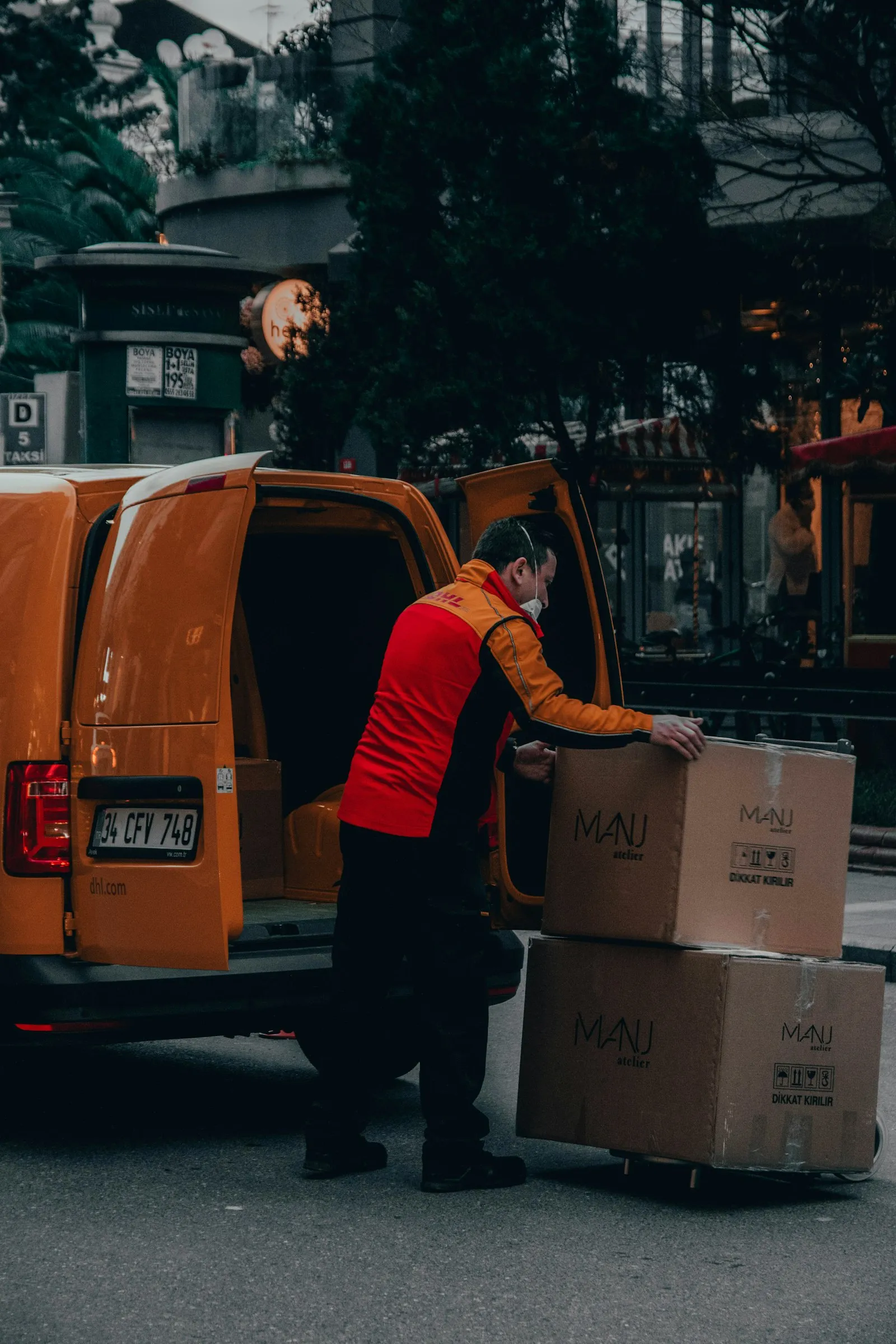
Here’s where it gets layered. Many Amazon-branded vans are operated by independent delivery contractors, smaller businesses that hire their own drivers and run routes under contract. Some FedEx routes work a similar way, with contractors handling the trucks and staff.
Why it matters: in New York, employers are generally responsible for the negligence of employees on the job. So the business that actually employed the driver is usually a central target. The difficulty is figuring out which business that was, because the logo on the van may belong to someone else entirely.
That’s not a reason to give up on the bigger name. It’s a reason to collect the records that show how the operation was set up before you decide where the claim belongs. If you want more depth on how employer responsibility works with commercial vehicles, our article on vicarious liability in New York truck cases lays out the theory.
A brief note on mail trucks: postal and other federal vehicles follow their own federal claim rules, which are different from everything described here.
Link Three, the Vehicle Owner or Lessor
The van itself may be owned by the contractor, owned by a fleet company, or leased.
Owners: Vehicle and Traffic Law § 388 makes a vehicle owner generally liable for the negligence of anyone driving it with permission. A delivery driver running a route is about as clear an example of a permissive user as there is. That gives you a second path to coverage even when the employment picture is murky.
Leasing and rental companies: this is the exception. A federal law known as the Graves Amendment generally shields vehicle rental and leasing businesses from being held vicariously liable just because they own the vehicle a renter was driving. They can still be on the hook for their own negligence, though. Examples might be handing over a van with known brake problems or ignoring a maintenance issue that contributed to the crash.
Bottom line: the registration and title matter. Who owns the van, and in what capacity, changes what you can argue.
Link Four, the Brand on the Package
This is the one most people fixate on, and it’s the hardest link to pin down. Whether the large retailer or shipping company carries legal responsibility depends on the actual relationship among the brand, the contractor and the driver. That relationship lives in contracts, route assignments, dispatch systems and the practical level of control the brand exercised.
A crash with a UPS truck, an Amazon van or a FedEx vehicle may involve different structures, and we don’t assume anything based on the paint job. What we do assume is that more than one insurer is probably involved. Commercial delivery operations commonly carry their own commercial auto policies, and the contractor, owner and brand may each have separate coverage, sometimes layered on top of one another.
What this means for you: don’t give a recorded statement to the first adjuster who calls and assume they speak for everyone. They may represent only one link in the chain, and what you say to one can surface in conversations with the others.
The Evidence That Disappears If Nobody Asks
Delivery operations generate a remarkable amount of data. Much of it is kept only for a limited time unless someone formally asks for it to be saved.
- Telematics. Many commercial vans record speed, braking, location and acceleration.
- Route and delivery scan logs. Scans at each stop can show where the van was minutes before the crash and how tight the schedule was.
- In-cab and exterior cameras. Some fleets use driver-facing and road-facing cameras.
- Dispatch records and messages. These can show route changes, pressure to hit targets, and who was directing the driver’s day.
- Maintenance and inspection files. Relevant when brakes, lights, mirrors or backup alarms are in question.
- Driver hiring and training records. Useful when the contractor’s own choices are at issue.
A preservation letter, sent early to every company in the chain, puts them on notice to keep that material. Later, in a lawsuit, formal discovery is how you actually get it; our guide to document requests in New York cases explains that process.
On your side, the essentials are simpler. Photograph the van, its plate, any DOT or fleet numbers on the door, the logo, the scene and your injuries. Get witness contact information. Note nearby storefronts that may have cameras. And if anyone was hurt or property damage exceeds $1,000, each driver involved generally has to file a DMV Form MV-104 within 10 days.
When Federal Trucking Rules Come Into Play
Smaller vans and larger box trucks are not always treated alike. Federal Motor Carrier Safety Administration rules apply to larger commercial vehicles operating in interstate commerce, including limits on driving time. The FMCSA hours-of-service summary is a good overview of those limits.
Whether those rules govern a particular vehicle depends on its size and how it’s being used, so it’s something to check rather than assume. When they do apply, a driver who was over their hours, or a company that pushed them to be, adds another layer to the liability picture. Our page on Queens truck crashes near JFK and the Van Wyck goes further into heavier commercial traffic.
No-Fault, Serious Injury and the Path to Pain and Suffering
No-fault comes first. If you were in a car, your own no-fault coverage generally pays medical bills and part of your lost wages regardless of who caused the crash. If you were a pedestrian or cyclist hit by a delivery van, you generally get no-fault benefits from the van’s policy. The application is generally due within 30 days, so it’s one of the first deadlines to watch. Our New York no-fault guide goes step by step.
Then the threshold. To recover for pain and suffering from the at-fault driver and the businesses behind them, you generally need a “serious injury” as defined in Insurance Law § 5102(d). That list includes:
- death, dismemberment or significant disfigurement
- a fracture
- loss of a fetus
- permanent loss of use of a body organ, member, function or system
- permanent consequential limitation or significant limitation of a body organ, member, function or system
- a medically determined injury that keeps you from substantially all of your usual activities for 90 of the first 180 days
Consistent medical treatment is how that threshold gets proven. See a doctor promptly and keep your follow-up appointments. Head injuries deserve particular attention because they’re easy to brush off at the scene; our batch article on concussion claims after a crash covers that in detail.
Shared Blame Doesn’t End Your Claim
Delivery companies and their insurers like to point at the injured person. The cyclist “should have seen” the open door. The driver who swerved around a double-parked van “should have waited.” The pedestrian “stepped out.”
New York uses pure comparative fault under CPLR § 1411. A partial share of blame trims your recovery; it does not erase it. So the fight is usually over percentages, and the van company’s own records often help settle it. Read more in our explainer on shared fault in New York.
If you were riding when it happened, our post on bike lane and e-bike crashes in Queens deals with the arguments cyclists usually face.
Deadlines, Briefly
The clock for most New York injury lawsuits is generally three years from the crash, under CPLR § 214. That sounds roomy. For a delivery truck accident lawyer, it often isn’t, because much of that time can go into identifying the contractor, the owner and the insurers.
Shorter windows apply in some situations. If a city or other municipal vehicle is involved, a notice of claim is generally due within 90 days and the lawsuit within one year and 90 days. If a family member died, a wrongful death action generally has to be filed within two years of the death. And the no-fault application, as noted above, is generally due within 30 days.
How We Approach These Cases
Yakov Mushiyev & Associates is based at 1 Cross Island Plaza in Rosedale, close enough to the Cross Island Parkway that commercial traffic is part of the daily view. We take on van and box-truck injury cases across Queens, the five boroughs and Nassau County, and the firm has brought in over $80 million for people hurt in New York.
Practically, a delivery truck accident lawyer on our team will work through the who’s-who questions above, send preservation demands, line up the insurers, and keep your no-fault benefits moving while the liability case builds. Our truck accident practice handles the heavier vehicles; if you were walking when it happened, start with our pedestrian injury page.
Your first conversation costs nothing, and you pay no fee unless we win. We speak English, Russian and Spanish, and if you can’t get to Rosedale, we’ll come to your home or hospital room or set up a video call. Call 718.775.3110 or send us a message.
Delivery Van Crash Questions
The van had an Amazon logo. Do I sue Amazon?
Not automatically. Many Amazon-branded vans are run by independent delivery contractors who employ the drivers. The contractor, the vehicle owner and possibly the brand can all be relevant, and the paperwork behind the route is what sorts that out. A delivery truck accident lawyer will usually look at every company in the chain before naming defendants.
I swerved around a double-parked van and got hit. Who’s at fault?
It depends on the facts, and fault can be shared. The van’s position, the other driver’s speed and your own choices all go into the analysis. Under comparative fault, even if you bear some share, you can generally still recover the rest.
Is a rental or leasing company responsible for the driver?
Generally not just for owning the vehicle, because of the federal Graves Amendment. A leasing company can still be liable for its own negligence, such as poor maintenance that contributed to the crash.
I was walking when a backing box truck hit me. What covers my medical bills?
Pedestrians struck by a vehicle generally receive no-fault benefits from that vehicle’s policy, which covers medical costs and part of lost wages. Apply quickly, since the application is generally due within 30 days. A claim for pain and suffering against the driver and the businesses behind the truck generally requires a serious injury.
What is the deadline to sue a delivery company?
Most injury lawsuits in New York generally have to be started within three years. Claims involving municipal vehicles and wrongful death claims have shorter limits, and no-fault has its own 30-day application deadline. Because identifying everyone in a delivery chain takes time, it helps to get started early. If a reckless driver was involved, our batch post on aggressive-driver crashes may also be useful.
Visit Yakov Mushiyev & Associates
Our office is at 1 Cross Island Plaza, Suite 325, Rosedale, NY 11422, just off the Cross Island Parkway on the Queens–Nassau border. If you can’t come to us, we’ll come to you: at home, in the hospital or by video.

Talk to a Queens delivery truck accident lawyer today
Yakov Mushiyev & Associates has recovered over $80 million for injured New Yorkers across the five boroughs and Nassau County. Consultations are free, available in English, Russian and Spanish, and there is no fee unless we win.
Call 718.775.3110 or contact us online for a free case review.
This article is general information, not legal advice. Every case is different. Attorney Advertising.