
Most people go to work expecting the usual hazards of their trade, not a dog lunging from a porch or a hallway. Yet a dog bite at work happens to people in all kinds of jobs across Queens and the rest of New York City, and when it does, the injured worker is often left with two questions at once: who pays for my medical care, and can I hold the dog’s owner responsible? The answer, in many cases, involves two separate paths that run side by side. This guide walks through both, gently and in plain terms, so you can see where you stand.
The People Who Meet Strange Dogs for a Living
Some jobs put workers on other people’s property all day long. If you do one of these jobs, you already know how often a gate is left open or a dog slips past its owner at the front door. The workers who come up most often in these situations include:
- Package and food couriers. A delivery driver bitten by dog on a stoop or in a building lobby is one of the most familiar versions of this injury.
- Letter carriers. A mail carrier dog bite is common enough that postal workers are often trained to watch for warning signs, but training does not stop a dog that is loose.
- Home health aides and visiting nurses. These caregivers spend hours inside a client’s home, where the family pet may not be used to a stranger.
- Utility, cable and repair technicians. Meter readers, plumbers, electricians and installers often need to reach basements, backyards and side alleys where dogs are kept.
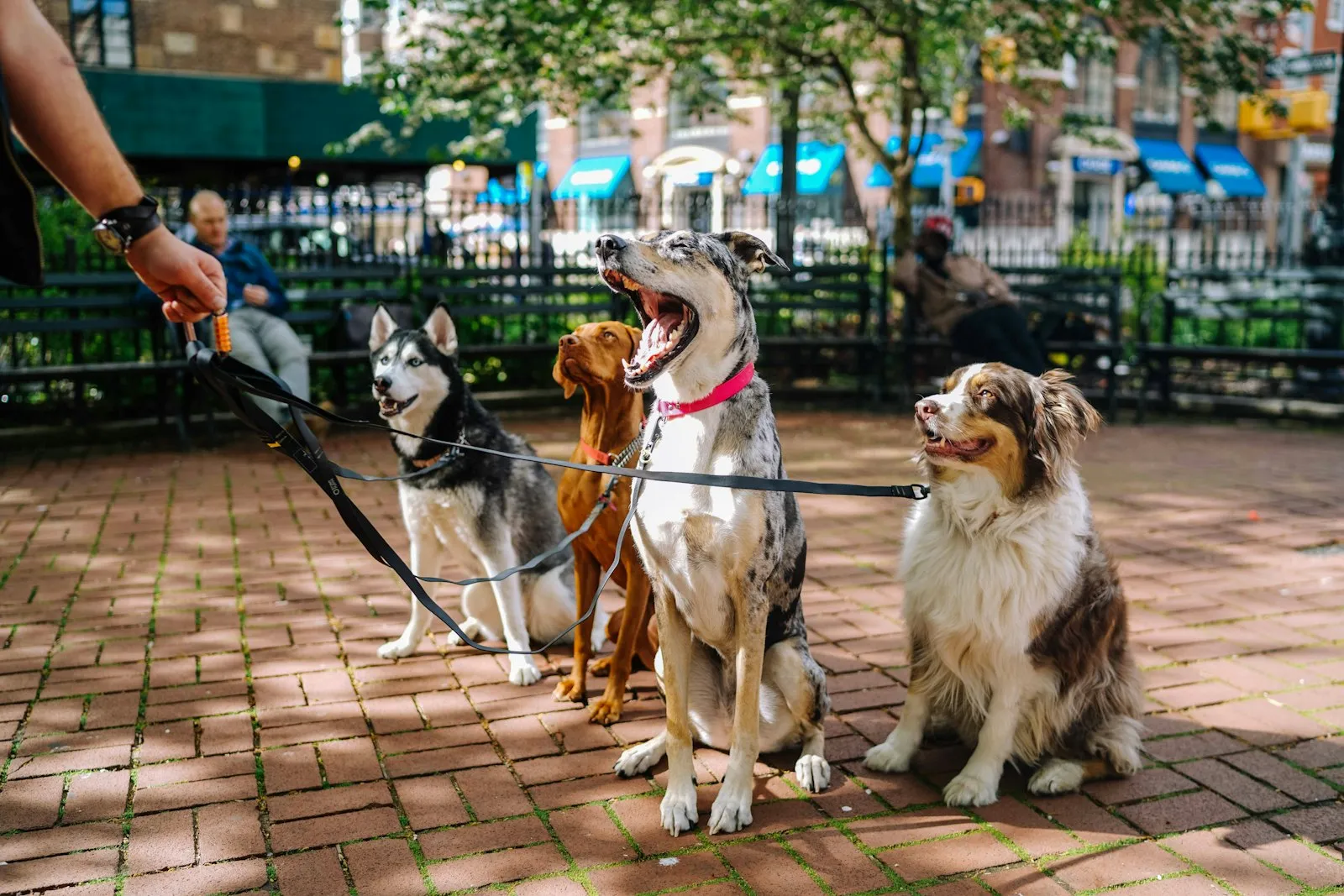
- Dog walkers, groomers and pet sitters. People who handle dogs for a living face a particular set of legal questions, because handling the animal is the job itself.
- Building staff. Supers, porters and doormen deal with tenants’ dogs in elevators, hallways and courtyards every day.
None of these workers chose to be near an aggressive animal. That matters, because New York treats a dog bite at work differently from one that happens on a weekend walk.
First, Take Care of Yourself and Make a Record
Before anything legal comes into the picture, the bite needs medical attention, since even a small-looking wound can carry bacteria deep under the skin. Dog bites can cause puncture wounds, torn skin, infection and damage to nerves or tendons, and a worker knocked to the pavement by a jumping dog can break a wrist or a hip. If no one can confirm the dog’s rabies vaccination, a doctor may recommend a course of rabies shots. Our guide to stitches, scarring and infection after a dog bite goes into more detail about what treatment often looks like.
Once you are safe, a few simple steps help protect you later:
- Tell your supervisor or employer right away, and ask that the incident be written down. Note the date, address and time.
- Find out who owns the dog. Get the owner’s name and address if you can, or at least the address where it happened.
- Report the bite. In New York City, bites must be reported to the Health Department within 24 hours. You can learn how through the city’s animal bite reporting page.
- Take photographs of the wound, torn clothing or uniform, the spot where it happened, and any “Beware of Dog” sign, chain or broken fence.
- Write down witnesses. Coworkers, neighbors and passersby can all help confirm what happened.
- Keep every medical record and receipt.
It also helps to keep a simple daily note of pain, sleep, missed shifts and how the injury affects your routine. We explain one easy way to do that in our article on keeping an injury and symptom diary.
Path One: Workers’ Compensation Through Your Employer
When an employee is bitten while working, the usual starting point is workers’ compensation through the employer. This is the system that generally covers medical treatment for job injuries and helps replace part of a worker’s wages while they recover. You do not have to prove that your employer did anything wrong to use it. The question is simply whether the injury happened on the job.
The New York State Workers’ Compensation Board has a section written for injured workers that explains how claims are started and what forms are involved. Reporting the injury to your employer promptly is an important part of that process, which is one more reason to speak up the same day.
If the bite keeps you off your feet or away from your route for a while, you may also need to show how the injury limits you. Our guide on proving you cannot work after an injury describes the kinds of medical and job records that help. For more about how our firm approaches on-the-job harm generally, see our work injury practice page.

Path Two: A Separate Claim Against the Dog’s Owner
Here is the part many injured workers never hear about. Workers’ compensation deals with you and your employer. But the person who owns the dog is usually not your employer at all. The owner is what lawyers call a “third party,” and a worker may have a separate claim against that owner in addition to workers’ compensation.
Think of a courier bitten on a customer’s front steps. The courier’s employer sent them there, so workers’ compensation may apply. The customer who owns the dog, though, is a different person entirely, and the courier may also be able to bring a claim against that customer. The two paths are not either-or; they can exist together.
A claim against a homeowner or tenant is very often paid through a homeowners or renters insurance policy rather than out of the owner’s own pocket. Many workers hesitate because they do not want to hurt a customer or a client’s family. It may ease your mind to know that a dog bite at work on someone’s property is the kind of event that insurance coverage is meant for. We explain this further in who pays after a dog attack in Queens.
One thing that does not apply: no-fault car insurance does not cover dog bites, even for a delivery driver who was stepping out of a vehicle when the dog charged.
What You Need to Show About the Dog
A third-party claim against the owner follows New York’s dog-bite rules, which are stricter on the injured person than many people expect. New York’s Court of Appeals set the rule in Collier v. Zambito that an owner is generally responsible when they knew or should have known about the dog’s “vicious propensities.” In everyday language, that means the owner had reason to know the dog might hurt someone.
The kinds of facts that can show this include:
- earlier bites or attacks;
- a history of growling, snapping or lunging at people;
- a habit of jumping on visitors;
- a “Beware of Dog” sign posted on the property;
- the dog being kept chained or muzzled;
- complaints from neighbors, tenants or other workers.
Workers sometimes hold an advantage here: someone who visits the same block every week may have seen the dog act aggressively before, and route notes or coworkers’ warnings can help. If a dog has been formally found “dangerous” under New York’s Agriculture and Markets Law § 123, the owner is strictly liable for the medical costs that dog’s attacks cause. Our New York dog bite law guide covers these rules more fully.

When the Owner Is Not the Only One Responsible
Sometimes the person who owns the dog is not the only one with responsibility. A landlord can be liable if the landlord knew about the dog’s vicious propensities and had the power to remove the dog from the building. That can matter a great deal for supers, porters, home health aides and repair workers who are bitten in apartment buildings, hallways or shared yards.
Businesses and property owners can also be responsible for a dangerous dog kept on their property. A technician sent to a warehouse, auto shop or storefront with a guard dog, for example, may have a claim that involves the business itself. Questions about property conditions sometimes overlap with our premises liability work.
Letter Carriers and Other Federal Employees
A mail carrier who works for the United States Postal Service is a federal employee. Federal employees, postal workers among them, are covered by a separate federal workers’ compensation system rather than the New York State system. The forms, the agency and the process are different, so it is worth getting guidance early on which system applies to you.
What stays the same is the third-party piece. A letter carrier bitten on a homeowner’s walkway may still have a separate claim against the dog’s owner, judged under the same New York dog-bite rules described above. Carriers often see the same dogs on the same route day after day, which can make their observations about a dog’s past behavior especially helpful.
App-Based Couriers and the Question of Classification
Many people who deliver food and packages through apps are classified as independent contractors rather than employees. That label matters, because workers’ compensation is generally tied to an employment relationship. If you are treated as a contractor, ordinary workers’ compensation may not be available in the usual way.
Some apps may offer accident coverage of their own in some situations, but the terms vary from company to company and can change. If you deliver through an app, look carefully at your agreement and the app’s own materials, and save copies. Whatever your classification turns out to be, the claim against the dog’s owner does not depend on it. A delivery driver bitten by dog on a customer’s porch can generally pursue the owner whether the driver is an employee, a contractor or something in between.
A Few Words for Dog Walkers and Pet Sitters
If you care for dogs professionally, your situation can be more complicated. When the dog that bit you was one you were hired to walk, it matters what the owner told you about the dog and whether earlier incidents were kept from you. A walker bitten by a stranger’s loose dog on the sidewalk is in a very different position, so each case turns on its own facts.
New York City also has rules that can shape these cases. Dogs in public must be on a leash six feet long or shorter, licensed, and vaccinated against rabies once they are four months or older. Off-leash time is allowed only in designated areas and hours, which the city lists on its NYC Parks dog areas page. A dog running loose outside those areas can be an important part of the story.

Timing, Shared Fault and Other Practical Points
Deadlines matter in both paths after a dog bite at work. For a claim against a private dog owner, most New York injury lawsuits must be filed within three years under CPLR § 214. Workers’ compensation has its own reporting and filing requirements, which is another reason not to let weeks slip by.
New York also follows pure comparative fault under CPLR § 1411. If an insurer argues that you were partly careless, for instance by stepping into a yard past a closed gate, your recovery may be reduced by your share of fault, but it is not wiped out. You can read more in our explanation of comparative negligence in New York.
The kinds of losses that are considered in a third-party claim, and how they are weighed, are covered in our article on dog bite compensation in New York. The emotional side deserves attention too, since many workers feel nervous returning to the same route or front door.
How Our Firm Helps Workers Who Were Bitten
At Yakov Mushiyev & Associates, when a client comes to us after a dog bite at work, we look at both paths together, so the workers’ compensation side and the claim against the owner do not trip over each other. We help gather the evidence about the dog’s history, identify the owner’s insurance, and keep track of the deadlines. Our firm has recovered over $80 million for injured New Yorkers, and consultations are free, with no fee unless we win.
We know that injured workers are busy and often in pain, so we can meet you at home, in the hospital or by video, and we speak English, Russian and Spanish. You can learn more on our dog bite practice page, reach us at 718.775.3110, or send a message through our contact page.
Frequently Asked Questions About Being Bitten on the Job
Can I get workers’ compensation and also make a claim against the dog owner?
Often, yes. Workers’ compensation through your employer and a claim against the dog’s owner are separate. The owner is usually a third party, not your employer, so a worker may pursue both, though how they interact should be reviewed with a lawyer.
I am a mail carrier. Does New York workers’ compensation cover me?
Postal workers and other federal employees are covered by a separate federal workers’ compensation system rather than the state system. A mail carrier dog bite may still support a separate claim against the dog’s owner under New York law.
I deliver for an app and I am called an independent contractor. Do I have any options?
Your classification can affect workers’ compensation, and some apps may offer accident coverage in some cases, so review your agreement. Your claim against the dog’s owner generally does not depend on how the app classifies you.
Do I have to prove the dog had bitten someone before?
Not necessarily a prior bite. New York generally asks whether the owner knew or should have known of the dog’s vicious propensities, which can be shown through growling, lunging, jumping on people, warning signs, chaining or past complaints.
Does it matter that the bite happened inside a customer’s apartment building?
It can. A landlord who knew about a dangerous dog and had the power to remove it may share responsibility, and a business or property owner may be responsible for a dangerous dog kept on its property.
Visit Yakov Mushiyev & Associates
Our office is at 1 Cross Island Plaza, Suite 325, Rosedale, NY 11422, just off the Cross Island Parkway on the Queens–Nassau border. If you can’t come to us, we’ll come to you: at home, in the hospital or by video.

Talk to a Queens dog bite lawyer today
Yakov Mushiyev & Associates has recovered over $80 million for injured New Yorkers across the five boroughs and Nassau County. Consultations are free, available in English, Russian and Spanish, and there is no fee unless we win.
Call 718.775.3110 or contact us online for a free case review.
This article is general information, not legal advice. Every case is different. Attorney Advertising.