
Most people who call a FedEx Truck Accident Lawyer in Bellerose have already made at least one mistake by the time they pick up the phone. That isn’t a criticism — nobody gets a rehearsal for a crash with a delivery truck on Hillside Avenue. But some errors are hard to undo, and FedEx claims have a structure that punishes them more than an ordinary fender-bender does. Below is our countdown of the ten mistakes we see most often, from the merely costly to the ones that can sink a case outright.
We start at number ten and work our way to number one. If you remember only the last three, you’ll be ahead of most people.
First, Why FedEx Crashes Are Different
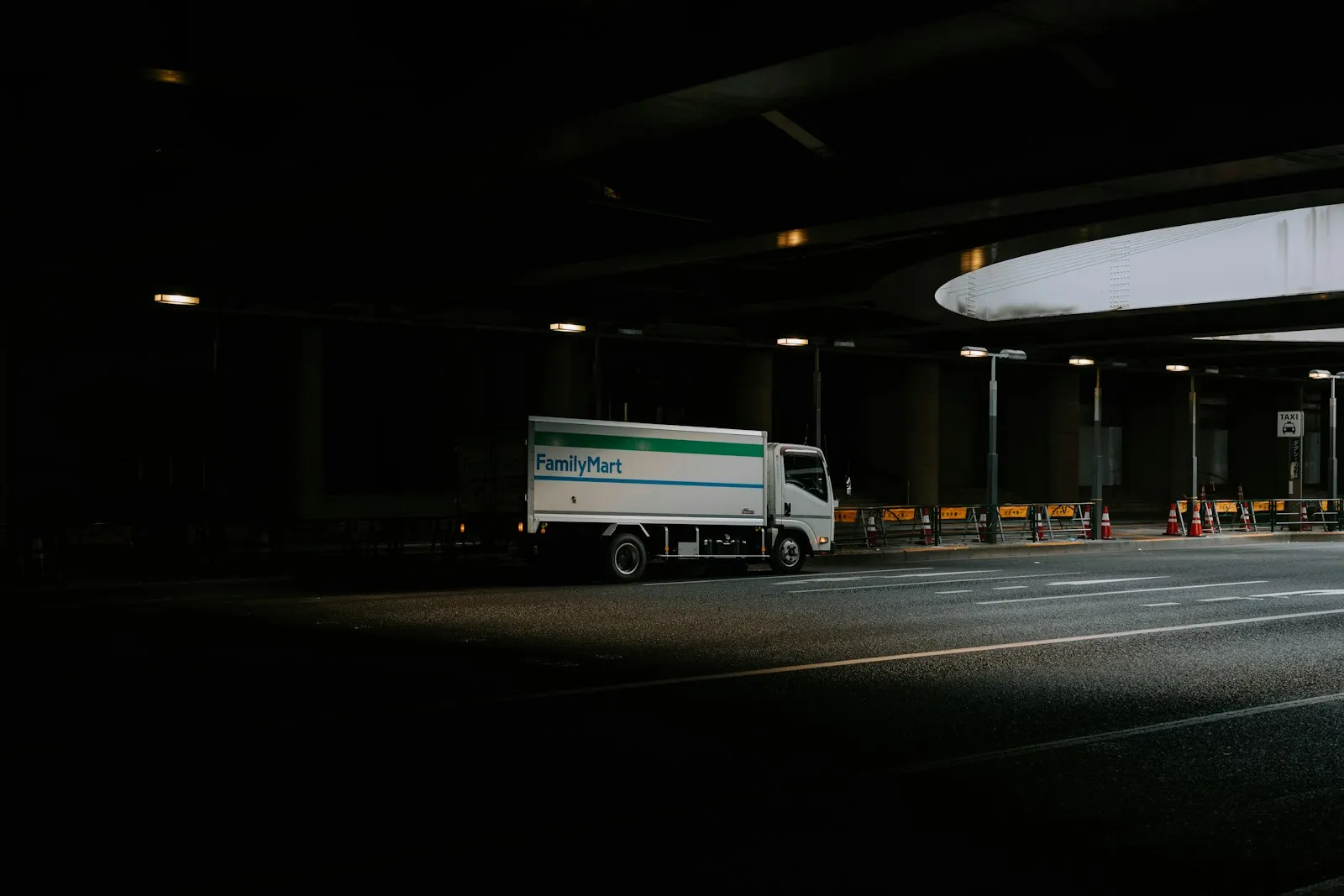
FedEx isn’t one delivery operation; it’s several. FedEx Express has historically employed its own drivers. FedEx Ground and home delivery have long relied on a contractor model, in which independent businesses — often called Independent Service Providers — hire the drivers and frequently own or lease the trucks that carry FedEx branding. FedEx Freight runs its own tractor-trailers. The logo on the side of the van that hit you doesn’t automatically tell you who employed the driver or whose insurance pays.
That single fact drives several of the mistakes below. Keep it in mind as you read.
Mistake #10: Assuming a “Minor” Crash Means Minor Injuries
A delivery van backing out of a driveway on a Bellerose side street at five miles an hour doesn’t look dramatic. But the van weighs far more than your sedan, and soft-tissue, disc and concussion symptoms often show up hours or days later. People skip the doctor because the bumper damage looks small, then discover a week later that their neck won’t turn. Get evaluated the same day or the next. Long Island Jewish Medical Center sits on the Queens–Nassau line in New Hyde Park; urgent care is fine for lesser symptoms. Tell every provider it was a vehicle crash.
Mistake #9: Not Photographing the Truck’s Identifiers
The FedEx logo isn’t enough. Photograph the truck’s number on the body, the license plate, the USDOT number if one is painted on the door, any contractor business name in small print near the cab, and the driver’s ID if offered. On contractor-operated trucks, that small print can be the key to identifying the right defendant and its insurer.
Mistake #8: Letting the Scene Disappear
Jamaica Avenue and Hillside Avenue are lined with storefronts, and many have cameras. Residential blocks off Braddock Avenue and 243rd Street are full of doorbell cameras. Most systems overwrite footage in days or weeks. Ask neighbors and shop owners right away, write down witness names and phone numbers, and photograph skid marks, debris, signals, and sight-line obstructions like parked trucks or overgrown hedges.
Mistake #7: Missing the 30-Day No-Fault Deadline
New York’s no-fault system, set out in Insurance Law §5102, pays medical bills and a share of lost earnings up to the basic $50,000 limit, regardless of fault. But you generally must file the application within 30 days. People wait because they assume FedEx will “take care of it.” It’s your own no-fault coverage (or, for pedestrians without a household policy, the truck’s) that pays first, and the clock is short.
Mistake #6: Posting About the Crash Online
A quick post saying “I’m okay, just shaken up!” or a photo from a family event two weeks later can be printed out and handed to a jury. Defense investigators do look. Keep the crash, your injuries and your recovery off social media until your case is resolved, and ask family members to do the same.
Mistake #5: Skipping or Spacing Out Treatment
To sue for pain and suffering in a car or truck case, New York requires a “serious injury.” Insurers read gaps in treatment as proof you weren’t really hurt. Missing physical therapy for a month because of work or child care is understandable, but it is exactly what an adjuster will highlight. If cost or scheduling is the problem, tell your lawyer; there are often solutions.
Mistake #4: Ignoring the 2026 Rule Changes
Motor-vehicle cases in New York changed in 2026. If you were hurt in the spring of 2026, you need a lawyer who is tracking exactly how the new law applies to your filing date.
Update for 2026: Legislation signed in late May 2026 reshaped motor-vehicle lawsuits filed on or after its effective date (death cases excluded). Under amended CPLR 1411, a plaintiff found more than 50% at fault recovers nothing; the 90/180-day serious-injury category was eliminated; juries decide fault before serious injury; and pain-and-suffering is capped at $100,000 for plaintiffs who were driving uninsured, were convicted of impaired driving, or were committing a felony. Filing timing now matters more than ever.
The practical effect: arguments about your share of fault carry far higher stakes than before. An adjuster nudging you to agree you were “partly to blame” isn’t making small talk.

Mistake #3: Suing (or Settling With) the Wrong Party
Back to the FedEx structure. If the truck was operated by a FedEx Ground contractor, the driver’s employer may be that contractor, with its own commercial policy. FedEx may still be a proper defendant depending on the facts — how much control it exercised, the vehicle’s operating authority, the lease arrangements — but that is a fact-heavy question. If it was a FedEx Express vehicle with a company-employed driver, respondeat superior (the employer’s responsibility for an employee’s on-the-job negligence) is usually more direct. Tractor-trailers on the Cross Island or the Grand Central may be subject to federal motor-carrier rules and insurance minimums under FMCSA regulations.
Name the wrong defendant and you may waste months or run up against the deadline. Sign a release with one party and you may unknowingly release others. Here is a quick comparison of what to look for.
| Vehicle type you saw | Who often employs the driver | What we investigate |
|---|---|---|
| Small van or step van, residential delivery | Frequently a contractor business | Contractor’s identity, its insurer, FedEx’s control over operations |
| Express-branded van or truck | Often FedEx directly | Scope of employment, route data, company policies |
| Tractor-trailer on a parkway or highway | Freight operation or linehaul contractor | Hours-of-service logs, ELD data, maintenance, federal insurance |
Those are general patterns, not rules; the paperwork in your specific case controls. For a broader look at delivery-company structures, see our guides on UPS truck accidents and delivery truck accidents in Bellerose.
Mistake #2: Giving a Recorded Statement
Within days, someone may call from FedEx’s claims operation, a contractor’s insurer, or a third-party administrator. They will be friendly and will ask if they can “record this so we get it right.” Questions like “How fast were you going?” or “Did you see the truck before it turned?” feel harmless. They aren’t. Estimates you give while shaken, medicated or in pain become fixed facts in the file and can be used to push your fault percentage up — which, after the 2026 changes, can matter enormously.
Instead:
- Give your name and contact information only.
- Write down the caller’s name, company, phone number and claim number.
- Say your attorney will be in touch.
- Don’t sign medical authorizations that open your entire history.
- Don’t accept a check that comes with a release attached.
Mistake #1: Waiting Until the Evidence Is Gone
The single most damaging mistake is delay. Commercial vehicles generate data — GPS, telematics, delivery-scanner timestamps, dash-camera video, electronic logging device records for trucks subject to federal hours-of-service rules. Companies have retention schedules, and some data is overwritten routinely. A prompt preservation letter puts the company on notice that it must keep the evidence. Wait months, and the most objective proof of what happened may simply not exist anymore.
Delay also burns legal deadlines. Personal injury suits in New York generally must be filed within three years under CPLR 214, but if a city-owned vehicle or a city road defect played a part, a Notice of Claim is usually due within 90 days. Wrongful death claims must generally be brought within two years of death.

Bonus: What Doing It Right Looks Like
Here’s a hypothetical. A Bellerose Manor driver is stopped at a light on Hempstead Avenue when a contractor-operated delivery van rear-ends her. She photographs the van’s number and the contractor’s name on the door, gets checked at an urgent care that evening, follows up with an orthopedist, files her no-fault application the following week, and declines a recorded statement. Her lawyer sends preservation letters to both the contractor and FedEx, requests the van’s camera footage, and identifies the contractor’s commercial insurer. None of that guarantees a particular result — this is an illustration, not a real client — but it avoids every mistake on this list.
Getting to Our Office from Bellerose
Yakov Mushiyev & Associates, P.C. is located at 1 Cross Island Plaza, Suite 325, Rosedale, NY 11422. From Bellerose, take the Cross Island Parkway south toward the Belt; our building sits right off the Cross Island in Rosedale, roughly a 15–20 minute drive depending on traffic. Office hours are Monday through Friday, 9 to 6. If you can’t come in, we’ll visit you at home or in the hospital, or meet by video.
Speak With a FedEx Truck Accident Lawyer in Bellerose Today
If you’ve already made one of these mistakes, don’t panic — many can be managed if you act now. Our firm handles truck accident claims and car accident claims throughout Queens, and our Bellerose truck accident page covers local crash patterns in more depth. You can also browse common questions on our FAQ page.
Consultations are free, there’s no fee unless we win, and we speak English, Russian and Spanish. Call 718.775.3110 or contact us online to talk with a FedEx Truck Accident Lawyer in Bellerose about your case.
Frequently Asked Questions
Is FedEx responsible if a contractor’s driver hit me?
Possibly, but not automatically. The contractor that employed the driver is usually a defendant, and FedEx may also be liable depending on its control over the operation, vehicle leasing and other facts. We investigate both and pursue every available insurance policy.
Who pays my medical bills right after a FedEx truck crash?
Usually New York no-fault (PIP) coverage pays first, up to the basic $50,000 limit, regardless of fault — your own policy if you were in your car. File the application within 30 days. Pain-and-suffering claims against the at-fault parties come later.
How do I get doorbell or store camera footage from near the crash?
Ask quickly and politely — many Jamaica Avenue and Hillside Avenue businesses will share if asked within days. A lawyer can also send preservation requests. Note exact addresses, since footage on residential blocks off Braddock Avenue is often the only independent record.
The crash happened on the Cross Island Parkway. Does that change which police report I need?
Parkway crashes in Queens are handled by the NYPD, often through the local precinct or highway units; in Bellerose neighborhoods, the 105th Precinct typically responds to street crashes. We obtain the report and any related records as part of our investigation.
Can I still bring a claim if I was partly at fault?
Often yes, with your recovery reduced by your share of fault. For motor-vehicle suits filed under the 2026 reform, a plaintiff found more than 50% at fault recovers nothing, so how fault is presented matters. Talk to us before you discuss fault with any insurer.
This article is general information, not legal advice. Attorney Advertising. Prior results do not guarantee a similar outcome.