
Every weekday, well over a million trips are taken on the commuter railroads and subways that tie New York together: the Long Island Rail Road out of Jamaica and Penn Station, Metro-North out of Grand Central, the subway under every borough except Staten Island, and Amtrak along the Northeast Corridor. Almost all of those trips end without incident. The ones that don't can leave people with broken bones, head injuries and months of missed work.
Train injury claims are not like car accident claims. Who you sue depends on which railroad was involved, and each one has its own deadlines, some of them startlingly short. This guide, written for anyone looking for a New York train accident lawyer, breaks down how these cases work, what the law requires, and what evidence disappears first.
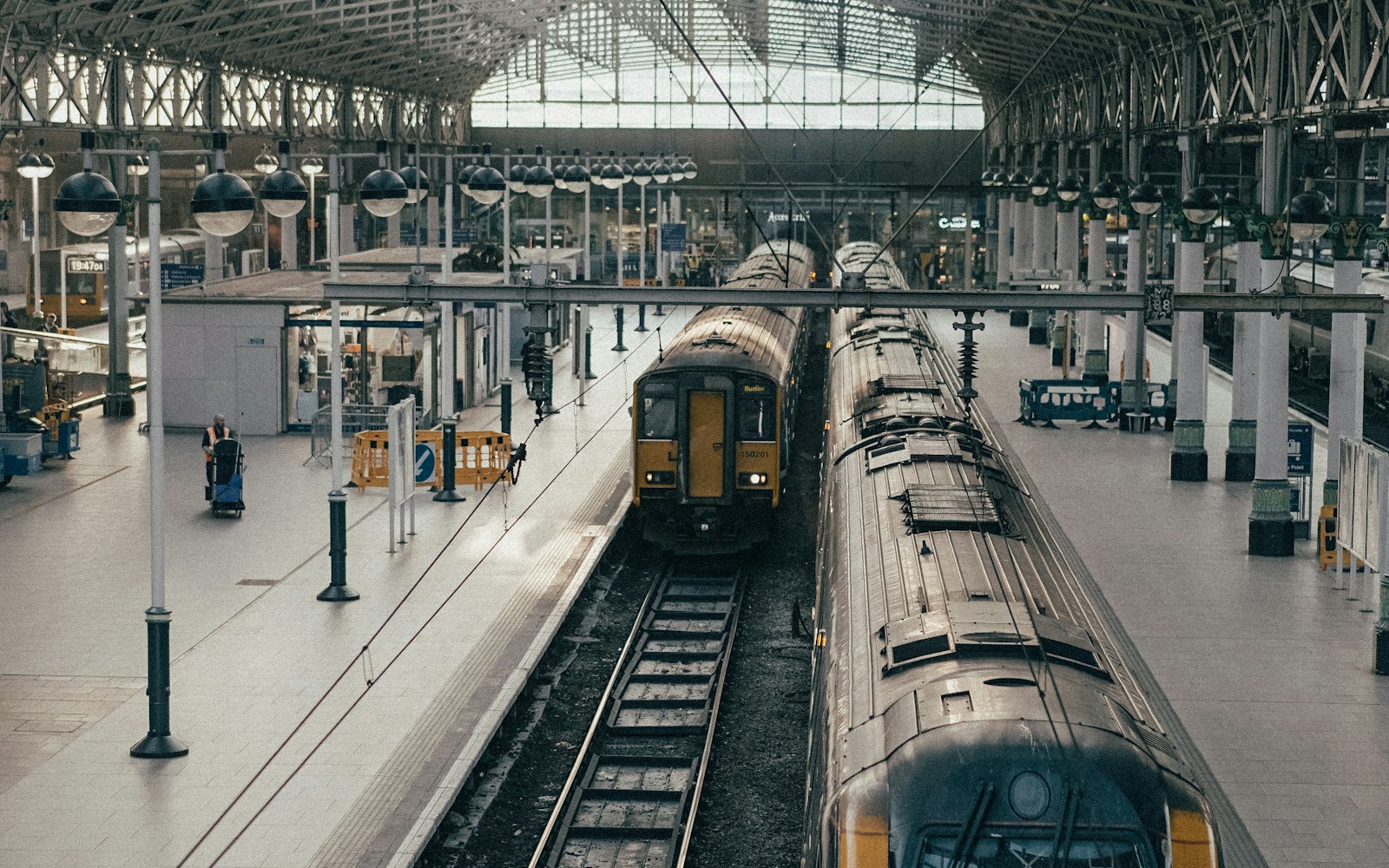
How people get hurt on trains and in stations
Derailments and collisions make the news, but they are a small fraction of the injuries we see. Far more common:
- Platform gap falls, when a passenger's leg slips into the space between the train and the platform, especially at curved platforms
- Doors closing on passengers, or trains moving with someone caught in the doors
- Sudden jerks and stops that throw standing passengers into poles, seats or other riders
- Falls on stairs, escalators and platforms because of water, ice, debris, broken treads or poor lighting
- Overcrowding on platforms during service disruptions, leading to falls or crush injuries
- Falling objects, such as loose ceiling panels or overhead fixtures in stations
- Grade crossing crashes between trains and cars or pedestrians, a particular risk on Long Island where the LIRR crosses many streets at ground level
- Assaults, which can raise questions about security and lighting in some cases
Who runs the train matters more than anything else
New York's rail systems are run by different entities, and the law treats them differently. Before anything else, a lawyer has to answer one question: who operated the train, and who controlled the place you were hurt?
| System | Operated by | What that means for a claim |
|---|---|---|
| Long Island Rail Road (LIRR) | A subsidiary of the Metropolitan Transportation Authority | Special public-authority rules apply. No notice of claim is required, but a written demand and a short lawsuit deadline are. |
| Metro-North Railroad | A subsidiary of the MTA | Similar to the LIRR |
| NYC subway | New York City Transit and MTA affiliates | A 90-day notice of claim, and a lawsuit within one year and 90 days |
| PATH trains | The Port Authority of New York and New Jersey | Its own notice and one-year deadline rules |
| Amtrak | A federally chartered corporation | Generally treated like a private carrier on deadlines, with some federal rules |
| NJ Transit at Penn Station | A New Jersey public entity | New Jersey public-entity rules can apply |
The deadlines, examined
LIRR and Metro-North
Claims against the MTA and its subsidiaries are governed by Public Authorities Law § 1276. Here's a detail many people (and even some websites) get wrong: courts have held that a formal notice of claim is not required to sue the LIRR, because it's a subsidiary exempted by subdivision 6 of that statute. An appellate court said so plainly in a 2008 decision. That does not mean there's no deadline. The law requires a written demand to the authority before you sue, and courts have applied a limitations period of roughly one year, with a short extension for the demand period. That is far less than the three years most injury claims in New York get.
The practical lesson: an LIRR or Metro-North injury has to be acted on within months, not years.
The subway
For subway injuries, the claim is generally against New York City Transit. A notice of claim must be served within 90 days, you may be asked to appear for a hearing (a "50-h" examination), and the lawsuit must be filed within one year and 90 days. Our article on suing the MTA for a subway station fall covers the process step by step.
Amtrak
Amtrak is not a New York public authority, so New York's ordinary three-year negligence deadline generally applies. Federal law does impose an overall cap on passenger damages for a single rail accident, but that cap only matters in mass-casualty events.
Railroad employees
Workers injured on the job at the LIRR, Metro-North or Amtrak are generally covered by the federal Employers' Liability Act (FELA), not state workers' comp. FELA requires proof of employer negligence but allows a full recovery, and has a three-year deadline.
What you have to prove
Railroads and transit agencies are "common carriers." In New York, the Court of Appeals has held that common carriers owe passengers reasonable care under the circumstances, the same standard used in most negligence cases. That means a claim generally requires showing that the railroad, or the people running it, failed to act reasonably and that this failure caused the injury.
Some types of cases have their own rules:
- Sudden stops and jerks. New York courts require proof that the movement was "unusual and violent," something more than the ordinary jolts of train travel. The Court of Appeals described this standard in Urquhart v. New York City Transit Authority. Witness testimony describing how hard the train stopped, and whether other passengers fell, can be critical.
- Platform gaps. These cases often turn on whether the gap was larger than it should have been, whether warnings and gap fillers were in place, and whether the train was properly berthed at the platform.
- Station hazards. Like other premises cases, these depend on whether the agency created the condition or knew, or should have known, about it in time to fix it.
- Doors. Evidence about the conductor's view of the platform, door sensors and the train's operating procedures matters.
New York's comparative fault rule means a passenger who was partly careless, for example rushing for a closing door, can still recover, reduced by their share of fault.
The evidence that disappears first
This is where train cases are won or lost.
- Video. Stations, platforms and many train cars have cameras. But recordings are routinely overwritten. A written preservation demand should go out immediately.
- Train event recorders. Locomotives and many cars have data recorders that log speed, braking and door operation. Getting that data preserved early can prove a sudden stop or a door malfunction.
- Crew and station reports. Conductors, engineers, station agents and police officers often write internal reports. Ask that the incident be reported and write down the names of anyone you speak with.
- Proof you were there. Keep your ticket, your MTA eTix or OMNY record, or the bank statement showing the fare. Transit agencies sometimes dispute whether the injured person was even a passenger.
- Witnesses. Fellow commuters vanish into the crowd within minutes. Get a name and number if you can.
- Photos. The gap, the wet stair, the broken tread, your injuries. Take them before anything is cleaned or repaired.
What to do if you're hurt
- Report the injury to the crew, the station agent or the police on the spot, and ask for an incident number.
- Accept medical care, or get it the same day. Head and knee injuries from platform falls are often worse than they first appear.
- Don't sign anything or give a recorded statement to the railroad's claims department before getting advice.
- Write down exactly where it happened: the station, the track, the car number if visible, and the time.
- Talk to a lawyer quickly, because of the short deadlines.
A note on grade crossings
Long Island has many places where the LIRR crosses streets at ground level. When a train hits a car or pedestrian at a crossing, the questions include whether the gates, lights and bells worked, whether the crossing was properly maintained and visible, and whether the train crew sounded the horn and kept a proper lookout. Event recorder data and the railroad's crossing maintenance records become central evidence.
What a train injury claim can recover
Depending on the case, an injured passenger can seek medical costs not otherwise covered, lost wages and future earning capacity, and pain and suffering. Because these accidents often cause serious injuries, such as fractures, spinal injuries and brain injuries, damages can be substantial. Our guides on brain injury claims and spinal cord injuries explain how those cases are valued. When a train accident is fatal, see our guide for families after a wrongful death.
Common questions about train injury claims
I fell on the stairs at an LIRR station. Is that the railroad's fault?
It may be, but it depends on who maintains that stairway. Some station areas belong to the railroad; others belong to a town, a county or a private property owner. Figuring out who controlled the stairs determines both who you sue and which deadline applies.
Can I still sue if I was running for the train?
Possibly. A passenger's own carelessness reduces a recovery under comparative fault, but it doesn't automatically bar a claim, for example if doors closed on a passenger who was already boarding.
Does no-fault cover a train accident?
Generally no. No-fault covers motor vehicles. Your health insurance pays first, and the claim against the railroad recovers the rest. If a train hit your car at a crossing, no-fault would apply to your car accident injuries.
What if I was hurt during a train delay or evacuation?
Injuries during an evacuation, a stalled train or a crowded platform can still be claims if the railroad didn't manage the situation with reasonable care, for example by failing to provide light, direction or crowd control.
Who pays my medical bills while the case is pending?
Usually your health insurance, Medicaid or Medicare, which may then seek repayment from your recovery. Our guide on medical liens explains how that repayment is negotiated.
Why experience with transit claims matters
The LIRR, Metro-North and New York City Transit have their own claims departments and their own lawyers, and they deal with these cases every day. They know the deadlines, the defenses and the evidence rules. An injured passenger should have someone on their side who knows them just as well. Yakov Mushiyev & Associates represents people hurt on trains, subways and buses throughout Queens, Brooklyn, Manhattan and Long Island. Jamaica Station, the busiest transfer hub on the LIRR, is just minutes from our Rosedale office. See also our guides to subway accident claims and bus accidents.
We've recovered over $80 million for injured New Yorkers. The first consultation is free, we can meet by video or at your home, and there's no fee unless we win.
Call 718.775.3110 or contact us online. With train cases, the clock starts the day of the accident.
This article is general information, not legal advice. Deadlines depend on which entity is responsible and the facts of your case; talk to a lawyer promptly. Prior results do not guarantee a similar outcome. Attorney Advertising.