
A dismissal doesn’t always erase your right to seek compensation. If you’re asking what happens if your personal injury case is dismissed, start with the court order: a dismissal with prejudice generally bars refiling the same claim, while one without prejudice may leave that option open. The reason for the ruling and applicable deadlines shape what you can do next.
A court dismissal can feel like the end, especially after an injury has disrupted your life. But the wording and basis of the ruling matter. A procedural dismissal may leave a way to address the problem, while a final judgment may require a different response. This guide explains what a dismissal or lawsuit loss may mean, when refiling may be possible, and when an appeal may be an option. For a case connected to Rosedale, Rochdale, or Queens, understanding the order and acting promptly can help you focus on the legal issues that shape your next move.
Key Takeaways
- Read the dismissal order closely: its wording and stated reason can shape whether you may correct a problem, refile, or need another legal response.
- Don’t assume “without prejudice” removes every deadline. The time left under the applicable limitations period can still affect your options.
- If you lost after a ruling, focus on whether a significant legal or procedural error may support an appeal and act promptly.
- Understanding the difference between dismissal, summary judgment, and losing at trial can help clarify what the court decided and what options may remain.
Can You Refile Your Personal Injury Claim If It Was Dismissed?
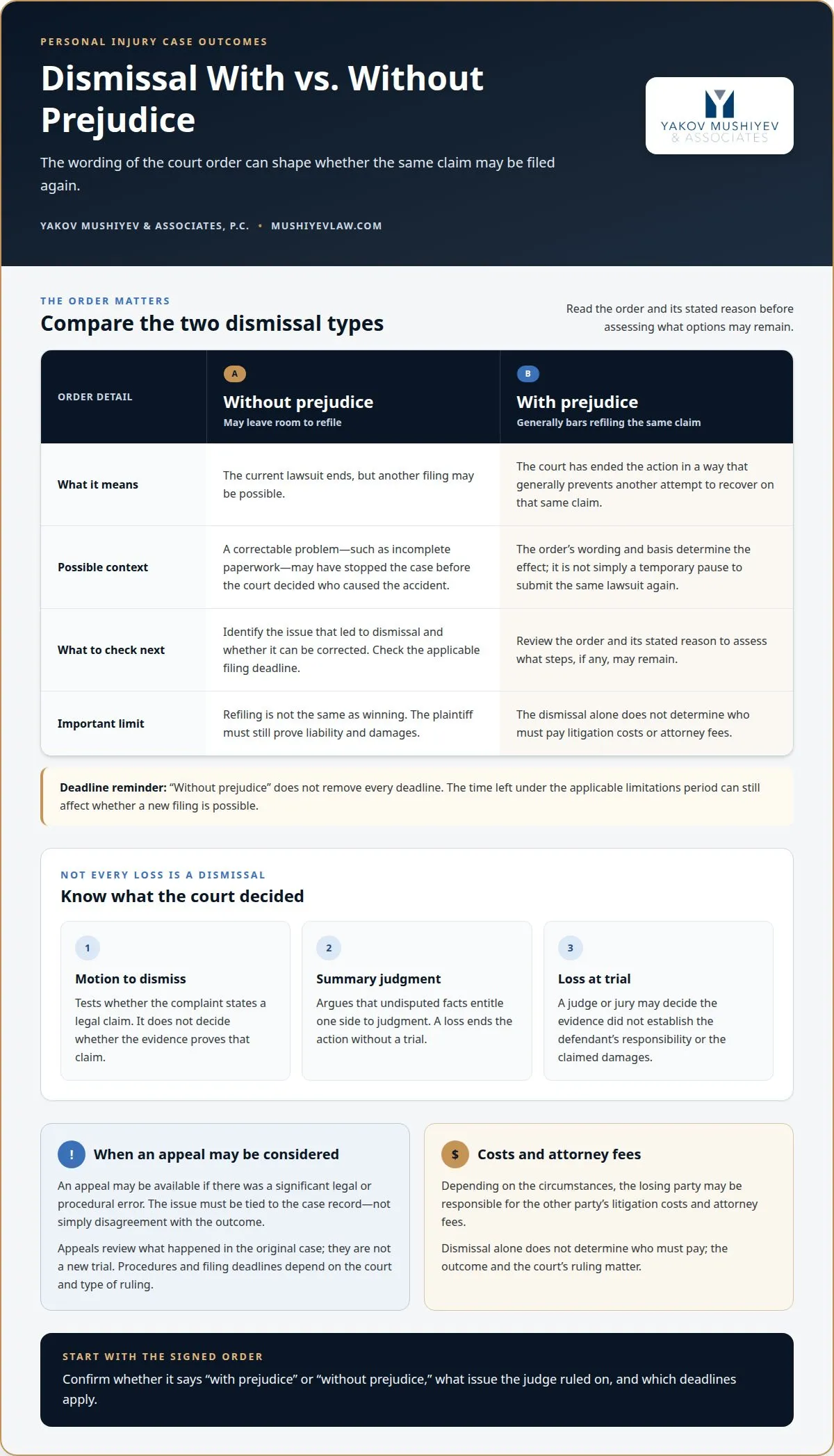
Whether you can refile depends on the dismissal order and the reason the judge ended the lawsuit. A dismissal without prejudice may leave room to correct a filing problem and bring the claim again, while a dismissal with prejudice generally bars refiling. Read the order carefully: it identifies the court’s decision and may explain what issue must be addressed.
Common reasons for dismissal include filing in a court without jurisdiction, naming the wrong defendant, improper service, or failing to state a legally recognized claim. A judge may also dismiss a case because of missed deadlines, incomplete paperwork, failure to appear, or noncompliance with a court rule or order. For example, a complaint naming the wrong party may need to be corrected before the case can proceed.
A motion to dismiss tests whether the complaint states a legal claim; it doesn’t decide whether the evidence proves that claim. A separate summary judgment motion argues that undisputed facts entitle one side to judgment. Even if a case survives an early dismissal motion, weak documentation, inconsistent statements, delayed medical care, or social media posts may undermine the evidence later.
A lawyer may seek to withdraw if communication or cooperation breaks down, or a conflict affects continued representation. Withdrawal doesn’t decide whether the injury claim can continue. The lawsuit’s status and any court requirements still matter, so clarify who will handle upcoming filings and deadlines before representation ends.
Who pays court costs and attorney fees when a personal injury case is dismissed? Depending on the circumstances, the losing party may be responsible for the other party’s litigation costs and attorney fees. Dismissal alone doesn’t determine who must pay; the outcome and the court’s ruling matter.
If you’re weighing what happens if your personal injury case is dismissed, find out whether the order permits refiling and what led to the dismissal. Those details help determine whether the next step is correcting a defect, addressing evidence gaps, or considering another legal option.
What Happens If You Lose a Personal Injury Lawsuit in Texas?
The judgment’s wording determines whether the same claim may continue. A dismissal with prejudice and one without prejudice have different consequences for your next legal step.
Dismissal Without Prejudice
A dismissal without prejudice ends the current lawsuit but may allow the plaintiff to refile. This distinction matters when a correctable problem, such as incomplete paperwork, stopped the case before the court decided who caused the accident. Refiling isn’t the same as winning: the plaintiff must still prove liability and damages, and applicable deadlines can affect whether a new filing is possible.
Dismissal With Prejudice
A dismissal with prejudice generally prevents the plaintiff from refiling the same claim. The court has ended the action in a way that bars another attempt to recover compensation on that claim. The order isn’t simply a temporary pause that lets the plaintiff submit the same lawsuit again. Its language and basis matter when assessing what steps, if any, remain.
Losing at trial is different from a dismissal before trial. A judge or jury may decide that the evidence didn’t establish the defendant’s responsibility or the claimed damages. That outcome can end the case and prevent recovery through that lawsuit. A loss on summary judgment also ends the action without a trial, based on the court’s ruling on the issues presented.
Start by reading the final order and identifying whether it says “with prejudice” or “without prejudice.” Then note whether the judge ruled on the merits, a procedural issue, or a filing defect. Those details shape whether another filing or an appeal may be considered. If an accident led to the claim, Yakov Mushiyev & Associates, P.C. can provide car accident legal representation to help address the injury lawsuit’s outcome in Rosedale, Rochdale, Queens, and surrounding areas.
Can I appeal the ruling in my personal injury case?
An appeal may be available if the court made a significant legal or procedural error. A plaintiff generally must identify an error in the case record, not simply disagree with the outcome. Appeal procedures and filing deadlines depend on the court and type of ruling, so the signed order and docket dates matter.
Keep the judgment, court notices, motions, and relevant hearing records together. Note the date the court entered its ruling and whether anyone filed a post-judgment motion. These details can affect the time available to seek review. Don’t assume discussions with the other parties pause a court deadline.
Possible appeal issues include the court applying the wrong law, mishandling a required procedure, or entering a ruling unsupported by the record. An appeal usually reviews what happened in the original case; it isn’t a new trial to present the dispute again. The plaintiff must connect the claimed error to the decision being challenged.
Deadlines for filing an injury lawsuit are separate from deadlines for appealing a judgment. In New York, the general statute of limitations for negligence claims is three years from the accident date. Claims involving a municipality may have a 90-day notice-of-claim deadline, while wrongful death claims generally have a two-year period from the date of death. Those filing periods do not set the appeal deadline.
State rules differ, including how courts handle refiling after a dismissal and the procedures for appealing. Don’t assume that a deadline from another state applies to a case connected to Rosedale, Rochdale, or Queens.
A consultation with a personal injury attorney can focus on the order, the record, the parties involved, and the dates in the case file. Separating a possible appeal issue from a filing deadline helps clarify which legal question needs attention first.
Dismissal of personal injury cases
A dismissal ends all or part of a lawsuit before the court, but it doesn’t always decide whether the defendant caused the injury. A motion to dismiss challenges the legal sufficiency of the complaint, while summary judgment asks the court to decide the case based on undisputed facts.
At the motion-to-dismiss stage, courts assume the plaintiff’s factual allegations are true. The question is whether those allegations support a legally recognized claim, not whether discovery has proved them. If the complaint survives, the case can proceed to discovery and litigation. If it doesn’t, dismissal may end the case before the plaintiff can obtain evidence through discovery.
Summary judgment involves a different test. Either party can argue in a motion that undisputed facts support judgment in that party’s favor. For example, a defendant might argue that the evidence cannot establish a required element of the claim. A partial dismissal can also narrow the case, limiting the damages or legal claims that remain while other issues continue.
What does it mean when a personal injury case is dismissed? The court has ended the entire lawsuit or removed part of it from consideration. The order and the motion behind it show whether the ruling concerns the complaint, the evidence, or specific claims only.
In some situations, a court may consider reopening a dismissed case because of court error, newly discovered evidence, or opposing-party misconduct. Reopening isn’t automatic: the request needs legal grounds and supporting evidence, and the judge decides whether to grant it. A personal injury lawyer can review the order, motion, and record to identify which issues remain open.
If a court ruling has cut off your chance to pursue an injury claim, discuss your dismissed injury case and the options it may leave.
Yakov Mushiyev & Associates, P.C
Yakov Mushiyev & Associates, P.C. can help you understand how a dismissal affects an accident injury claim and what legal issues may remain. The firm represents people injured in car, truck, and motorcycle accidents, as well as slip-and-fall incidents. For cases connected to Rosedale, Rochdale, or Queens, the dismissal order, the court’s stated reason, and any upcoming deadlines are key details in assessing what may happen next.
Consider speaking with a personal injury lawyer when you receive a dismissal order, face a challenge from the defendant, or need guidance about your lawsuit’s status. A lawyer can explain the ruling and the decisions before you without assuming that refiling or an appeal is available in every case.
Contact Yakov Mushiyev & Associates, P.C. to discuss your personal injury case.
Choose Your Next Move With Clarity
After a ruling, uncertainty can make every decision feel urgent. Start with what the court decided, what issue remains unresolved, and what action may still fit your goals. If you’re wondering what happens if your personal injury case is dismissed, the answer begins with the actual order and the record behind it, not assumptions about what the ruling means.
Bring the decision, court notices, and key case documents to a focused legal discussion. A careful review can help distinguish possible next steps from options the ruling has closed, so you can weigh your priorities with a clearer understanding of the case. Focus on preserving choices rather than reacting to pressure.
You don’t have to sort through the uncertainty alone. Contact Yakov Mushiyev & Associates, P.C. to discuss your situation and decide how to move forward with greater clarity.
Frequently Asked Questions
What Is a Motion to Dismiss?
A motion to dismiss asks the court to end a lawsuit because of a legal or procedural problem. For example, a defendant might argue that the complaint names the wrong party or that the court lacks authority to hear the dispute. The motion challenges the case’s legal basis rather than asking the judge to weigh all the evidence. These answers are general information, not legal advice about your specific case. Consult a lawyer for case-specific guidance.
Can You Reopen a Dismissed Case?
A court may reopen a dismissed case in some circumstances, but reopening requires a request supported by legal grounds. Records showing newly discovered evidence or an event that prevented a party from pursuing the case may be relevant. The judge decides whether to grant the request. Keep the dismissal order and relevant case documents together for a lawyer’s review.
Why Might My Lawsuit Be Dismissed?
A lawsuit may be dismissed because of a missed deadline, incomplete filing, improper service, failure to appear, or failure to follow a court order. A judge may also find that the court lacks jurisdiction or that the complaint doesn’t state a legally recognized claim. For someone injured in Rosedale or elsewhere in Queens, the court’s stated reason helps identify what ended the case.
What is dismissal with prejudice?
A dismissal with prejudice generally bars the plaintiff from bringing the same claim again. The case cannot simply be restarted by submitting the same lawsuit. Read the signed order to see which claims the judge dismissed and whether the ruling covers the entire case or only part of it. The precise order matters when assessing remaining options.
What is involuntary dismissal?
An involuntary dismissal occurs when the court ends a case without the plaintiff choosing to withdraw it. It may follow a defendant’s request or a procedural problem, such as a missed court appearance or failure to comply with an order. The reason and wording in the court’s order show whether the dismissal covers the whole case and what consequences may follow.
What is voluntary dismissal?
A voluntary dismissal occurs when the plaintiff asks to end their own lawsuit instead of continuing it. A plaintiff might consider this after deciding not to proceed or needing to address a filing issue. The dismissal order matters because it can explain whether the case ends with or without prejudice. Before taking action, consider how the request may affect deadlines and any future filing.