
Most people never think about the difference between a car crash and a semi truck crash until they are in one. The differences are not just about size. They show up in the physics, in the federal regulations, in the insurance, in the evidence and in who can be held responsible. This explainer from a Semi Truck Accident Lawyer in Bellerose walks through the numbers and the law side by side, with a comparison table you can use to see at a glance why a tractor-trailer case on Jamaica Avenue is handled differently from a two-car collision on a side street off Hillside Avenue.
Yakov Mushiyev & Associates, P.C. represents people hurt in eastern Queens and along the Nassau line. Consultations are free, there is no fee unless we win, and we meet in English, Russian or Spanish — in our Rosedale office, at your home, in the hospital or by video.

The Physics: Why Weight and Stopping Distance Matter
Federal law sets a general gross vehicle weight limit of 80,000 pounds for trucks on the Interstate system. A typical passenger car weighs somewhere around 3,000 to 4,500 pounds. In other words, a fully loaded semi can weigh roughly twenty times as much as the sedan it collides with. When two vehicles of such unequal mass meet, the lighter vehicle absorbs a disproportionate share of the force.
That is why federal crash data from the National Highway Traffic Safety Administration consistently show that most people killed in crashes involving large trucks are occupants of the other vehicles, not the truck. Injuries that are rare in ordinary fender-benders — multiple fractures, spinal cord injuries, traumatic brain injuries, crush injuries and amputations — are far more common when a semi is involved.
Stopping distance and blind spots
- Stopping distance: a loaded tractor-trailer needs considerably more road to stop than a car traveling at the same speed, and air brakes have a short lag before they fully engage. Following too closely is a recurring cause of rear-end truck crashes.
- Blind spots: the FMCSA’s long-running “No-Zone” safety message warns that semis have large blind spots directly in front, directly behind and along both sides, especially the right side.
- Wide turns: trailers track inside the path of the cab, so a right turn from Jamaica Avenue onto a narrow residential street can sweep across a bike lane, a crosswalk or a waiting car.
- Rollover and jackknife risk: high centers of gravity and shifting cargo make rollovers and jackknifes possible even at moderate speeds.
Comparison Table: Car Crash vs. Semi Truck Crash in New York
The table below summarizes the most important practical differences. It is a simplification, but it captures why semi truck claims require a different playbook.
| Issue | Typical car-vs-car crash | Semi truck crash |
|---|---|---|
| Vehicle weight | About 3,000–4,500 lbs each | Up to 80,000 lbs gross on Interstate highways |
| Main rules | NY Vehicle and Traffic Law | NY VTL plus federal FMCSA rules (49 CFR) for interstate carriers |
| Driver records | Usually none beyond license and phone | Hours-of-service logs, ELD data, qualification file, drug and alcohol testing records |
| Vehicle data | Sometimes an event data recorder | Engine control module, ELD, telematics, often forward and driver-facing cameras |
| Minimum liability coverage | NY minimum $25,000 / $50,000 bodily injury | Federal minimum of $750,000 for many general freight carriers; higher for some hazardous cargo |
| Possible defendants | The other driver and vehicle owner | Driver, motor carrier, trailer owner, shipper or loader, broker, maintenance company |
| Speed of insurer response | Days | Often hours, through rapid-response teams |
| Typical injuries | Soft tissue to moderate | More frequently catastrophic or fatal |
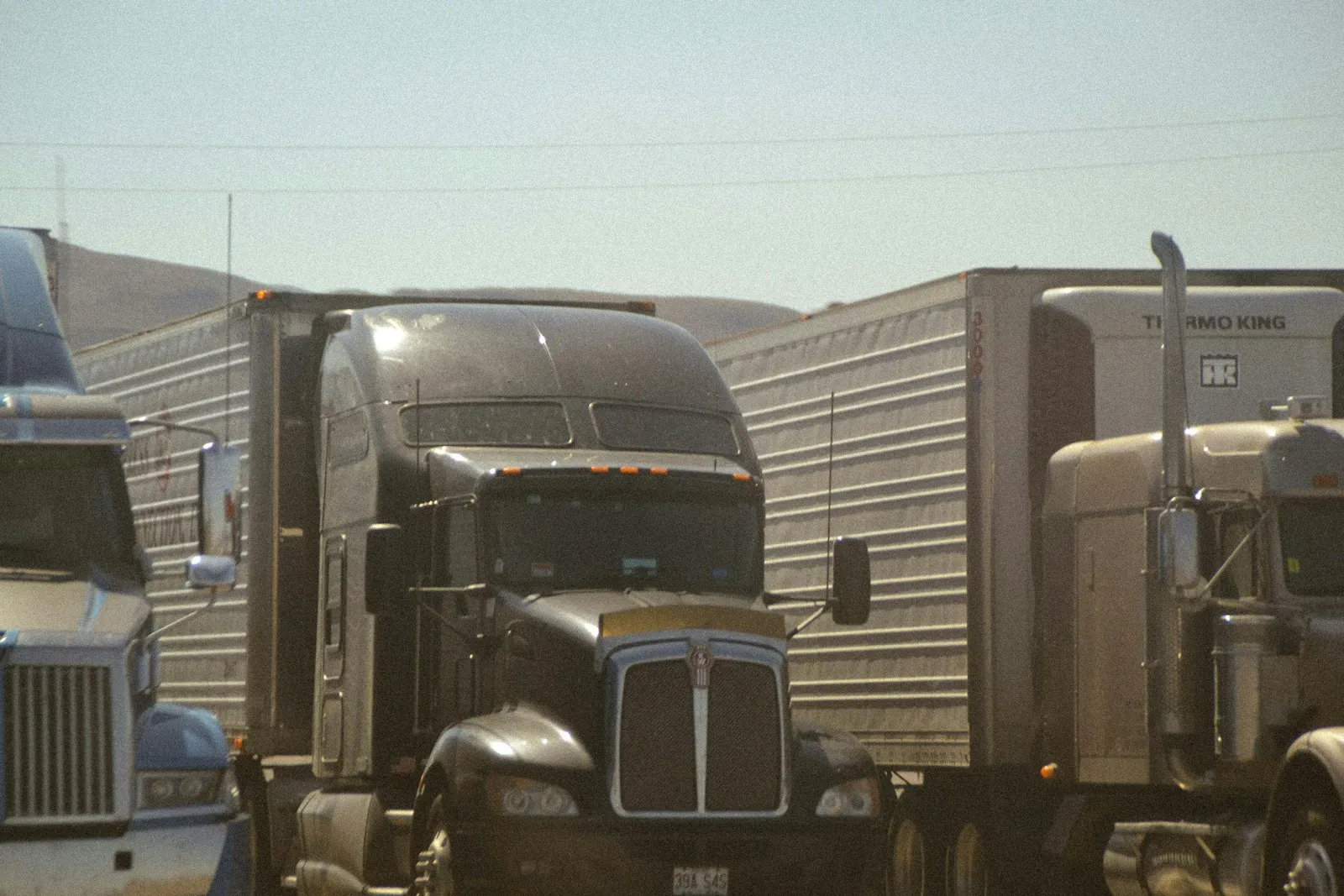
The Federal Rulebook: What Semi Truck Drivers and Carriers Must Do
Interstate motor carriers and their drivers are regulated by the Federal Motor Carrier Safety Administration. When we investigate a semi truck crash, we compare what happened to these rules, because a violation can be powerful evidence of negligence.
Hours of service (49 CFR Part 395)
The hours-of-service rules for property-carrying drivers generally include:
- An 11-hour driving limit after 10 consecutive hours off duty.
- A 14-hour window: no driving beyond the 14th consecutive hour after coming on duty.
- A 30-minute break after 8 cumulative hours of driving.
- A 60/70-hour limit over 7 or 8 consecutive days, which may be reset with 34 or more consecutive hours off duty.
Most drivers record these hours on electronic logging devices, which makes the data objective — if it is preserved. Delivery deadlines that are impossible to meet legally are a red flag we look for in dispatch records.
Driver qualification (Part 391) and maintenance (Part 396)
Carriers must keep a driver qualification file showing the driver’s license, driving history and medical certification, among other things. Inspection, repair and maintenance rules require carriers to systematically inspect and maintain their vehicles, and drivers to perform and document inspections. Worn brakes, bald tires, broken lights and unsecured loads are not just mechanical problems; they can be regulatory violations.
Insurance (Part 387)
Federal financial-responsibility rules require for-hire carriers of general freight to carry at least $750,000 in liability coverage, with higher minimums for oil and certain hazardous materials. Many carriers carry more, often through layered or excess policies. Finding every layer is part of our job.

New York Law That Shapes Every Semi Truck Claim
Federal rules tell us how the truck should have been operated. New York law decides how you are compensated.
No-fault benefits first
Under Insurance Law §5102, New York no-fault insurance pays basic economic loss — medical bills and a portion of lost earnings — regardless of who caused the crash, up to $50,000 in basic benefits. The application is generally due within 30 days of the accident. Motorcyclists are excluded from no-fault benefits.
The serious injury threshold
To sue for pain and suffering arising from a motor vehicle crash, you must meet the “serious injury” threshold in §5102(d), which includes categories such as fractures, significant disfigurement, and permanent or significant limitation of use of a body function or system. Semi truck victims frequently qualify, but the medical documentation still has to be right.
Comparative fault and deadlines
Under CPLR 1411, a plaintiff’s own share of fault reduces the recovery proportionally. Most personal injury lawsuits must be filed within three years (CPLR 214); wrongful death claims within two years of death; and claims against New York City or its agencies require a Notice of Claim within 90 days.
Update for 2026: New York’s motor-vehicle tort reform, signed in late May 2026, changes several rules for motor-vehicle lawsuits filed on or after its effective date (death cases are not covered). A plaintiff whose fault exceeds 50% — more than the defendants’ — recovers nothing under CPLR 1411(b). The 90/180-day serious-injury category is eliminated. Juries decide fault before serious injury. And pain-and-suffering awards are capped at $100,000 for plaintiffs who were driving uninsured, were convicted of impaired driving, or were committing a felony. If your semi truck crash happened before then, the filing date may matter; ask us.
A Second Table: Key Deadlines After a Semi Truck Crash
| Deadline | What it covers | Source |
|---|---|---|
| 30 days | No-fault application to the insurer | NY no-fault regulations |
| 90 days | Notice of Claim if a City vehicle or agency is involved | General Municipal Law §50-e |
| 1 year and 90 days | Lawsuit against the City after a Notice of Claim | General Municipal Law |
| 2 years from death | Wrongful death action | EPTL 5-4.1 |
| 3 years | Most personal injury lawsuits | CPLR 214 |
Evidence deadlines are not on this table, but they matter just as much. Carriers are not required to keep every type of record forever, and video from businesses along Jamaica Avenue or the Jericho Turnpike can be recorded over within days.
Where Semi Trucks Travel Around Bellerose
Commercial vehicles are banned from New York City parkways, including the Cross Island Parkway and the Grand Central Parkway, both of which run near Bellerose. Semis serving the neighborhood and the Nassau border therefore use surface roads: Jamaica Avenue (which becomes the Jericho Turnpike at the county line), Hillside Avenue, Braddock Avenue and nearby arteries. That means semi truck crashes here tend to involve turning trucks, double-parked trailers, pedestrians and cyclists, and cars pulling out from residential blocks — not just high-speed highway collisions. Occasionally a truck enters a parkway by mistake, which can itself be evidence of poor route planning.

How a Semi Truck Accident Lawyer in Bellerose Uses This Data
Data is only useful when it is collected, preserved and explained to an insurer or a jury. In a typical case we send preservation letters right away, identify the carrier through its USDOT number, request the driver’s logs and ELD data, obtain engine and camera data, and retain experts in accident reconstruction and trucking safety where appropriate. We then line up the medical evidence for the serious-injury threshold and calculate the full losses, including future care and lost earning capacity.
For more background, see our Bellerose personal injury lawyer hub, our local truck accident lawyer in Bellerose page and our firm-wide truck accident practice. Related Bellerose guides cover 18-wheeler accidents and commercial truck accidents. You can also learn about Yakov Mushiyev.
Getting to Our Office from Bellerose
Yakov Mushiyev & Associates, P.C. is at 1 Cross Island Plaza, Suite 325, Rosedale, NY 11422, open Monday through Friday from 9 to 6. From Bellerose, take the Cross Island Parkway south toward the Belt Parkway; 1 Cross Island Plaza sits right off the Cross Island in Rosedale, about 15 to 20 minutes away depending on traffic. If you are not able to travel, we can meet at your home, at the hospital or by video.
Speak With a Semi Truck Accident Lawyer in Bellerose
If a semi truck crash has changed your life or a family member’s, call 718.775.3110 or contact us online for a free consultation. No fee unless we win. English, Russian and Spanish spoken.

Frequently Asked Questions
Is a semi truck accident case worth more than a car accident case?
Not automatically. Value depends on the injuries, the evidence of fault and the available insurance. Semi truck crashes do tend to cause more serious injuries, and interstate carriers must carry higher minimum coverage than ordinary drivers, so more coverage is often available when the facts support it.
What is an ELD, and why does it matter in my case?
An electronic logging device records a commercial driver’s driving time and duty status. It can show whether the driver exceeded federal hours-of-service limits, which can point to fatigue. We ask the carrier to preserve this data early.
Do federal trucking rules apply to a semi that only drives within New York?
FMCSA rules primarily govern interstate commerce, and New York has adopted many similar requirements for intrastate carriers. Which rules apply depends on the carrier and the trip, which we determine during the investigation.
Which hospital handles serious crash injuries near Bellerose?
Long Island Jewish Medical Center in New Hyde Park, right on the Queens–Nassau line, is the nearby trauma hospital. In an emergency, EMS decides where to take you based on your injuries.
How long do I have to file a semi truck lawsuit in New York?
Generally three years from the crash for personal injury, and two years from death for wrongful death. If a City vehicle or agency is involved, a Notice of Claim is due within 90 days. Evidence can disappear long before these deadlines, so it is best to act early.
This article is general information, not legal advice. Attorney Advertising. Prior results do not guarantee a similar outcome.