
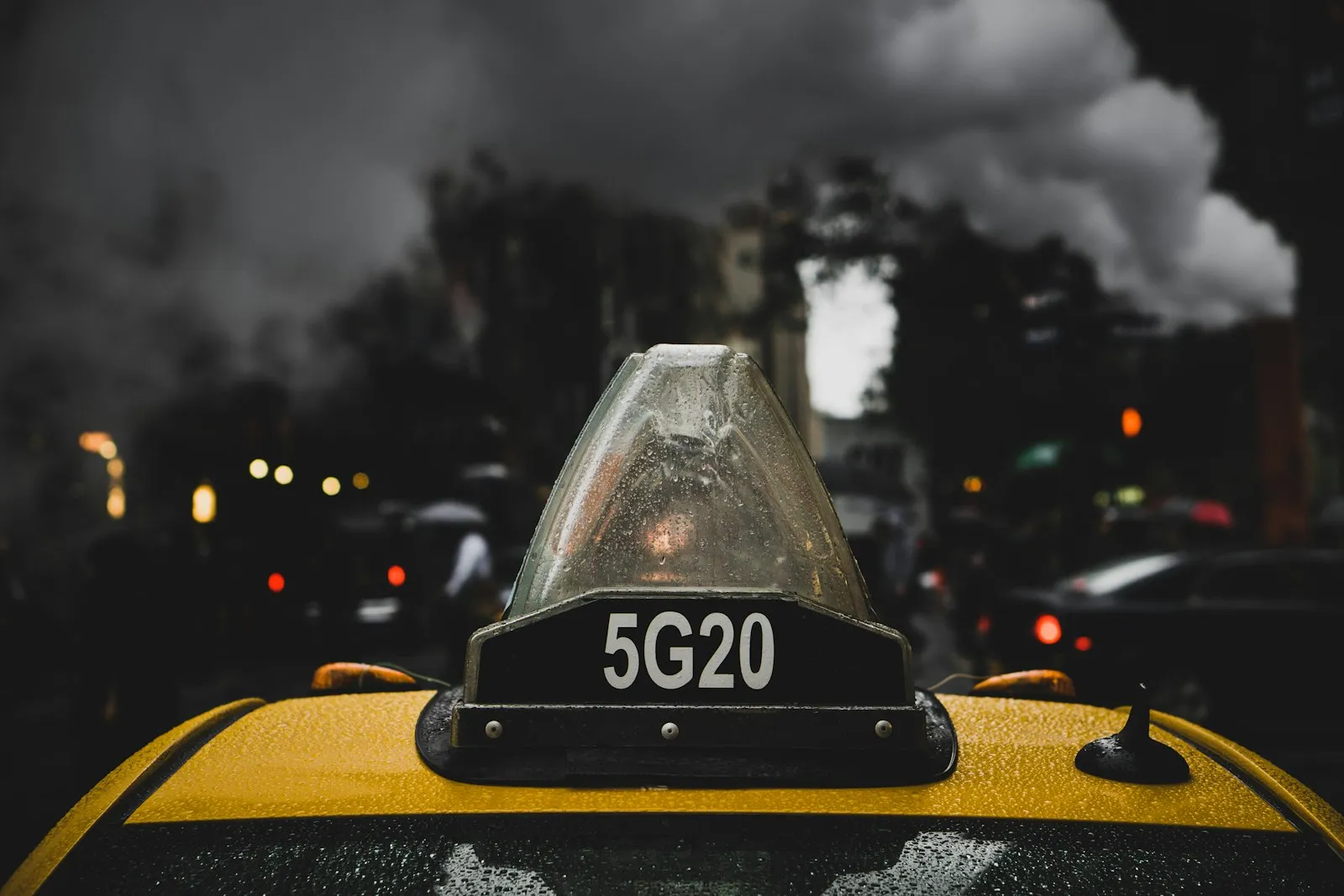
Picture three people on the same Astoria block on a Friday night. One is in the back seat of a yellow cab heading home to Ditmars. One is crossing 30th Avenue with a bag of groceries. One is pedaling up 31st Street under the elevated train. If that cab runs a light and hits all three, they’ve been in the same accident, but under New York law they are in three different positions. Where the money comes from, what they need to prove and what the insurer will argue can all be different.
We wrote this guide because people in our consultations are often surprised by that. A passenger assumes the rules are the same as for a pedestrian; a cyclist assumes the bike counts as a car. Below we walk through each role, using the law as it stands after the 2026 changes. If you’d prefer to talk it through, call us at 718.775.3110, any time, day or night.
The One Rule Everyone Shares: No-Fault Comes First
Before we split people up by role, here’s what all three have in common. New York is a no-fault state. Personal injury protection, or PIP, pays medical bills, a portion of lost earnings and other basic economic loss regardless of who caused the crash (Insurance Law § 5102(a)). For TLC-licensed vehicles, including yellow and green taxis, Uber and Lyft cars, black cars and limos, the required PIP is $100,000 per person since March 1, 2026, while the general state minimum is $50,000.
And everyone shares the same first deadline: the no-fault application is due within 30 days of the accident. It’s the deadline we see people miss most often, usually because they were busy just trying to get better.
If You Were the Passenger
Passengers generally claim no-fault benefits from the vehicle they were riding in. So if you were in a green cab or an app car when it crashed, that vehicle’s TLC coverage is usually your starting point, even if another driver caused the collision.
The good news for passengers is on the fault side. Under the new CPLR 1411(b), in motor-vehicle injury suits filed on or after May 26, 2026, a claimant who is more at fault than the defendants recovers nothing, and one who is 50% or less at fault has their award reduced. A passenger sitting in the back seat rarely carries much blame, if any. Insurers sometimes still try, for example by arguing that an unbelted rider made injuries worse, so it’s worth being careful about what you say.
What passengers should save:
- The trip receipt or the in-app ride record, which identifies the car and driver
- A photo of the medallion number or TLC plate and the driver’s license displayed in the car
- Names and numbers of any other passengers or witnesses
- The other vehicle’s plate and insurance information, if a second car was involved
If You Were on Foot
Pedestrians generally claim no-fault from the vehicle that struck them. In Astoria, that’s often a cab turning onto a side street off Steinway Street or Broadway, or a car pulling away from the curb after a drop-off without seeing someone stepping off the sidewalk.

Here’s where pedestrians need to pay attention to the 2026 fault rule. If the insurer can convince a jury you were more at fault than the driver, maybe because you crossed mid-block or against the signal, you could recover nothing for pain and suffering. A few things help push back:
- Footage. Delis, pharmacies and restaurants along Astoria’s shopping strips often have cameras facing the sidewalk. Ask quickly; many systems record over themselves.
- Signal timing. Where you were in the crosswalk and what the walk signal showed can be reconstructed.
- Driver conduct. Phone use, speed, failure to yield on a turn, or pulling into a crosswalk to grab a fare.
If You Were on a Bike
Cyclists, like pedestrians, generally claim no-fault from the vehicle that hit them. The classic Astoria bike crash with a taxi is a “dooring”: a cab or app car stops in or next to the bike lane, and a passenger swings the door open without looking. Others happen when a cab cuts right across a cyclist to reach the curb.
Dooring cases raise a fair question: who’s responsible, the passenger who opened the door or the driver who stopped there? Sometimes both. We look at where the car stopped, whether the driver directed the passenger to exit on the street side, and what the vehicle’s own records show.
Same crash, three different claims. A passenger, a pedestrian and a cyclist each start with a different insurer, face different fault arguments and need different evidence.
Side by Side: How the Three Roles Compare
| Passenger | Pedestrian | Cyclist | |
|---|---|---|---|
| No-fault (PIP) usually from | The vehicle you were in | The vehicle that hit you | The vehicle that hit you |
| Typical fault argument | Rarely any; sometimes seatbelt use | Crossing outside the crosswalk or against the signal | Riding position, lane choice, signals |
| Key evidence | Trip record, medallion or TLC plate | Storefront video, signal timing | Photos of bike and car door position |
| Serious injury threshold for pain and suffering | Applies | Applies | Applies |
The Serious Injury Hurdle, After 2026
No matter your role, to recover for pain and suffering in a car case you need a “serious injury.” The 2026 state budget removed the category that was based on days missed from normal activities, leaving eight: death; dismemberment; significant disfigurement; fracture; loss of a fetus; permanent loss of use of a body organ, member, function or system; permanent consequential limitation of use of a body organ or member; and significant limitation of use of a body function or system.
The order of decisions changed too. Under Insurance Law § 5104, the fact-finder decides fault before deciding whether your injury is serious. These rules apply to lawsuits filed on or after May 26, 2026, regardless of when the crash happened.

Practically, that means getting checked out promptly, telling your doctors about every symptom, and following through on treatment. Gaps in care give insurers room to argue your injury isn’t what you say it is.
Around Astoria Park, the Hell Gate Bridge and the Museum of the Moving Image
Astoria Park is one of the neighborhood’s big draws: a large waterfront park along the East River, beneath the RFK Bridge and beside the Hell Gate railroad bridge. People come for the summer pool, the track, the tennis courts and the river views. A short ride away, the Museum of the Moving Image on 35th Avenue pulls in visitors for exhibits and film screenings.
All three roles collide around these spots. Passengers get dropped at the park along Shore Boulevard and nearby side streets, and the cab then turns around on a narrow block. Pedestrians, many of them kids and families heading to the pool, cross between parked cars. Cyclists use the waterfront and the streets leading up from Ditmars. Near the museum, cabs and app cars stop on 35th Avenue and the side streets around it, and a burst of pickups can follow an evening screening. When a crash happens in these settings, the details of where and how the driver stopped tend to decide who’s at fault.
A Hypothetical to Tie It Together
This is a hypothetical example, not a real client’s story. A cab heading toward the park pulls over abruptly near Ditmars Boulevard to drop off a rider. The rider swings the door into a passing cyclist. A moment later, the cab pulls away from the curb and clips a pedestrian stepping into the crosswalk. The rider claims no-fault from the cab she was riding in. The cyclist and the pedestrian generally claim no-fault from the cab as the vehicle involved in each of their injuries. On the injury side, the driver’s stopping position, the rider’s door, and where the cyclist and pedestrian were will all be weighed. Each person’s case would rise or fall on different evidence, even though it’s the same crash.
Taxi Accident FAQs for Passengers, Pedestrians and Cyclists
I was a passenger in an Uber, not a yellow cab. Does that change anything?
Uber and Lyft cars in NYC are TLC-licensed, so the $100,000 TLC PIP requirement applies just as it does for taxis. You’d generally claim no-fault from the car you were riding in.
I was hit while crossing mid-block. Do I still have a case?
You still have no-fault benefits. For pain and suffering, it depends on how fault is divided. If your share is 50% or less, you can recover a reduced amount; if it’s greater than the driver’s, you recover nothing in suits filed on or after May 26, 2026.
A taxi passenger doored me on my bike. Who do I claim against?
For no-fault, generally the taxi’s insurer. For the injury claim, potentially the passenger, the driver, or both, depending on how and where the car stopped.
How long do I have to sue?
Generally three years for personal injury under CPLR 214(5) and two years for wrongful death. If a City or MTA vehicle was involved, a notice of claim is due within 90 days.
Is there a cap on what I can recover?
Usually no. The new $100,000 cap on non-economic damages applies only to an at-fault claimant who was driving uninsured, was convicted of impaired driving, or was convicted of a felony committed while driving. It doesn’t apply to passengers or to others’ claims, and it doesn’t cap economic damages.
Where can I check that a cab or app car was properly licensed?
The NYC Taxi & Limousine Commission licenses these vehicles and drivers. We can help pull the records as part of your claim.
About Astoria: Local FAQs
What’s the easiest way to get to Astoria Park without a car?
Many people take the N or W to Astoria–Ditmars Boulevard or Astoria Boulevard and walk west toward the river.
Which bridges connect Astoria to the rest of the city?
The RFK (Triborough) Bridge connects Astoria with Manhattan and the Bronx. The Hell Gate Bridge next to Astoria Park carries trains, not cars.
Where’s the nearest hospital?
Mount Sinai Queens is on 30th Avenue in Astoria. In an emergency, call 911 and go wherever EMS decides is best.
Which neighborhoods are next door?
Long Island City to the south, Woodside to the southeast, and Jackson Heights and East Elmhurst to the east. We also serve taxi accident clients in Long Island City.
Is it hard to find parking in Astoria?
On the busy commercial strips, often yes, which is one reason so many residents rely on cabs and app cars, and why double-parked drop-offs are so common. If you’re getting out of a car, use the curb side whenever you can.
What county and court cover Astoria?
Astoria is in Queens County, so injury suits are generally filed in the Supreme Court of the State of New York, Queens County. General court information is on the NY Courts website.
Let’s Figure Out Where You Stand

Whether you were riding, walking or biking, we’d be glad to look at your situation for free. For the bigger picture, see our Astoria taxi accident lawyer page, our Astoria accident lawyer hub, our car accident practice area, our FAQ and our settlements.
Call 718.775.3110 (24/7 phone intake) or contact us online. Our office is at 1 Cross Island Plaza, Suite 325, Rosedale, NY 11422, open Monday to Friday, 9 to 6. We speak English, Russian and Spanish, we can visit you at home or in the hospital or meet by video, and there’s no fee unless we win.
Attorney Advertising. This is general information about New York law, not legal advice, and reading it does not create an attorney-client relationship. Every case depends on its own facts. Prior results do not guarantee a similar outcome.