
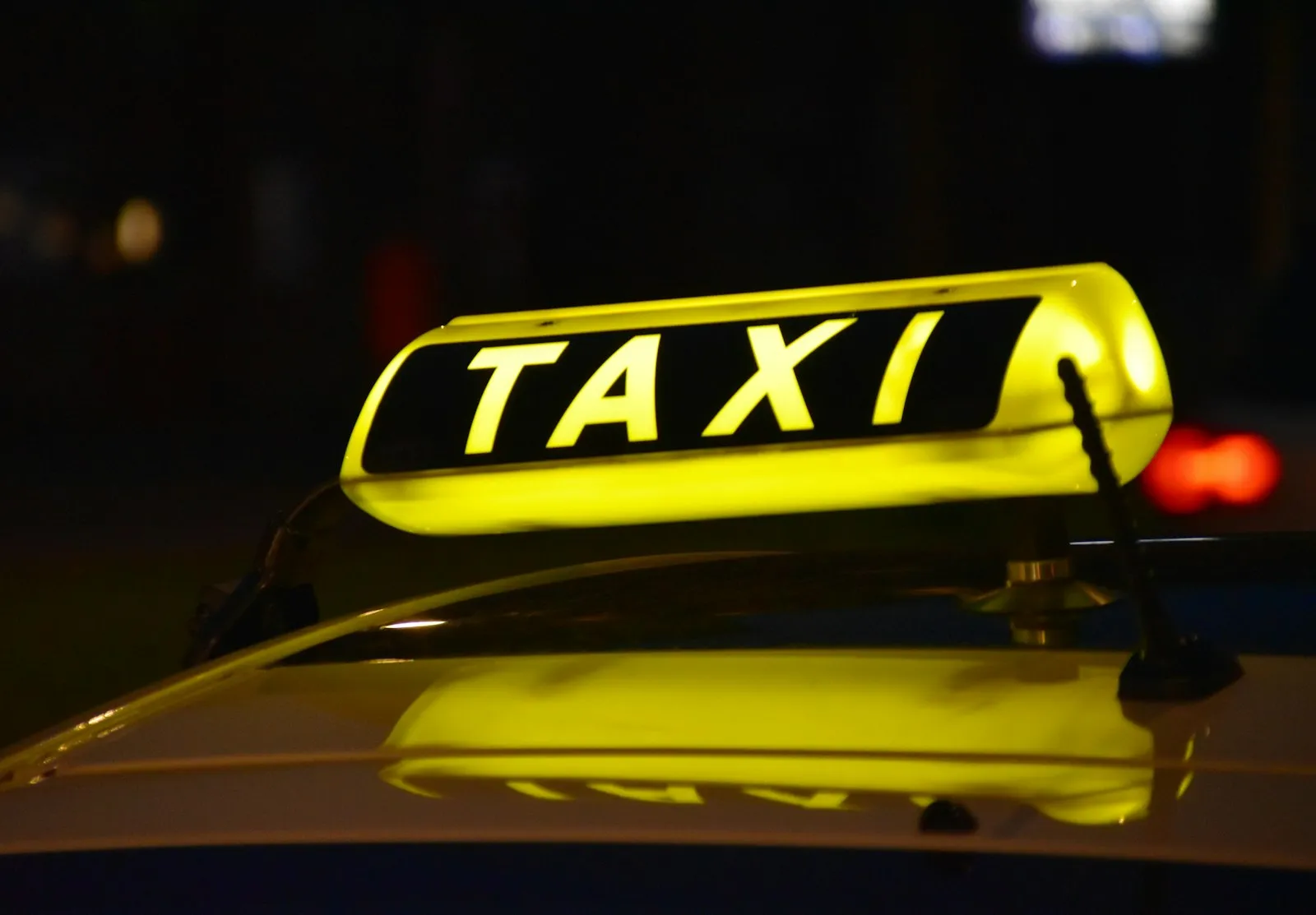
The last song ends a little after ten. Picture a man we will call David — a hypothetical, not a client — walking out of Forest Hills Stadium with a friend, phone in hand, watching a little car icon crawl toward him on a ride-hailing app. The streets around the Gardens are full of people doing the same thing. His driver, unable to stop where the app told him to, rolls forward along a side street near Station Square, and David steps off the curb to wave him down. At the same moment a yellow cab, also hunting for its fare, pulls around the stopped car. David is clipped at the hip and knocked to the pavement. Nobody meant for it to happen. Everybody was looking at a phone.
Pickup and drop-off crashes are some of the most common, and most misunderstood, taxi accidents in Forest Hills. They happen at low speeds, often in a crowd, and frequently involve more than one vehicle that was “just stopping for a second.” This article uses David’s hypothetical night, and two other made-up examples, to explain how these claims work under New York law as it stands in 2026. If you need advice about a real crash, call 718.775.3110 or read our Forest Hills taxi accident lawyer page.
Why the Curb Is Where Forest Hills Taxi Trips Go Wrong
Most of a cab ride is uneventful. The risky moments come at the edges: when the driver is scanning the sidewalk for a passenger, when a passenger is opening a door into traffic, and when someone on foot is crossing toward a car that has not fully stopped. Forest Hills has more of those edges than most Queens neighborhoods, for three reasons.
- Transit hubs that feed taxis. The Forest Hills–71st Avenue subway station (E, F, M, R) opens onto Queens Boulevard, and the LIRR’s Forest Hills station sits at Station Square. Riders coming off trains often finish their trips by cab or app car.
- A destination that empties all at once. When a show at Forest Hills Stadium ends, a large crowd leaves together and requests rides at the same time.
- Streets not designed for heavy pickup traffic. The curving, narrow streets of Forest Hills Gardens and the busy shopping blocks of Austin Street were not built to handle dozens of cars stopping and starting at once.

Inside the Gardens: Forest Hills Stadium on a Show Night
Forest Hills Gardens is a planned community of Tudor-style houses and winding, privately maintained streets south of the LIRR tracks, anchored by Station Square. Forest Hills Stadium stands within it. The stadium belongs to the West Side Tennis Club and hosted the U.S. national tennis championships for decades before the tournament moved to Flushing Meadows; today it draws crowds mainly for outdoor concerts in the warmer months.
What that means for traffic is simple: a few hours of heavy foot traffic followed by a surge of for-hire vehicles. Before a show, cabs and app cars drop people off along Queens Boulevard, Austin Street, Continental Avenue and the streets leading into the Gardens. Afterward, the flow reverses and intensifies. Drivers wait, circle and double-park. Riders walk into the roadway to find their car. Some drivers make quick U-turns to reach a passenger on the other side. Others stop abruptly in a travel lane when they spot a waving arm.
A pickup crash rarely has one simple cause. That is why identifying every vehicle and every app involved, while the evening is still fresh, matters so much.
Three Hypothetical Curbside Crashes, and Who Pays in Each
The answer to “who pays?” in New York starts with no-fault insurance, also called Personal Injury Protection or PIP. Under Insurance Law § 5102, PIP pays medical bills, lost earnings and other basic economic loss regardless of fault. Which policy you claim against depends on your role in the crash. Each of the following scenarios is invented for illustration.
Scenario one: David, the pedestrian
David was on foot when the cab struck him. Pedestrians generally claim PIP from the vehicle that hit them, so his first claim goes to the cab’s no-fault carrier. TLC-licensed vehicles, which include yellow cabs, green Boro Taxis, for-hire vehicles such as Uber and Lyft, and limousines, must carry PIP of $100,000 per person as of March 1, 2026, after a TLC rule implementing Local Law 90 of 2025 reduced the earlier requirement. For his pain and suffering, David would look to the cab driver and owner, and possibly the app car’s driver, if his injury meets New York’s serious-injury threshold.
Scenario two: Ana, the passenger getting out
Ana takes a Boro Taxi home from the 71st Avenue station. Her driver stops in the travel lane rather than at the curb, and as she steps out, a passing car strikes the open door and throws her to the ground. As a passenger, Ana generally claims PIP from the vehicle she occupied: the Boro Taxi. Her liability claim might involve both the taxi driver, for stopping where he did, and the passing driver, for not leaving room.
Scenario three: Sam, the driver rear-ended
Sam is driving his own car along Queens Boulevard’s service road when an app car ahead of him stops abruptly to pick someone up, and a yellow cab behind him cannot stop in time. Sam’s PIP generally comes from his own policy, since he was in his own vehicle. His liability case would focus on the drivers whose conduct caused the chain reaction.
| Your role | Where PIP usually comes from | Liability claim may target |
|---|---|---|
| Pedestrian or cyclist | The vehicle that struck you | That driver and owner, plus any vehicle that contributed |
| Taxi or app-car passenger | The vehicle you were riding in | Your driver, the other driver, or both |
| Driver of a private car | Your own policy | The taxi or app car and its owner |
For medallion taxis, TLC rules require liability coverage of at least $100,000 per person and $300,000 per occurrence. Coverage for app cars depends on the trip and what the records show, so we never assume a figure.
The 2026 Fault Rule and Why It Bites in Crowds
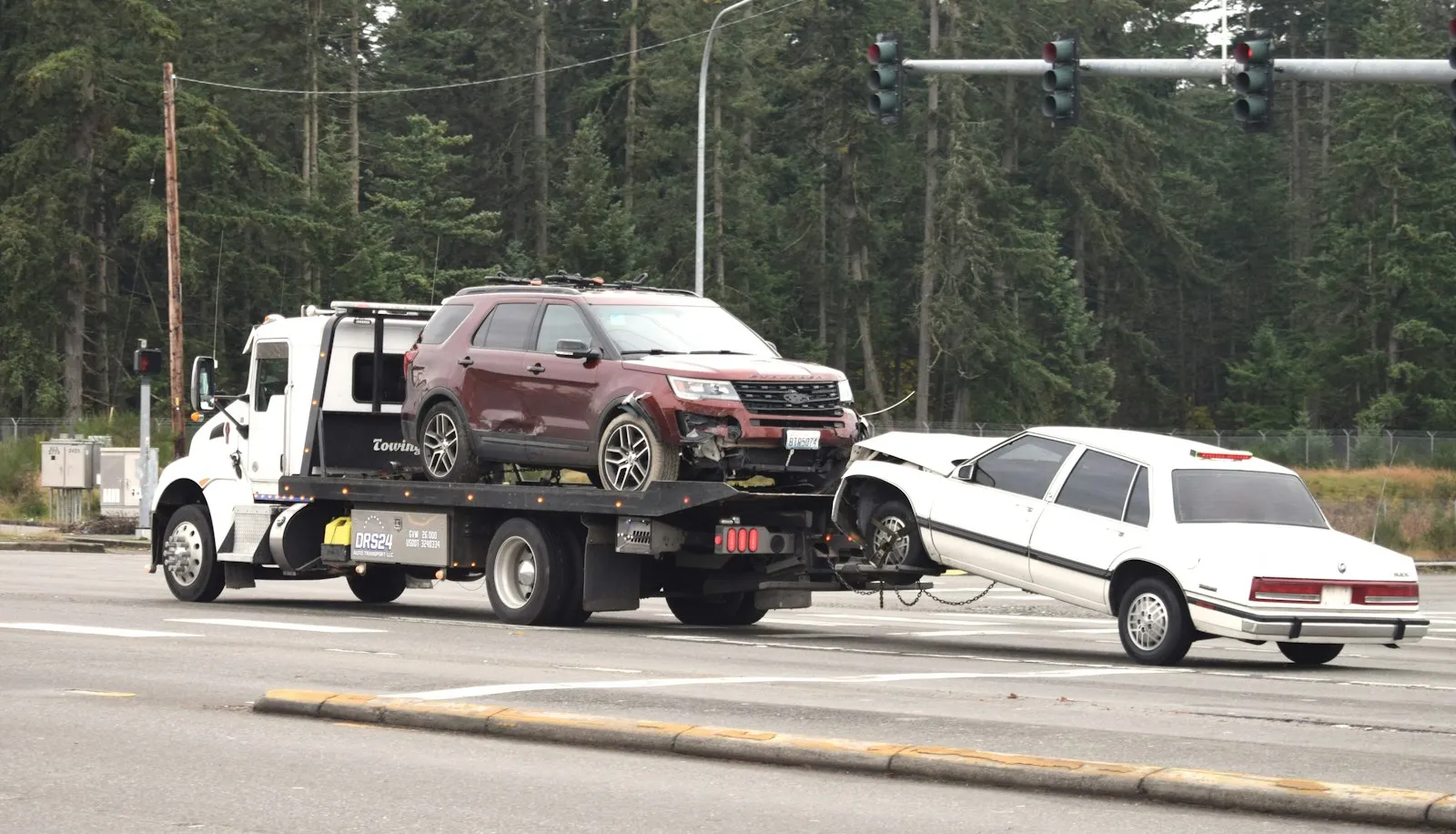
Pickup crashes invite finger-pointing. The driver says the pedestrian stepped out without looking. The pedestrian says the driver was watching the app. In 2026, that argument carries higher stakes.
For motor-vehicle injury lawsuits under Insurance Law Article 51 filed on or after May 26, 2026, new CPLR 1411(b) bars recovery for a claimant whose fault is greater than that of the defendant, or of all defendants combined. If the claimant’s share is 50% or less, damages are reduced proportionally. The new rule follows the filing date, not the accident date, according to DFS Circular Letter 2026-01. And under Insurance Law § 5104, the jury decides fault before it reaches the serious-injury question.
In David’s case, the fact that two vehicles were maneuvering for fares helps him: his share is compared against both drivers combined. But it also shows why evidence matters. A video clip showing the cab pulling around a stopped car could make the difference between a reduced recovery and none at all.
The serious-injury threshold after the budget change
To recover for pain and suffering, an injured person must show a serious injury under Insurance Law § 5102(d). The 2026 budget (Chapter 58, Part EE) removed the former time-based category, leaving eight: death; dismemberment; significant disfigurement; fracture; loss of a fetus; permanent loss of use of a body organ, member, function or system; permanent consequential limitation of use of a body organ or member; and significant limitation of use of a body function or system. A hip or wrist fracture from a fall in the street would fall into the fracture category; soft-tissue injuries require careful medical documentation.
What to Do Before You Leave the Curb
Crowds disperse quickly and phones die. If you are able, do these things before you go home:
- Call 911 if anyone is hurt, and ask that police respond.
- Photograph the cab’s medallion number or TLC plate, the app car’s plate, and the exact spot where each vehicle stopped.
- Screenshot your ride app: driver name, car, trip status and timestamps.
- Get names and numbers from witnesses, including event staff or traffic agents nearby.
- Note businesses or buildings with cameras facing the street; footage can be overwritten.
- See a doctor the same night or the next day, even if you feel “fine” through the adrenaline.
The Deadlines Don’t Wait for the Weekend
- No-fault application: 30 days from the accident (11 NYCRR 65-1.1).
- Notice of claim against NYC or the MTA: 90 days, if a City vehicle or bus was involved.
- Personal injury lawsuit: 3 years (CPLR 214(5)).
- Wrongful death: 2 years (EPTL 5-4.1), limited to pecuniary damages.
Accident reporting forms are available from the New York State DMV, and the Department of Financial Services explains how no-fault works for consumers. Complaints about a specific cab or driver can go to the TLC.
Taxi Accident FAQs for Pickup and Drop-Off Crashes
My ride hadn’t picked me up yet. Am I a passenger or a pedestrian?
If you were outside the car when it hit you, you are generally treated as a pedestrian and claim PIP from the vehicle that struck you, even if it was the car you ordered.
I was hurt opening the cab door. Who is responsible?
It depends on the facts: where the driver stopped, whether the passing vehicle had room, and what you could see. Your PIP generally comes from the cab you were riding in.
What if I was looking at my phone when I stepped into the street?
You may still recover. For lawsuits filed on or after May 26, 2026, you are barred only if your fault exceeds the defendants’ combined fault; otherwise your award is reduced by your share. No-fault benefits do not depend on fault.
How much PIP does a taxi carry now?
TLC-licensed vehicles must carry $100,000 per person in PIP as of March 1, 2026. Private cars carry the state minimum of $50,000 per person.
Is a bruise or sprain enough to sue?
Not by itself. You must meet one of the eight serious-injury categories in Insurance Law § 5102(d). No-fault still covers your economic loss even if you do not.
Does the new law apply if my crash happened before May 26, 2026?
The new fault rule applies to lawsuits filed on or after May 26, 2026, regardless of the accident date. Talk to a lawyer promptly about timing.
Getting Around Forest Hills: Neighborhood Questions
What’s the easiest way to reach Forest Hills Stadium?
Many visitors take the E, F, M or R to Forest Hills–71st Avenue or the LIRR to Forest Hills station, then walk into the Gardens. Arriving by train avoids the crush of cars at pickup time.
Where is Station Square?
Station Square is the brick plaza at the LIRR’s Forest Hills station, at the northern entrance to Forest Hills Gardens, near Austin Street and Continental Avenue.
Which major roads run through or near Forest Hills?
Queens Boulevard, Woodhaven Boulevard, Yellowstone Boulevard, Metropolitan Avenue and Union Turnpike, with the Grand Central Parkway and Jackie Robinson Parkway along its edges.
Where is the nearest hospital?
Long Island Jewish Forest Hills, part of Northwell Health, is in the neighborhood. In an emergency, call 911.
Which precinct and court cover Forest Hills?
The NYPD’s 112th Precinct covers Forest Hills. Civil cases from the neighborhood are generally filed in Queens County Supreme Court; see nycourts.gov.
Is there green space nearby?
Yes. Forest Park lies along the southern edge of Forest Hills, and Flushing Meadows Corona Park is a short drive north and east.
Hurt at a Forest Hills Pickup? Let’s Talk
David, Ana and Sam are made up. If something like their night happened to you, Yakov Mushiyev & Associates, P.C. can review it for free, in English, Russian or Spanish, at home, in the hospital or by video. There is no fee unless we win. Call 718.775.3110 (phone intake 24/7) or reach us through our contact page. Our office is at 1 Cross Island Plaza, Suite 325, Rosedale, NY 11422, open Monday through Friday, 9 to 6.

More reading: our Forest Hills accident lawyer hub, our car accident practice, our settlements, the general FAQ, and taxi crash help in neighboring Rego Park and Kew Gardens.
Attorney Advertising. This is general information about New York law, not legal advice, and reading it does not create an attorney-client relationship. All scenarios in this article are hypothetical. Prior results do not guarantee a similar outcome.