
Two people can be hurt by the same taxi on the same afternoon in Glendale and end up with claims that look almost nothing alike. One is sitting in the back seat when the cab is struck on Cooper Avenue. The other is crossing Myrtle Avenue with a bag of groceries when a cab turns into her. Both are injured, both deserve to be made whole, but the insurer that pays first, the evidence that matters most and the questions about fault are different for each. This article explains those differences, so that whichever position you were in, you know where your claim begins.
If you are looking for an overview of how our firm handles these cases, see our main page for a taxi accident lawyer in Glendale. What follows is the more detailed explanation I would give a neighbor who asked me over the fence.
The Common Ground: No-Fault Comes First
Whether you were inside the cab or outside it, New York’s no-fault system is the first stop. Under Insurance Law § 5102(a), personal injury protection (PIP) pays medical expenses, lost earnings and other basic economic loss regardless of who caused the crash. Two points apply to everyone:
- The no-fault application must be filed within 30 days of the accident (11 NYCRR 65-1.1).
- Since March 1, 2026, TLC-licensed vehicles, including yellow and green taxis, for-hire vehicles, Uber and Lyft cars and limousines, must carry PIP of $100,000 per person; the requirement was cut from $200,000 on that date. The general state minimum for other vehicles is $50,000 per person.
Where passengers and pedestrians part ways is the question of which vehicle’s PIP coverage applies.

If You Were a Passenger in the Taxi
A passenger generally claims no-fault benefits from the vehicle he or she occupied. If you were riding in a yellow cab, a green Boro Taxi or an app-based car, that means the TLC vehicle’s PIP coverage is ordinarily where your medical bills and lost wages are submitted.
Who can be at fault
Passengers are rarely responsible for a crash, which is an advantage. The question is usually which driver was negligent: the cab driver, the driver of the other vehicle, or both. A passenger can have a claim against more than one party, and it is not unusual for the two drivers’ insurers to blame each other. Your lawyer’s job is to make sure that argument between insurers does not leave you without a recovery.
Evidence that matters most for passengers
- The trip receipt or app record showing pickup time, route and driver details.
- The TLC license number displayed in the vehicle and the plate number.
- Whether you were wearing a seat belt, which insurers will ask about.
- Photographs of both vehicles and of the intersection.
- Names and phone numbers of the other driver and any witnesses.
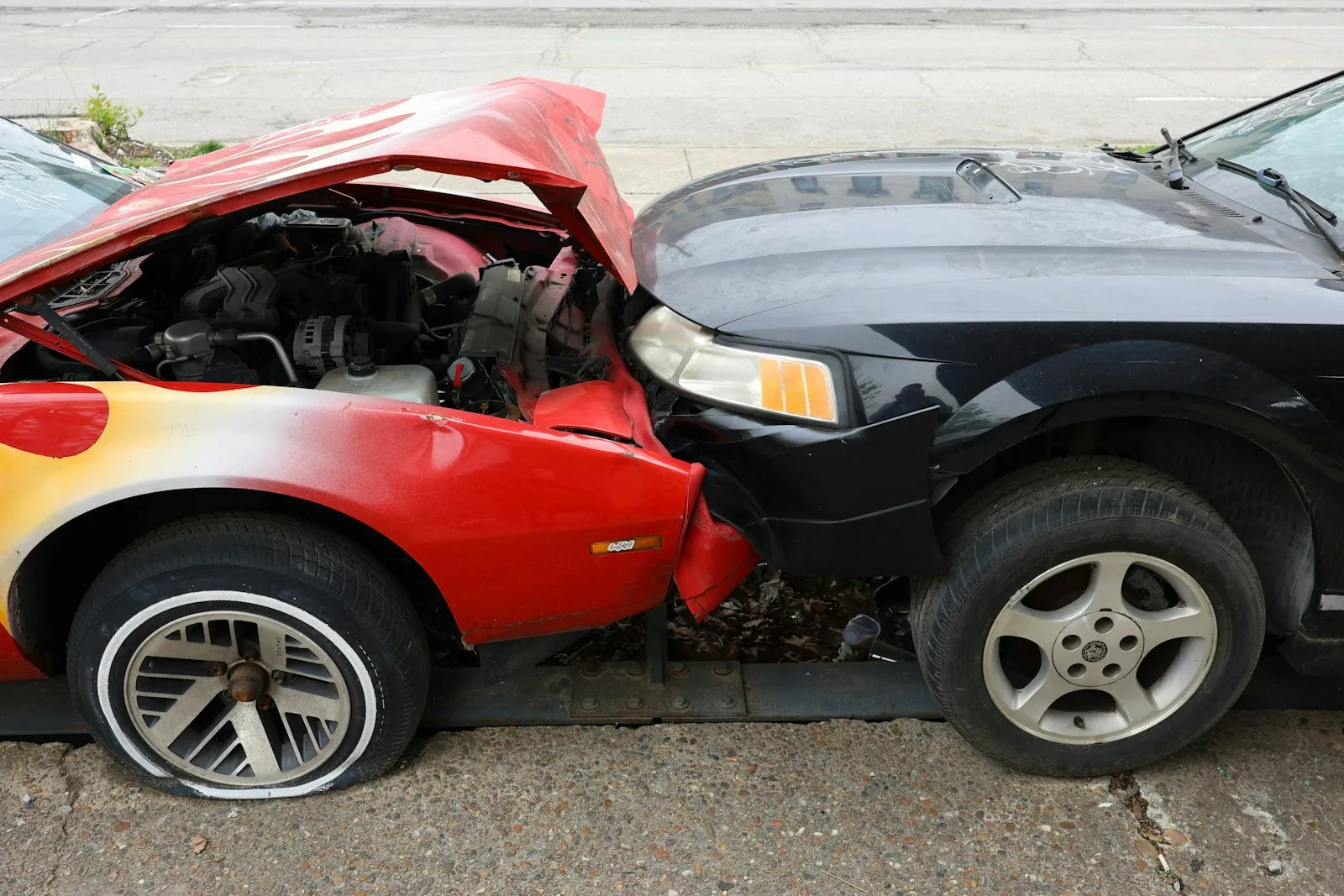
Hypothetical example. A passenger takes an app-based car home from The Shops at Atlas Park. As the car pulls onto Cooper Avenue, a delivery van strikes its side. The passenger’s medical bills go first to the app car’s PIP coverage. If the injury meets the serious injury threshold, the passenger may pursue the van driver, the app car’s driver, or both, depending on what the evidence shows about the turn.
If You Were a Pedestrian or Cyclist
Pedestrians and cyclists generally claim no-fault benefits from the vehicle that struck them. If a taxi hit you, the taxi’s PIP coverage is ordinarily the starting point, even if you own a car with your own policy. Bring any insurance cards you have so your lawyer can confirm the right order of coverage.
Fault questions are harder on foot
A pedestrian’s claim often turns on details: whether the person was in a crosswalk, which signal was showing, whether the driver was turning, and whether parked vehicles blocked the view. Insurers sometimes argue that a pedestrian stepped out from between parked cars or crossed against the light. Those arguments matter more now than they did before 2026, for the reason explained in the next section.
Evidence that matters most for pedestrians
- The exact spot where you were struck, ideally photographed with the crosswalk and signals visible.
- Security video from storefronts, which on a commercial street like Myrtle Avenue may exist but is often recorded over quickly.
- Witnesses who saw the signal and the vehicle’s movement.
- The police accident report and the names of the responding officers.
- Emergency room records describing how the injury happened.
Hypothetical example. A pedestrian is walking toward a Forest Park entrance on a Saturday morning when a cab dropping off a passenger pulls away from the curb and strikes her. The cab’s PIP coverage pays her medical bills. Her claim for pain and suffering will depend on whether her injuries meet the serious injury threshold and on how the fault question is resolved.
How the 2026 Fault Rule Treats Each Group
For motor-vehicle injury actions under Insurance Law Article 51 commenced on or after May 26, 2026, new CPLR 1411(b) applies. A claimant whose fault is greater than the defendant’s (or the defendants’ combined fault) recovers nothing. A claimant who is 50% or less at fault has damages reduced proportionally. The rule applies to suits filed on or after that date regardless of when the accident occurred.
In addition, Insurance Law § 5104 now requires the fact-finder to decide fault before deciding serious injury. Here is how that plays out:
| Passenger | Pedestrian or cyclist | |
|---|---|---|
| No-fault (PIP) source | Generally the vehicle you were riding in | Generally the vehicle that struck you |
| Typical fault dispute | Between the two drivers | Between you and the driver |
| Risk under the 2026 fault rule | Usually low, since passengers rarely cause crashes | Higher, because insurers may argue you were mostly at fault |
| Key early evidence | Trip record, TLC number, both drivers’ details | Crosswalk and signal photos, store video, witnesses |
| Lawsuit deadline | 3 years for personal injury (CPLR 214(5)); 90 days for a notice of claim against a City or MTA vehicle | |
The serious injury threshold itself also changed. The 2026 budget removed a category that used to exist based on days of inability to perform daily activities. Eight categories remain: death; dismemberment; significant disfigurement; fracture; loss of a fetus; permanent loss of use of a body organ, member, function or system; permanent consequential limitation of use of a body organ or member; and significant limitation of use of a body function or system. That applies equally to passengers and pedestrians.
Forest Park and Atlas Park: Where Passengers and Pedestrians Meet
Glendale’s two best-known destinations happen to be the places where riders and walkers are most often in the same space.
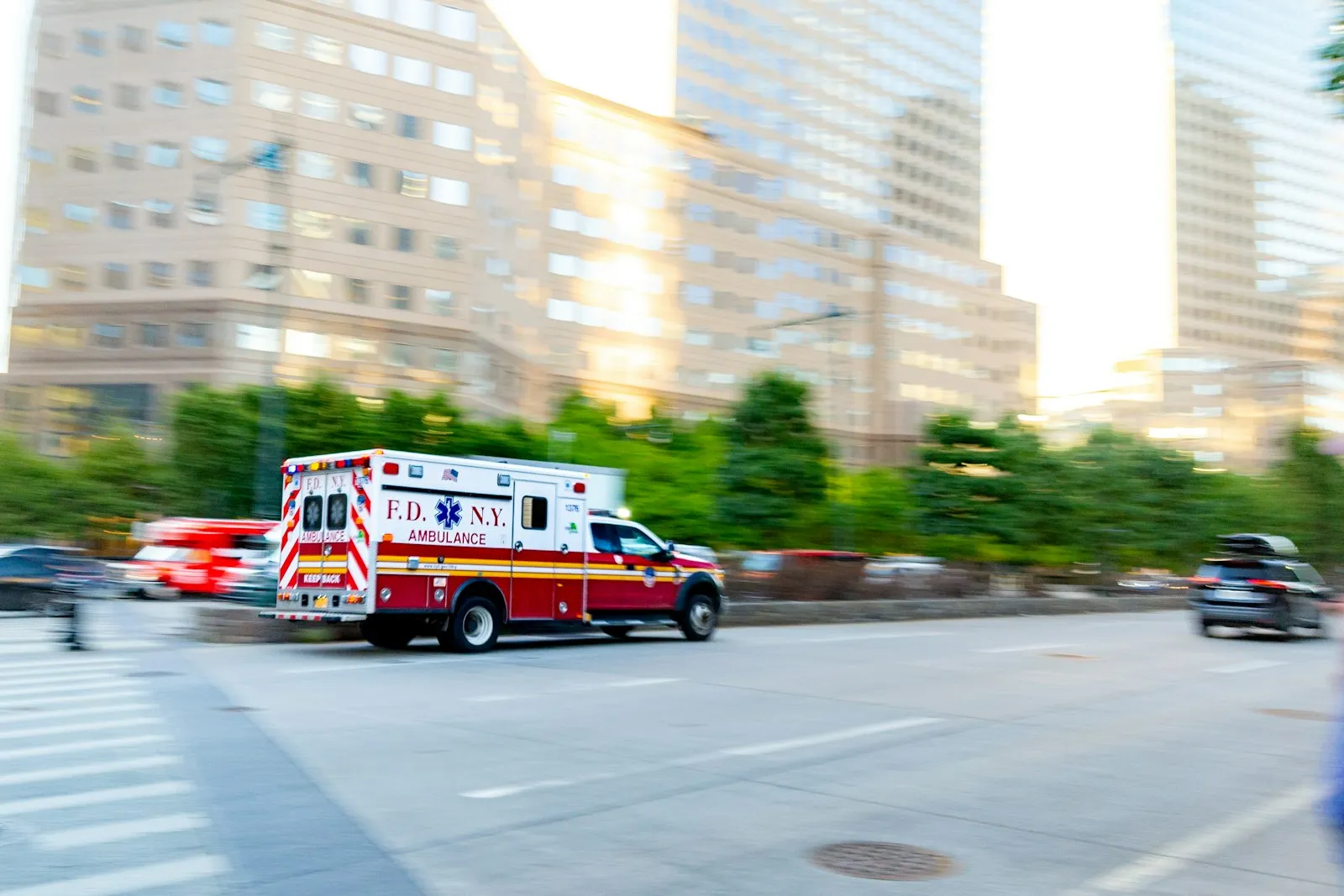
Forest Park is a large wooded park that stretches from Glendale and Woodhaven toward Kew Gardens, Forest Hills and Richmond Hill. Its ballfields, trails and open woods draw people throughout the year, and on the Glendale side, cabs and app cars drop off at the park’s edges and along Forest Park Drive. Many of those passengers become pedestrians seconds later, stepping out of a car into a road with limited sight lines and other drivers looking for parking.
The Shops at Atlas Park, an open-air shopping and dining center on Cooper Avenue, works much the same way. Without a subway station in Glendale, many visitors arrive by car, bus, cab or rideshare. Pickups and drop-offs cluster at the curb and driveways, where drivers turn across traffic and shoppers walk between parked vehicles. A crash here can involve both kinds of claims at once: the passenger in the car that was hit and the pedestrian struck as the car swerved. The center’s private driveways and parking areas can also raise questions about property ownership and the availability of security video, which is one more reason to act early.
What Both Groups Should Do in the First Weeks
- Get medical care and follow through with treatment.
- File the no-fault application within 30 days.
- Write down everything you remember while it is fresh.
- Keep receipts, app records and photos in one place.
- Avoid giving a recorded statement to the other side’s insurer before speaking with a lawyer.
- File an MV-104 report with the DMV if the law requires it.

Passenger and Pedestrian Taxi Accident FAQs
I was in a cab and own a car. Does my own policy pay?
Generally, a passenger claims no-fault from the vehicle he or she occupied, so the cab’s PIP coverage is usually first. Your own policy can matter in certain situations, which a lawyer can sort out with you.
I was on a bicycle when a taxi hit me. Am I treated like a pedestrian?
For no-fault purposes, cyclists, like pedestrians, generally claim from the vehicle that struck them.
Can a pedestrian lose the case for crossing mid-block?
Under the 2026 rule for motor-vehicle suits filed on or after May 26, 2026, a claimant found more at fault than the defendants recovers nothing, and one found 50% or less at fault has damages reduced. Crossing mid-block does not automatically make you more at fault; the driver’s speed, attention and other conduct all count.
Does the $100,000 non-economic damages cap apply to me?
The cap in new Insurance Law § 5104(d) applies only to an at-fault claimant who was driving uninsured, was convicted of impaired driving, or was convicted of a felony committed while driving. It does not apply to other people’s claims, so it would rarely affect a passenger or pedestrian, and it never caps economic damages or wrongful death claims.
What if the vehicle was an MTA bus, not a taxi?
Claims involving City or MTA vehicles require a notice of claim within 90 days under General Municipal Law § 50-e. That is far shorter than the three-year lawsuit deadline.
How long does a family have after a fatal taxi crash?
A wrongful death action must be filed within two years under EPTL 5-4.1, and New York currently allows recovery of pecuniary (financial) losses only.
Our general FAQ page and car accident practice page cover more ground.
Glendale Local Questions
How do people get to Atlas Park without a car?
Glendale has no subway station, so visitors typically come by bus, cab or app-based ride. The nearest subway is the M train at Middle Village–Metropolitan Avenue.
Which roads carry the most traffic through Glendale?
Myrtle Avenue, Cooper Avenue, Metropolitan Avenue and Woodhaven Boulevard are the main corridors, with the Jackie Robinson Parkway passing nearby through Forest Park and the cemetery belt.
Which NYPD precinct covers Glendale?
The 104th Precinct, which also covers Ridgewood, Middle Village and Maspeth.
What neighborhoods are next to Glendale?
Ridgewood, Middle Village, Forest Hills and Woodhaven in Queens, plus Cypress Hills across the Brooklyn line. If your crash happened nearby, see our pages on Ridgewood taxi accidents and our Glendale accident lawyer page.
Where is the nearest hospital?
Jamaica Hospital Medical Center in Richmond Hill and Wyckoff Heights Medical Center on the Ridgewood–Bushwick border are both nearby. EMS decides where to take patients in an emergency.
Where would a lawsuit be heard?
Glendale is in Queens County, so an injury suit would typically go to Supreme Court, Queens County. The New York State courts site lists locations.
Get a Free Review of Your Glendale Taxi Claim
Whether you were in the back seat or in the crosswalk, the first weeks decide a great deal. Yakov Mushiyev & Associates, P.C. offers free case reviews in English, Russian and Spanish, at home, in the hospital or by video, and you pay no fee unless we win. Call 718.775.3110, any time for phone intake, or contact us online. Our office is at 1 Cross Island Plaza, Suite 325, Rosedale, NY 11422. You can also review examples of our work on our settlements page.

Attorney Advertising. This is general information about New York law, not legal advice, and reading it does not create an attorney-client relationship. Every case depends on its own facts. Prior results do not guarantee a similar outcome.