
Many taxi injuries in Kew Gardens never involve two cars hitting each other. A passenger steps out on the traffic side of Queens Boulevard and is clipped by a passing car. A cyclist on Union Turnpike runs into a rear door that swings open without warning. A pedestrian crossing near Lefferts Boulevard is struck by a cab pulling away from the curb. These “curbside” moments are quick, often confusing, and easy to underestimate. This article answers the questions we hear most about them, calmly and in order, so you know whose insurance responds, what the 2026 law changes mean, and what to do next.
If you would rather talk it through with a person, Yakov Mushiyev & Associates, P.C. offers a free case review at 718.775.3110. For a broader overview of taxi claims in the neighborhood, see our Kew Gardens taxi accident lawyer page.
Why Are the Curb and the Door Such Common Trouble Spots?
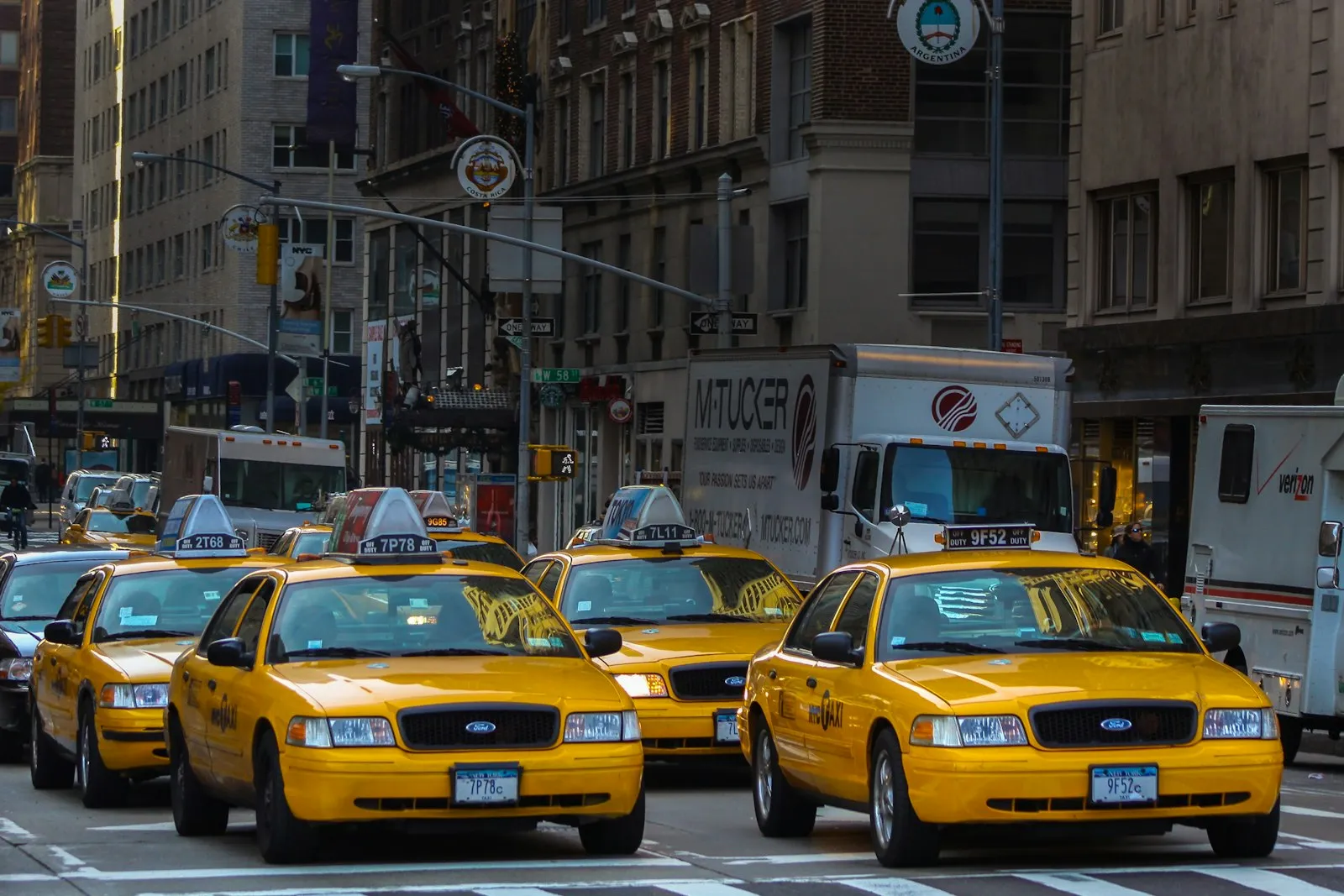
A taxi or app-based car is in constant motion between stops, and every stop creates a small window of risk. The driver is watching the meter or the app for the next fare. The passenger is gathering bags and paying. Traffic behind is trying to get around the stopped car. In Kew Gardens, several local conditions make that window a little wider:
- Queens Boulevard’s service roads. Cabs often stop in a travel lane rather than at the curb, leaving riders to step out into moving traffic.
- The Union Turnpike subway entrances. Riders hop out quickly to catch the E or F train, sometimes on the street side.
- Lefferts Boulevard and Austin Street near the LIRR station. Narrow lanes, double-parked trucks and short stops are routine.
- Bike traffic. Cyclists heading toward Forest Park or along the boulevard can be in a door’s path before anyone inside notices.
Who Pays When You’re Hurt Getting In or Out of a Cab?
Start with no-fault. Under Insurance Law § 5102, personal injury protection (PIP) pays medical bills, part of lost earnings and other basic economic loss regardless of fault. The key question is which vehicle’s policy you look to first. The general rule: passengers claim from the vehicle they occupied, and pedestrians and cyclists claim from the vehicle that struck them. Here is how that plays out in the curbside scenarios below. Each one is a hypothetical example for illustration, not a real client’s case.
| Hypothetical situation | Your role | Where no-fault usually starts | Who might be at fault |
|---|---|---|---|
| You step out of a cab on Queens Boulevard and a passing SUV hits you | Likely pedestrian at the moment of impact (this can be disputed) | Often the SUV’s policy | The SUV driver, the cab driver for where they stopped, or both |
| A cab passenger flings the door open into your bicycle | Cyclist | Generally the cab’s policy | The passenger, the driver, or both |
| The cab you’re riding in is rear-ended while stopped | Passenger | The cab’s policy | Usually the following driver |
| A cab pulls away from the curb and strikes you in the crosswalk | Pedestrian | The cab’s policy | The cab driver |
Whether someone stepping out of a car counts as an “occupant” or a “pedestrian” can be a real dispute in no-fault law, and the answer can change which insurer pays. That is a good reason not to accept an adjuster’s first label without asking questions.
Your no-fault application is generally due within 30 days of the accident. Curbside injuries often seem minor at first, so people wait, and then the deadline slips by.
How Much No-Fault Coverage Does a Taxi Carry Now?
The statewide minimum for PIP is $50,000 per person. Vehicles licensed by the NYC Taxi and Limousine Commission, including yellow and green taxis, for-hire vehicles, app-based cars and limousines, have a separate requirement. Effective March 1, 2026, that requirement was reduced from $200,000 to $100,000 per person, through a TLC rule implementing Local Law 90 of 2025. If your injuries require long treatment, no-fault may run out sooner than it once would have, and a liability claim may become the main route to covering what remains.
Can I Recover More Than No-Fault Pays?
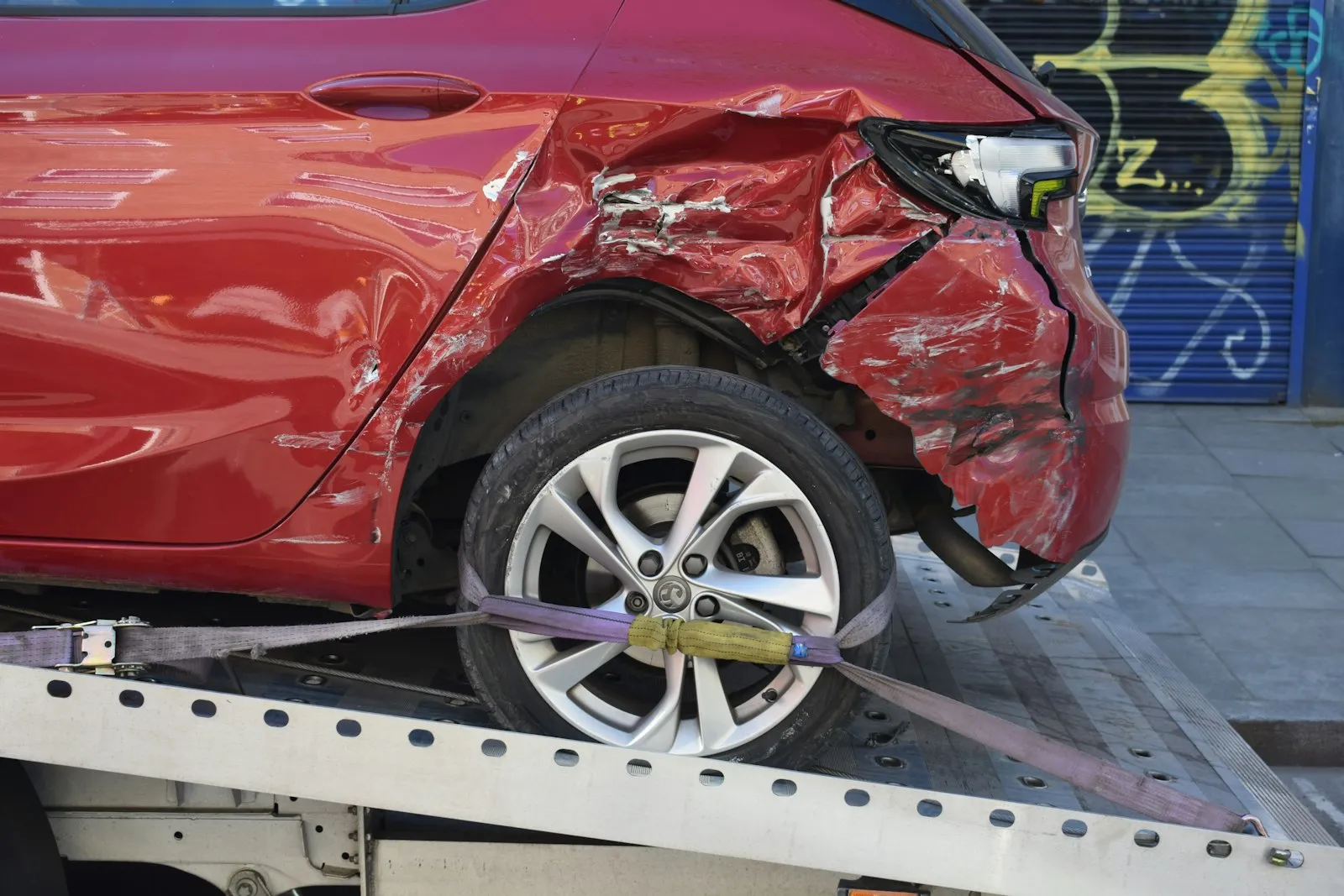
To claim pain and suffering, you generally need a “serious injury” under Insurance Law § 5102(d). After the 2026 state budget (Chapter 58, Part EE), the definition has eight categories: death; dismemberment; significant disfigurement; fracture; loss of a fetus; permanent loss of use of a body organ, member, function or system; permanent consequential limitation of use of a body organ or member; and significant limitation of use of a body function or system. A fall onto the pavement after a door strike, for example, can cause a fracture, which is one of those categories.
Liability coverage is the other half of the picture. A medallion taxi must carry at least $100,000 per person and $300,000 per occurrence in liability insurance. Other vehicles involved in a curbside crash have their own policies.
What Did the 2026 Fault Rule Change for Curbside Claims?
Curbside cases often involve shared blame. An insurer may argue the pedestrian stepped out without looking, or the cyclist rode too close to parked cars. That argument carries more weight now. Under new CPLR 1411(b), for motor-vehicle injury lawsuits under Insurance Law Article 51 commenced on or after May 26, 2026:
- A claimant whose fault is greater than the defendant’s, or the defendants’ combined fault, recovers nothing.
- A claimant who is 50% or less at fault has the recovery reduced proportionally.
- Under Insurance Law § 5104, the fact-finder decides fault before deciding whether the injury is serious.
These rules apply based on when the lawsuit is filed, not when the accident happened, as the Department of Financial Services noted in Circular Letter 2026-01. Notice the word “combined”: when both a cab driver and a passing motorist share responsibility, their fault is added together before it is compared with yours. That is why identifying every driver involved matters so much in a curbside case.
What Should I Do in the Hours and Days After?
- Get checked by a doctor, even if you feel only bruised. Tell them exactly how it happened: “door,” “stepping out,” “struck while crossing.”
- Note exactly where the cab stopped. At the curb, in a travel lane, at a bus stop, in a crosswalk? That detail can shape fault.
- Record the cab and every other vehicle. Medallion or TLC license number, plates, and app ride receipts.
- Look for cameras. Storefronts along Queens Boulevard, Austin Street and Lefferts Boulevard may have video, but footage is often overwritten quickly.
- File your no-fault application within 30 days.
- Check whether a public vehicle was involved. Claims against NYC or MTA vehicles require a notice of claim within 90 days.
Borough Hall, the Courthouse and Forest Park: Drop-Off Zones to Know
Queens Borough Hall sits on Queens Boulevard at the northern edge of Kew Gardens, with the Queens criminal courthouse beside it. On weekday mornings, people summoned for jury duty, appearing as witnesses or supporting family members arrive under time pressure, and many take a cab or an app-based car. Drivers look for any gap along a busy boulevard, and riders hurry out to make it through security on time. That combination is exactly when a door gets opened into traffic or a passenger steps out without checking behind.
Forest Park, on the neighborhood’s southwest side, creates a different pattern. On weekends and summer evenings, visitors head to its trails, golf course, carousel and bandshell. Drop-offs along Park Lane South and Metropolitan Avenue involve families, strollers, bikes and coolers, which means more time spent beside an open car door. The Jackie Robinson Parkway, which cuts through the park, adds faster traffic nearby. If you are being dropped off at either place, asking the driver to pull fully to the curb, and exiting on the curb side, are simple habits that reduce risk.
Taxi Accident FAQs for Passengers, Pedestrians and Cyclists
Can the cab passenger who opened the door be responsible?
Possibly. Depending on the facts, responsibility may rest with the passenger, the driver who stopped in an unsafe spot, or both. We look at where the car was, who opened the door, and what each person could see.
I was half in, half out of the cab. Am I a passenger or a pedestrian?
It depends on the details, and it can be contested. The answer affects which policy pays no-fault benefits first, so describe the moment of impact precisely to your doctor and to your lawyer.
Does the 2026 serious-injury change affect soft-tissue injuries?
The current definition has eight categories. Whether a particular injury fits one of them, such as significant limitation of use of a body function or system, depends on medical evidence. Consistent treatment records help.
How long do I have to sue?
Generally three years for personal injury under CPLR 214(5). A wrongful death action generally must be brought within two years under EPTL 5-4.1, and recovery is limited to pecuniary losses.
Is there a cap on what I can recover?
For most people, no special cap applies. New Insurance Law § 5104(d) limits non-economic damages to $100,000 only for an at-fault claimant who was driving uninsured (with a narrow lapse exception under 30 days), convicted of impaired driving, or convicted of a felony committed while driving. It does not cap economic damages or other people’s claims.
Where can I find official information?
The Department of Financial Services has a consumer page on auto insurance, and the DMV handles MV-104 accident reports. Our own FAQ page answers general questions.

About Kew Gardens: Local Questions
Where is the nearest subway?
Kew Gardens–Union Turnpike, served by the E and F trains, at Queens Boulevard and Union Turnpike.
Does the LIRR stop in Kew Gardens?
Yes. The Kew Gardens LIRR station is near Lefferts Boulevard and Austin Street, close to the neighborhood’s small shopping district.
What major roads meet near Kew Gardens?
The Kew Gardens Interchange connects the Grand Central Parkway, the Van Wyck Expressway, the Jackie Robinson Parkway, Union Turnpike and Queens Boulevard, which is why so many airport-bound cabs pass through.
Which hospitals serve the area?
Jamaica Hospital Medical Center and Long Island Jewish Forest Hills are both close by. In an emergency, call 911.
Where would a Queens injury lawsuit be filed?
Civil cases in Queens County Supreme Court are generally heard at the courthouse on Sutphin Boulevard in Jamaica, not at Borough Hall. Court information is available from the New York State Unified Court System.
Talk With Someone Who Handles These Cases
Curbside injuries can look simple and turn out to be complicated, especially under the 2026 rules. Yakov Mushiyev & Associates, P.C. offers free case reviews in English, Russian and Spanish, and we can visit you at home, in the hospital or by video. Call 718.775.3110; phone intake runs 24/7 and the office is open Monday through Friday, 9 to 6. You can also contact us online. There is no fee unless we win.

Learn more on our Kew Gardens accident lawyer hub, our car accident practice page and our settlements page. We also help riders and pedestrians hurt nearby, including in Forest Hills.
Yakov Mushiyev & Associates, P.C.
1 Cross Island Plaza, Suite 325, Rosedale, NY 11422
718.775.3110
Attorney Advertising. This is general information about New York law, not legal advice, and reading it does not create an attorney-client relationship. The scenarios described are hypothetical. Prior results do not guarantee a similar outcome.