
Most people never think about hiring a taxi accident lawyer in Bellerose until the moment a ride they took a hundred times before ends with broken glass and flashing lights. A taxi trip feels low-risk because someone else is driving. That same fact is what makes these cases different from an ordinary fender-bender: you were a passenger, you did nothing wrong, and yet you are suddenly dealing with a professional driver, a commercial insurer, a dispatch base or permit holder, the New York City Taxi and Limousine Commission, and possibly a second driver who caused the crash.
Rather than hand you a dry list of rules, we are going to follow one ride from start to finish. Everything below is a hypothetical. The passenger, the drivers and the crash are invented to show how a real claim tends to unfold. The law, the deadlines and the local geography are real.
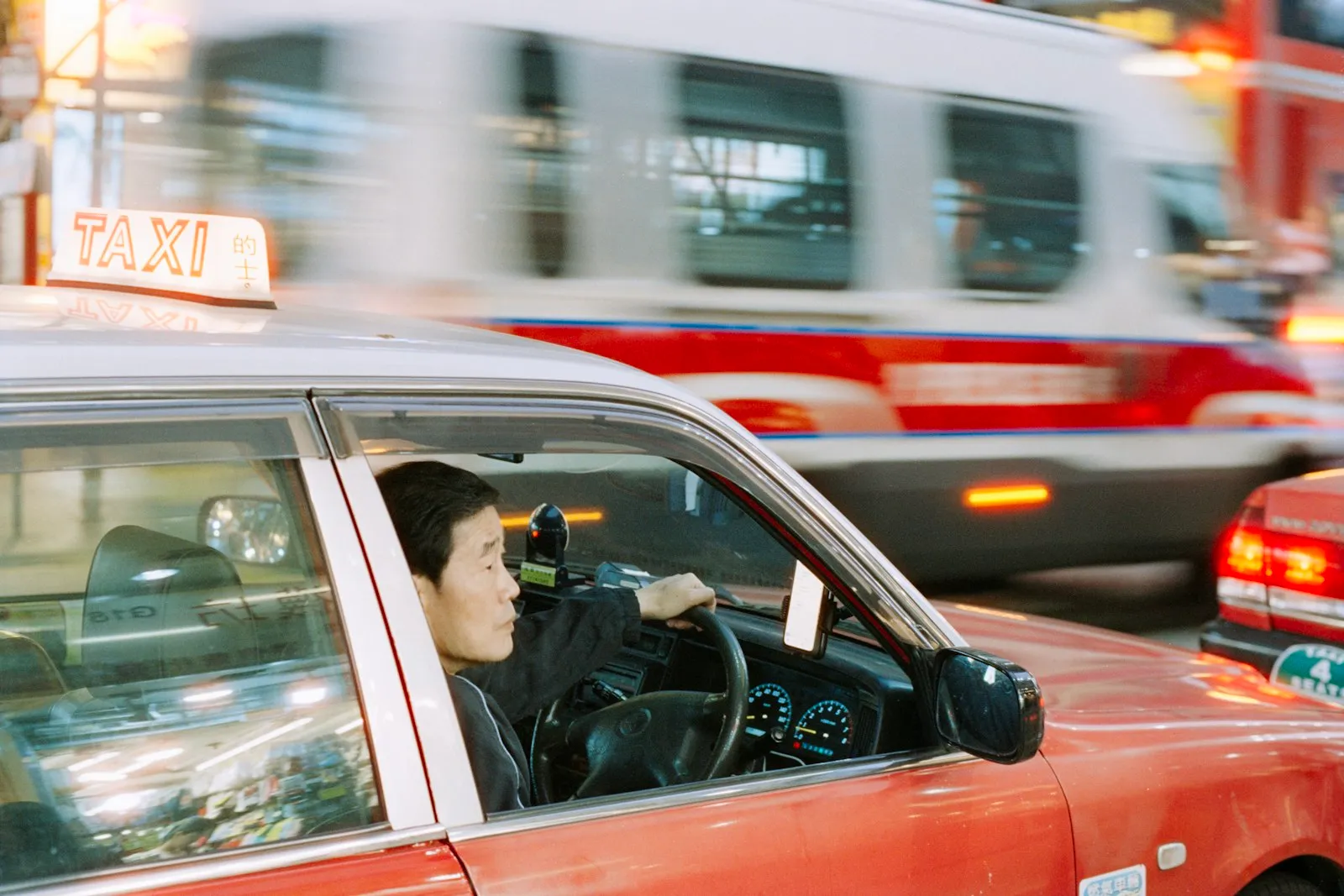
Here’s a Hypothetical: A Wet Thursday Evening on Hillside Avenue
Picture a Bellerose resident we will call Dana. It is a rainy Thursday in late winter, a little after 7 p.m. She has been at a doctor’s appointment in Jamaica and does not feel like waiting for the bus, so she flags down a green Boro Taxi, the apple-green cabs licensed to pick up street hails in the outer boroughs. She gets in the back, gives the driver an address a few blocks off Hillside Avenue near the Nassau line, and leans her head against the window.
The driver heads east on Hillside. Traffic is heavy and the pavement is slick. As the cab nears Bellerose, he glances down at a phone mounted low on the dashboard to check his next fare. In those two seconds, a commercial van coming the other way starts a left turn onto a side street, assuming the cab will slow for the stale yellow light. The cab does not slow. The front of the taxi strikes the van’s passenger side, and Dana, who had not buckled her seat belt, is thrown forward into the back of the front seat.
Two drivers made mistakes. Neither of them was Dana. That single fact shapes almost everything that follows.
The First Ten Minutes: What Matters at the Scene
In our hypothetical, Dana is dazed, her right shoulder is screaming, and there is a cut above her eyebrow. A bystander calls 911. Officers from the NYPD’s 105th Precinct, which covers Bellerose, respond along with an ambulance. What Dana does, or what a family member does for her, in these first minutes can make a large difference later.
- Get the cab’s identifiers. Every TLC-licensed vehicle carries a license number on the outside and inside of the car, and the driver holds a separate TLC driver’s license. A photo of the rear-seat information and the roof or door markings is worth more than a memory.
- Photograph both vehicles where they stopped. Point of impact, skid marks on wet asphalt, the traffic signal, and the van’s company name or DOT number if it has one.
- Get witness contacts. The pedestrian who called 911 saw the light. Insurance adjusters will not go looking for her later.
- Ask for the police report number. In New York the officer typically prepares a police accident report; you will want the precinct and report number to request a copy.
- Accept medical care. Adrenaline hides injuries. Refusing the ambulance is one of the first things an insurer points to when it argues you were not really hurt.
Notice what is not on that list: arguing with either driver about who caused the crash, apologizing, or agreeing to “handle it without insurance.” A commercial driver may be worried about his license, and an offer to settle in cash on the spot is a red flag.

That Night: The Emergency Room at LIJ
The ambulance takes Dana to Long Island Jewish Medical Center, which sits right on the Queens–Nassau line in New Hyde Park and is the trauma hospital most Bellerose crash victims end up at. Doctors close the cut, order imaging of the shoulder, and note signs of a concussion. She is discharged after midnight with a sling and instructions to follow up with an orthopedist.
Two things from that night end up mattering. First, the ER chart records that she was a rear-seat passenger in a taxi involved in a collision; that note ties the injuries to the crash. Second, the chart records that she reported head pain and dizziness. If she had brushed those symptoms off because she was embarrassed, a later concussion diagnosis would have been much easier for an insurer to question.
The First 30 Days: No-Fault Comes First
New York is a no-fault state. Under Insurance Law §5102, personal injury protection (PIP) pays reasonable medical bills and a share of lost earnings regardless of who caused the crash. For Dana, that means her medical care starts getting paid without anyone first deciding whether the cab driver or the van driver was at fault.
The catch is timing. The no-fault application generally must be filed within 30 days of the accident. Miss it and the carrier has a ready reason to deny benefits. Which policy pays depends on the circumstances, but in a TLC vehicle the cab’s own no-fault coverage is commonly where a passenger starts. Since March 1, 2026, TLC-licensed vehicles must carry at least $100,000 per person in PIP, double the $50,000 basic no-fault level that applies to ordinary private cars.
In plain terms: a passenger hurt in a TLC-licensed cab on a trip that starts in New York City has a larger no-fault cushion for medical bills and lost wages than someone hurt in a private car.
No-fault, however, does not pay for pain, suffering or the loss of the life you had before the crash. For that, Dana needs a claim against the at-fault drivers, which is where a taxi accident lawyer in bellerose earns his or her keep.

Week Two: The Phone Calls Start
About ten days after the crash, Dana gets a friendly call from an adjuster for the van’s insurer. He asks how she is feeling, whether she would mind giving a short recorded statement, and whether she was wearing a seat belt. A day later the taxi’s insurer sends a letter asking for authorizations to pull all of her medical records going back ten years.
Neither request is unusual, and neither is something she has to answer alone. A recorded statement given while she is still on pain medication and unsure of her diagnosis can be quoted back to her for years. A blanket records authorization lets an insurer hunt for an old shoulder complaint to blame instead of the crash. This is usually the point where people call us. We handle insurer contact, limit authorizations to what is actually relevant, and make sure the no-fault paperwork has been filed correctly.
Who Pays for What in a Two-Vehicle Taxi Crash
Because both drivers share responsibility in our hypothetical, Dana’s injury claim can reach more than one policy. Here is how the pieces commonly fit together for a trip that started inside New York City:
| Source of payment | What it covers | Key point |
|---|---|---|
| Taxi’s no-fault (PIP) | Medical bills, part of lost earnings, some other expenses | TLC minimum $100,000 per person since March 1, 2026; claim within 30 days |
| Taxi’s liability coverage | Pain and suffering, losses beyond no-fault, if the threshold is met | TLC minimums of $100,000 per person / $300,000 per accident |
| Van owner’s liability coverage | Same categories as above, for the van driver’s share of fault | A commercial van may carry higher limits than a private car |
| Your own policy (SUM) | Underinsured motorist protection if the at-fault coverage is not enough | Check your own auto policy even though you were not driving |
The deeper the injury, the more those layers matter. A surgically repaired shoulder can easily exceed one policy; identifying every available source early is part of the job.
The Serious Injury Threshold and the Shoulder MRI
To sue for pain and suffering in a car or taxi case, an injured person must meet New York’s “serious injury” threshold in §5102(d). The categories include things like a fracture, significant disfigurement, permanent loss of use, and a permanent consequential or significant limitation of a body organ or member. In our hypothetical, Dana’s MRI three weeks after the crash shows a torn labrum, and her orthopedist documents a measurable loss of range of motion. Those objective findings are what move a case past the threshold argument.
This is why consistent treatment matters. A three-month gap in physical therapy because she was busy will be described by the defense as proof she healed. We encourage clients to keep appointments, tell every provider about every symptom, and keep a simple diary of what they cannot do anymore, whether that is lifting a grandchild or sleeping on the injured side.
Update for 2026: In late May 2026, New York enacted motor-vehicle tort reform that applies to motor-vehicle lawsuits filed on or after that date (it does not apply to death cases). It eliminates the 90/180-day serious-injury category, has juries decide fault before serious injury, adds a modified comparative fault rule under CPLR 1411(b) so a plaintiff more than 50% at fault recovers nothing, and caps pain-and-suffering at $100,000 for plaintiffs who were driving uninsured, convicted of impaired driving, or committing a felony. For a rear-seat passenger like Dana, who did nothing to cause the crash, the fault rule rarely bites, but the loss of the 90/180-day category makes objective medical proof even more important.

Month Two: Building the Liability Case Against Both Drivers
With treatment under way, the investigation turns to fault. In a taxi crash that usually means:
- Requesting the police accident report and any 911 audio.
- Sending preservation letters to the cab’s owner and the van’s company for dash-camera video, telematics and trip records before they are overwritten.
- Canvassing Hillside Avenue businesses for exterior camera footage, which often loops over in days or weeks.
- Requesting the cab driver’s phone records once a lawsuit is filed, since distraction is central to our hypothetical and New York restricts phone use behind the wheel (see VTL §1225-d).
- Checking the TLC license status and history of the driver and vehicle through the Taxi and Limousine Commission.
Because Dana was a passenger, she does not have to prove which driver was more at fault. Each driver is responsible for his share, and the two insurers will often spend more energy blaming each other than blaming her. Our job is to make sure that finger-pointing does not delay her recovery.
What If the Ride Started Across the Line in Bellerose Village?
Bellerose sits on the border, and plenty of local rides start at the LIRR Bellerose station or on Jericho Turnpike in Nassau County. That detail changes the analysis. The TLC’s $100,000 PIP and $100,000/$300,000 liability minimums are tied to TLC-licensed vehicles on trips that begin in New York City. A Nassau-based taxi or car service is licensed locally rather than by the TLC, and New York’s ordinary minimum auto requirements may be all that applies unless the company chose to buy more. If you are hurt in a cab and you are not sure who licensed it, take a photo of every sticker and placard you can see. We sort out the rest.
Month Six to Year Three: Deadlines You Cannot Miss
Under CPLR 214, most New York personal injury claims must be filed within three years. That sounds like plenty of time, but the evidence that wins taxi cases, especially video and electronic data, disappears in weeks. And if a city-owned vehicle is involved instead of a private van, a Notice of Claim must be served within 90 days. If a crash takes a life, the wrongful death deadline is generally two years from the date of death.
In our hypothetical, Dana finishes physical therapy around month five, her surgeon gives a permanency opinion, and the claim against both drivers moves toward negotiation with a full picture of her losses. Not every case settles; some go to suit in Queens County Supreme Court on Sutphin Boulevard in Jamaica. Either way, the work done in the first month is what gives the case its value.

How Our Firm Helps After a Taxi Crash
Yakov Mushiyev & Associates, P.C. represents injured passengers, pedestrians, cyclists and drivers throughout eastern Queens. You can read more about Yakov Mushiyev and our approach to car accident cases, or visit our Bellerose personal injury page for an overview of the neighborhood cases we handle. If your crash involved a private car rather than a cab, our Bellerose car accident lawyer page is a good next stop.
- Free consultation, and no fee unless we win.
- Consultations in English, Russian and Spanish.
- Home, hospital or video visits if you cannot travel.
- We file no-fault paperwork, deal with every insurer, and preserve evidence early.
Not sure how a medallion yellow cab claim differs from a green cab or car service ride? See our companion article on the yellow cab accident lawyer in Bellerose, and if you were in an app-based ride, our guide for the Uber passenger accident lawyer in Bellerose.
Getting to Our Office from Bellerose
Our office is at 1 Cross Island Plaza, Suite 325, Rosedale, NY 11422. From Bellerose, take the Cross Island Parkway south toward the Belt Parkway; 1 Cross Island Plaza sits right off the Cross Island in Rosedale, roughly a 15 to 20 minute drive depending on traffic. We are open Monday through Friday, 9 a.m. to 6 p.m. If you are still recovering, we will come to you.
Talk to a Taxi Accident Lawyer in Bellerose Today
If you were hurt in a cab, a car service or a green Boro Taxi, call 718.775.3110 or send us a message. The sooner we can send preservation letters, the more evidence survives. You can also browse our general FAQ before you call.
Frequently Asked Questions
Can I sue the taxi driver if another car caused the crash?
You can bring a claim against whichever drivers were at fault, and often that is both. As a passenger, you generally do not have to choose. If the other driver was entirely to blame, the claim would go against that driver’s insurer, while the cab’s no-fault coverage still pays medical bills.
Does the $100,000 TLC no-fault minimum apply to every cab in Bellerose?
It applies to TLC-licensed vehicles, such as yellow taxis, green Boro Taxis and for-hire vehicles, on trips that begin in New York City, and has been in effect since March 1, 2026. Cabs licensed in Nassau County or a village outside the city follow different rules.
I wasn’t wearing a seat belt in the back. Do I still have a case?
Usually yes. Not wearing a seat belt does not cause a crash, and it does not bar a passenger’s claim. The defense may argue that a belt would have reduced some injuries, which can affect damages, so it is important to have a lawyer address that argument with medical evidence.
Which hospital do most Bellerose crash victims go to?
Long Island Jewish Medical Center in New Hyde Park, right on the Queens–Nassau line, is the nearby trauma hospital. Wherever you are treated, keep your discharge papers and follow up with your own doctor promptly.
How long do I have to file a taxi accident lawsuit in New York?
Generally three years for personal injury, but the no-fault application is due within 30 days, and claims against a city vehicle require a Notice of Claim within 90 days. Talk to a lawyer early so none of those shorter deadlines slip by.
This article is general information, not legal advice. Attorney Advertising. Prior results do not guarantee a similar outcome.