
Most people never think about how a taxi claim works until they're sitting in the back of a cab that just got hit. To show what really happens, step by step, this article follows one passenger through the whole process. She isn't a real client, and her story is a hypothetical built to explain the law. The legal rules along the way are real, and they're the same ones a taxi accident lawyer in Rosedale works with every day.
Imagine a Rosedale commuter, whom we'll call Denise, heading home from JFK after a work trip. It's a weeknight, she's tired, and she does what thousands of travelers do: she walks out of the terminal and gets in line at the official taxi stand.
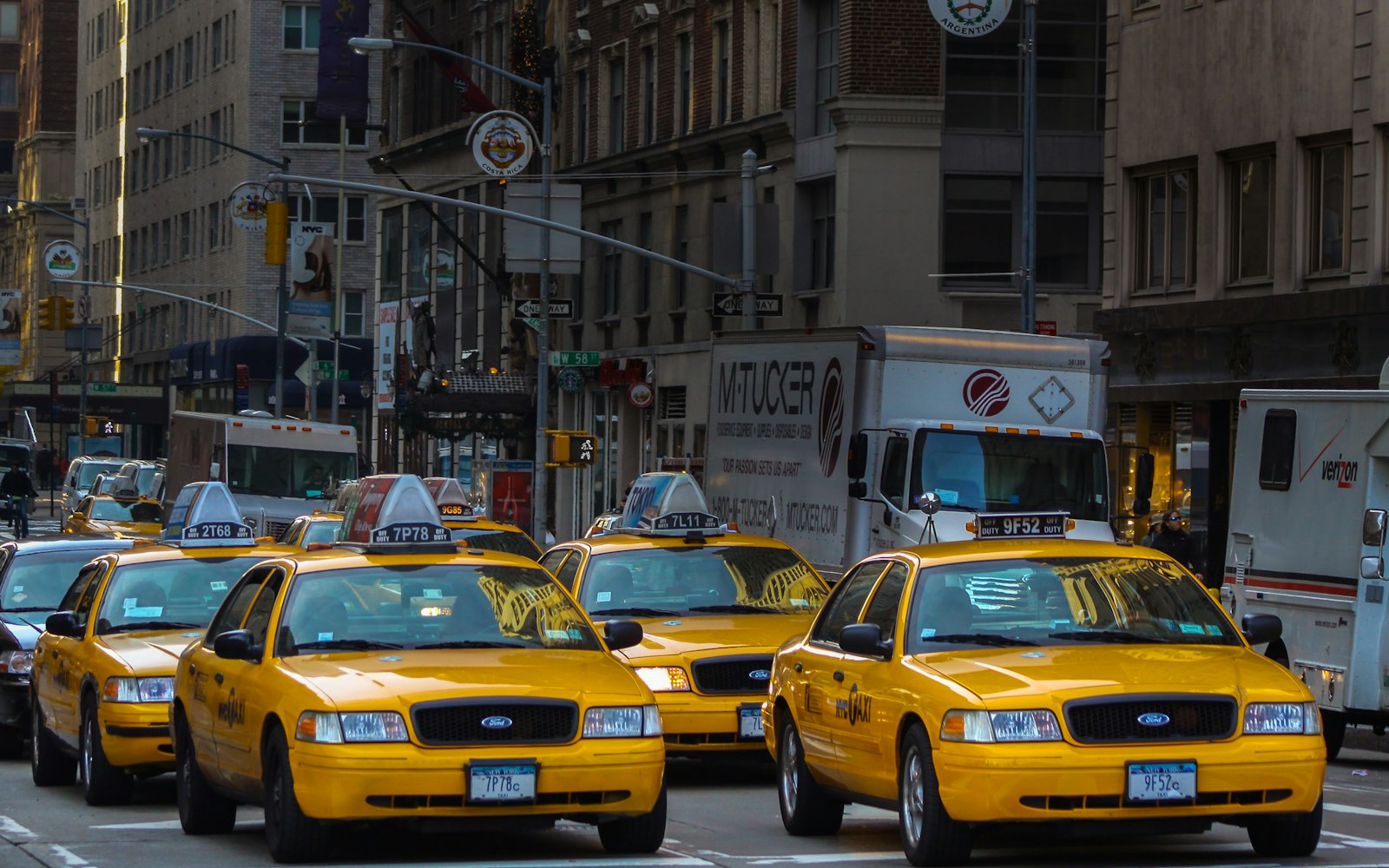
Stage one: the ride, and the crash
In our hypothetical, Denise's yellow cab pulls away from the airport toward southeast Queens. A few minutes later, at an intersection near the airport, another driver runs a red light and strikes the cab on the passenger side. Denise's head hits the window and her wrist bends back against the door as she braces herself. The cab driver is shaken but unhurt. The other driver gets out, apologizes, and then starts telling anyone who will listen that the cab was speeding.
Even in this short moment, several legal questions are already in play: what kind of vehicle Denise was in, who insures it, who caused the crash, and whether anything she did, like whether she buckled up, might matter later.
JFK sits just west of Rosedale, and the airport's taxi stands send a steady stream of cabs into the surrounding neighborhoods. The Port Authority directs arriving travelers to use official taxi stands and pick-up areas and notes that taxis are regulated by the NYC Taxi and Limousine Commission. That regulation is what shapes a passenger's claim after a crash.
Stage two: what kind of car was it?
Denise was in a yellow cab. That detail matters more than most passengers realize, because New York City has several kinds of licensed for-hire vehicles, and each one comes with its own rules, insurance and records. A taxi accident lawyer in Rosedale will usually start by pinning down exactly which kind of vehicle was involved.
| Vehicle type | How passengers get one | What to know after a crash |
|---|---|---|
| Yellow medallion taxi | Street hails and airport taxi stands | Medallion owner and driver are TLC-licensed; the taxi must carry TLC-required insurance. |
| Green taxi (street hail livery) | Street hails outside the "Hail Exclusionary Zone" (south of West 110th Street and East 96th Street in Manhattan), plus dispatches | Can pick up street hails in neighborhoods like Rosedale; also TLC-licensed and insured under TLC rules. |
| Community car service (livery) | Pre-arranged through a base, with up-front flat fares | The base that dispatched the trip is part of the record; identify it early. |
| Black car | Pre-arranged through a base; most business paid by means other than cash | Often corporate or app-dispatched; the dispatching base and vehicle owner both matter. |
These descriptions come from the TLC's own pages on green cabs and for-hire vehicle bases. Whatever the category, the practical point is the same: every TLC-licensed vehicle has a license number, a registered owner and an insurer on file, which makes these vehicles easier to trace than an ordinary private car. If you were in a rideshare rather than a cab, our Uber and Lyft accident page covers how those claims differ.
Stage three: the first 24 hours
Back to our hypothetical. Police arrive, and the officers from the local precinct take statements. Denise tells them her wrist hurts and she feels dizzy. She takes photos of the cab's medallion number and the TLC license on the partition, the other car's plate, and the intersection. She gets the cab driver's name and the other driver's insurance information. An ambulance takes her to the emergency room, where an X-ray shows a fractured wrist.
These steps help her case in specific ways:
- Medical records made the same night tie the injury to the crash. Gaps in treatment are one of the first things insurers point to.
- Photos of the medallion and license make it easy to identify the vehicle's owner and insurer.
- Names and contact details of witnesses matter when drivers dispute who had the light. A neutral witness at the scene is often worth more than either driver's account.
- The police report records who said what at the scene. If it gets something wrong, it can be challenged. See our guide on what to do if the police report is wrong.
Stage four: no-fault through the taxi
A few days later, Denise is home with her arm in a cast and can't work. The bills start arriving. Here's where New York's no-fault system comes in. As a passenger, Denise generally applies for no-fault benefits through the taxi's insurance. She doesn't need to prove that anyone was at fault to get them.
No-fault generally pays her necessary medical bills and 80% of her lost earnings, up to $2,000 a month. The statewide basic benefit is $50,000, but TLC vehicles must carry more. Under a TLC rule change that took effect March 1, 2026, the minimum personal injury protection for taxis, for-hire vehicles and street hail liveries is $100,000 per person, down from $200,000 before. The TLC's notice of the amended insurance rules explains the change.
The most important deadline at this stage: the no-fault application is generally due within 30 days of the accident. Denise's lawyer files it promptly. Later, the insurer may send her to an independent medical examination with a doctor of its choosing. If that doctor says she's recovered and benefits stop, there are ways to fight back. Our guides to filing a no-fault claim and to no-fault IMEs and benefit cut-offs go into detail.
Stage five: why passengers usually aren't at fault
The other driver insists the cab was speeding. The cab driver insists the other car ran the light. For Denise, the argument matters less than it might seem. A paying passenger in the back seat doesn't control the vehicle, so in most cab crashes the passenger bears no fault for the collision itself. Her injury claim can generally be brought against whichever driver was negligent, and if both share the blame, against both.
That's an advantage worth understanding, because New York changed its fault rules for motor vehicle cases in 2026. For suits filed after late May 2026, a new subsection of CPLR 1411 generally bars an injured person whose own fault is greater than the fault of the defendant or defendants combined from recovering anything in a motor vehicle injury action. Someone found less at fault still recovers, reduced by their share. Outside motor vehicle cases, New York's pure comparative fault rule still applies. Passengers rarely face that problem. Drivers often do. For background on how shared fault works in New York more generally, see our guide to comparative negligence in New York.
The finger-pointing between drivers still matters to Denise in one practical way: it tells her lawyer where to look for coverage. If the other driver alone caused the crash, that driver's liability policy is the main source of recovery for pain and suffering. If the cab driver was also careless, for example by speeding into the intersection, the taxi's liability policy becomes a second source. When an injury is serious and one driver carries only minimal coverage, having two policies available can make a real difference.
Stage six: the serious injury threshold
No-fault doesn't pay for pain and suffering. To recover those damages from the at-fault driver, Denise's injury generally has to qualify as a "serious injury" under Insurance Law § 5102(d). The listed categories include death, dismemberment, significant disfigurement, a fracture, loss of a fetus, permanent loss of use of a body organ, member, function or system, a permanent consequential limitation of use, and a significant limitation of use of a body function or system.
In our hypothetical, Denise's wrist fracture fits a listed category on its face. Many real passengers aren't so clear-cut. Neck and back injuries, concussions and torn ligaments often have to be proved through the "limitation" categories, which usually means objective medical evidence, such as imaging and measured range-of-motion testing, and a doctor willing to explain the findings. Our article on fracture claims and the serious injury threshold covers how these cases are built. Be wary of older articles that list a separate category based on missing 90 of the first 180 days; the current statute no longer includes it.
Stage seven: the seatbelt question
The other driver's insurer asks Denise whether she was wearing her seatbelt. Plenty of taxi passengers don't buckle up, so this question comes up often.
New York's seatbelt law, Vehicle and Traffic Law § 1229-c, has a specific provision for taxis and liveries that requires passengers 16 and older to be belted. But the statute also limits how a defendant can use that fact in a lawsuit. Not wearing a seatbelt is not evidence of liability; it can be offered only to reduce damages, and only if the defendant raised it as an affirmative defense. In practice, the defense has to show that the seatbelt would actually have prevented or lessened the specific injury. For a wrist broken while bracing against a side impact, that argument may be weak. For other injuries, it can be a real fight.
Stage eight: the injury claim and how it resolves
With the fracture documented and treatment under way, Denise's lawyer gathers the remaining evidence: the police report, medical records, wage documentation, any intersection or dashboard video, and the identities of both vehicles' insurers. The claim against the at-fault driver is presented to that driver's insurer. If the cab driver shares fault, the taxi's liability coverage is also in play. TLC rules require medallion taxis to carry bodily injury liability coverage of at least $100,000 per person, up to $300,000 per accident.
Most claims like this resolve through negotiation. If they don't, a lawsuit is filed, generally in Queens County Supreme Court in Jamaica. Most negligence suits must generally be filed within three years, but waiting that long is rarely wise. Before any settlement is paid out, liens from health insurers or other payers may need to be addressed; see our guide to negotiating medical liens.
That's where our hypothetical ends. Real cases take their own turns, and nothing here predicts how any particular claim will come out.
Taxi accident FAQ
Does a taxi accident lawyer in Rosedale handle crashes that happened elsewhere in the city?
Yes. A crash anywhere in New York City involves the same TLC insurance rules and the same no-fault and serious injury law. Being local helps with Queens courts and southeast Queens roads, but it isn't a requirement.
What if the cab hit a pedestrian or cyclist?
Pedestrians and cyclists hit by a car are generally covered by no-fault. Their injury claims then follow the same serious injury and fault rules. Our taxi accident practice page covers these cases too.
What if I don't know whether I was in a yellow cab, green cab or car service?
Your receipt, the app you used, your credit card statement or the vehicle's markings usually settle it. If they don't, the TLC license number can identify the vehicle and its owner.
Have you written about Rosedale taxi crashes before?
Yes. See our earlier article on a taxi accident in Rosedale and our page for taxi accident victims in nearby Rochdale.
Speak with a taxi accident lawyer in Rosedale
If you were hurt in a cab, Yakov Mushiyev & Associates can explain where you stand. Our office is at 1 Cross Island Plaza, Suite 325, in Rosedale. Our firm has recovered over $80 million for injured clients. We offer free consultations in English, Russian and Spanish, at our office, by video, at your home or in the hospital, and there's no fee unless we win.
Call 718.775.3110 or contact us online to talk about your taxi accident.
This article is general information, not legal advice. Every case is different, and prior results do not guarantee a similar outcome. Attorney Advertising.