
Important: The story on this page is a hypothetical, illustrative case study. “Dana” is not a real client, the companies are fictional, and no outcome described here reflects a real case or promises a result. We built it from the issues that commonly arise in box truck crashes so that you can see, step by step, how a claim moves from the moment of impact to resolution, and why a box truck accident lawyer in Queens approaches these cases the way we do.
Box trucks occupy an awkward middle ground. They are bigger than a van and smaller than a tractor-trailer. Many are rented by the day to moving companies, caterers, furniture stores, and people moving apartments. Some are driven by professional drivers; others by someone who has never handled a vehicle that tall or that heavy. That variety is exactly what makes box truck cases legally interesting.
Chapter 1: The Crash on Queens Boulevard
It is a weekday afternoon. Dana, a hypothetical 38-year-old office manager from Middle Village, is driving her sedan west on Queens Boulevard in Rego Park. Traffic slows for a red light. She stops. Behind her, a 16-foot box truck with a fictional furniture company’s logo on the side does not stop in time. The truck’s flat front end slams into her rear bumper, pushing her car into the vehicle ahead.
Dana feels a jolt in her neck and lower back. Her head hits the headrest hard. Within minutes, her hands are tingling.
What happens next is typical. The box truck driver, a young employee of the furniture company, gets out and apologizes. He says he was looking at his phone’s map because he was not sure of the next delivery address. A pedestrian on the sidewalk saw the whole thing. Dana, shaken, almost says, “I’m fine,” but does not.
What Dana does right at the scene
- She calls 911, and police and EMS respond.
- She photographs the truck’s front end, the logo, the license plate, and a rental company decal on the cab door.
- She gets the pedestrian’s name and phone number.
- She writes down what the driver said about the map on his phone.
- She accepts an ambulance ride to the emergency room.
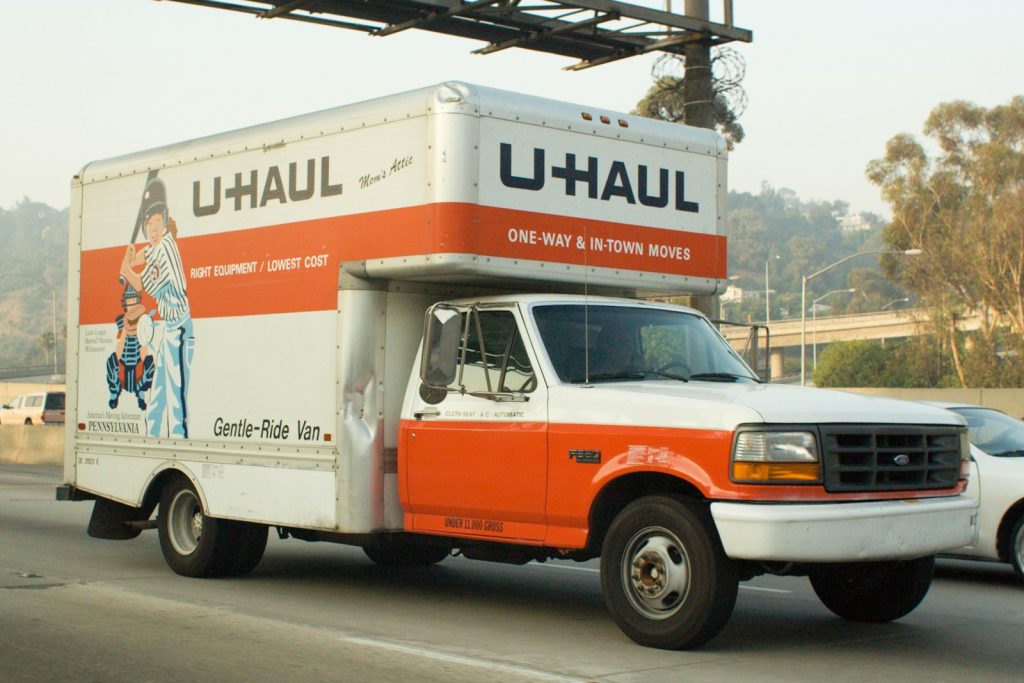
That decal will matter. It tells us the truck may be owned by a rental company, not the furniture company whose logo is on the side.
Chapter 2: The First Thirty Days
At the emergency room, Dana is diagnosed with cervical and lumbar strain and released with instructions to follow up. Two weeks later, her pain is not improving. Her doctor orders an MRI, which shows a herniated disc in her neck pressing on a nerve root. She begins physical therapy three times a week and misses work.
No-fault comes first
In this hypothetical, Dana’s first financial lifeline is New York no-fault. Her own auto insurer’s no-fault coverage pays basic economic loss up to $50,000 per person regardless of fault: her medical bills, 80% of her lost earnings up to $2,000 per month, and up to $25 per day for other reasonable expenses such as transportation to therapy. The application is generally due within 30 days of the accident, and Dana files it in week two.
The paperwork nobody mentions
Because she was injured, New York requires Dana to file a DMV Report of Motor Vehicle Accident (MV-104) within 10 days. She also requests the police report number.
The phone call
In week three, an adjuster from the furniture company’s commercial insurer calls. He is pleasant and asks for a recorded statement “to move things along.” Dana has already spoken with a lawyer by now, so she declines and gives him her attorney’s contact information. In real cases, this is a common moment where a well-meaning person says something like “I was going a little fast myself,” which can be used later.
Chapter 3: How a Box Truck Accident Lawyer in Queens Untangles Ownership
Dana’s lawyer starts with the question that defines box truck cases: who owns the truck, who was driving it, and for whom?
In our illustration, the investigation reveals three entities:
- The driver, an employee of the furniture company making deliveries.
- The furniture company, which rented the truck for its delivery season.
- The rental company, which owns the truck.
Under New York’s Vehicle and Traffic Law §388, a vehicle owner can generally be vicariously liable for the negligence of a permissive driver. Rental and leasing arrangements can complicate that picture, however, and rental companies may raise federal defenses that limit owner liability for a renter’s driving when the owner itself was not negligent. So in Dana’s hypothetical, the lawyer focuses the claim on the driver and his employer, the furniture company, which is generally responsible for an employee’s negligent driving within the scope of the job, while also examining whether the rental company did anything independently negligent, such as renting out a truck with known brake problems.
This is a very common structure in box truck cases in Queens. Moving companies in Astoria, restaurant suppliers in Long Island City, and contractors in Maspeth all rent box trucks, and the insurance picture can involve the business’s commercial auto policy, coverage purchased through the rental agreement, and the driver’s own policy.
Preserving the evidence
Within days, Dana’s lawyer sends preservation letters to the furniture company and the rental company. The requests include the rental agreement, any telematics or GPS data, the driver’s phone records relevant to the time of the crash, the driver’s training and licensing information, delivery schedules for that day, and maintenance records for the truck. The lawyer’s team also canvasses businesses along Queens Boulevard for security footage, because private video is often recorded over within days or weeks.
Depending on its size, weight, and whether it operates across state lines, a box truck may not be subject to every federal motor carrier rule that governs tractor-trailers, so electronic logging records may not exist the way they would for a long-haul rig. That makes telematics, phone records, and witnesses even more important.
Chapter 4: Liability Is Clear. The Fight Is Over the Injury.
In Dana’s hypothetical, fault looks straightforward. She was stopped at a red light and was hit from behind. Under VTL §1129, drivers must not follow more closely than is reasonable and prudent, and in rear-end collisions New York courts generally presume the rear driver was negligent unless that driver offers a non-negligent explanation. The driver’s statement about his phone map and the pedestrian witness reinforce that. New York also bans hand-held phone use while driving under VTL §1225-c.
The insurer’s response, as it often is in rear-end cases, shifts from “who caused it” to “how badly was she really hurt.” Their defense team argues:
- Dana’s disc herniation is degenerative, the product of age rather than trauma.
- She had a two-week gap in therapy during the holidays.
- She does not meet New York’s serious injury threshold.
The serious injury threshold
To recover for pain and suffering after a motor vehicle accident, Dana must show a “serious injury” under Insurance Law §5102(d). Possible categories in her situation include a “permanent consequential limitation of use of a body organ or member” or a “significant limitation of use of a body function or system.” Her economic losses beyond what no-fault pays, like wages above the monthly cap, can be pursued regardless of the threshold.
Her lawyer builds the threshold case with objective proof: the MRI, nerve conduction testing confirming radiculopathy, range-of-motion measurements recorded with instruments over months of treatment, and a treating physician’s report explaining why the herniation is consistent with trauma, not mere degeneration. The holiday gap is documented in her therapist’s notes: the clinic was closed, and she did home exercises. A gap with a reason is far less damaging than one without.
2026 update: For motor-vehicle personal injury lawsuits commenced on or after May 26, 2026, New York removed the “90/180-day” category from the §5102(d) serious injury definition and amended CPLR 1411 to adopt modified comparative fault: a claimant more than 50% at fault recovers nothing, and a claimant at 50% or less has recovery reduced by their share. In a hypothetical like Dana’s, a rear-end crash with a stopped plaintiff, the fault change might matter little; in a case where the truck driver claims a sudden lane change, it could matter a great deal.

Chapter 5: Filing Suit and Discovery
About eight months into treatment, Dana’s doctors recommend a cervical injection, with surgery as a possible next step. The insurer’s offer, made before that recommendation, does not account for future care. Her lawyer files a lawsuit in Queens County Supreme Court, well within the three-year statute of limitations under CPLR 214(5).
Had a city vehicle been involved, for example if the box truck had been operated by a city agency, a Notice of Claim generally would have been required within 90 days and the lawsuit within one year and 90 days. That is why the first question in any truck case is always whose vehicle it was.
Discovery follows. In our illustration:
- The furniture company produces the rental agreement, delivery schedule, and the driver’s personnel file.
- The driver’s phone records for the minutes around the crash are obtained under the court’s rules.
- The driver is deposed and confirms he was using a navigation app while moving.
- Dana attends a defense medical examination with a doctor chosen by the insurer.
- Both sides exchange medical expert disclosures.
The delivery schedule shows the driver had a tight sequence of stops that afternoon. That does not change the legal standard, but it gives context for why he was looking at his phone.
Chapter 6: Resolution
In our hypothetical, the case goes to mediation after Dana completes her injection treatment and her doctors issue a prognosis on her long-term limitations. The mediator reviews both sides’ medical evidence, the clear liability picture, the documented wage loss, and the cost of future care. The case resolves through a negotiated settlement, the most common path for injury cases, though some do go to trial. We are deliberately not attaching a dollar figure to this illustration; every real case turns on its own facts, injuries, and coverage, and no result can be promised.
What made Dana’s hypothetical claim strong was not luck. It was a series of small, early decisions: calling 911, photographing the rental decal, getting a witness’s number, filing no-fault on time, declining the recorded statement, following through with treatment, and preserving evidence before it disappeared.
Three Queens Landmarks Where Box Trucks Are Part of the Scenery
Box trucks are everywhere in Queens, from gallery districts to residential parks to historic factories. Here are three landmarks where they are part of daily life.
MoMA PS1
MoMA PS1, on Jackson Avenue in Long Island City, is one of the country’s best-known contemporary art institutions, housed in a former public school building. Affiliated with the Museum of Modern Art, it presents experimental exhibitions and has hosted its popular summer Warm Up music series in its courtyard. Long Island City has transformed with residential towers, but it remains a busy commercial and industrial area, and box trucks making deliveries to restaurants, galleries, and construction sites crowd Jackson Avenue and nearby streets near the Queensboro Bridge approaches.
Juniper Valley Park
Juniper Valley Park in Middle Village is a beloved neighborhood park with ball fields, a running track, tennis and handball courts, bocce courts, and playgrounds. It is a hub for youth sports leagues and weekend gatherings. The park sits between residential streets and the busier corridors of Woodhaven Boulevard and Metropolitan Avenue, and the Long Island Expressway runs just to the north. Moving trucks and delivery box trucks are common on surrounding blocks, especially on weekends when families relocate.
Steinway & Sons Piano Factory in Astoria
The Steinway & Sons piano factory in northern Astoria has been building pianos in Queens since the nineteenth century, when the company established its manufacturing complex and surrounding worker community. The factory still produces its famous handcrafted instruments there and has offered public tours. The area around it remains industrial, close to LaGuardia Airport and the Grand Central Parkway corridor, so trucks serving local manufacturers and warehouses travel the surrounding streets rather than the parkway, where commercial vehicles are banned.
Directions to Our Rosedale Office from Long Island City
From MoMA PS1 in Long Island City, take the Long Island Expressway east across Queens. Exit onto the Cross Island Parkway southbound near Alley Pond Park and follow it south past Belmont Park until it meets the Belt Parkway near Rosedale. Exit and follow local streets to 1 Cross Island Plaza, Suite 325. This parkway route is for passenger cars only.
Box Truck Accident Questions, Answered
Was the case study on this page a real client?
No. Dana and the companies in the story are entirely hypothetical. We created the scenario to illustrate common issues in box truck claims, such as rental ownership, rear-end liability, the serious injury threshold, and evidence preservation. It does not describe any real person or outcome, and it is not a prediction of what will happen in your case. Every claim depends on its own facts.
Who is liable when a rented box truck hits me?
Potentially several parties. The driver is responsible for their own negligence. If the driver was working, the employer may be responsible for driving within the scope of the job. Vehicle owners can generally be vicariously liable under VTL §388, though rental companies may raise federal defenses limiting liability for a renter’s driving unless the rental company itself was negligent. The rental agreement and insurance purchased with it also matter.
What if the person driving the box truck was moving apartments, not working?
Then the claim would focus on that driver’s own auto insurance and any coverage purchased through the rental agreement, along with any independent negligence by the rental company, such as poor maintenance. People who rent box trucks for a move often have little experience driving a vehicle that tall and heavy, which can contribute to rear-end crashes, wide turns, and low-clearance strikes.
Are box trucks allowed on Queens parkways?
No. Commercial vehicles are banned from New York’s parkways, including the Grand Central, Cross Island, Belt, and Jackie Robinson. Box trucks should use expressways like the LIE, Van Wyck, Clearview, and BQE, along with local truck routes. Renters sometimes follow a car GPS onto a parkway and strike a low overpass, creating dangerous conditions for everyone behind them.
I was rear-ended by a box truck. Is fault automatic?
Not automatic, but strongly in your favor in most cases. New York courts generally presume the rear driver in a rear-end collision was negligent unless the driver offers a non-negligent explanation, such as a sudden, unexplained stop. VTL §1129 also prohibits following more closely than is reasonable and prudent. Evidence like witness statements and video can help confirm what happened.
Who pays my medical bills while my claim is pending?
Generally, no-fault insurance pays first, regardless of fault. It covers basic economic loss up to $50,000 per person, including medical bills, 80% of lost earnings up to $2,000 per month, and up to $25 per day in other reasonable expenses. Drivers and passengers usually claim through their own vehicle’s policy, while pedestrians and cyclists generally claim through the striking vehicle’s insurer. File within 30 days.
The insurer says my herniated disc is degenerative. What now?
This is one of the most common defenses in truck and car cases. The response usually relies on objective medical evidence: imaging, neurological testing, measured range-of-motion limitations, the timing of symptoms after the crash, and a treating doctor’s explanation of why the injury is consistent with trauma. A pre-existing condition that was made worse by a crash can also be part of a claim.
How long do I have to bring a box truck accident claim?
Generally three years from the accident under CPLR 214(5). If a city vehicle or MTA bus was involved, a Notice of Claim is usually required within 90 days and a lawsuit within one year and 90 days. Wrongful death claims generally must be filed within two years. No-fault applications are due much sooner, generally within 30 days.
Does it matter that the crash happened in a busy area like Long Island City?
It can matter for evidence. Dense commercial areas like Long Island City, Astoria, and Rego Park often have many security and traffic cameras, as well as pedestrian witnesses. That footage can be extremely helpful but is often recorded over within days or weeks, so it should be requested quickly. Busy streets also mean double parking and congestion, which can factor into fault.
Can I meet with your firm in person?
Yes. Our office is at 1 Cross Island Plaza, Suite 325, in Rosedale, Queens, near the Belt and Cross Island Parkways. We represent people injured in box truck crashes across Queens. Call 718.775.3110 to talk about what happened and to set up a time that works for you. If your injuries make travel difficult, let us know when you call so we can discuss options.
Related: For a full overview of how our firm handles these claims, visit our Box Truck Accident Lawyer in Queens page.
Your Story Is Not a Hypothetical: Call a Box Truck Accident Lawyer in Queens
Dana’s case was invented to teach. Yours is real, with real bills, real pain, and real deadlines. Yakov Mushiyev & Associates, P.C. represents people hurt in box truck crashes throughout the borough, including eastern Queens residents who need a Bellerose box truck accident attorney. For larger rigs, see our New York truck accident lawyer page. If you were hit from behind by any vehicle, our page on working with a rear-end collision lawyer in Queens may help, and if a rideshare was involved, read about an Uber accident lawyer in Queens. You can also explore our practice areas or learn more about Yakov Mushiyev & Associates.
Call Yakov Mushiyev & Associates, P.C. at 718.775.3110 or reach our Rosedale office online to talk with a box truck accident lawyer in Queens.
General information, not legal advice. Attorney Advertising. Prior results do not guarantee a similar outcome.