
Not every bus is a city bus. In and around Bellerose you’ll see Nassau Inter-County Express (NICE) buses crossing in from Long Island, charter coaches heading to casinos and ball games, private commuter lines, airport and hotel shuttles, senior-center vans, church and camp buses, and party buses on Saturday night. Each one is owned and insured differently, and that changes who you file against and how fast you have to move. If you were hurt on or by one of them, a bus accident lawyer in Bellerose can sort out which rules apply. To make it simpler, this guide is built around a plain-English glossary of the words you’ll hear in a bus case.
One note before we start: if your crash involved an MTA or NYC Transit bus, the rules are stricter and the deadlines are shorter. We cover that separately in our MTA bus accident guide. This page focuses on everything else.
Quick Glossary: Who Runs the Bus?
- Common carrier: A company that transports members of the public for a fare. New York law expects common carriers to use a high level of care for passenger safety. Charter coaches, commuter lines and many shuttles fall into this group.
- Charter bus: A coach hired by a group for a specific trip: a wedding, a school trip, a casino run or a sports outing. The charter company, not the group that hired it, usually employs the driver and carries the insurance.
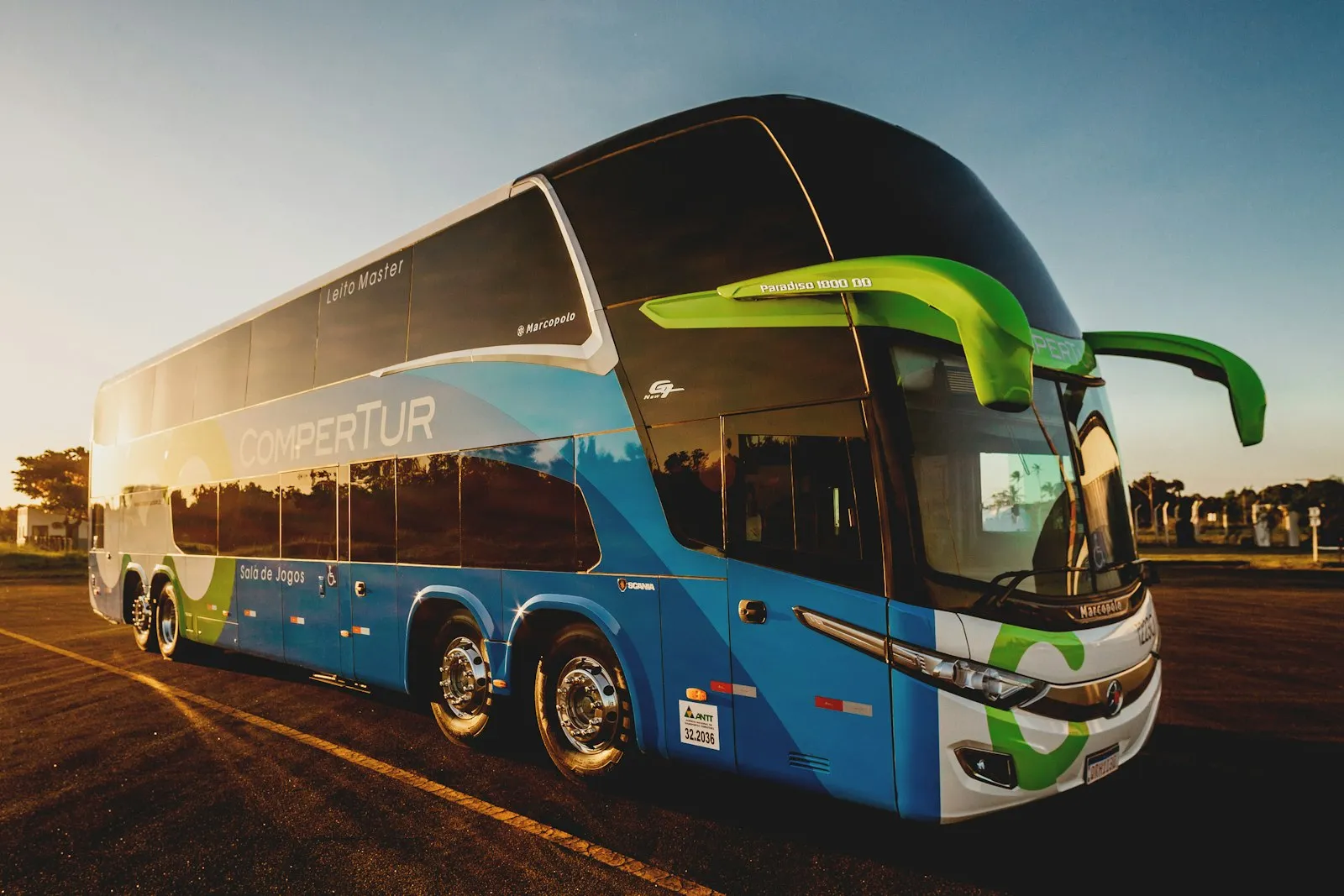
- Motorcoach: The large highway-style bus with luggage bays underneath. Interstate motorcoaches are regulated by the Federal Motor Carrier Safety Administration (FMCSA).
- NICE bus: Nassau Inter-County Express, the bus system serving Nassau County. Some NICE routes run into eastern Queens. NICE is a public system operated by a private contractor for the county, which means notice-of-claim rules can apply.
- Shuttle: A van or small bus run by a hotel, airport parking lot, hospital, employer or apartment complex. The business that runs it is often the responsible party.
- Paratransit / ambulette: Door-to-door transport for people with disabilities or medical needs. These operators may be private companies working under contract with an agency.
- Party bus or limo bus: A converted bus rented for celebrations. Safety issues with standing passengers, alcohol and poorly maintained vehicles come up often.
Glossary: The Rules That Apply
- USDOT number: An identification number for interstate commercial carriers, usually painted on the side of the bus. It lets you look up the company’s registration and safety record through the FMCSA.
- Hours of service: Federal limits on how long commercial drivers can drive and must rest. Passenger-carrier rules are different from truck rules, and both are explained on the FMCSA hours-of-service page. A tired charter driver who exceeded the limits is a serious red flag.
- CDL with passenger endorsement: Bus drivers need a commercial driver’s license with a passenger (“P”) endorsement. A driver without the proper license points to negligent hiring.
- Driver qualification file: Records the carrier must keep on each driver: license history, medical certification, road test, prior employers. Missing or stale files matter.
- Inspection and maintenance records: Bus companies must inspect and maintain vehicles. Bad brakes, bald tires and broken doors can turn an ordinary stop into an injury.
- Respondeat superior: A Latin phrase meaning an employer is generally responsible for an employee’s negligence on the job. It’s why the bus company, not just the driver, is usually the defendant.

Glossary: Insurance Words You’ll Hear
- No-fault / PIP: Personal injury protection under Insurance Law §5102. It pays medical bills and part of lost earnings regardless of fault, up to the basic $50,000. Bus passengers are a special case: depending on your situation, the bus’s insurer or your own household auto policy may be the one that pays. Your application is generally due within 30 days.
- Serious injury threshold: The legal bar you must clear to sue for pain and suffering in a motor-vehicle case. It covers injuries such as fractures, significant disfigurement and significant limitation of use of a body function or system.
- Liability coverage: The insurance that pays when the bus company or its driver is at fault. Commercial passenger carriers generally must carry much higher limits than ordinary cars, and the amount depends on the type of carrier and whether it operates interstate.
- Excess or umbrella policy: Extra coverage stacked on top of the primary policy. Large carriers often have several layers.
- Subrogation / lien: When your health insurer or no-fault carrier paid bills and seeks to be repaid from a settlement. These need to be negotiated, not ignored.
Update for 2026: New York’s late-May 2026 tort reform applies to motor-vehicle lawsuits filed on or after its effective date (not death cases). It adopts modified comparative fault in CPLR 1411(b), so a plaintiff more than 50% at fault (more than the defendants) cannot recover; eliminates the 90/180-day serious injury category; has juries decide fault before serious injury; and caps pain and suffering at $100,000 for plaintiffs who were driving uninsured, were convicted of impaired driving, or were committing a felony. Most bus passengers carry no fault at all, but for a driver whose car was hit by a bus, these changes can matter.
Glossary: Deadlines
| Term | Plain meaning | Typical time limit |
|---|---|---|
| Statute of limitations | The last day to file a lawsuit | 3 years for most injury claims against private companies (CPLR 214) |
| No-fault application | The claim form for medical and wage benefits | 30 days |
| Notice of Claim | A formal written notice required before suing many public entities | Often 90 days (GML §50-e); applies to MTA/NYC buses and may apply to NICE and other public systems |
| Wrongful death | A claim by the family of someone killed | 2 years from death (EPTL 5-4.1) |
The single most important glossary entry for a Bellerose bus case is the line between private and public. A private charter coach usually means the three-year clock. A public or publicly contracted system can mean a 90-day notice. If you are not sure which kind of bus it was, assume the shorter deadline until a lawyer confirms otherwise.

How Bus Injuries Happen
The ways people get hurt are surprisingly varied:
- Passengers thrown forward or into aisles when a bus brakes hard or takes a curve too fast
- Standing riders on party buses and shuttles falling during sudden movements
- Slips on wet stairs or trips on damaged flooring
- Doors closing on passengers boarding or exiting
- Collisions with cars, cyclists or pedestrians, including on Hillside Avenue, Jamaica Avenue and Jericho Turnpike
- Motorcoach crashes on highways and parkway approaches, sometimes tied to driver fatigue
- Luggage falling from overhead racks
Many of these aren’t “crashes” at all, but they can still be the carrier’s responsibility. If a slip on bus stairs was the problem, our premises liability page explains related concepts.
A Hypothetical: The Charter Trip
Here’s a hypothetical to show how the glossary terms fit together. It is not a real case. A Bellerose seniors group hires a charter coach for a day trip. On the way home, the driver dozes and drifts onto the shoulder, then over-corrects. Several passengers are thrown from their seats.
- The charter company is a common carrier, and the driver was its employee, so respondeat superior points to the company.
- The USDOT number on the coach leads to the company’s registration and safety history.
- Hours-of-service logs and the driver qualification file are requested, along with inspection records.
- Each injured passenger files a no-fault application within 30 days.
- Because the carrier is private, the three-year statute of limitations applies, but evidence is preserved immediately.

Glossary: Words From the Claim Itself
- Negligence: Failing to use reasonable care. For a bus company, that might mean speeding, distracted driving, skipping inspections or hiring an unqualified driver.
- Comparative fault: Splitting responsibility among the people who caused a crash. Passengers almost never share fault, but a driver who collided with a bus might.
- Preservation letter: A written demand that the bus company keep video, GPS data, driver logs and maintenance records. Many coaches and shuttles have interior and exterior cameras, and footage can be overwritten if no one asks for it.
- Damages: The losses you can be compensated for, such as medical expenses beyond no-fault, lost earnings, and pain and suffering.
- Settlement release: The document you sign to end a claim. Once signed, you usually cannot reopen the claim, so never sign one from a bus company or insurer without legal advice.
Knowing these words won’t make you a lawyer, but it will help you follow what the insurance adjuster is really saying, and spot when a quick offer is designed to close the file before the full extent of an injury is known.
What to Do After a Bus Accident
- Get medical care, and tell providers you were injured on or by a bus.
- Write down the bus company name, bus number, USDOT number and route or trip details.
- Photograph the inside of the bus, the stairs, the seat you were in and your injuries.
- Collect names of other passengers; group trips make this easier.
- Keep tickets, receipts, trip itineraries and emails confirming your booking.
- Report the incident to the company, but don’t sign releases or give recorded statements before talking to a lawyer.
More information is on our bus accident practice page, our Bellerose personal injury hub and our personal injury practice. If a school bus was involved, see our school bus accident guide.
Getting to Our Office from Bellerose
Yakov Mushiyev & Associates, P.C. is at 1 Cross Island Plaza, Suite 325, Rosedale, NY 11422, open Monday through Friday from 9 to 6. From Bellerose, take the Cross Island Parkway south toward the Belt Parkway. 1 Cross Island Plaza sits right off the Cross Island in Rosedale, roughly a 15 to 20 minute drive depending on traffic. We also meet clients at home, in the hospital or by video.
Talk to a Bus Accident Lawyer in Bellerose
Bus cases come with more vocabulary, more insurance layers and sometimes much shorter deadlines than ordinary car crashes. A bus accident lawyer in Bellerose from our firm can identify the right carrier, preserve the records and handle the claim. Consultations are free, there’s no fee unless we win, and we speak English, Russian and Spanish. Call 718.775.3110 or reach us online.
Frequently Asked Questions
Is a NICE bus treated like an MTA bus?
Not exactly. NICE is Nassau County’s system, operated by a private contractor, while MTA buses are run by public authorities. Both can involve notice-of-claim requirements that are much shorter than the three-year statute of limitations, so treat a NICE bus crash as time-sensitive and get advice quickly about which notice rules apply.
Who pays my medical bills if I was hurt as a passenger on a charter bus?
No-fault benefits usually pay first, but which insurer pays depends on details such as whether you own a car or live with someone who does. Filing the no-fault application within 30 days is important either way.
Can I sue the group or company that hired the charter bus?
Usually the claim is against the bus company that employed the driver and maintained the vehicle. In some situations other parties may share responsibility, which is something we look at case by case.
Are there bus routes through Bellerose?
Yes. MTA buses run along major roads such as Hillside and Jamaica Avenues, and some Nassau routes cross the line nearby. Charter coaches and shuttles also use Hillside Avenue, the Cross Island Parkway area and Jericho Turnpike. Which type of bus was involved determines the deadlines.
What if I was in a car and a private bus hit me?
You would generally pursue no-fault benefits through your own auto policy and a liability claim against the bus company. Driver fatigue, maintenance records and the company’s safety history are all fair game in that claim.
This article is general information, not legal advice. Attorney Advertising. Prior results do not guarantee a similar outcome.