
The first phone call after a school bus crash rarely comes from a lawyer. It comes from an insurance adjuster, usually within a day or two, and the voice on the line is friendly, patient and very good at the job. If your child was hurt on a bus in eastern Queens, it helps to know what that adjuster is actually doing. This guide from a School Bus Accident Lawyer in Bellerose walks through the claim from the other side of the desk: how the file is opened, what the adjuster is weighing, and where families unknowingly give value away.
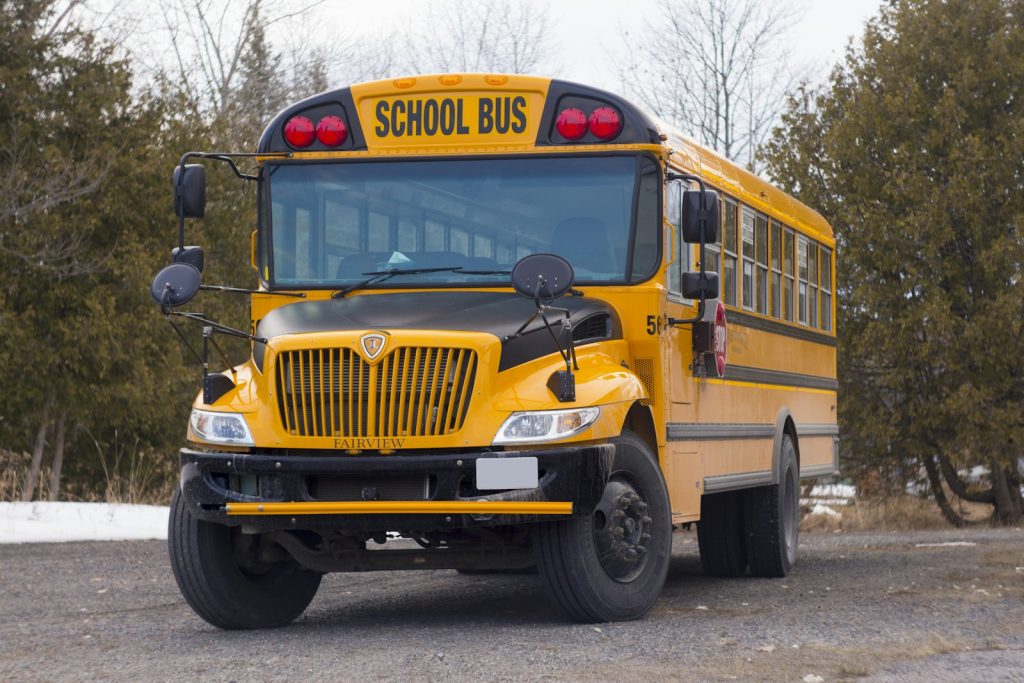
We are not writing this to make adjusters sound like villains. Most are professionals following a process. But that process is built to close claims for as little as the file will support, and it moves fastest in the first few weeks, when parents are focused on doctors, missed school days and a frightened kid. Understanding the playbook is the best way to keep it from running you.
The File Opens Before You Know It Exists
When a school bus is involved in a collision on Hillside Avenue, Braddock Avenue or anywhere along the Bellerose routes, the driver radios dispatch, the bus company notifies its carrier, and a claim number is created. Commercial bus operators deal with incidents constantly, so their reporting is fast and organized. By the time you get home from the pediatrician, there may already be an incident report, a driver statement and a request for the bus’s camera footage sitting in the file.
The adjuster’s first job is to set a reserve, an internal estimate of what the claim will eventually cost. That number is revised as information comes in. Everything you say and every record you sign over feeds that estimate. A low early reserve is not a disaster on its own, but it shapes the attitude of everyone who touches the file afterward.
Who might be on the hook
School transportation in New York City is a patchwork. Many routes are run by private bus contractors working for the Department of Education; others involve public entities directly. A crash may also involve a second driver who ran the bus’s stop arm, rear-ended it at a light, or turned across its path. Each of those parties has its own insurer and its own adjuster, and each one would prefer that the blame land somewhere else. Identifying every potential defendant early is the first thing we do on any bus accident case.
The Deadlines Adjusters Never Mention
An adjuster has no obligation to remind you about deadlines, and many claims die quietly because a family waited for the insurer to “get back to them.” These are the clocks that matter most in a school bus case:
- No-fault application: 30 days. New York’s no-fault system pays medical bills and certain lost earnings regardless of who caused the crash, up to the basic $50,000 in coverage, under Insurance Law §5102. Miss the 30-day application window and you are fighting uphill for your own medical bills.
- Notice of Claim: 90 days. If the City of New York or the DOE may be responsible, a formal Notice of Claim must be served within 90 days under General Municipal Law §50-e, with a lawsuit following within one year and 90 days. The NYC Comptroller explains the process on its claims page.
- Lawsuit: generally three years. Claims against private bus companies and other drivers are typically governed by the three-year limit in CPLR 214.
For children, New York generally pauses the three-year lawsuit clock until the child turns 18. Adjusters know families sometimes hear this and relax. Don’t. The infancy rule does not automatically rescue a missed Notice of Claim, and it does nothing to stop bus video from being overwritten or witnesses from moving away. Nassau school districts, which serve families just over the line, have their own notice requirements as well.
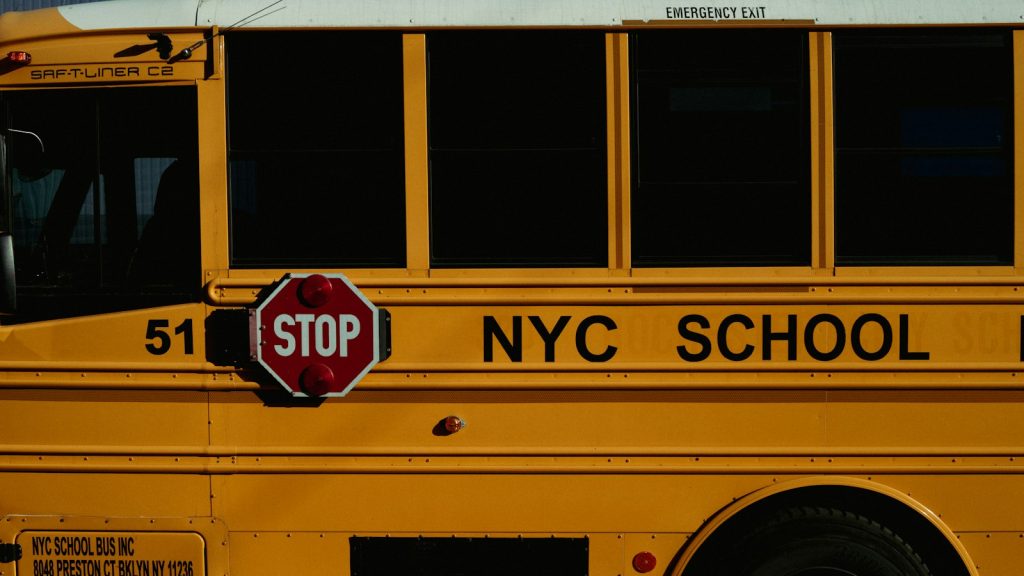
How an Adjuster Reads Liability on a School Bus Crash
Liability is the first column in the adjuster’s evaluation. With school buses, the questions tend to fall into a few predictable buckets:
- Was the bus driver careless? Speed, following distance, turning wide on a narrow residential block, pulling away before a child was seated, or driving distracted.
- Did another motorist break the law? Passing a stopped school bus with its red lights flashing is illegal under Vehicle and Traffic Law §1174. Rear-end impacts at lights on Jamaica Avenue are another common pattern.
- Was the company careless? Hiring, training, supervision, maintenance records, and whether the route and stop locations were reasonable.
- Did the child or a parent contribute? This is where adjusters look for leverage, especially with older kids at bus stops.
Here is a quiet truth about how insurers think: a child passenger seated on a bus is almost never at fault in a collision. Adjusters know that. So the fight usually shifts away from whether someone is responsible and toward how much the injury is worth and which insurer pays. If you hear the adjuster talking a lot about “the other driver” or “the City,” what you are often hearing is a carrier positioning itself to pay a smaller share.
Update for 2026: New York changed several rules for motor-vehicle lawsuits filed on or after the late-May 2026 reform. A plaintiff whose share of fault is greater than 50% can no longer recover; the 90/180-day “serious injury” category was eliminated; juries now decide fault before serious injury; and pain-and-suffering awards are capped at $100,000 for plaintiffs who were driving uninsured, convicted of impaired driving, or committing a felony. Death cases are excluded. For a child riding as a passenger, the comparative-fault change rarely matters, but the loss of the 90/180-day category can matter a great deal for injuries that are real but heal within months. Read the comparative-fault statute at CPLR 1411.
The “Serious Injury” Column: Where Values Are Won or Lost
A school bus crash is a motor-vehicle accident, which means New York’s no-fault rules apply. To recover for pain and suffering beyond what no-fault pays, the injured person must meet the “serious injury” threshold in Insurance Law §5102(d). Categories include fractures, significant disfigurement, permanent loss of use, and permanent or significant limitations of a body function or system.
Adjusters are trained to probe this column hard. They look for:
- Gaps between the crash and the first doctor visit.
- Missed physical therapy appointments.
- MRI findings described as “degenerative” or pre-existing.
- A child who returned to sports or gym class quickly.
- Social media photos that appear to show normal activity.
None of this means you should keep a child out of normal life to “help the case.” It means you should get prompt medical care, follow the treatment plan, and keep honest records of what your child can and cannot do. For children, we also pay attention to things adults rarely face: missed school, tutoring needs, sleep problems, and new anxiety about getting back on a bus. Those details belong in the file, documented by the right professionals.
Inside the Adjuster’s Notes: A Translation Table
Families occasionally see claim correspondence or hear phrases on the phone that sound harmless. Here is what some of them typically mean in practice.
| What you hear | What it usually means | What to do |
|---|---|---|
| “Can we get a quick recorded statement?” | The adjuster wants your account locked in early, before medical facts are known. | Politely decline until you have spoken with counsel. |
| “Just sign this authorization so we can process things.” | A broad release may open years of unrelated medical history. | Have a lawyer review and narrow it. |
| “We’re still investigating liability.” | The carrier may be trying to shift responsibility to another driver or entity. | Preserve your own evidence now. |
| “This offer is only good for a short time.” | Pressure to settle before the full injury is understood. | Never settle before your doctors know the long-term picture. |
| “Kids bounce back.” | An attempt to frame the injury as minor and temporary. | Let the medical records speak. |
Evidence the Adjuster Already Has and You Don’t
The imbalance of information is the biggest advantage an insurer has. Bus companies often hold interior and exterior camera footage, GPS and route data, driver logs, maintenance records, prior complaints about the driver, and the attendant’s account if one was on board. Some of this is retained only for a limited time unless someone demands it be preserved.
That is why one of the first things a lawyer does is send preservation letters. Meanwhile, families can help by gathering what they control:
- Photos of your child’s injuries, taken over several days as bruising develops.
- The bus number, route, date, time and location of the crash.
- Names and phone numbers of other parents whose children were on board.
- Any police report number from the NYPD 105th Precinct, which covers Bellerose.
- School nurse notes and any messages from the school about the incident.
If your child was hit while crossing to or from a bus rather than injured on board, the case looks more like a pedestrian claim. Our Bellerose pedestrian accident guide covers that angle in more detail.
How No-Fault Fits In (and Where Parents Get Confused)
No-fault benefits are meant to cover medical treatment quickly without arguing about blame. In a school bus case, figuring out which carrier owes no-fault can itself be a puzzle. Often it runs through the bus company’s insurer, but in some situations a family’s own auto policy is the one first in line. Adjusters at different companies sometimes point at each other while bills pile up. Filing the application on time, with the correct carrier, keeps treatment moving.
No-fault does not pay for pain and suffering. That part of the claim is handled separately, against whoever was at fault, and it is the part where an adjuster’s early evaluation matters most. The New York State Department of Financial Services has general consumer information about no-fault on its website.
Why Insurers Treat Represented Families Differently
It is not personal. Adjusters work with authority limits, internal review, and supervisors who ask one question about every file: what happens if this goes to court? When a family has no lawyer, the honest answer is often “probably nothing,” and the reserve reflects that. When a Queens personal injury firm is involved, the file is evaluated against what a Queens County jury at 88-11 Sutphin Boulevard might think, and the conversation changes.
Representation also stops the slow drift that happens in unrepresented claims: the repeated requests for “one more record,” the unanswered calls, the deadlines that pass in silence. We handle the communication so you can handle your child. You can learn more about our approach on our Bellerose personal injury page and in our related guides on bus accidents in Bellerose and MTA bus crashes.
A hypothetical to make it concrete
Here’s a hypothetical. A bus carrying middle schoolers stops for a red light on Hillside Avenue. A delivery van rear-ends it. Several kids are jolted forward; one strikes her face on the seatback and chips a tooth, another complains of neck pain that night. The bus company’s adjuster calls the parents, sympathetic, and suggests the van’s insurer is really the one responsible. The van’s adjuster, a week later, asks whether the bus “stopped short.” Each carrier is protecting itself. Meanwhile, nobody has told the parents about the 30-day no-fault window. That is exactly the kind of file where early legal help changes the outcome.
What You Should and Shouldn’t Say on the Phone
You don’t have to be rude. You just have to be careful. It is fine to confirm your name, your child’s name, and that you are getting medical care. It is wise to avoid guessing about speed, distances, or how badly your child is hurt. “I don’t know yet” is a complete answer. “My lawyer will be in touch” is even better. And never sign a release on behalf of a minor without legal advice; in New York, settlements for children generally require court approval, which exists precisely to protect kids from rushed deals.
Getting to Our Office from Bellerose
Our office is at 1 Cross Island Plaza, Suite 325, Rosedale, NY 11422. From Bellerose, take the Cross Island Parkway south toward the Belt; the building sits right off the Cross Island in Rosedale, roughly a 15 to 20 minute drive depending on traffic. If it is hard to get away from work or your child is still recovering, we can meet at your home, at the hospital, or by video. Consultations are available in English, Russian and Spanish, Monday through Friday from 9 to 6.
Talk to a School Bus Accident Lawyer in Bellerose
If you are already getting calls from an adjuster, the best time to speak with a School Bus Accident Lawyer in Bellerose is before the next one. Yakov Mushiyev & Associates, P.C. offers a free consultation, and there is no fee unless we win. Call 718.775.3110 or reach us through our contact page. You can also browse our general FAQ before you call.
Frequently Asked Questions
Should I give the bus company’s insurer a recorded statement about my child’s accident?
You are not required to, and it is usually wise to wait until you have spoken with a lawyer. Early statements are often taken before the injury is fully understood, and casual phrases can be used later to argue an injury was minor.
How long do I have to file a school bus accident claim in New York?
It depends on who is responsible. Claims against a public entity such as the City or the DOE generally require a Notice of Claim within 90 days. Claims against private bus companies and other drivers usually have a three-year limit, which is generally paused for minors, but evidence and notice deadlines do not wait. A School Bus Accident Lawyer in Bellerose can identify which deadlines apply to your situation.
Does no-fault insurance cover my child’s medical bills after a school bus crash?
Generally yes, up to the basic $50,000 in no-fault benefits, regardless of fault. The application must usually be filed within 30 days, and determining the correct carrier can take some work.
Which police precinct handles school bus accidents in Bellerose?
The NYPD 105th Precinct in Queens Village covers Bellerose. If an officer responded, the report number is one of the most useful pieces of information you can keep.
Can we meet somewhere other than your Rosedale office?
Yes. Many Bellerose families meet us at our office off the Cross Island Parkway, but we also visit homes and hospitals, including families at Long Island Jewish Medical Center in New Hyde Park, and we offer video consultations.
This article is general information, not legal advice. Attorney Advertising. Prior results do not guarantee a similar outcome.