
Our phones ring with versions of the same question almost every week. Sometimes it is a driver whose car was clipped by a van double-parked on Northern Boulevard. Sometimes it is a pedestrian knocked down by a food courier on an e-bike in Jackson Heights. Sometimes it is the delivery worker who got hurt. We decided to collect the questions readers actually send us and answer them the way we would on the phone. If you’re trying to figure out whether you need a delivery driver accident lawyer in Queens, start here.
The answers below come from the team at Yakov Mushiyev & Associates, P.C., a personal injury firm based in Rosedale. We’ve kept them conversational, but every legal point is grounded in New York law. Where the honest answer is “it depends,” we tell you what it depends on.
“A delivery van hit my car. Isn’t this just a regular car accident?”
In some ways, yes, and in one big way, no. The same basic rules apply: New York’s no-fault system pays your initial medical bills and lost wages, and you can pursue the at-fault driver for pain and suffering if your injury qualifies as a “serious injury.” What changes is who stands behind the driver.
When an ordinary driver hits you, there is usually one driver and one insurance policy. When a delivery driver hits you, there may be a driver, the company that owns or leases the vehicle, the company that employs or contracts with the driver, and sometimes a larger brand whose packages or food were on board. Each may have its own insurance. That’s the core reason delivery crashes deserve a closer look than a typical fender-bender.
“Who can I actually hold responsible?”
Good question, and the answer depends on facts we’d want to confirm. Here are the usual candidates:
- The driver. Always a starting point. Negligent driving, such as speeding, distraction, illegal double-parking, or failing to yield, is the foundation of the claim.
- The vehicle’s owner. Under VTL §388, a vehicle owner is generally vicariously liable for a permissive driver’s negligence. If a delivery company owns or leases the van, that matters.
- The employer. If the driver is an employee acting within the scope of the job, the employer may be responsible for the driver’s negligence.
- A contractor company. Many delivery networks use contractor arrangements. Amazon commonly uses third-party Delivery Service Partners, and FedEx Ground uses independent contractor service providers. UPS drivers are generally UPS employees. Liability can involve the driver, the contractor company, and in some situations the brand itself, depending on the facts.
- A restaurant or app platform. For food delivery, responsibility depends on how the courier was engaged and what insurance applies. This is a developing area, and the honest answer is that it turns on specifics.
Our dedicated page on Amazon delivery van crashes in Queens goes deeper on the Delivery Service Partner structure.
“Why do these accidents keep happening in Queens?”
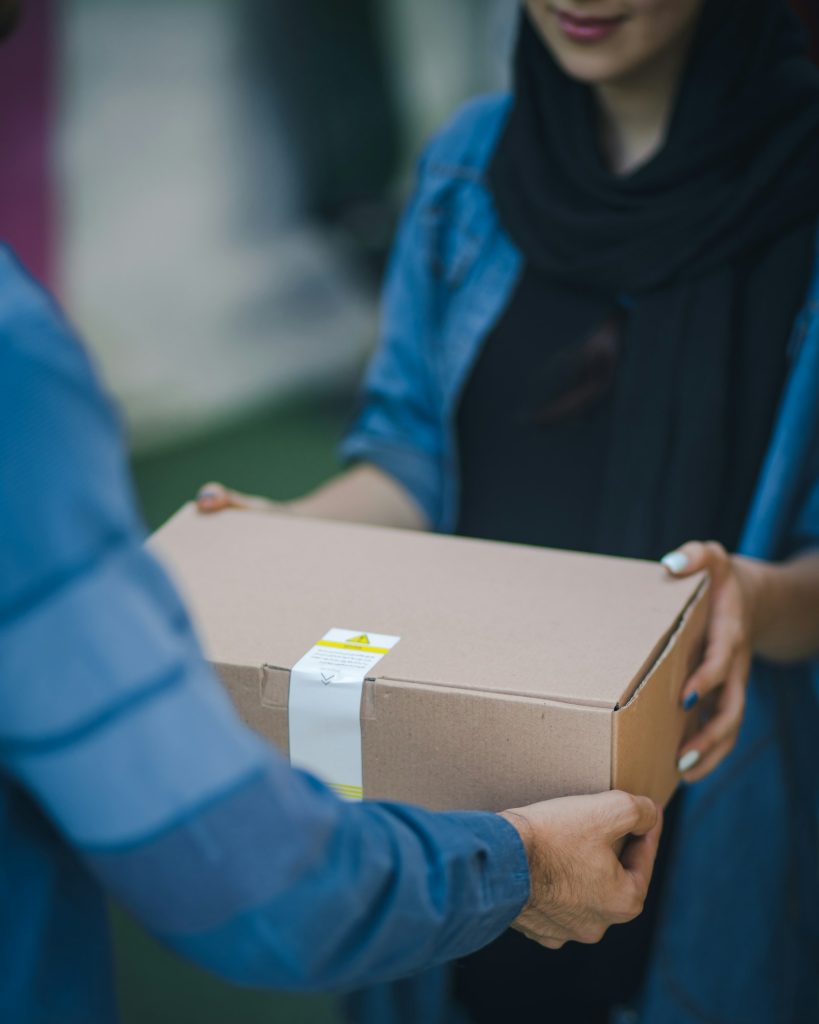
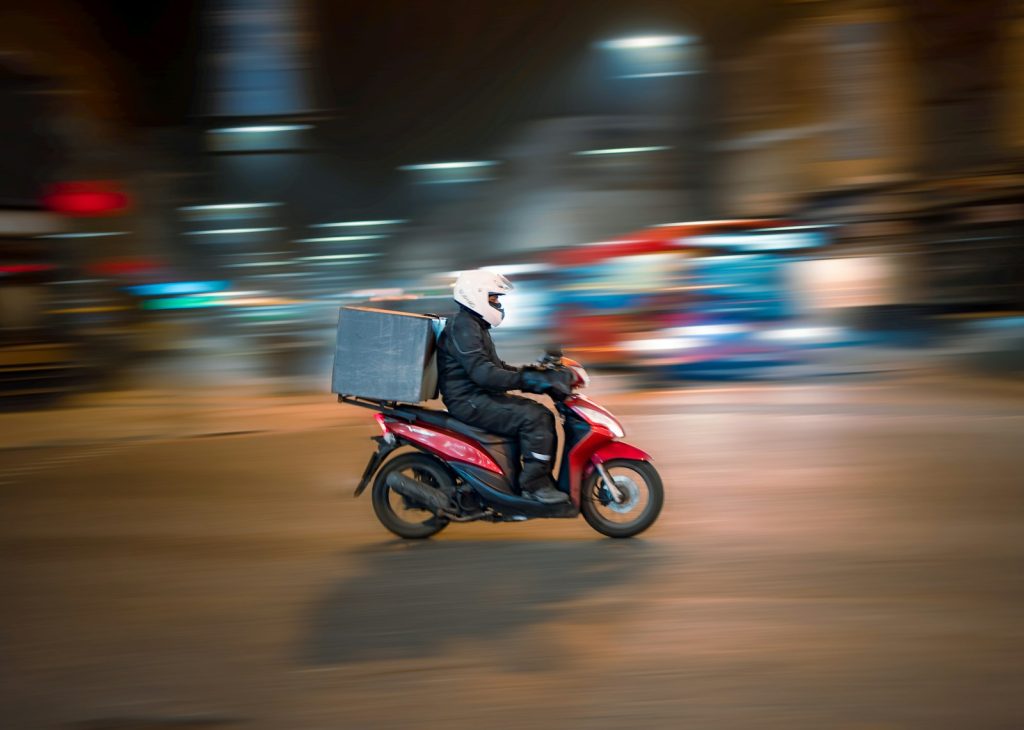
Honestly, it’s the combination of volume and pressure. Queens has dense commercial corridors and enormous residential neighborhoods, and delivery vehicles are on every block. Drivers work on tight schedules with dozens or hundreds of stops, which encourages rushing, double-parking, U-turns mid-block, and checking a route screen while moving.
The corridors where we see delivery-related crashes tend to be the obvious ones: Queens Boulevard, Northern Boulevard, Roosevelt Avenue under the elevated 7 train, Jamaica Avenue, Hillside Avenue, Merrick Boulevard, and the dense grid around Main Street in Flushing. On these streets, a van stopped in the travel lane forces cars to swing out into the next lane, and pedestrians step out from between the van and parked cars where drivers can’t see them.
On the highway side, the Long Island Expressway, the Van Wyck, and the BQE carry box trucks and vans heading for distribution centers. Remember that commercial vehicles are banned from New York parkways like the Grand Central, Cross Island, and Belt, so a commercial truck on one of those roads is already a red flag.
“The driver was looking at his phone. Does that help my case?”
It can. New York bans hand-held phone use while driving under VTL §1225-c, and §1225-d restricts other portable electronic devices. Evidence of a violation can support a negligence claim. Delivery drivers interact constantly with routing apps and scanners, and the timing of that activity can sometimes be reconstructed from company records.
The catch is that you usually need to request those records, and companies don’t keep everything forever. That’s why we send preservation letters early asking companies to keep telematics data, route logs, dashcam video, and device records.
“What does no-fault cover, and how fast do I need to apply?”
No-fault pays basic economic loss up to $50,000 per person, regardless of who caused the crash: necessary medical expenses, 80 percent of lost earnings up to $2,000 per month, and up to $25 per day for other reasonable expenses. If you were in a car, you generally claim through the policy covering that car. If you were a pedestrian or a bicyclist struck by the delivery vehicle, you generally claim through the delivery vehicle’s insurer.
The application is generally due within 30 days of the accident. People miss this because they’re focused on getting better, or because they assume the delivery company “will take care of it.” Don’t wait.
Follow-up: “What if the courier was on an e-bike or moped?”
Then coverage depends on the vehicles involved and the policies in place, and it can get complicated. Class 1 to 3 e-bikes and e-scooters are legal in New York under specific Vehicle and Traffic Law rules, while mopeds and limited-use motorcycles must be registered and insured. New York City also set a 15 mph speed limit for e-bikes and e-scooters, taking effect in late 2025. The city’s e-bike rules from NYC DOT summarize what’s allowed. We’d look at your own policies, the courier’s coverage, and any business policy that might apply.
“When can I sue for pain and suffering?”
For car, van, and truck accidents, New York requires a “serious injury” before you can recover for pain and suffering. The definition is in Insurance Law §5102(d) and includes things like a fracture, significant disfigurement, permanent loss of use of a body part, or a permanent consequential or significant limitation of use. Economic losses beyond what no-fault pays, such as wage loss over the no-fault cap, can be pursued regardless.
We’d add one practical point: the medical record is what proves serious injury. Gaps in treatment, skipped appointments, and vague complaints give insurers ammunition. Consistent care and honest, detailed reporting to your doctors matter.
2026 update: For motor-vehicle personal-injury actions commenced on or after May 26, 2026, two rules changed. Under amended CPLR 1411, a claimant whose fault is greater than the defendants’ combined fault (more than 50 percent) recovers nothing; at 50 percent or less, recovery is reduced by the claimant’s share. And the “90/180-day” category was removed from the serious-injury definition in Insurance Law §5102(d). Delivery-vehicle crashes are motor-vehicle cases, so both changes apply to actions filed after that date.
“Delivery drivers are always double-parked. Is that automatically negligence?”
Not automatically, but it can be strong evidence. A van stopped in a travel lane, a bike lane, or a crosswalk creates hazards that a reasonable driver should foresee. If you swerved around a double-parked van and were struck by oncoming traffic, or if a pedestrian stepped out from behind the van and was hit, the van’s position may be part of the story of who was negligent, alongside the conduct of the other drivers involved.
We’d also want to know whether the van had hazard lights on, whether the driver opened a door into traffic, and whether there was a legal place to stop nearby. Those details shape how fault is divided.
“I’m the delivery driver who got hurt. Do I have any options?”
Yes, and the answer depends heavily on how you’re classified. If you’re an employee, workers’ compensation is generally your main remedy against your employer. Under Workers’ Compensation Law §11, you generally can’t sue your own employer for a workplace injury, except in narrow “grave injury” situations.
But workers’ comp doesn’t stop you from pursuing other parties. If another driver ran a light and hit your van, you may have a third-party claim against that driver. If a property owner’s broken steps caused you to fall while dropping off a package, a premises claim may exist. If you’re classified as an independent contractor, workers’ comp may not apply the same way, and your own insurance, the platform’s coverage, and claims against at-fault parties become more important. Classification itself can be disputed, so don’t assume the label on your contract settles it.
“The delivery company’s insurer called me. Should I talk to them?”
Be careful. You’re not obligated to give a recorded statement to the other side’s insurer. Adjusters for commercial fleets handle these claims all day, and their questions are often aimed at pinning down details that reduce what they’ll pay, like whether you were distracted or whether you’d had prior injuries. You can politely decline and say your lawyer will be in touch.
“What should I be doing right now?”
If you’re reading this shortly after a crash, here’s our short list:
- Get medical care and keep every record.
- Photograph the vehicle, its company markings, the license plate, any USDOT number on the side, and the scene.
- Write down the driver’s name and the company name on the uniform or van.
- Get witness names and numbers, and note nearby businesses with cameras.
- File your no-fault application promptly, generally within 30 days.
- File DMV form MV-104 within 10 days if anyone was injured or property damage exceeds $1,000.
- Talk to a delivery driver accident lawyer in Queens before giving any recorded statement.
“How is this different from an Uber or Lyft accident?”
There’s overlap. App-based drivers who carry passengers in New York City are licensed by the TLC and must carry commercial insurance, and passengers’ medical bills usually start with no-fault from the vehicle’s policy. App-based delivery work, on the other hand, may involve a personal vehicle, an e-bike, or a moped, and the coverage picture can be quite different. If your crash involved a rideshare vehicle, our page on Queens rideshare accident claims explains how those policies usually work.
“Do you handle cases outside my neighborhood?”
We do. Our office is in Rosedale, and we represent people throughout Queens and nearby communities. You can see our list of neighborhoods we serve, and if you’re near the Nassau line, our Bellerose delivery accident page covers that community specifically. For broader questions about how personal injury cases work, our frequently asked questions page is a good resource.
“How long do I have to bring a case?”
Generally three years from the accident for a personal injury lawsuit in New York, under CPLR 214(5). But shorter deadlines can apply, and they’re the ones that catch people. If a City vehicle was involved, such as a City-owned delivery or service vehicle, a Notice of Claim is generally due within 90 days. The no-fault application is generally due within 30 days. If the delivery driver fled and can’t be identified, MVAIC or your own uninsured motorist coverage may apply, but both have strict notice requirements.
“Any Queens spots you’d point out?” Three Landmarks Worth Knowing
A reader once asked us to name places in Queens we think about when we talk about delivery traffic. Here are three we like, along with what we notice about the streets around them.
The Noguchi Museum
The Noguchi Museum in Long Island City was created by the sculptor and designer Isamu Noguchi to display his own work, and it includes a serene sculpture garden inside a converted industrial building. It sits near the East River along Vernon Boulevard, close to Socrates Sculpture Park. The surrounding area remains a mix of warehouses, studios, and new residential buildings, so box trucks and vans share narrow streets with visitors on foot and on bikes. Delivery vehicles stopping along Vernon Boulevard and nearby side streets can block sightlines for drivers and cyclists alike.
The Queens County Farm Museum
The Queens County Farm Museum in Floral Park, near Glen Oaks, is a working farm with a history stretching back to the colonial era and is among the oldest continuously farmed sites in New York State. Families visit for the animals, the orchard, the farmhouse, and seasonal events like the fall corn maze. It sits on Little Neck Parkway, close to the Grand Central Parkway and Union Turnpike, and on event weekends the surrounding roads fill with cars. Delivery vans serving the nearby residential blocks add to the mix.
Neir’s Tavern in Woodhaven
Neir’s Tavern in Woodhaven is one of the oldest bars in New York City, with roots in the nineteenth century, and it has appeared in films including Goodfellas. It sits on a residential corner near Jamaica Avenue and Forest Park, where the elevated J train runs overhead. Jamaica Avenue in Woodhaven is a busy shopping strip where delivery vans and trucks frequently stop in the travel lane, and the pillars of the elevated line further limit visibility for drivers and pedestrians.
Directions to Our Rosedale Office from the Noguchi Museum
From the Noguchi Museum in Long Island City, take local streets to the Long Island Expressway and head east. Exit onto the Cross Island Parkway southbound and follow it toward the Belt Parkway, exiting for Rosedale near Brookville Boulevard. Our office is at 1 Cross Island Plaza, Suite 325. During rush hour, allow extra time on the LIE.
Quick Answers: Delivery Driver Accident FAQs
Can I sue the company the delivery driver works for?
Possibly. If the driver is an employee acting within the scope of the job, the employer may be responsible for the driver’s negligence. If the company owns or leases the vehicle, VTL §388 may make it vicariously liable as owner. When the driver works for a contractor, the contractor company may be the responsible employer, and in some situations claims against the larger brand may also be possible depending on the facts.
Does no-fault apply if a delivery van hit me while I was walking?
Generally, yes. A pedestrian struck by a motor vehicle in New York typically claims no-fault benefits through the insurer of the vehicle that hit them. No-fault covers necessary medical expenses and 80 percent of lost earnings up to $2,000 per month, within the $50,000 basic economic loss limit. Apply promptly, generally within 30 days.
What if a food delivery e-bike hit me?
Coverage depends on the vehicles involved and the policies in place, so these cases require careful investigation. Your own auto or household policies, any coverage the courier carries, and potentially business coverage may all be relevant. Identifying the rider and the platform or restaurant involved is often the first challenge, so photographs and witness information are especially valuable.
How do I find out who the delivery driver worked for?
Start with what you can see: company names on the vehicle and uniform, the license plate, and any USDOT number on commercial vehicles. Police reports and the MV-104 exchange may identify the owner and insurer. A lawyer can then trace the relationship between the driver, the vehicle owner, and any contractor or brand through insurance disclosures and records requests.
I was injured while working as a delivery driver. Can I get workers’ comp and still sue?
Often, yes, but not against your own employer. Workers’ compensation is generally the exclusive remedy against an employer under WCL §11, except in grave injury cases. You may still bring a third-party claim against an at-fault driver, a negligent property owner, or another company that contributed to the accident. Independent contractors may have different options.
Does it matter that the delivery van was double-parked?
It can. A vehicle stopped in a travel lane, bike lane, or crosswalk creates foreseeable hazards for other drivers, cyclists, and pedestrians. Whether the van’s position contributed to the crash depends on the full sequence of events, but it is often part of the fault analysis along with the conduct of everyone else involved.
What evidence should be preserved after a delivery vehicle crash?
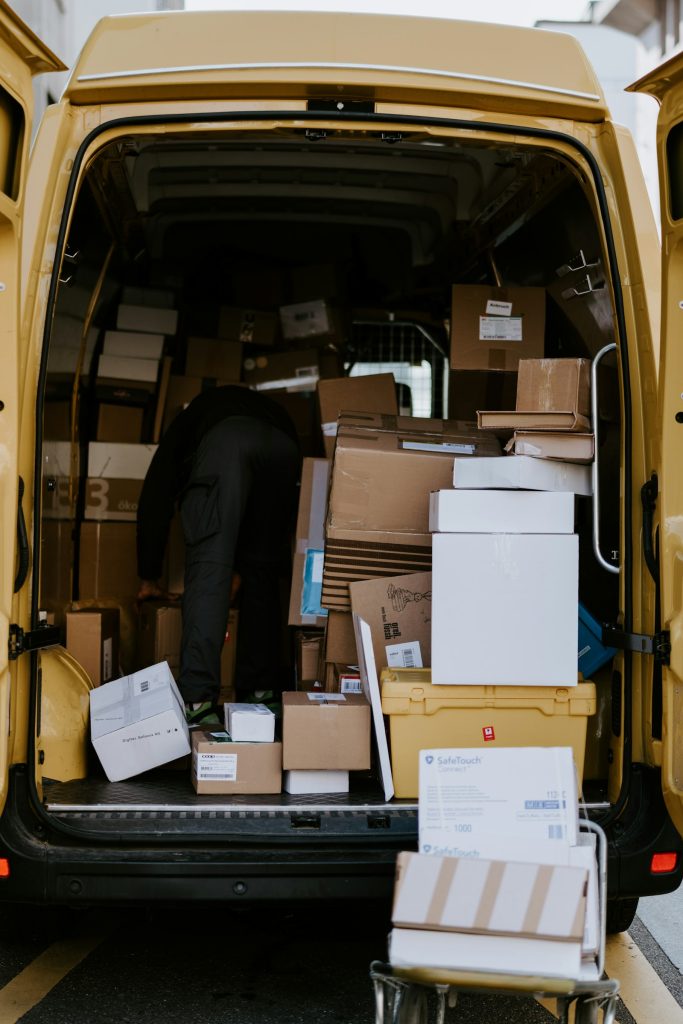
Dashcam and surveillance video, telematics and GPS data, route and delivery logs, the driver’s device activity, vehicle maintenance records, and the company’s hiring and training records. Fleets often keep this data only for limited periods, which is why lawyers send preservation letters quickly. Your own photos, medical records, and witness information matter too.
Does the 2026 comparative fault rule apply to delivery crashes?
Yes, for motor-vehicle personal-injury actions commenced on or after May 26, 2026. A claimant more than 50 percent at fault recovers nothing, while a claimant at 50 percent or less has recovery reduced by their share. Because delivery crashes often involve disputes about double-parking, lane changes, and pedestrians, the evidence about each party’s conduct matters.
What if the delivery driver left the scene?
Leaving the scene of an accident involving injury violates VTL §600. Call police, note every detail you remember, and look for nearby cameras. Company markings can help identify the vehicle later. If the driver can’t be identified, MVAIC or your own uninsured motorist coverage may apply, but notice deadlines are strict, so act as soon as possible.
How much does it cost to talk to a lawyer about my case?
You can call our office to discuss what happened and learn whether you may have a claim. We’ll explain how fees work for your type of case before you decide anything. The most important thing is to call early, because evidence in delivery cases disappears quickly and some deadlines are short.
Related: For a full overview of how our firm handles these claims, visit our Delivery Driver Accident Lawyer in Queens page.
Still Have Questions? Call a Delivery Driver Accident Lawyer in Queens
We hope these answers made the path clearer. Every case has its own facts, and the most useful next step is a conversation with a delivery driver accident lawyer in Queens who can look at yours. Call Yakov Mushiyev & Associates, P.C. at 718.775.3110 or send us your question online. Our office is at 1 Cross Island Plaza, Suite 325, Rosedale, NY 11422.
General information, not legal advice. Attorney Advertising. Prior results do not guarantee a similar outcome.