
After a crash, most people put their phone away. If you were in a Lyft, that is the one thing you should not do yet. The app on your phone holds a record of the trip that no police report, witness or insurance adjuster can recreate later: when the ride began, where it began, which car and driver were assigned, and the route the car took. In College Point, where a trip might start on a quiet block near the water or come in from across the Nassau line, those details can decide which insurance rules apply to you.
This article goes through what to save from the Lyft app after a crash in College Point, in the order you will probably need it, and explains why each piece matters. It is written for passengers, but pedestrians, cyclists and other drivers hit by a Lyft car will find most of it useful too.
First, Why the App Record Matters So Much
In New York City, a Lyft car is a for-hire vehicle licensed by the Taxi and Limousine Commission. The driver holds a TLC license, the car has TLC plates, and the car carries commercial for-hire insurance. For trips that start inside the city, the TLC’s insurance minimums apply, not the state’s rideshare law. That state law exempts cities of one million or more people, so New York City regulates app-based cars on its own.
That one rule explains why the trip’s starting point matters. A ride that begins in College Point is a TLC trip. A ride that begins in Nassau County, say in Great Neck, falls under the state rideshare rules and its $1.25 million liability requirement for trips that start outside the city. The app records where the trip began. Your memory of it, a week later and on pain medication, is not as reliable.
The app also records the driver’s status: app off, waiting for a ride request, driving to a pickup, or carrying a passenger. Status can affect which policy responds. Lyft may carry additional coverage above the TLC minimums on some trips; whether it applies, and how much, has to be confirmed from the insurer and the trip record. Either way, the trip record is where the answer starts.
The Screenshot Checklist
Take these screenshots as soon as you safely can, ideally before you leave the scene. If you are hurt, ask someone with you to do it, or do it the same day from home. Here is the list, in order.
- The ride receipt. It shows the trip ID, start and end times, and the route. The trip ID is the reference number everyone else will use.
- The driver and vehicle screen. The driver’s name and the plate shown in the app. Check the plate against the actual car.
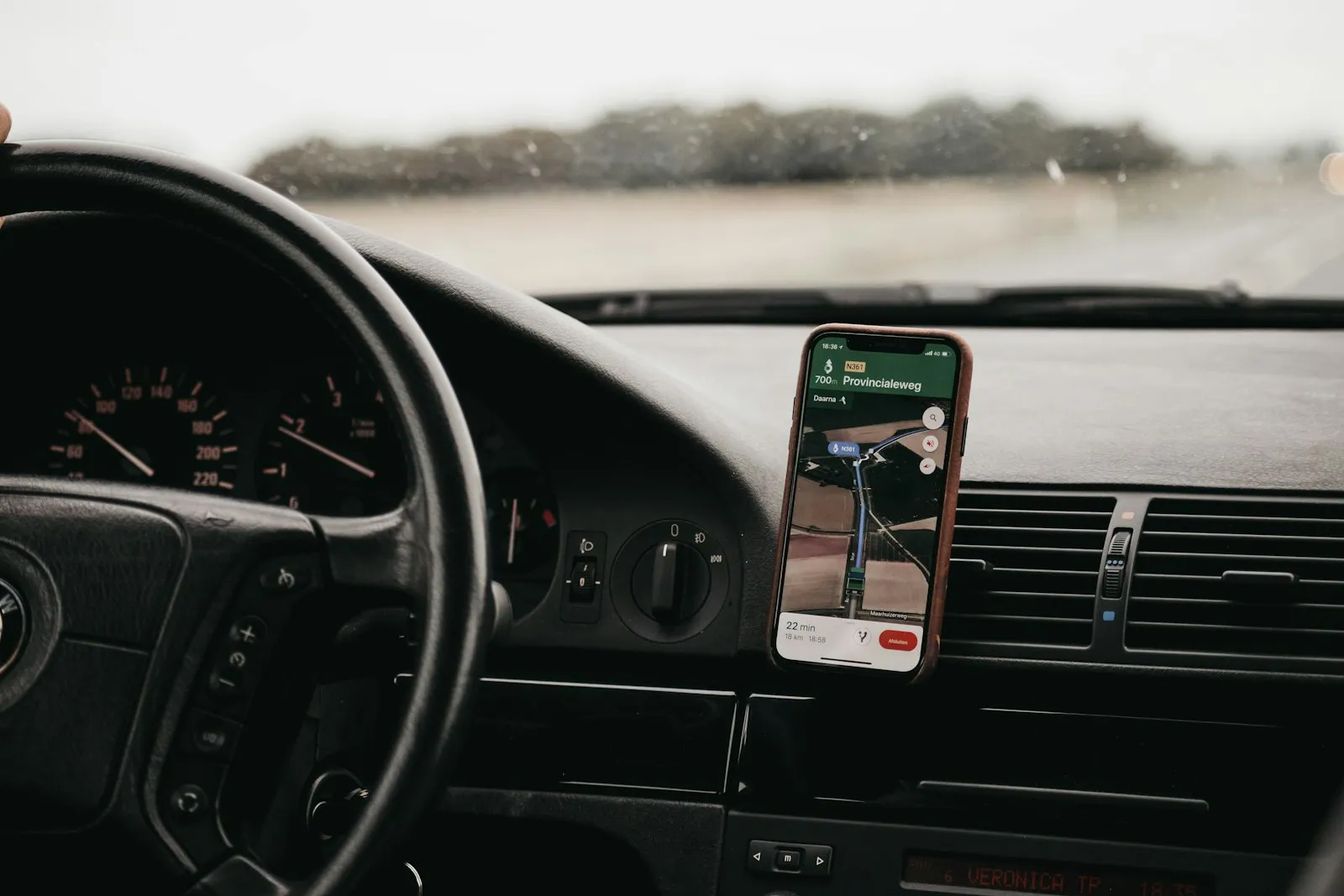
- The map and route. A screenshot of the route shows where the car was and where it was heading.
- Any in-app safety report you file. Report the crash through the app, then screenshot the confirmation.
- Messages with the driver. Texts or in-app messages about the pickup point can show where the car was told to stop.
Then do one more thing: do not delete the app or your account. People sometimes delete a rideshare app after a bad experience. The ride history inside your account is evidence, and keeping it intact is easier than trying to recover it later.
Screenshot first, delete never. The trip ID on your Lyft receipt is the thread that ties together the police report, the insurer’s file and your medical claim.
What the App Cannot Do for You
The app is a strong record of the trip, but it is not a record of the crash. A few things still have to happen outside it, and each one exists for a reason.
Call the police
An in-app report goes to Lyft. A police report is an independent record made at the scene, which is why insurers and courts give it weight. In College Point, crash reports typically come from the NYPD’s 109th Precinct. Drivers may also have to file an accident report with the New York State DMV.
Photograph the physical scene
Your phone camera matters as much as the app. Photograph both cars, where they came to rest, skid marks or debris, the traffic signal or stop sign, and your visible injuries. Look around for security cameras on nearby businesses. That footage may be recorded over, which is why speed matters.
Collect people, not just data
Get the names and phone numbers of witnesses and any other passengers. If it was a shared ride, other riders may have their own receipts showing the same trip, and they may have seen different things than you did.
Where Your Screenshots Go Next
Evidence is only useful if it reaches the right place on time. Here is how the pieces fit together.
| Step | Deadline | What the app record helps prove |
|---|---|---|
| No-fault (PIP) application to the Lyft car’s insurer | 30 days from the accident | That you were a passenger in that vehicle on that trip |
| Notice of claim, if a city or MTA vehicle was involved | 90 days | Time and place of the crash |
| Wrongful death action | 2 years | The trip and the driver’s status |
| Personal injury lawsuit | 3 years under CPLR 214(5) | Where the trip started, which rules apply, who was driving |
The no-fault deadline is short because no-fault exists to pay medical bills and lost earnings quickly, regardless of who caused the crash. The insurer needs prompt notice to check treatment and wages. For TLC vehicles, required PIP coverage is $100,000 per person since March 1, 2026, compared with the $50,000 state minimum for ordinary cars. Crashes before March 1, 2026 may fall under the policy then in force.
Pedestrians and cyclists hit by a Lyft car send their no-fault application to the insurer of the vehicle that struck them. They usually will not have a receipt, so the police report, photos and witnesses carry more of the load, and the trip details come later through the claim.
Why Evidence Matters More Under the 2026 Rules
For lawsuits filed on or after May 26, 2026, two changes raise the stakes on proof.
- Fault can end a claim. In motor-vehicle cases, a claimant whose fault is greater than the defendant’s (or the defendants’ combined) now recovers nothing; at 50% or less, recovery is reduced in proportion. A Lyft passenger is rarely at fault, so this mostly affects pedestrians, cyclists and drivers. Fault is also decided before serious injury.
- The injury has to fit a category. A pain-and-suffering claim requires an injury in one of eight categories under Insurance Law § 5102(d), including fracture, significant disfigurement, and permanent or significant limitations of use. A time-based category was removed.
Screenshots help with the first point. Medical records handle the second, which is why seeing a doctor promptly, and following through with treatment, matters as much as anything you save on your phone.

MacNeil Park: A Common Lyft Destination on the Waterfront
MacNeil Park sits on College Point’s northern shoreline. It is the neighborhood’s best-known park, with lawns, paths along the water and open views across to the Bronx–Whitestone Bridge. People come to walk, picnic, and watch the water, and on nice weekends it draws visitors from other parts of Queens.
Because College Point has no subway station, many park visitors arrive by Lyft. The drop-off pattern is simple: drivers come in from College Point Boulevard or off the Whitestone Expressway, then head onto the residential streets near the park and stop wherever the pin lands. There is no dedicated loading area, so riders often get out mid-block, sometimes on the street side. Pickups at the end of the day work the same way in reverse, with several riders waiting for different cars at once.
Hypothetical: a family requests a Lyft home from the park. The driver stops across the street from the pin, and as one rider crosses to reach the car, another vehicle strikes them. In that situation, the app’s map screenshot, the pickup pin location and any messages with the driver help show exactly where the car stopped and why the rider was in the street.
Lyft App and Crash Questions
What if my phone died or broke in the crash?
Try logging in to your account on another phone or device, look for the ride in your history, and take the screenshots there. Do not close the account.
Does reporting the crash in the app count as a police report?
No. The in-app report goes to Lyft. Call the police as well so there is an independent record.
Should I talk to Lyft’s insurer before I have my screenshots?
Save your evidence first. You still need to file the no-fault application within 30 days, but it helps to have the trip ID and receipt in hand when you do.
My Lyft started in Nassau and crashed in College Point. Does that change anything?
It can. Trips that start outside New York City fall under the state rideshare rules rather than the TLC minimums. The receipt showing where the trip began is the proof.
I’m the Lyft driver. Do I need the same screenshots?
Yes, save your trip records too. Drivers hurt on the job are generally covered through the New York Black Car Fund, which is separate from a passenger’s claim, and a driver may also have a claim against another at-fault motorist.
Where can I read Lyft’s own safety information?
Lyft posts its safety features and reporting options on its safety page.
College Point Questions Riders Ask
Why do so many College Point residents use Lyft?
There is no subway station in the neighborhood. The nearest subway is the 7 train at Flushing–Main Street, so many people use buses or app-based rides to reach it.
Which neighborhoods border College Point?
Flushing to the south and Whitestone to the east. Much of the rest of the neighborhood is bordered by water, and LaGuardia Airport sits across Flushing Bay.
What highway runs past College Point?
The Whitestone Expressway (I-678) runs along the eastern side and connects north to the Bronx–Whitestone Bridge.
Is there a business district?
Yes. College Point Boulevard is the main commercial street, and the College Point Corporate Park brings trucks and work traffic into the area.
Where is the closest major hospital?
NewYork-Presbyterian Queens in Flushing. In an emergency, call 911.
What ZIP code is College Point?
11356.
Saved Your Screenshots? Here Is the Next Step
Once your evidence is saved, the next questions are legal ones: which policy pays your bills, whether your injury qualifies for a pain-and-suffering claim, and which deadlines apply. Our Lyft accident lawyer College Point page covers those rules in detail. If you were in a yellow or green cab instead, see our College Point taxi accident page. We also handle Lyft crashes nearby, including for anyone who needs a Lyft accident lawyer in Flushing, as part of our Queens accident lawyer and car accident practice. Our FAQ page answers general injury questions.

Yakov Mushiyev & Associates, P.C. offers a free case review and charges no fee unless we win. Call 718.775.3110 (phone intake 24/7) or contact us online. Our office is at 1 Cross Island Plaza, Suite 325, Rosedale, NY 11422, open Monday through Friday, 9 to 6. Consultations are available in English, Russian and Spanish, and we can meet you at home, in the hospital or by video.
Attorney Advertising. This is general information about New York law, not legal advice, and reading it does not create an attorney-client relationship. Every case depends on its own facts. Prior results do not guarantee a similar outcome.