
Most Lyft accident articles assume you were sitting in the back seat. In Flushing, plenty of people are hurt from the outside: crossing Main Street to reach a waiting car, cycling past a driver who just stopped in the lane, or walking toward the park on a game day. If a Lyft car hit you while you were on foot or on a bike, your claim works differently from a passenger’s, and the 2026 changes to New York law hit you harder. Here is the quick, practical rundown.
Pedestrian or Cyclist? Your Claim in Five Bullets
- No-fault comes from the car that hit you, not from your own app account and not from the bus you just stepped off.
- Apply within 30 days of the crash.
- Your own fault now matters a lot. For suits filed on or after May 26, 2026, a claimant more at fault than the defendant recovers nothing.
- The Lyft car’s TLC coverage is the floor: $100,000 per person / $300,000 per occurrence in liability.
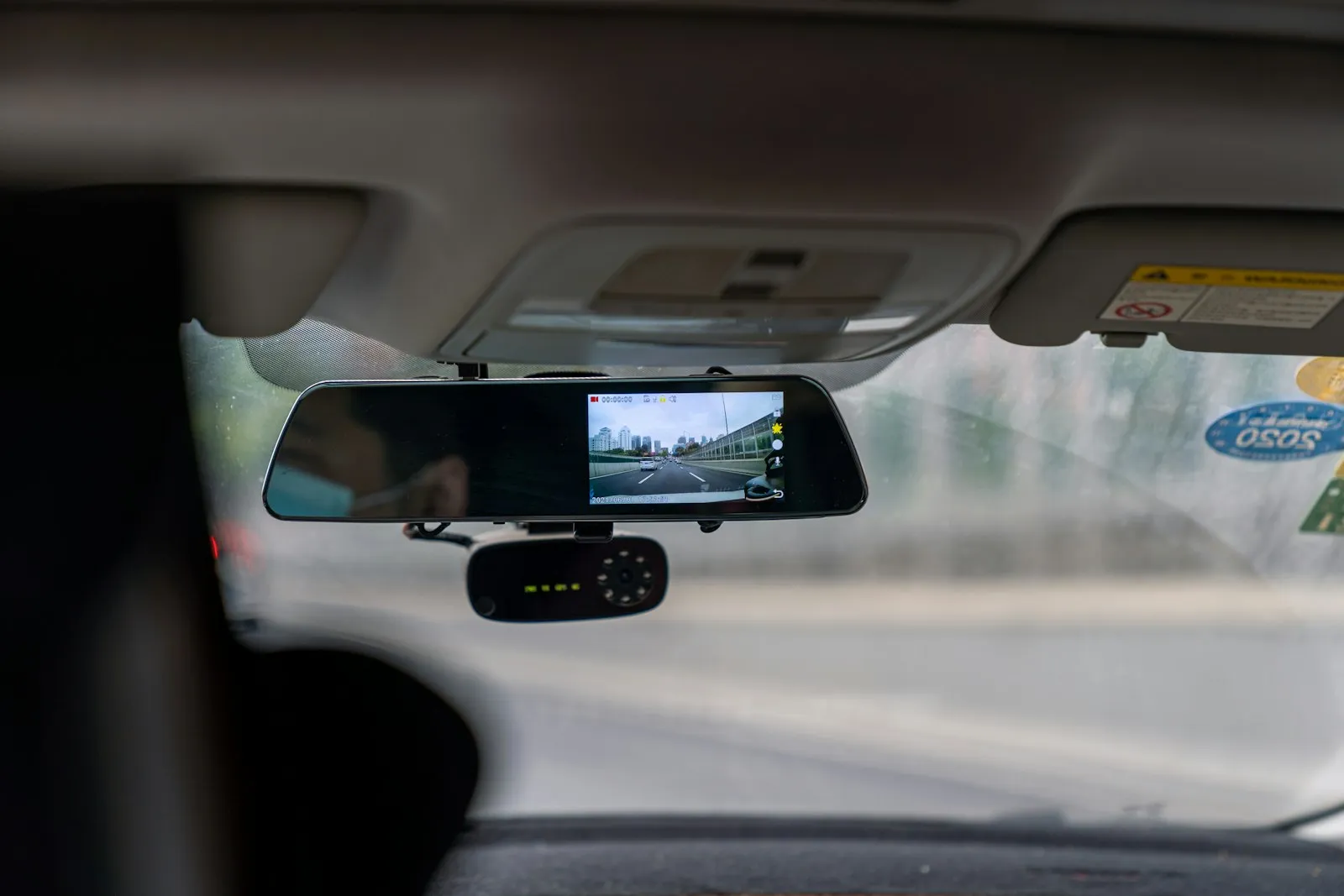
- Evidence vanishes fast: storefront video, the driver’s app status and the car’s identity.
The First Ten Minutes After the Hit
If you can move safely, work through this list. If you cannot, ask someone nearby to do it for you.
- Call 911. Ask for police and an ambulance if anyone is hurt.
- Photograph the car’s plate, including the TLC plate, and any Lyft sign displayed in the car.
- Get the driver’s name and ask whether they had a passenger, were heading to a pickup, or were just waiting for a request.
- Talk to any passenger in the Lyft. They saw the crash and have a ride receipt with the trip details.
- Note the cameras. Write down store names and building numbers facing the spot.
- Photograph your bike, helmet, shoes and the road: crosswalk lines, signals, the lane the car was in.
- Do not argue about fault at the scene. Anything you say may be quoted back later.
A passenger’s claim leans on the ride receipt. A pedestrian’s claim leans on what you can prove about the car and the driver’s status. Get that identity nailed down before the car leaves.
Who Pays a Pedestrian or Cyclist Hit by a Lyft
Step one: no-fault from the striking vehicle
New York is a no-fault state. Personal injury protection pays medical bills, lost earnings and other basic economic loss regardless of who caused the crash. As a pedestrian or cyclist, you claim it from the vehicle that struck you. For a Lyft car in NYC, that is its commercial for-hire policy, and TLC vehicles must carry $100,000 per person in PIP since March 1, 2026, after the TLC cut the earlier requirement. The NYC Taxi & Limousine Commission licenses the car and the driver.
Step two: a liability claim for pain and suffering
No-fault never pays for pain and suffering. For that, you claim against the driver and, where appropriate, the owner, and you must show a serious injury under Insurance Law 5102(d). TLC rules set the liability floor at $100,000 per person and $300,000 per occurrence for for-hire cars with fewer than 8 seats.
Step three: anything above the floor
- Lyft may carry additional coverage above the TLC minimums on some trips. Whether it applies, and how much, has to be confirmed from the insurer and the trip record.
- The state rideshare rule’s $1.25 million figure does not cover trips that start inside New York City; it applies to trips that start outside the city, such as in Nassau County.
- If another driver caused the crash and is underinsured, your own SUM coverage, or a household relative’s, may matter.
If you were inside the Lyft rather than in its path, our Lyft accident lawyer Flushing page covers the passenger side. Struck by a yellow or green cab instead? See our Flushing taxi accident page.
The 2026 Fault Cutoff, Explained With Examples
New CPLR 1411(b) applies to motor-vehicle injury suits filed on or after May 26, 2026, whatever the accident date. A Lyft passenger is rarely blamed for anything. Pedestrians and cyclists are a different story.
| Your share of fault | Result under CPLR 1411(b) |
|---|---|
| 0% | Full recovery of proven damages |
| Up to 50% | Recovery reduced in proportion to your share |
| More than the defendant’s (or defendants’ combined) share | No recovery |
Hypothetical examples (not real cases) of how the fault fight can play out:
- Hypothetical: a shopper crosses Roosevelt Avenue mid-block to reach a Lyft parked across the street and is struck by a second Lyft pulling away from the curb. The insurer will argue the walker’s mid-block crossing; the walker will point to the driver’s speed and lookout.
- Hypothetical: a cyclist on Northern Boulevard is hit by a door opened by a Lyft rider stopped in the travel lane. Questions include where the driver stopped, whether anyone checked the mirror, and the cyclist’s position.
- Hypothetical: a fan walking from Citi Field steps between stopped cars toward a pickup pin and is struck by a Lyft changing lanes. Lighting, signals and the driver’s app activity all come into play.
Because the cutoff can turn a reduced award into zero, early evidence on fault is worth more than ever. Insurance Law 5104 also now requires the fact-finder to decide fault before it looks at serious injury.
Lyft-Specific Twists for People Outside the Car
- Driver status. App off, waiting for a request, en route to a pickup, or carrying a passenger. The status can affect which coverage responds, and only the trip and app records prove it.
- Pickup pin behavior. Drivers hunting for a rider slow, swerve or stop abruptly. Riders hunting for a car step off the curb between parked vehicles.
- Dooring. A passenger who opens the street-side door can injure a cyclist. Who is responsible depends on where and how the car stopped.
- Phone mounts. A driver tapping to accept the next ride is not watching the crosswalk.
- Two app cars, one crash. Downtown, a Lyft and another app car can both be involved, which means two policies and two sets of trip records.
Walking and Biking Around Flushing’s Big Destinations

Flushing Meadows Corona Park
West of downtown across Flushing Creek, the park is home to the Unisphere, the USTA Billie Jean King National Tennis Center and, beside it, Citi Field. People come for ballgames, tennis, museums and open space. For walkers and riders, the risk peaks when an event lets out:
- Lyft drop-offs cluster near entrances before events; pickups pile up afterward.
- Drivers jockey toward the Grand Central Parkway, Van Wyck Expressway and Whitestone Expressway.
- Crowds walk between lots, the train and venues, often in the dark.
Downtown Flushing and Main Street
The 7 train ends here, the LIRR Port Washington Branch stops nearby, and buses converge on Main Street, Roosevelt Avenue and 39th Avenue. Foot traffic is heavy all day. Lyft cars stop wherever there is a gap, and pedestrians cross wherever the car is waiting. Turning cars and crowded crosswalks are the classic recipe for a pedestrian strike.
Queens Botanical Garden
On Main Street south of downtown, the garden draws visitors who are often let out at the curb on a fast stretch of road. Cyclists passing a stopped Lyft there should expect a door to open.

Building the Medical Side of the Claim
Pedestrians and cyclists often take the hardest hits: the body absorbs what a car door or bumper would otherwise take. Because a pain and suffering claim must clear the serious injury threshold, the medical file does a lot of the work. Keep it strong:
- Get seen the same day, even if adrenaline masks the pain.
- Tell every provider how it happened: “hit by a Lyft car while crossing” or “doored while cycling,” so the records match the crash.
- Follow through on imaging and referrals. Fractures and limitations of use have to be documented, not described.
- Keep going to therapy if it is prescribed. Gaps in treatment are what insurers point to first.
- Save receipts and pay stubs for the no-fault claim: prescriptions, travel to appointments, missed work.
Deadlines You Cannot Miss
- 30 days: no-fault application to the striking vehicle’s insurer.
- 90 days: notice of claim if a City or MTA vehicle was also involved.
- 2 years: wrongful death suit, limited to pecuniary losses.
- 3 years: most personal injury suits.
Drivers involved may also need to file an MV-104 report with the DMV. For broader background, see our car accident practice page or the Flushing accident lawyers hub.
Pedestrian and Cyclist Lyft Accident FAQs
I don’t own a car. Can I still get no-fault benefits?
Yes. As a pedestrian or cyclist, you claim from the vehicle that struck you, so you do not need your own policy.
The Lyft driver drove off. What now?
Report it to police right away with whatever you have: partial plate, car color, time and location. Nearby video and witnesses become critical. Your own or a household relative’s coverage may also be relevant.
A Lyft passenger doored me. Who is responsible?
It depends on where the car stopped and what each person did. The passenger, the driver, or both may share responsibility. Your no-fault claim still goes to the vehicle involved.
I was crossing against the light. Do I have a case?
Possibly. Under CPLR 1411(b), you recover nothing only if your fault is greater than the defendant’s. At 50% or less, your award is reduced. A lawyer should review the evidence before you assume anything.
What counts as a serious injury now?
Eight categories: death; dismemberment; significant disfigurement; fracture; loss of a fetus; permanent loss of use of a body organ, member, function or system; permanent consequential limitation of use of a body organ or member; and significant limitation of use of a body function or system.
Will a $100,000 cap limit my pain and suffering?
Only in narrow situations. The new Insurance Law 5104(d) cap applies to an at-fault claimant who was driving uninsured, convicted of impaired driving, or convicted of a felony committed while driving. It generally does not touch a pedestrian or cyclist who was not driving. More answers are on our FAQ page.
About Flushing: Local FAQs
What ZIP codes cover downtown Flushing?
Downtown Flushing falls mainly within 11354 and 11355.
Which 7 train stop is closest to Citi Field and the tennis center?
Mets–Willets Point, one stop before the Flushing–Main Street terminal.
Who runs Flushing Meadows Corona Park?
NYC Parks. The park also holds the Queens Museum, the New York Hall of Science and the Queens Zoo.
How do I get from the subway to Queens Botanical Garden on foot?
Walk south on Main Street from the Flushing–Main Street station. Use marked crosswalks; the stretch carries fast through-traffic.
Which emergency rooms serve Flushing?
NewYork-Presbyterian Queens on Main Street and Flushing Hospital Medical Center on Parsons Boulevard. Always call 911 in an emergency.
Which nearby neighborhoods does your firm also cover?
All of Queens, including our College Point Lyft accident page to the north and our Corona Lyft accident page across the park.
Hit While Walking or Riding? Talk to Us Free

Yakov Mushiyev & Associates, P.C. helps people hurt by Lyft cars across Flushing and Queens. Call 718.775.3110 (phone intake 24/7) or contact us online for a free case review. Consultations in English, Russian and Spanish, at home, in the hospital, by video, or at our office: 1 Cross Island Plaza, Suite 325, Rosedale, NY 11422. Office hours Monday to Friday, 9 to 6. No fee unless we win.
Attorney Advertising. This is general information about New York law, not legal advice. Reading this article does not create an attorney-client relationship. The scenarios above are hypothetical. Prior results do not guarantee a similar outcome.