
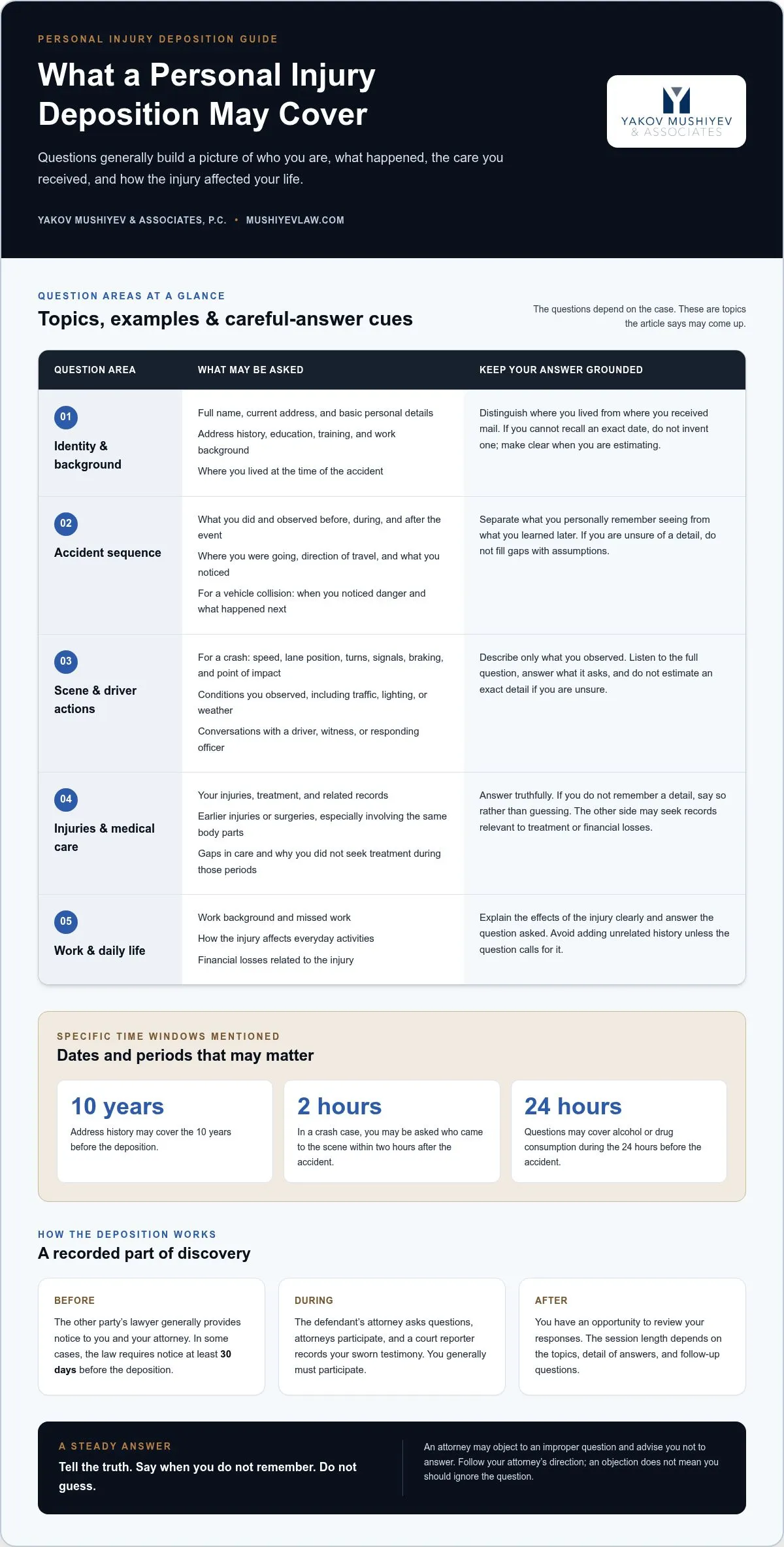
A deposition can feel intimidating, but the questions usually focus on what happened and how the injury affected you. If you’re wondering what questions will I be asked at a personal injury deposition, expect questions about your identity, the accident, what you did and observed, your medical care, and the effects on your work and daily life. In a slip and fall lawsuit, you generally must participate; refusing could lead a judge to dismiss your case. Your attorney may object to an improper question and advise you not to answer.
It’s natural to worry about remembering every detail or saying the wrong thing. Answer truthfully, and say when you don’t remember rather than guessing. A deposition is a formal question-and-answer process; understanding what it covers can make it feel more manageable.
This article covers the background, accident, driver-action, and injury questions you may face, including topics that can arise in a slip and fall deposition. You’ll also learn how objections work and why clear, careful answers matter.
Key Takeaways
- Expect questions that build a timeline of the accident, including what you saw and did before and after it happened.
- Background questions may cover your address history and other details that help establish who you are.
- Be ready to explain medical treatment, prior injuries, missed work, and how the injury affects everyday activities.
- In a slip and fall case, understanding the deposition process can help you prepare for questions and recognize when your attorney may object.
Must You Answer Questions in a Slip and Fall Deposition?
In a New York personal injury lawsuit, a deposition is part of discovery. The defendant’s attorney can ask questions and request documents. Attorneys participate while a court reporter records your sworn testimony. If you’re wondering what questions you’ll be asked at a personal injury deposition, expect questions about the accident, your injuries, and related records.
You generally must participate. Refusing to attend or answer can put your case at risk: a judge could dismiss it if you refuse to participate in a deposition. The other party’s lawyer generally provides notice of the deposition to you and your attorney. In some cases, the law requires notice at least 30 days before the deposition.
What questions will I be asked about my medical history and prior injuries? Expect questions about earlier injuries or surgeries, particularly those involving the body parts injured in the fall. You may also be asked about treatment, gaps in care, and why you didn’t seek care during those periods.
Answer truthfully, and don’t guess if you can’t remember a detail. Your attorney may object to an improper question and advise you not to answer. An objection doesn’t mean you should ignore the question; follow your attorney’s direction during the deposition.
What happens after a personal injury deposition, and how long does it take? Afterward, you’ll have an opportunity to review your responses. The session’s length depends on the topics covered, the detail of your answers, and follow-up questions. Reviewing the transcript can help identify whether a response needs correction.
Discovery may also involve requests for documents related to the accident and your injuries. For example, the other side may seek records relevant to your treatment or financial losses. Your testimony and the documents help each side evaluate the facts of the lawsuit.
For a slip and fall claim, be prepared to explain what happened, what you remember, and how the injury affected you. Your attorney’s guidance and objections can help you give accurate testimony without guessing or volunteering uncertain details.
Accident circumstances and driver actions
Questions about a crash often reconstruct the sequence of events, from what you did beforehand to what happened afterward. You may be asked where you were going, which direction you were traveling, and what you noticed on the road. For example, describe whether you saw the other vehicle before impact. Separate what you remember seeing from what you learned later.
The other attorney may ask about the driver’s actions and your observations. Questions could cover speed, lane position, turns, signals, braking, and the point of impact. You may also be asked when you first noticed danger and what you did next. If you didn’t see a specific action, say so instead of filling in the gaps with assumptions.
- Describe the location and conditions you personally observed, such as traffic, lighting, or weather.
- Explain the sequence, such as when a vehicle entered your lane or when you felt the collision.
- Identify anyone who came to the scene within two hours after the accident.
- Answer questions about alcohol or drug consumption during the 24 hours before the accident.
Expect questions comparing your account with reports, records, and other evidence. An attorney may ask whether you spoke with a driver, witness, or responding officer, and what you said and when. If you’re unsure of an exact detail, don’t estimate. Distinguish your own memory from information you reviewed later.
Deposition questions can resemble examination and cross-examination in court. The lawyer may ask about the same detail in different ways, such as where you looked before impact and what you saw. Listen to the full question, answer only what it asks, and correct an answer if you realize you misstated a fact.
If a vehicle collision left you injured, car accident legal representation can help address the legal issues surrounding your claim and deposition.
Background and identity questions
Expect the opening questions to establish who you are and how to identify you in the case. The attorney may ask for your full name, current address, and basic personal details. In a car accident deposition outline, questions may cover addresses during the 10 years before the deposition. Be prepared to distinguish where you lived from where you received mail, especially if you moved.
Address history can put events in context and help identify records tied to a particular home. An attorney may ask when you lived at an address and whether you remember the relevant dates. If you can’t recall the exact month you moved in, don’t invent one. Give the most accurate answer you can, and make clear when you’re estimating rather than remembering.
Questions may also cover your education and work background. An attorney could ask where you studied, what training you completed, and what kind of work you did before the accident. These details may provide context for later questions about how your injury affected your work. Answer directly, and don’t add unrelated personal history unless the question calls for it.
Listen for the specific time period in each question. “Where have you lived?” differs from “Where did you live when the accident happened?” If asked about your New York residence on the accident date, answer that first. If you lived elsewhere before moving to New York, explain the sequence as clearly as you remember it. Don’t assume the attorney means only your current address.
Identity questions can seem routine, but accuracy matters. A mistaken address or timeline can create confusion when your testimony is compared with documents. Before the deposition, review relevant personal details and your address history. During questioning, correct an honest mistake promptly, and say when you don’t remember instead of guessing.
Types of questions asked at a deposition
Deposition questions can resemble examination and cross-examination in court, moving from your injury to its effects. A lawyer’s questions should relate to the claims, but sensitive topics may arise. Your attorney may object to an improper question and advise you not to answer.
Injuries, Symptoms, and Treatment
These questions trace the injury from the accident through treatment and recovery. You may be asked to describe your symptoms, when they began, and how they changed. For example, explain which movements cause pain and what care you received. Specific answers distinguish your own experience from a medical record or another person’s description.
Work and Financial Losses
These questions examine how the injury affected your job and income. You may be asked about missed work, duties you could no longer perform, and the financial impact. A sample deposition outline may ask about any time missed from work in the five years before the deposition. Income records may also be reviewed to assess financial loss.
Daily Activities and Life Changes
These questions connect your symptoms to everyday tasks and routines. You may be asked how the injury changed activities such as walking, shopping, cooking, or caring for your home. Describe a specific task and the difficulty it causes rather than relying only on broad statements. Your account helps explain the injury’s practical effect on daily life.
Social Media, Photos, and Evidence
Questions about evidence may cover photos, posts, messages, or records related to the accident and your injuries. An attorney may ask who created an image, when it was taken, and what it shows. Explain the context accurately; a photo of one activity may not show what you could do consistently. Don’t alter or delete potentially relevant material.
If these issues affect your New York injury claim, discuss your deposition questions with a legal team.
Yakov Mushiyev & Associates, P.C: Car Accident Legal Representation
Yakov Mushiyev & Associates, P.C. represents people injured in car accidents. If you’re facing a deposition, legal guidance can help you understand how questions about the collision, your injuries, and related losses fit into your claim. The firm also represents people injured in truck and motorcycle accidents, as well as slip and fall incidents.
Consider seeking legal help if you’re preparing to testify, have questions about the process, or need representation for an accident-related claim. A deposition record can affect how the facts of your case are presented, so approach the process carefully and understand your role.
For help with an accident-related injury claim, contact Yakov Mushiyev & Associates, P.C.
Prepare to Move Forward With Clarity
A deposition is one stage of a longer legal process, not the final word on your claim. Keep case-related records organized, note any unresolved questions, and discuss your concerns with a lawyer before testifying. Preparation should help you give accurate answers, not rehearse a script or guess at details you don’t remember.
If you’re still wondering what questions will I be asked at a personal injury deposition, use that concern as a prompt to seek guidance tailored to your situation. Yakov Mushiyev & Associates, P.C. can discuss your accident-related claim and the issues you’re facing. You deserve to understand the process and make informed decisions about your next steps.
Contact Yakov Mushiyev & Associates, P.C. to discuss your case and move forward with a clearer plan.
Frequently Asked Questions
These answers provide general information, not legal advice for a specific case. The facts and legal issues may differ from one claim to another.
What Do You Say in a Personal Injury Deposition?
Give truthful, direct answers based on what you personally remember. If a question is unclear, ask for clarification before responding. If you don’t know or remember, say so instead of filling in a gap. Don’t guess, or try to make your testimony sound stronger. A clear answer is more useful than a confident estimate you can’t support.
What questions are commonly asked at a personal injury deposition?
Common topics include your background, the incident, your injuries, medical care, work, and the effect on daily life. The exact questions depend on the claims and evidence in your case. For example, a lawyer may ask you to clarify a date or explain how you know a detail. Consider what questions will I be asked at a personal injury deposition in light of your own claim, not a prepared script.
What questions will I be asked about the accident and how it happened?
You may be asked to explain the sequence of events, what you observed, and what you did. Distinguish what you remember firsthand from what you learned later, such as details in a report or another person’s account. If your memory differs from a document, explain what you recall rather than adopting a version simply because it appears in writing.
How should I prepare for a personal injury deposition?
Review the case timeline and discuss any concerns with your attorney before testifying. Organize relevant records so you can identify them if asked, and note details you genuinely don’t remember. Don’t memorize a script; prepared wording can make your answers sound less like your own recollection. If you live in Rosedale, Rochdale, or Queens, discuss your preparation concerns with counsel familiar with your claim.
What should I avoid saying or doing during a deposition?
Don’t guess, exaggerate, argue with the questioning attorney, or volunteer unrelated details. Don’t post about your accident, injuries, health, or case on social media, and don’t delete existing posts after an accident. Ask friends not to tag you in posts about your activities. These steps help avoid confusion between your testimony and other available evidence.