
Preparing for your personal injury trial starts well before the scheduled date, with case records organized as the case develops. Trial preparation can also support settlement negotiations because both depend on the same evidence, and a case may settle even after trial begins.
It’s understandable to think the hardest part is showing up and telling your story. Careful preparation helps present the evidence, your testimony, and the effects of your injuries clearly. You’ll learn when to begin, how to organize records and exhibits, and how your legal team can prepare witness examinations, address opposing arguments, and shape opening and closing statements.
You can help by reviewing key documents, understanding the sequence of events, and preparing to answer questions calmly and accurately. A clear plan makes the trial process more manageable and supports your account with organized evidence.
Key Takeaways
- Keep case records organized as the matter progresses, and prepare for trial early enough to review the evidence and key decisions carefully.
- Build exhibits around relevant records, photographs, witness accounts, and expert testimony so the evidence is clear and supports the case.
- Prepare for testimony by reviewing the sequence of events, listening carefully, and answering questions accurately and directly.
- Learn how legal representation can help coordinate trial preparation for an accident-related injury claim and present your case.
How Far in Advance Should Trial Preparation Begin?
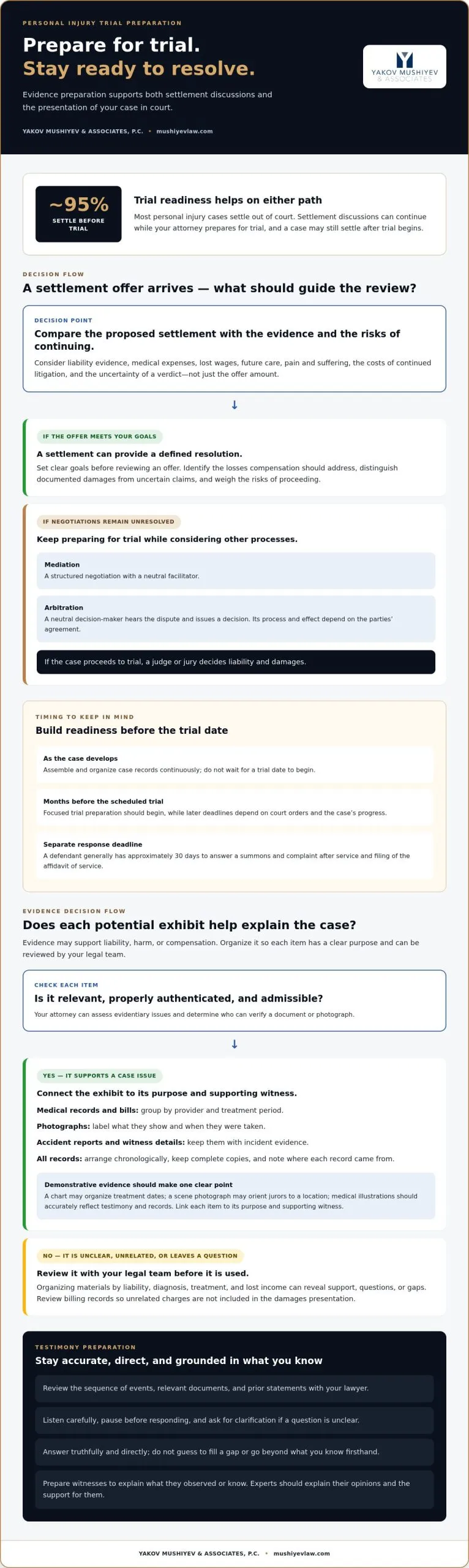
In New York, focused trial preparation should begin months before the scheduled trial, while case records are assembled continuously. A defendant generally has approximately 30 days to answer a summons and complaint after service and filing of the affidavit of service. Trial scheduling and later deadlines depend on the court’s orders and the case’s progress.
Settlement discussions can continue while your attorney prepares for trial. Most personal injury cases settle out of court, and about 95% settle before trial. A case may still settle after trial begins. Preparing for your personal injury trial keeps evidence, medical records, and damage calculations ready for negotiations instead of forcing a rushed review when the defense makes an offer.
Your lawyer can compare a proposed settlement with the evidence of liability, medical expenses, lost wages, future care, and pain and suffering. Mediation provides a structured negotiation with a neutral facilitator. In arbitration, a neutral decision-maker hears the dispute and issues a decision; its process and effect depend on the parties’ agreement. If negotiations remain unresolved, keep preparing for trial while considering these options.
Trial readiness can strengthen settlement negotiations because witness statements, records, and evidence of damages support either path. Your attorney can identify weaknesses in the defense position, anticipate arguments, and explain how they may affect the case. Before reviewing an offer, set clear goals: identify the losses compensation should address, separate documented damages from uncertain claims, and consider the risks of proceeding. Settlement can provide a defined resolution; at trial, a judge or jury decides liability and damages. Compare the proposed compensation with the evidence, the costs of continued litigation, and the uncertainty of a verdict, not just the offer amount.
Organizing exhibits and demonstrative evidence
Trial evidence may include medical records, accident reports, scene photographs, witness statements, and expert testimony. In a car accident case, photographs may show vehicle damage or road conditions, while treatment records document injuries and care. The plaintiff’s lawyer uses each item to support specific arguments about liability, harm, or compensation.
Arrange documents in chronological order, from the incident through medical visits, treatment, and ongoing effects. Keep complete copies and note where each record came from. Group materials by topic, such as liability, diagnosis, treatment, and lost income. This makes evidence easier for your legal team to locate and helps reveal where records support the case, raise questions, or leave gaps.
- Group medical records and bills by provider and treatment period.
- Label photographs with what they show and when they were taken.
- Keep accident reports and witness contact details with incident evidence.
For an exhibit to help the jury, it must be relevant, properly authenticated, and admissible. Your attorney can determine who can verify a document or photograph and address evidentiary issues before trial. Review billing records, too, so unrelated charges are not included in the damages presentation. A well-organized exhibit file reduces confusion and keeps each item connected to the claims.
Demonstrative evidence can make complex facts easier to follow. A chart might organize treatment dates, while a scene photograph can orient jurors to a location. Medical illustrations can clarify an injury, but they should accurately reflect the testimony and records. Each visual should make a specific point rather than distract from the evidence. Your legal team can prepare an exhibit list linking each item to its purpose and supporting witness.
Keep new documents and evidence organized as the lawsuit develops, rather than waiting for a trial date. During a legal consultation, ask how records will be reviewed and used to support your case. Personal injury case preparation can include reviewing the evidence and planning how it will be presented.
Planning examinations, rebuttals, and opening and closing statements
Preparing testimony connects your account of the accident with evidence about liability and damages. Your attorney can practice likely questions with you and explain how each witness’s testimony supports the case.
Examination and Cross-Examination Preparation
An examination before trial records a witness’s answers under questioning; cross-examination tests testimony given in court. Your lawyer can conduct practice examinations to help you listen, answer directly, and ask for clarification if a question is unclear. Pause before responding, speak clearly, and share only what you know firsthand. If a physical examination is scheduled, discuss its purpose and arrangements with your attorney, then describe your symptoms accurately.
Preparation can help you stay composed when the defense challenges your memory, treatment, or daily limitations. Review prior statements with your lawyer so you understand the facts and can address inconsistencies accurately. Don’t guess to fill a gap. A careful answer is better than speculation.
Preparing Witnesses and Experts
Preparing witnesses helps each person explain what they observed or know without going beyond that knowledge. Your attorney may select medical professionals, eyewitnesses, or family members whose testimony addresses the accident, treatment, or changes in your daily life. Each witness should review relevant records and understand the subjects they may be asked about.
To prepare to testify, review the sequence of events and relevant documents with your lawyer, then practice answering likely questions truthfully and directly. Witnesses should speak clearly, ask for clarification when needed, and avoid guessing or repeating hearsay. Experts should explain their opinions and the supporting facts in a way jurors can follow.
Opening and Closing Statements and Rebuttals
An opening statement previews the evidence and the plaintiff’s position; a closing argument connects admitted evidence to the outcome being requested. Your attorney can organize both around the central issues: how the accident happened, which injuries followed, and what damages the evidence supports.
Planning for rebuttal means anticipating opposing arguments, not arguing with defense counsel yourself. Attorneys may use prior deposition testimony to challenge a witness whose account changes at trial. Your role is to answer calmly and accurately; your lawyer presents legal arguments and responds to the defense evidence.
Trial preparation work in personal injury cases
Trial preparation involves more than arranging a court appearance. It connects the claims in a lawsuit to admissible evidence and legal arguments. In a car accident case, counsel may review pleadings, identify disputed facts, and prepare pretrial briefs explaining the issues to the judge. Your injury attorney also tracks court deadlines and orders so essential filings are ready before trial.
Pretrial motions may ask the court to exclude evidence or narrow the issues the jury must decide. For example, a motion may challenge whether a particular item belongs in the trial record. Attorneys also address document authentication before relying on records in court. Reviewing medical bills for unrelated charges helps ensure the damages claim reflects accident-related care, not expenses from another condition.
Your role matters, too. Keep appointments, follow medical advice, and promptly tell your lawyer about any interruption in care. An unexplained gap may give the defense an argument that your injuries were less serious or treatment was unnecessary. Keep a factual record of daily limitations, such as difficulty carrying groceries or completing routine tasks. Don’t discuss the lawsuit publicly or on social media; even private-account posts may be discoverable. Don’t delete existing posts, since removing evidence can harm your case.
Costs and fees depend on the case and are provided after a quote request; factors include the work required, case complexity, and litigation expenses. Ask for an explanation of the fee terms and potential case expenses before deciding how to proceed. Clear communication helps you understand what preparation involves and what decisions require your input. For guidance on the work involved in your claim, discuss your personal injury case.
Yakov Mushiyev & Associates, P.C: Car Accident Legal Representation
Yakov Mushiyev & Associates, P.C. represents people injured in car accidents as their claims move toward trial. If an insurer disputes responsibility, challenges your injuries, or makes an offer that doesn’t address your losses, legal representation can help you assess the evidence and understand your options.
The firm also represents people injured in truck and motorcycle accidents, as well as slip and fall incidents. Each case turns on its evidence, including how the incident happened and how the injuries affected the person’s life. Early legal guidance can help you understand how those facts relate to your claim and trial preparation.
Contact Yakov Mushiyev & Associates, P.C. to discuss your injury claim and possible next steps.
Take the Next Step With a Clear Plan
Consider what a fair resolution would need to address in your life, not just on paper. Think about how the injury has changed your routines, what support you still need, and what questions you want answered before making a major decision. These priorities can guide a focused conversation with your attorney and help you stay grounded as the case moves forward.
Preparing for your personal injury trial isn’t about memorizing a script or predicting every development. It’s about making informed choices, understanding your role, and having an advocate who can explain your options. If you’re unsure what to do next, a direct conversation can help clarify your concerns.
Contact Yakov Mushiyev & Associates, P.C. to discuss your situation and possible next steps. You deserve a clear path forward, and you can take it one decision at a time.
Frequently Asked Questions
How Can I Help My Case?
Be candid with your attorney and keep them updated when your symptoms, treatment, or daily limitations change. Save relevant communications and bring questions to case meetings rather than relying on memory. If you live in Rosedale, Rochdale, or Queens, explain how the injury affects your routines, such as commuting or household tasks. This information is general and is not legal advice for your specific case.
What Are the Key Stages of a Personal Injury Trial?
A personal injury trial generally proceeds through jury selection, opening statements, witness testimony and cross-examination, closing arguments, jury instructions, deliberation, and a verdict. During jury selection, the parties question prospective jurors about impartiality. Each stage has a distinct purpose: testimony presents evidence, while closing arguments connect it to the claims. This is general information, not legal advice for your specific case.
How Long Will the Trial Last?
A personal injury trial may last a day or two or extend over weeks. The number of witnesses, complexity of medical evidence, disputed issues, and court schedule can affect the length. A case involving several experts and contested injuries may require more testimony than one with fewer witnesses. Ask your attorney how the expected witnesses and evidence may shape the schedule. This is general information, not legal advice for your specific case.
What Does Trial Preparation Involve in a PI Case?
Trial preparation connects legal claims with evidence, witness testimony, and court filings. You can help by reviewing key dates and pointing out details that seem incomplete or inaccurate. For example, tell your attorney if a medical record shows the wrong appointment date. Correcting it early can help the legal team address the issue before it distracts from the evidence. This is general information, not legal advice for your specific case.
What Happens During Pre-Trial Discovery?
During discovery, each side requests information relevant to the lawsuit; neither side automatically receives every piece of evidence. Requests may seek records, written answers, or deposition testimony. Your responses should be complete and truthful, and your attorney can explain what a request means and how to respond. Keep notices and requests together so nothing is overlooked. This is general information, not legal advice for your specific case.
What If I Lose the Trial?
Someone who loses a personal injury trial may be able to appeal. An appeal is a separate review of the case, not simply another chance to present the same evidence. Discuss the verdict and trial record with your attorney promptly to understand whether an appeal may be available and what factors apply. An appeal does not assure a different outcome. This is general information, not legal advice for your specific case.