
What if the settlement check comes with a decision you can’t take back? If you’re asking, “what is a settlement release form and should I sign it,” the key point is this: the document may do far more than confirm payment. It can waive your right to bring future claims related to the accident, even if your injuries worsen or new problems emerge.
It’s understandable to want a claim resolved, especially when medical bills are mounting and an insurer is pressing for an answer. But unclear wording can leave you unsure which people or companies are being released, whether the agreement covers every injury, and what happens to unpaid medical bills, liens, or other claims. In New York, a signed release can be difficult to undo.
This article explains what a settlement release may waive, which terms deserve a closer look, and why unresolved treatment costs matter before you sign or accept settlement funds. If you were injured in a car crash, fall, construction incident, or another accident in Rosedale, Rochdale, Queens, careful legal review can help you understand the consequences before your rights are closed off.
Key Takeaways
- Asking “what is a settlement release form and should I sign it” starts with understanding that the document may trade payment for giving up specific legal claims.
- Check who the release names and how broadly it describes the claims, because its scope depends on the wording and circumstances.
- Before signing, compare the complete release with the settlement offer, claim correspondence, medical records, and known bills.
- If your injuries or treatment needs are still changing, consider how signing could affect claims covered by the release.
- Understand the agreement’s payment conditions and the potential finality of the release before signing or accepting settlement funds.
What Is a Settlement Release Form in a Personal Injury Case?
A settlement release is a contract documenting a settlement in exchange for giving up specified legal claims. If you’re asking “what is a settlement release form and should I sign it,” start with the document’s exact scope: its wording, the parties it identifies, the claims it covers, and applicable law can all affect what signing means. It’s not just paperwork confirming that money changed hands.
A legal settlement resolves a dispute without a trial, as explained in this overview of Settlement (litigation). A release records which claims are being resolved. Once signed, it may make covered claims final, even if your symptoms worsen or your treatment needs change later. The outcome depends on the release and the circumstances, so don’t assume every form has the same effect.
For a brief overview of settlement release forms, watch:
What does a settlement release usually do?
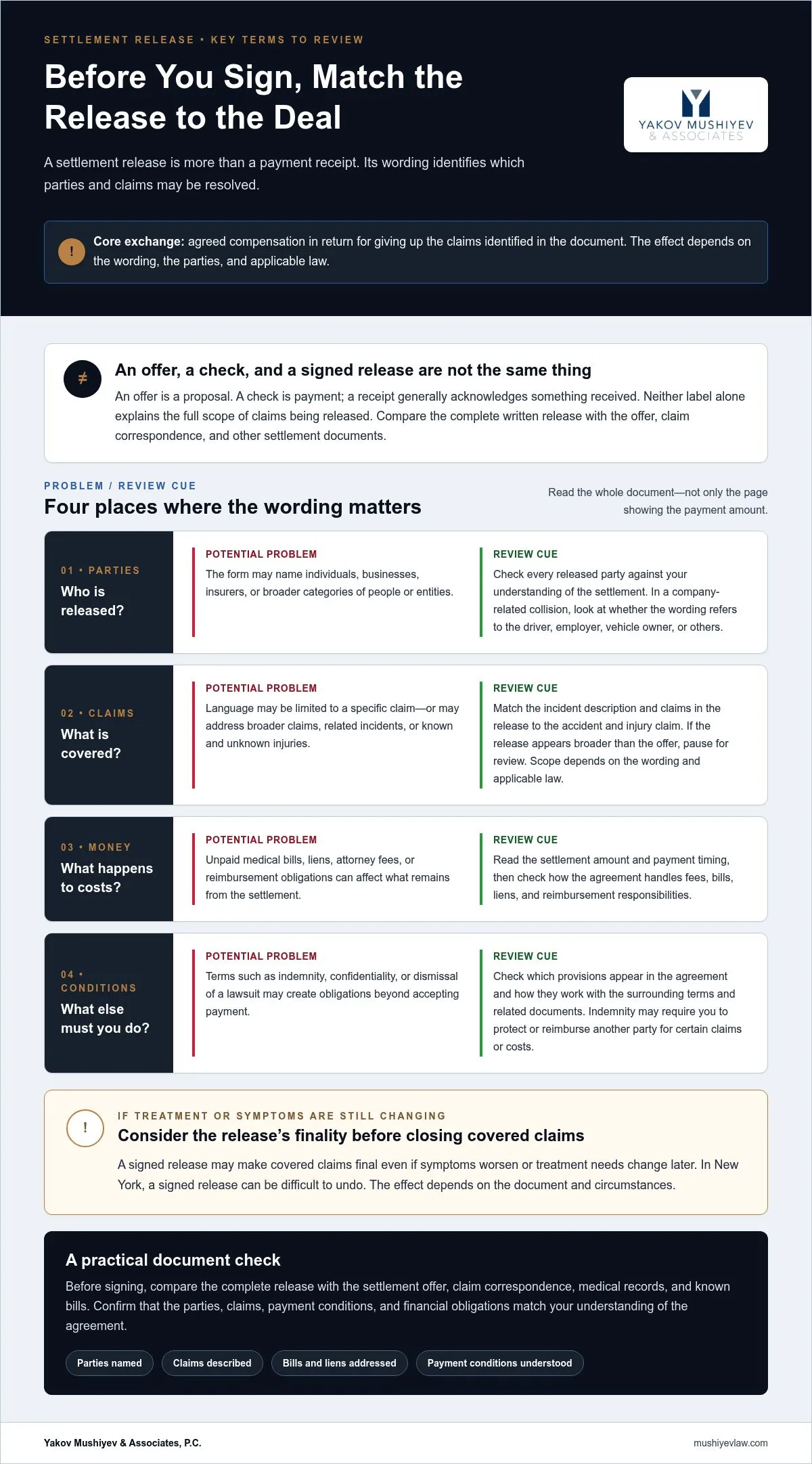
The basic exchange is agreed compensation in return for releasing stated claims. The form may name the insurer, the insured person or business, the accident, and the claims being resolved. A release might be limited to a particular claim, or use broader language. Read the actual terms to see who and what they include.
A settlement release is a contract that documents an agreed payment in exchange for giving up the claims identified in the document, with its effect depending on its wording, the parties, and applicable law.
Is a release the same as accepting a settlement offer?
No. An offer is a proposal; negotiations or a verbal understanding may indicate that the parties have reached agreement, but they aren’t the same document as an executed written release. A check is payment, and a receipt generally acknowledges something received. Neither label alone tells you the full scope of the claims being released.
Payment may follow signed paperwork, subject to the agreement’s stated conditions. Before signing, compare the release with the offer, related claim correspondence, and any other settlement documents. For example, if an offer describes resolving one claim but the release appears to cover additional claims or parties, pause and have the wording reviewed. Yakov Mushiyev & Associates, P.C. represents people injured in accidents and can help assess how a release may affect an injury claim.
Which Settlement Release Terms Should You Read Before Signing?
Read the entire release, not just the page with the payment amount. The words identifying the parties and claims can determine how far the agreement reaches. A form may use narrow language tied to one claim, or broader wording that addresses additional claims or parties. Don’t assume its title, such as “release of all claims,” tells you precisely what it covers. The release of all claims form overview from FindLaw also explains common document details and the rights a release may address.
Who and what does the release cover?
Match the release’s incident description to the actual accident and injury claim. Check every released party, including named individuals, businesses, insurers, and any broader categories of people or entities. If you were hurt in a collision involving a driver working for a company, for example, look closely at whether the language identifies only the driver or also refers to an employer, vehicle owner, or other parties.
Then review which claims and incidents the document describes. Does it refer to a specific injury claim, or use broader language about known and unknown injuries or related claims? The scope depends on the wording and applicable law. If the released parties or claims don’t match your understanding of the offer, pause and have the complete document reviewed before signing.
What financial and legal terms deserve attention?
Check how the agreement handles the settlement amount, payment timing, attorney fees, medical bills, liens, and any reimbursement obligations. Confirm what the document says about confidentiality or dismissal of a lawsuit, if those terms appear. These provisions can affect what you’re expected to do after signing and how much of the settlement may remain after outstanding obligations are addressed.
Pay special attention to indemnity language. It may require you to protect or reimburse another party for certain claims or costs, creating obligations beyond accepting payment. Don’t rely on a quick explanation of a phrase in isolation; its meaning may depend on surrounding terms and related documents.
- Parties: Identify every person, business, insurer, or other entity being released.
- Claims: Look for language addressing unknown injuries, related claims, or incidents beyond the accident at issue.
- Money and obligations: Review payment terms, bills, liens, reimbursement, confidentiality, indemnity, and dismissal provisions.
If you’re still wondering “what is a settlement release form and should I sign it,” the specific wording matters more than a general label. A personal injury lawyer can review the complete release and related offer documents with you. For help understanding an injury claim before signing, learn about Yakov Mushiyev & Associates, P.C..
Should You Sign a Settlement Release Form Before Your Injuries Are Clear?
There’s no safe universal yes-or-no answer. Whether to sign depends on the release’s wording, the claims it covers, and what you know about your injuries and losses. A signed release may end covered claims even if symptoms continue, treatment needs change, or an injury’s effects become clearer later. The decision deserves careful review before you trade the right to pursue those claims for prompt payment.
A settlement can provide money sooner and bring a measure of closure. But if you accept before you understand the potential scope of your injuries and expenses, you may have limited options to seek more for claims the release covers. Not every injury gets worse, and an insurer’s deadline does not automatically mean the offer is improper. Weigh the actual offer against the known and unresolved parts of your claim.
How can future treatment affect the decision?
Consider whether you still have symptoms, whether a clinician has recommended further care, and whether your prognosis or recovery remains uncertain. Medical records, treatment recommendations, and documented symptoms can help clarify what is known about your condition. A qualified clinician is the right person to discuss your medical outlook. An attorney can help assess how the release may affect the legal claim, including whether its terms address future or unknown injuries.
Before deciding, write down what remains unresolved: follow-up appointments, proposed treatment, missed work, or bills that have not yet arrived. These details don’t predict a particular outcome, but they can reveal questions that deserve answers before you sign. A release’s effect depends on its wording and applicable law, so review the complete document alongside the status of your claim.
What if the insurer says the offer expires?
Keep the offer and any messages about its deadline. Note the stated date and ask a lawyer to review the terms promptly. The deadline’s meaning and consequences depend on the offer, any agreement, and applicable law; a stated expiration date alone doesn’t explain whether it can be extended or what happens if it passes.
Don’t sign solely because you feel pressured to decide before understanding the document. If you’re asking “what is a settlement release form and should I sign it,” review the complete release, your medical status, and the offer together. Prompt legal review can help you make an informed decision without assuming either that accepting is wrong or that waiting is risk-free.
What to Do Before Signing a New York Settlement Release
Before signing, slow the process down enough to see what the complete agreement requires. A practical review can help you spot missing paperwork, inconsistent terms, and expenses or claims that still need attention. In a New York injury case, the effect of a release depends on its wording and the circumstances, so don’t rely on a general description or a verbal summary alone.
Which records and questions should you gather?
Use this checklist before you sign:
- Get the complete release. Request every page, attachment, and referenced document. Note any stated deadline, then read the full packet, including signature pages and conditions.
- Compare the paperwork. Put the release beside the settlement offer and insurer correspondence. Check whether the payment, incident description, released parties, and claims match across the documents.
- Gather claim and medical records. Keep relevant claim identifiers, medical records, provider names, known bills, and information about recommended follow-up care together.
- Write down what remains unresolved. List outstanding medical balances, possible liens or reimbursement obligations, ongoing treatment, and any claims involving other parties.
- Ask what the agreement requires. Identify which claims and parties it covers, what obligations you take on, and what must happen before payment. Mark language you don’t understand.
This comparison matters. For example, if the offer refers to one claim but the release appears to include another party or broader obligations, don’t assume the documents mean the same thing. Preserve the correspondence and seek an explanation of the complete language before signing.
When should a New York injury lawyer review the release?
Get legal review if the terms are broad, unclear, or inconsistent with the offer, or if medical bills, liens, treatment, or other parties remain unresolved. Counsel can assess the release’s scope, related settlement documents, and how applicable New York law may affect your claim. The right analysis depends on the actual paperwork and facts, not a form’s title.
For context on how an injury claim proceeds, read about the New York personal injury claim process. Yakov Mushiyev & Associates represents injured people in Rosedale, Rochdale, Queens, in accident-related claims, including car, construction, and slip-and-fall cases.
What Happens After You Sign a Settlement Release?
After the required settlement documents are properly completed, the release may allow payment processing to move forward under the agreement’s terms. Check what else the paperwork requires, such as a dismissal document or other conditions, and keep copies of everything you sign. In New York, CPLR § 5003-a generally requires a settling defendant to pay within 21 days after receiving a properly executed release and a stipulation to discontinue the action. The rule’s application depends on the case and the required documents.
Payment doesn’t necessarily mean the entire settlement amount goes directly to you. Attorney fees, outstanding medical bills, liens, or reimbursement obligations may affect how funds are distributed. Those issues require case-specific handling, so understand what remains to be paid and how the settlement will be allocated.
The release may also limit further recovery for claims it covers. If additional symptoms, expenses, or treatment needs arise later, you may not be able to pursue more compensation for a claim you’ve released. The terms and applicable law matter. A signed document doesn’t automatically resolve every possible issue, but don’t assume you can reopen a claim just because circumstances change.
Can you change your mind after signing?
Undoing a signed release can be difficult. Whether there may be a basis to challenge it depends on the facts, the document, and applicable law. Don’t assume every release is automatically irreversible, or that setting one aside is routine. If you’ve signed and are concerned about what you agreed to, preserve the complete paperwork and seek legal advice promptly. The timing and details may matter.
How can legal review protect an injury claim?
Before you sign, a lawyer can explain the release’s scope, identify obligations that remain unresolved, and assess how the settlement documents may affect your injury claim. If the release follows a motor vehicle crash, review this Queens car accident legal guidance for information relevant to crash claims.
If you’re still asking “what is a settlement release form and should I sign it,” focus on the actual agreement, payment conditions, and claims it covers. Yakov Mushiyev & Associates represents injured people in New York. If you haven’t signed, a case review can help you understand the document before deciding. Learn about the firm’s injury representation.
Protect Your Claim Before You Sign
A settlement release is more than proof of payment. Its wording can determine which parties and claims are included, and signing may limit your ability to seek further recovery for covered claims. Before deciding, compare the complete release with the offer and your current understanding of your injuries, treatment, bills, and other obligations.
If you’re asking “what is a settlement release form and should I sign it,” the answer depends on the document and your claim. Don’t let unfamiliar wording or a deadline push you into signing before you understand the terms. A careful review can help you make an informed choice and identify questions that need answers.
Yakov Mushiyev & Associates represents injured people in New York in car, truck, motorcycle, pedestrian, construction, and premises-liability cases, including claims in Rosedale, Rochdale, Queens. If you have an injury claim and haven’t signed the release, request a review of your injury claim before you sign. Understand what you’re agreeing to before you move forward.
Frequently Asked Questions
What is a settlement release form?
A settlement release form is a contract that records an agreement to resolve claims in exchange for compensation and to give up the claims specified in the document. It may identify the accident, insurer, released parties, payment, and claims being resolved. The exact effect depends on the wording, the parties, and applicable law. Read the complete release and related settlement documents, not just the title or payment amount.
Should I sign a settlement release form?
Sign only after you understand what claims and parties the release covers and how it affects your injury claim. There’s no universal yes-or-no answer to “what is a settlement release form and should I sign it” without reviewing the actual document and circumstances. Consider whether your injuries, treatment, medical bills, or other obligations remain unresolved. If terms are unclear or broader than the offer, seek legal review before signing.
Can I reopen my injury claim after signing a release?
It may be difficult to pursue claims that a signed release covers, even if your symptoms or expenses change later. Whether a release can be challenged or a claim pursued depends on the document, the circumstances of signing, and applicable law. Don’t assume you can reopen a claim simply because new problems arise. If you believe the release doesn’t reflect the agreement or have concerns about its scope, get prompt legal advice.
Does a settlement release cover future medical treatment?
It depends on the release’s language and the claims it resolves. Some releases may address unknown injuries or future consequences, while others may be narrower. Don’t assume future treatment is excluded just because it hasn’t happened yet. Before signing, consider ongoing symptoms, medical recommendations, and any uncertainty in your recovery. A qualified clinician can explain your medical outlook; a lawyer can assess how the release may affect related claims.
What should I check in a settlement release before signing?
Read every page and attachment. Identify all released people, businesses, and insurers, then compare the incident and claims described with your actual accident and settlement offer. Review payment terms and any provisions about medical bills, liens, reimbursement, confidentiality, indemnity, or dismissing a lawsuit. Make a list of unresolved treatment, expenses, and claims involving other parties. If the wording is broad, unclear, or inconsistent with the offer, seek legal review.
Can an insurance company require me to sign a release to receive a settlement?
An insurer may make a signed release part of the paperwork required to process an agreed settlement, but the specific requirement and its consequences depend on the offer, agreement, and applicable law. Review the release before signing to confirm that its scope matches what you understood was being settled. If it includes additional parties, claims, or obligations, don’t treat the payment condition as a reason to ignore the wording.
What if I already signed a settlement release and regret it?
Keep a copy of the signed release, settlement offer, and related messages, then seek legal advice promptly. Undoing a signed release can be difficult, and whether you have options depends on the document, facts, and applicable law. Yakov Mushiyev & Associates, P.C. represents injured people in Rosedale, Rochdale, Queens, in accident-related claims. A lawyer can review your situation and explain potential next steps without promising a particular result.