
You pay rent on the first and assume the building is at least safe to walk through. Then a stair tread cracks under your heel, or a chunk of ceiling lands on your kid’s bed, and suddenly you are asking a question most tenants never expected to ask: does my landlord owe me for this? A landlord negligence lawyer looks at exactly that question, and in New York the answer often turns on what the owner knew, when they knew it, and what they did about it. Below, we walk through your building one space at a time, from the stairwell to the sidewalk.
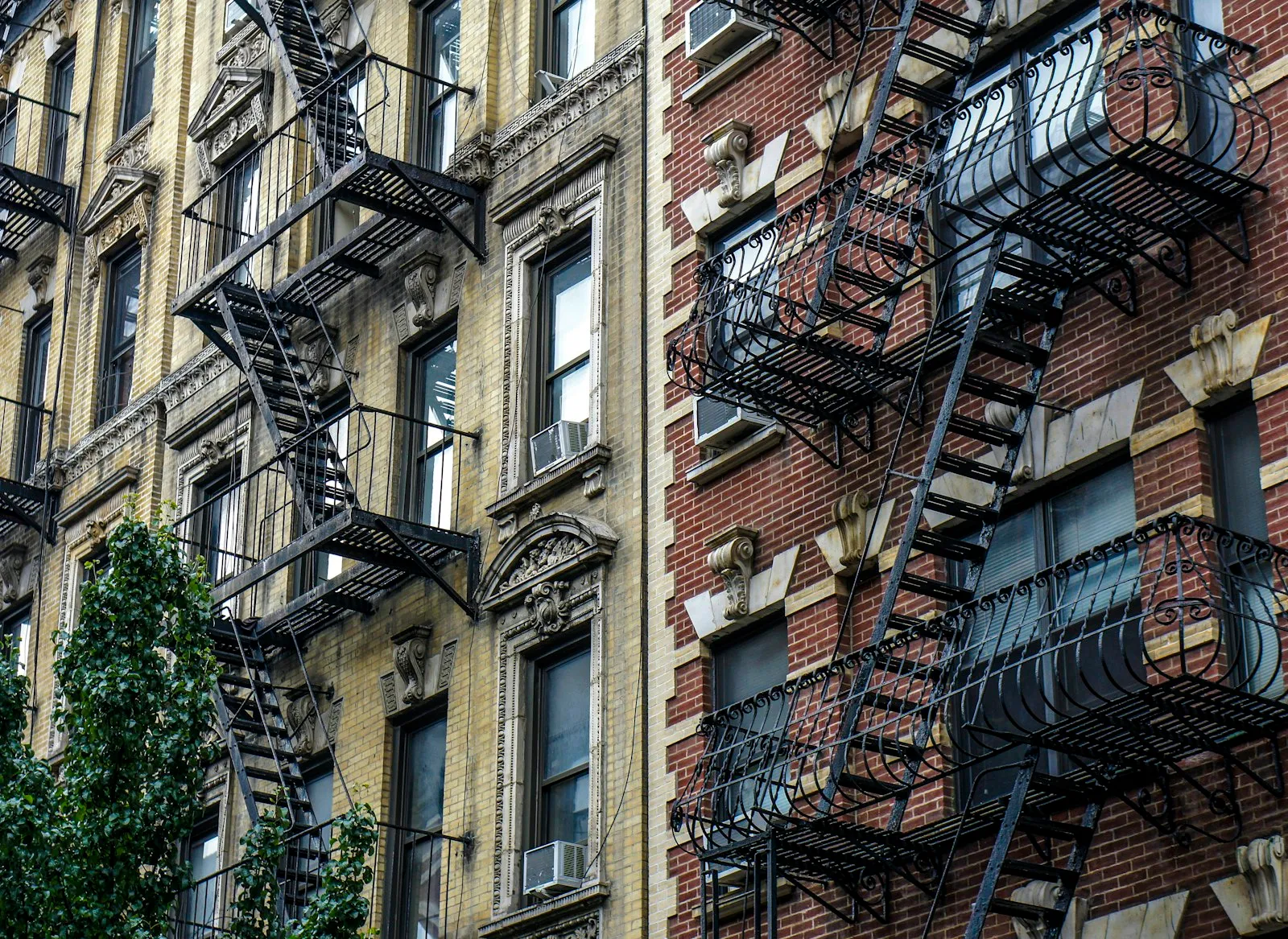
The Rule That Covers Every Hallway and Stair in Your Building
Start with the statute that sits underneath almost every apartment injury case in the city. Multiple Dwelling Law § 78 says that every multiple dwelling, and every part of it, must be kept in good repair, and it puts that responsibility on the owner. A multiple dwelling, roughly speaking, is a building where three or more families live independently.
The phrase “every part of it” matters. It reaches the stairs, the railings, the lobby, the hallways, the light fixtures, the windows and the ceilings over your head. Hiring a managing agent or a super does not make that duty disappear.
The statute does not make the owner pay automatically for every injury, though. You still generally have to show negligence.
Lease Rights and Injury Claims Are Two Different Things
Real Property Law § 235-b is a lease protection. It promises a livable apartment and usually comes up in rent disputes, like an abatement for months without heat.
An injury claim is a separate animal. If you fell because the landlord ignored a broken step, your claim for your medical treatment, lost wages and pain is generally a negligence claim, not a habitability claim. The facts can overlap, but the theory, the proof and the damages are different.
What Your Landlord Knew, and When
Here is the heart of nearly every apartment injury case. To hold the owner responsible, you generally need to show one of these:
- The owner, or someone working for them, created the dangerous condition, for example a porter who mopped the stairs and left them wet with no warning.
- The owner had actual notice, meaning someone told them about it or they saw it themselves.
- The owner had constructive notice, meaning the problem was visible and apparent and had been there long enough that a reasonable owner would have found it and fixed it.
Tenants often have more power here than they realize, because complaints leave a trail. A text to the super saying the hallway light has been out for two weeks. An email to the management company with a photo of the loose handrail. A 311 complaint logged under your address. Violations the city has already placed on the building. Each can help prove the owner knew before you got hurt. Our guide to proving notice in Queens fall cases goes deeper.
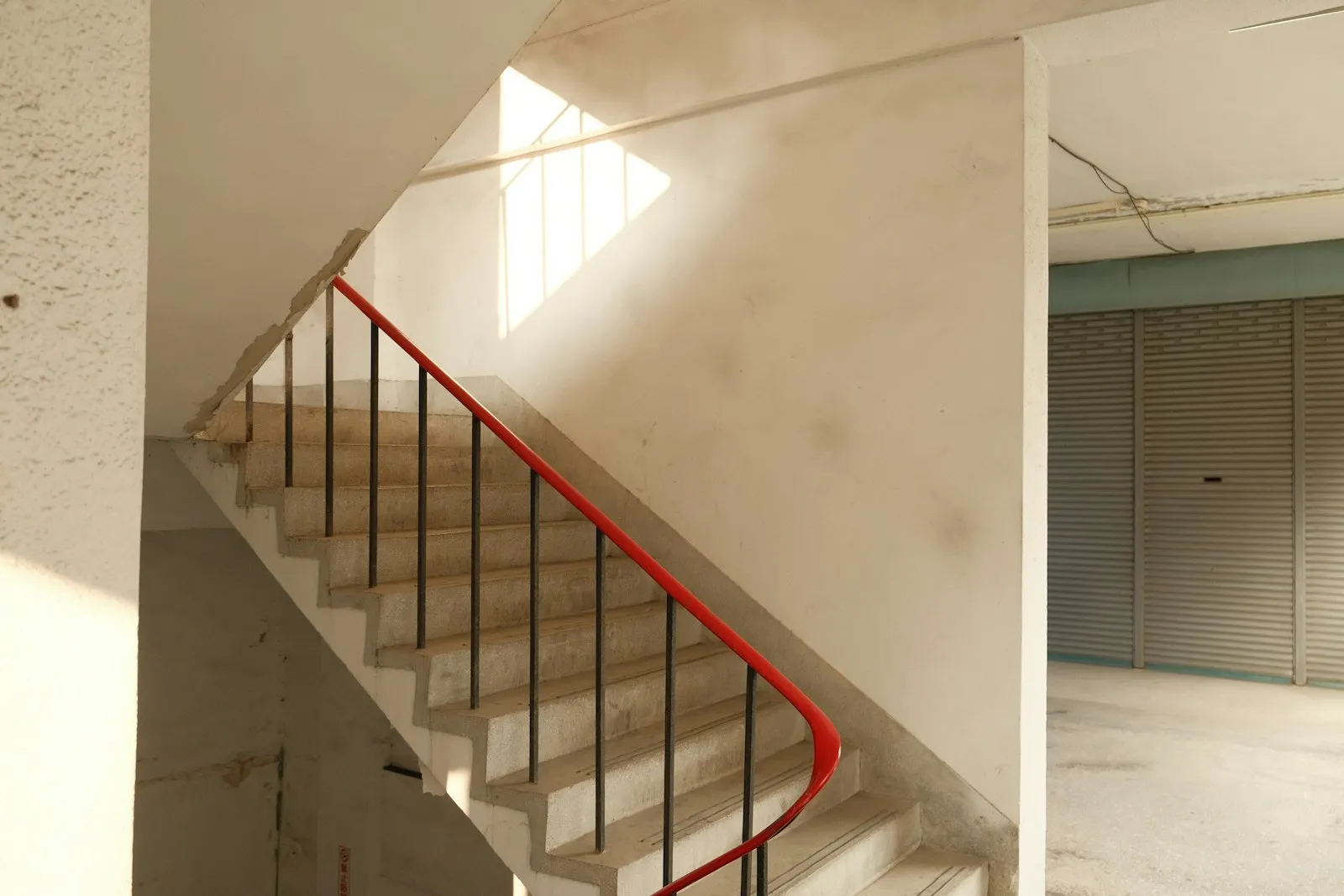
The Stairwell
Stairwells collect every kind of neglect at once: worn or broken treads, loose or missing handrails, bulbs that burned out a month ago, and landings where water pools after every rainstorm.
Picture this as an example. You are carrying groceries down from the fourth floor because the elevator is out again. The stairwell light on the third-floor landing has been dead for weeks, and you and two neighbors have each texted the super about it. In the dark, your foot catches the edge of a tread that has been chipped for longer than you can remember, and there is no handrail on that side to grab. Those texts may go a long way toward showing the owner was on notice.
Stair falls tend to produce real injuries: broken wrists and ankles, back and neck trauma, and torn shoulders from catching a rail at the wrong angle. If a fall wrecked your shoulder, our write-up on rotator cuff and labral tear claims covers how those injuries are documented and valued.
The Hallway
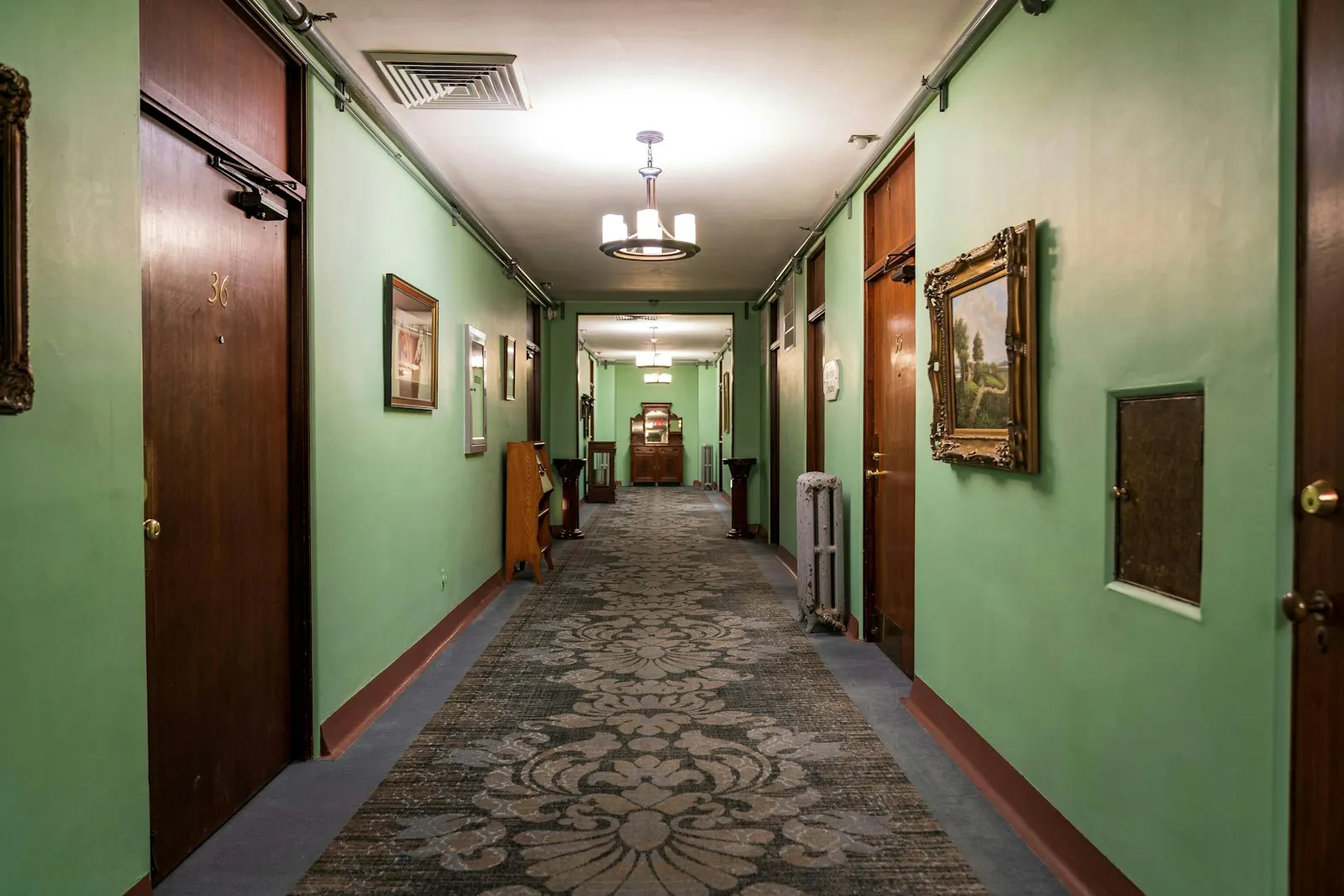
Common hallway hazards in older Queens buildings include:
- Carpet that is ripped, curled or loose at the seams
- Tiles that are cracked, lifted or missing
- Water on the floor from a roof or pipe leak that has never been repaired
- Lighting so dim you cannot see a change in floor level
For example, imagine a delivery worker visiting your floor who trips on a carpet seam that has been curling up for months. Visitors are protected too. The duty to keep common areas safe is not limited to the names on the lease. Our slip and fall practice handles many of these common-area injuries, along with trip-and-fall cases involving uneven floors.
The Lobby Door
When the lobby door has not locked for months, strangers can walk in, and tenants can end up robbed or attacked.
New York law can hold a landlord responsible when a broken lock or other security failure that the owner knew about allowed an intruder to get in and hurt someone. It often matters whether the attacker was an outsider and whether tenants had already complained. See our guide to negligent security claims in NYC. If a camera in the lobby may have caught what happened, move quickly, because many systems record over themselves; our article on getting security camera footage explains how to ask for it.
Inside Your Apartment
The owner is still responsible for the structure and building systems inside your unit.
Falling ceilings and plaster
A slow leak from the apartment upstairs soaks into the plaster above your kitchen. You report the brown stain. You report it again when it starts to bulge. Then one evening it comes down. In an example like that, the string of reports is the proof.
Defective windows
Window sashes that slam shut on fingers, frames that are rotted through, and window guards that are missing where the law requires them all create hazards, especially for children.
Missing smoke and carbon monoxide detectors
When required detectors are missing or dead, a fire or gas leak can cause burns, smoke inhalation or carbon monoxide poisoning. Our page on burn injury claims in Queens walks through how fire cases are investigated.
Outside: The Courtyard and the Sidewalk
The building’s responsibility does not stop at the front door. Courtyards, walkways, side entrances and the path to the garbage area all need to be kept reasonably safe, and that includes dealing with ice and snow within a reasonable time after a storm ends.
Public sidewalks have their own rule in the city. Under NYC Administrative Code § 7-210, owners of most properties next to a sidewalk are generally responsible for keeping it reasonably safe, including repairs. There is a notable exception: owner-occupied one-, two- and three-family homes used only as residences.
Smaller buildings raise another wrinkle. A two-family house is not a multiple dwelling, so Multiple Dwelling Law § 78 does not apply to it, though the owner still owes ordinary care to keep the property reasonably safe.
Who Exactly Is Responsible?
The parties who may be involved include:
- The owner, often a limited liability company with a name that tells you nothing about who is behind it.
- The managing agent, the company that collects rent, schedules repairs and fields complaints.
- The superintendent or porters, who do the cleaning and the hands-on fixing and whose conduct may be charged to their employer.
- Contractors who did a repair badly.
One special situation deserves mention. An out-of-possession landlord is an owner who has leased an entire space, such as a storefront or a whole building, to a business that runs it. Those owners are generally liable only in limited situations, for example when they kept a right to come back in and make repairs, or when a statute puts the duty on them. If you got hurt at a store or restaurant rather than in your own apartment building, the tenant business may be the main target. Our premises liability practice sorts out these ownership questions.
Public Housing: NYCHA Has Its Own Clock
If you live in a NYCHA development, the rules change in an important way. Because NYCHA is a public entity, you generally have to serve a formal notice of claim within 90 days of the injury under General Municipal Law § 50-e. NYCHA may then demand a sworn examination, often called a 50-h hearing, before a lawsuit goes forward. Missing that window can put the whole case at risk.
Building Your Case Before Anyone Fixes Anything
Landlords sometimes fix a hazard right after someone gets hurt, so preserve proof of what it looked like. Gather what you can:
- Photos and video of the condition, with something in the frame for scale, taken as soon as you are able.
- Every text, email, letter and app message you or your neighbors sent to management about the problem.
- Your 311 complaint numbers and any responses.
- Names and phone numbers of neighbors who saw the fall or who can say how long the hazard was there.
- Your medical records, starting with the first visit. See a doctor promptly and keep up with follow-up care.
A written record of your pain and limitations helps too. Our guide on keeping an injury diary shows what to track day by day.
Shared Fault, Deadlines and Who Pays the Bills
Insurers often argue the tenant was not watching their step. New York follows pure comparative fault under CPLR § 1411, so even if some of the blame lands on you, your recovery is generally reduced by your share rather than wiped out. Our explainer on comparative negligence shows how that math works.
For a private landlord, the window to sue is generally three years from the injury under CPLR § 214. Records and witnesses fade well before then.
One more practical point: because this is not a car accident, New York’s no-fault insurance does not apply. Your medical bills will generally run through your own health insurance in the meantime, and the injury claim itself is how you seek reimbursement for those costs, your lost earnings and your pain. Unlike vehicle cases, there is no “serious injury” threshold to clear before you can seek pain and suffering in a premises case.
Talking With Our Firm
Yakov Mushiyev & Associates represents tenants and visitors hurt in buildings throughout Queens, the rest of the city and Nassau County, from an office at 1 Cross Island Plaza in Rosedale. Talking to us costs nothing, our fee depends on winning, and the conversation can happen in English, Russian or Spanish. We can meet at home, in the hospital or by video. Attorney Yakov Mushiyev and the team have recovered over $80 million for New Yorkers hurt by someone else’s carelessness. If you are wondering whether you need a landlord negligence lawyer for what happened in your building, send us a message or call 718.775.3110.
Frequently Asked Questions About Landlord Negligence Claims
Can I sue my landlord if I fell on the stairs in my building?
Often, yes, if the fall was caused by a condition the landlord created or knew about, or should have found through reasonable inspection, such as a broken tread or a missing handrail. A landlord negligence lawyer will look first at what complaints, violations and repair records show about how long the problem existed.
Does it matter that I never complained about the hazard myself?
Not necessarily. A complaint from a neighbor, a 311 report, a city violation or simply the fact that the hazard was obvious for a long time can all help show notice. Your own complaint is helpful, but it is not the only way to prove the owner knew.
Can a guest who was hurt in my building bring a claim?
Generally, yes. The owner’s duty to keep common areas in good repair protects visitors, aides, relatives and delivery workers, not only tenants on the lease.
Will withholding rent over the repairs affect my injury case?
A rent dispute under the warranty of habitability is a separate matter from an injury claim. The paper trail you created in that dispute, though, such as letters about the condition, may help prove that the landlord had notice of the hazard that hurt you. A landlord negligence lawyer can review those documents with you.
I was hurt in a building elevator. Is that a landlord case?
It can be, since owners are responsible for maintaining building equipment, though elevator maintenance companies are sometimes involved as well. Our article on elevator and escalator injuries explains how those claims are usually sorted out.
Visit Yakov Mushiyev & Associates
Our office is at 1 Cross Island Plaza, Suite 325, Rosedale, NY 11422, just off the Cross Island Parkway on the Queens–Nassau border. If you can’t come to us, we’ll come to you: at home, in the hospital or by video.

Talk to a Queens landlord negligence lawyer today
Yakov Mushiyev & Associates has recovered over $80 million for injured New Yorkers across the five boroughs and Nassau County. Consultations are free, available in English, Russian and Spanish, and there is no fee unless we win.
Call 718.775.3110 or contact us online for a free case review.
This article is general information, not legal advice. Every case is different. Attorney Advertising.