
The shoulder is the most mobile joint in the human body, and that freedom of movement is exactly what makes it fragile. A hip sits deep in a bony cup; a shoulder balances on a shallow one, held in place mostly by soft tissue. When an accident overloads that tissue, the result can be a tear, separation or fracture that changes how a person dresses, sleeps and works. This guide explains the anatomy in plain terms, walks through how accidents injure the shoulder, and then lays out how New York law treats these claims, which is the part a shoulder injury lawyer spends most of the case working on.
A Quick Tour of the Shoulder
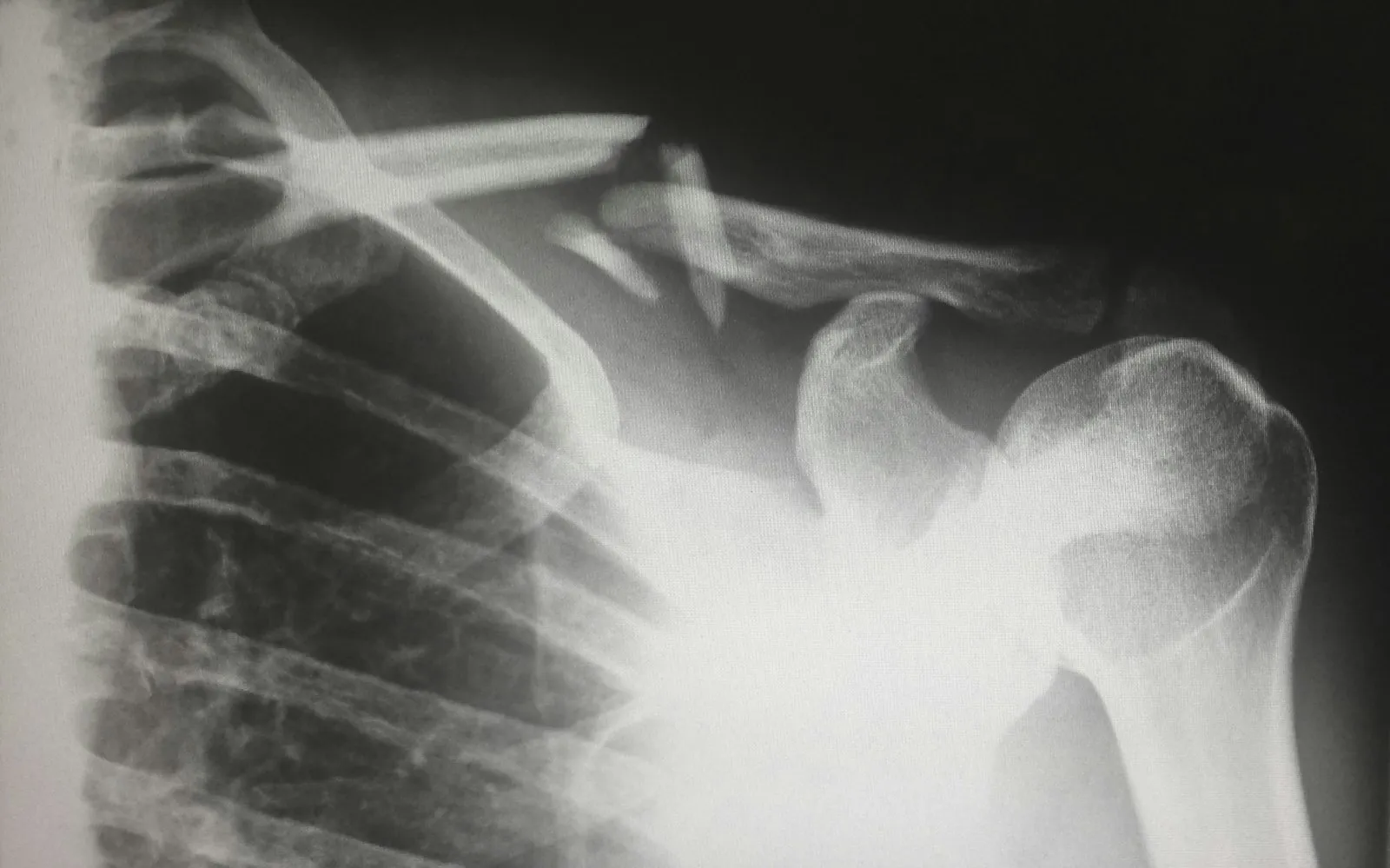
Clinicians often compare the main shoulder joint to a golf ball resting on a tee. The ball is the top of the upper arm bone, called the humeral head. The tee is the glenoid, a small, shallow socket on the shoulder blade. Because the tee is so much smaller than the ball, bone alone cannot hold the joint together. Three soft-tissue systems do most of that work.
The first is the labrum, a rim of fibrocartilage that rings the glenoid and deepens the socket, much like a rubber gasket around the edge of a jar lid. The second is the capsule, a ligament sleeve that tightens at the extremes of motion. The third is the rotator cuff, a group of four muscles whose tendons wrap around the humeral head and press it into the socket every time the arm moves.
Two more structures matter in accident cases. The collarbone, or clavicle, acts as a strut connecting the arm to the trunk. Where it meets the top of the shoulder blade, at a point called the acromion, it forms the acromioclavicular (AC) joint, the small bump many people can feel at the top of the shoulder.
How Accidents Load the Shoulder
Shoulder injuries in accident cases tend to follow a handful of recognizable mechanisms. Surgeons ask about them because the mechanism helps explain what shows up on imaging.
Motor vehicle crashes
In a frontal or rear-end collision, the shoulder belt does its job by stopping the torso, but it concentrates that stopping force along a narrow band across the collarbone and the front of the shoulder. Drivers add a second mechanism: many instinctively brace against the steering wheel with locked elbows, which drives force straight up the arm and into the joint. In a side impact, the near-side occupant’s shoulder may strike the door, the window frame or the B-pillar. Our car accident practice sees each of these patterns regularly.
Slip-and-fall and trip-and-fall incidents
The reflex to catch oneself is nearly universal. When a person slips on a wet floor or trips on a broken sidewalk flag, the hand goes out, and the full weight of the body travels up a straight arm. The force can tear the cuff, dislocate the joint or fracture the top of the humerus. Falls directly onto the side of the shoulder tend to injure the AC joint or the clavicle instead.
Work and construction falls
A worker who falls from a ladder or scaffold often grabs for a rung or rail on the way down. That sudden traction, the arm yanked overhead while the body keeps dropping, is a classic way to tear the labrum or dislocate the shoulder.
Shoulder Injuries, Defined
The names on an MRI report can read like a foreign language. Below is a working glossary of the injuries that come up most often after accidents.
- Partial-thickness rotator cuff tear: a tear that goes partway through a cuff tendon, like a fraying rope that still holds. These may cause pain, weakness and difficulty raising the arm.
- Full-thickness rotator cuff tear: a tear that passes all the way through the tendon, leaving a hole or a complete detachment from the bone.
- Labral tear (including SLAP): damage to the cartilage rim of the socket. A SLAP lesion, short for “superior labrum, anterior to posterior,” is a tear at the top of the labrum where the biceps tendon anchors.
- AC joint separation: a sprain or tear of the ligaments holding the collarbone to the acromion. Separations are graded by severity; higher grades can produce a visible step-off at the top of the shoulder.
- Dislocation: the humeral head comes fully out of the socket, usually forward. It can also tear the labrum on the way out.
- Clavicle fracture: a break in the collarbone, frequently from a direct blow or a fall onto the shoulder, and sometimes from seat belt loading.
- Proximal humerus fracture: a break near the top of the upper arm bone, just below the ball of the joint, common after a hard fall.
- Frozen shoulder (adhesive capsulitis): stiffening and thickening of the joint capsule. It can develop after a period of immobilization in a sling, which is why a fracture or tear can lead to a second, separate problem weeks later.

Diagnosis and Treatment
The workup usually begins with an orthopedic examination. The doctor checks strength in specific directions, performs provocative tests that stress individual tendons or the labrum, and measures range of motion with a goniometer, a hinged protractor that records how many degrees the arm can lift, rotate or reach behind the back. Those numbers matter legally too.
X-rays show fractures and AC joint separations. Soft-tissue injuries need more. An MRI can reveal a rotator cuff tear, swelling in the tendon and fluid around the joint. Because the labrum is thin and tucked against the bone, doctors sometimes order an MR arthrogram, in which contrast dye is injected into the joint before the scan so the dye can seep into any tear and outline it. A labral tear that is invisible on a standard MRI may show up clearly with contrast.
Treatment tends to move in steps. Rest and a sling come first for many injuries, followed by physical therapy to restore motion and strength. Injections may follow. When conservative care does not work, or when the tear is large, surgeons often recommend arthroscopic repair, in which small instruments and a camera are inserted through a few small incisions to reattach a tendon or the labrum. Anyone hurt in an accident should see a doctor promptly and follow up on every referral.
The Serious Injury Threshold in Vehicle Cases
New York’s no-fault system pays for treatment and a portion of lost income after a car crash no matter who was at fault, with the application generally expected within 30 days; our no-fault claims guide covers that process. To go further and seek compensation for pain from the driver who caused the crash, the injured person generally must prove a “serious injury” as defined in Insurance Law § 5102(d).
Here the type of shoulder injury drives the analysis. A fracture qualifies on its own, so a broken clavicle or proximal humerus clears the threshold once the break is documented. That point is covered in more depth in our article on fracture claims and the serious injury rule.
Tears are different. A rotator cuff or labral tear usually relies on one of two categories: “significant limitation of use of a body function or system” or “permanent consequential limitation of use of a body organ or member.” Courts generally require objective medical evidence for both. In Toure v. Avis Rent A Car Systems, the courts looked for this kind of objective proof, and in shoulder cases it commonly takes the form of goniometer readings compared with normal ranges, matched with imaging that shows the tear. A complaint of pain without measured findings is far weaker. Put simply, the MRI shows the damage exists; the measurements show what it costs in function.
The Degeneration Defense
Insurance carriers defending shoulder claims tend to reach for one argument above all others: the tear was already there. Rotator cuff tendons do wear with age, and an MRI of a middle-aged shoulder may show fraying, bone spurs or thinning that predates any accident. The defense will often call those findings “degenerative.”
A few things push back against that argument:
- The treating surgeon’s causation opinion. A surgeon who looked inside the joint during arthroscopy can describe whether the tear edges appeared fresh or chronic, and whether the injury fits the mechanism described.
- Prior history. Medical records from before the accident showing no shoulder complaints, no treatment and full use of the arm can carry real weight.
- Aggravation of a pre-existing condition. New York generally follows the rule that a defendant takes the injured person as it finds them. If a shoulder had quiet, painless wear and the accident turned it into a symptomatic tear that needed surgery, the aggravation is generally compensable.
Two other pressure points come up often. Gaps in treatment, such as stopping physical therapy for several months, are frequently cited by the defense as proof the injury resolved; a gap needs a documented explanation, whether that was an insurance cutoff, a doctor’s instruction or a plateau in recovery. Insurers also schedule an independent medical examination, performed by a doctor the insurer selects and pays. Our explainer on what to expect at an IME walks through that appointment. Our guide to tracking symptoms in a diary shows how to fill gaps the charts leave.
Falls on Property and Injuries at Work
The serious injury threshold belongs to motor vehicle cases only. When a shoulder is torn in a fall at a store, on a broken sidewalk or in an apartment building, the injured person does not have to clear that bar. The questions instead center on whether the owner or manager created or knew about the hazard. Our slip and fall practice handles these cases, and falls in rental housing raise their own issues covered in our piece on landlord negligence and apartment injuries. Under the comparative fault rule in CPLR § 1411, a person partly at fault still recovers, with the award reduced by that share.
Workplace shoulder injuries usually involve two tracks. Workers’ compensation generally covers the injured employee against the employer. On construction sites, Labor Law § 240(1) places duties on owners and contractors to guard against elevation-related hazards like ladder and scaffold falls, and section 241(6) adds duties tied to specific safety rules. These claims are typically brought against the owner and general contractor rather than the employer. Our work injury practice evaluates both tracks together.
Why the Dominant Arm Matters
Two people with identical MRI findings can have very different claims. A right-handed electrician who tears the right rotator cuff loses the ability to work overhead, which is much of the job. Occupation, hand dominance and the activities a person can no longer perform, such as lifting a child, reaching a top shelf or sleeping on the injured side, all shape how damages are presented. For people who cannot return to their usual work, our write-up on proving inability to work explains the evidence that tends to matter.
Filing Deadlines
The clock for a shoulder claim depends on who is responsible. Lawsuits against private parties, whether a driver, a store or a building owner, generally carry a three-year filing period under CPLR § 214. A city bus, a municipal sidewalk defect or a public building changes the timeline sharply: General Municipal Law § 50-e generally calls for a notice of claim within 90 days, with suit generally due within one year and 90 days. Because a tear may not appear on early X-rays, waiting for a clear MRI can eat into that short municipal window.
Working With a Shoulder Injury Lawyer in Queens
Attorney Yakov Mushiyev’s practice, based at 1 Cross Island Plaza in Rosedale on the Queens side of the Nassau line, takes cases from every borough of the city and from Nassau County; its recoveries for injured clients top $80 million. A shoulder injury lawyer at the firm will usually start by gathering imaging, operative reports and range-of-motion measurements, then line those up against the accident mechanism. The first consultation is free, fees are owed only if the case succeeds, and meetings can take place by video, at the client’s home or at a hospital bedside, in English, Russian or Spanish. To set one up, reach the office through this booking page or by phone at 718.775.3110.
Frequently Asked Questions
Does a rotator cuff tear count as a serious injury after a car accident?
It can, but not automatically. A tear generally needs objective proof of limitation, such as measured range-of-motion loss compared with normal, supported by imaging and a physician’s findings. A fracture, by contrast, qualifies on its own under Insurance Law § 5102(d).
The insurer says my tear is degenerative. Is the claim over?
Not necessarily. Age-related changes are common, but if the accident aggravated a condition that previously caused no symptoms, that aggravation is generally compensable. The treating surgeon’s opinion and pre-accident records are often central to answering this defense.
Do I need surgery to have a valid shoulder claim?
No. Many shoulder claims involve injuries treated with therapy and injections. In a car case the question is whether the injury meets the serious injury definition; in a premises or construction case, whether someone else was responsible for the hazard.
Can a shoulder injury lawyer help if I was hurt at work?
Yes. Workers’ compensation generally covers the injured employee, but a separate claim may exist against a property owner, general contractor or other third party, particularly in a construction fall governed by Labor Law § 240(1) or § 241(6).
Visit Yakov Mushiyev & Associates
Our office is at 1 Cross Island Plaza, Suite 325, Rosedale, NY 11422, just off the Cross Island Parkway on the Queens–Nassau border. If you can’t come to us, we’ll come to you: at home, in the hospital or by video.

Talk to a Queens shoulder injury lawyer today
Yakov Mushiyev & Associates has recovered over $80 million for injured New Yorkers across the five boroughs and Nassau County. Consultations are free, available in English, Russian and Spanish, and there is no fee unless we win.
Call 718.775.3110 or contact us online for a free case review.
This article is general information, not legal advice. Every case is different. Attorney Advertising.