
A FedEx truck accident unfolds on a timeline. Some decisions belong to the first sixty minutes, when you are still standing on the asphalt. Others belong to the first month, when insurance forms and doctor visits pile up. And a few belong to the first year, when the legal case takes shape. As a FedEx truck accident lawyer in Queens, we have organized this guide the same way the experience unfolds: hour, day, week, month, year.
Yakov Mushiyev & Associates, P.C. represents injured people throughout the borough from our office at 1 Cross Island Plaza in Rosedale. Whether the purple-and-orange truck that hit you was making stops on Metropolitan Avenue in Middle Village or merging off the Long Island Expressway near Maspeth, the sequence below shows what typically matters, and when.
Before the Clock Starts: How FedEx Trucks Move Through Queens
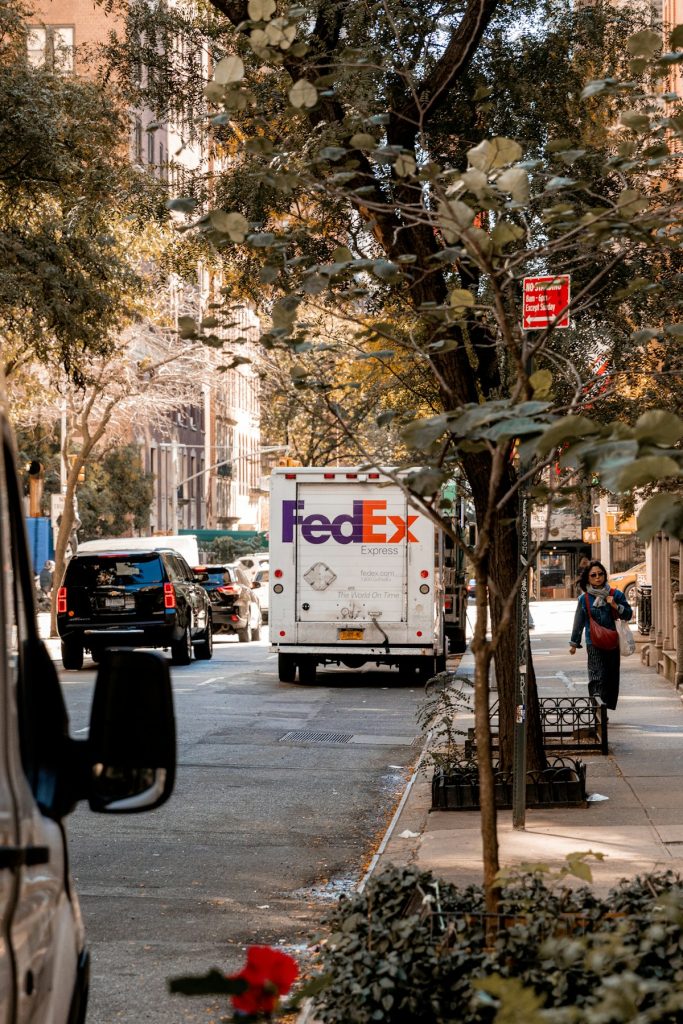
Queens is a crossroads for package delivery. Trucks feed in from the Long Island Expressway, the Van Wyck, the Clearview, and the Brooklyn-Queens Expressway, then fan out across surface streets like Queens Boulevard, Woodhaven Boulevard, Northern Boulevard, and Jamaica Avenue. Because commercial vehicles are barred from parkways such as the Grand Central, the Cross Island, and the Belt, delivery trucks rely on those expressways and avenues, which concentrates heavy vehicles on roads shared with pedestrians, cyclists, and buses.
One more structural point shapes the whole timeline. FedEx operates more than one delivery network, and how the truck and driver were connected to FedEx matters. FedEx Ground, for example, relies on independent contractor companies, often called service providers, that employ the drivers and operate the trucks under the FedEx brand. That means a claim may involve the driver, the contractor company, and potentially FedEx itself, depending on the facts. Liability may be shared, and identifying each party is part of the work that starts early.
The First Hour After a FedEx Truck Crash
The first hour is about safety and the facts that only exist at the scene. Everything else can wait.
- Get medical help. Call 911. Truck impacts involve enormous weight differences, and injuries like internal bleeding, concussions, and spinal injuries can hide behind adrenaline. Accept an ambulance evaluation if offered.
- Get a police response. A police accident report creates an official record of the vehicles, drivers, and location. Ask the officers for the report number before they leave.
- Photograph the truck. Capture the truck’s markings, any company name or DOT number painted on the door, the license plate, and the truck number. A truck branded FedEx may display a separate contractor’s name or number, and that detail matters later.
- Photograph the scene. Road position, skid marks, traffic signals, double-parked vehicles, and debris all tell a story. If the truck was stopped in a lane or backing up, capture its position.
- Find witnesses. Pedestrians, shop owners, and other drivers often leave quickly. A name and phone number now can matter a year from now.
- Say little about fault. Be polite, exchange information, and avoid guessing about what happened. Statements made in shock tend to resurface later.
If the driver leaves the scene, write down everything you can about the truck. Leaving the scene of an accident involving injury is a violation of VTL §600, and a description of the vehicle helps police and insurers identify it.
The First Day: Medical Care and the Record It Creates
Within the first 24 hours, the priority is a thorough medical evaluation, even if you felt “okay” at the scene. Emergency rooms at hospitals across Queens see crash patients every day, and urgent care is better than nothing if your symptoms seem minor. Describe every symptom, including headaches, numbness, stiffness, and dizziness.
This visit does two things. It protects your health, and it begins the medical record that will later be used to prove your injuries. In New York, recovering pain and suffering damages after a motor vehicle crash requires showing a “serious injury” under Insurance Law §5102(d), which includes categories such as fractures, permanent consequential limitations, and significant limitations of use. Courts look for objective medical proof and consistent care. A record that begins on the day of the crash is far more persuasive than one that begins three weeks later.
The first day is also when the other side starts working. A large delivery company or its contractor’s insurer may call you quickly. You are not required to give a recorded statement to the other side’s insurer, and it’s reasonable to decline until you understand your rights.
The First Week: Paperwork, Preservation, and No-Fault
The first week is when deadlines you may not know about start getting close.
The MV-104 accident report
New York drivers must file a DMV report (form MV-104) within 10 days of an accident if anyone is injured or killed or property damage exceeds $1,000. If you were driving, put this on your calendar now.
The no-fault application
New York’s no-fault system pays basic economic loss regardless of fault, up to $50,000 per person: necessary medical expenses, 80% of lost earnings up to $2,000 a month, and up to $25 a day for other reasonable expenses. The application is generally due within 30 days of the accident. If you were in a car, you usually apply through your own vehicle’s insurer. If you were a pedestrian or bicyclist struck by the FedEx truck, you generally apply through the insurance on that truck. Motorcycle operators and passengers are an exception: New York no-fault does not cover them.
Preservation letters
This is the week to lock down evidence that belongs to someone else. Depending on the truck, that can include dashcam footage, GPS and telematics data, electronic logging device records, maintenance files, and the driver’s qualification and training records. Businesses along the crash route, from Austin Street storefronts to gas stations on Queens Boulevard, may have security video that is automatically overwritten. A written preservation (spoliation) demand, sent promptly, tells the companies that the material is relevant to a potential claim and must be kept.
Your own records
Start a simple folder: the police report number, photos, medical paperwork, receipts, pay stubs showing missed work, and a short daily note about pain and limitations. These details fade fast.
The First Month: Building the FedEx Truck Accident Claim in Queens
By the end of the first month, the shape of the case begins to emerge. Medical treatment is underway, no-fault benefits should be flowing, and the key legal questions come into focus.
Who is responsible?
In a FedEx case, the answer can involve several layers. The driver may be personally negligent: speeding, following too closely, failing to yield, or using a phone. New York’s VTL §1146 requires drivers to exercise due care to avoid pedestrians, bicyclists, and others on the road, and VTL §1225-c and §1225-d restrict hand-held phone and electronic device use behind the wheel. If the driver was employed by an independent contractor company, that company may be responsible for the driver’s conduct on the job. Separately, VTL §388 makes a vehicle’s owner liable for the negligence of a permissive driver. Whether FedEx itself may share liability depends on the facts, including how much control it exercised over the operation, so we say “may,” not “will.”
Which rules governed the truck?
Larger commercial vehicles operating in interstate commerce are subject to federal safety rules, including the FMCSA hours-of-service regulations. For property-carrying drivers covered by those rules, the limits include 11 hours of driving after 10 consecutive hours off duty, a 14-hour on-duty window, and a 30-minute break after 8 hours of driving. A smaller delivery van on a neighborhood route may fall outside some federal requirements, but company routing data and delivery schedules can still show pressure, fatigue, or rushing. Federal law also sets a $750,000 minimum liability amount for interstate for-hire carriers of general freight; what coverage actually exists in a given case has to be confirmed.
Is there a public party?
Most FedEx cases are claims against private parties. But if a city vehicle, an MTA bus, or a dangerous city-maintained road condition contributed, a Notice of Claim is generally due within 90 days for that part of the case, under General Municipal Law §50-e or, for NYC Transit, Public Authorities Law §1212. The one-month mark is a good checkpoint to confirm whether any public party is involved before that short window closes.

The First Year: Treatment, Thresholds, and Filing
Months two through twelve are usually the longest stretch, and the quietest. That is when patience and consistency do the most work.
Keep treating, keep documenting
Physical therapy, specialist visits, imaging, and, for some people, surgery all happen in this period. Each appointment adds to the record that will be used to evaluate the serious injury threshold. Gaps in treatment are often used by insurers to argue that an injury resolved or was never serious. If you must pause care, for cost or scheduling reasons, write down why.
Understand how fault will be weighed
2026 update: For motor-vehicle personal injury actions commenced on or after May 26, 2026, New York changed two rules. Amended CPLR 1411 now applies modified comparative fault: a claimant whose fault exceeds the defendants’ combined fault (more than 50%) recovers nothing, and a claimant at 50% or less has recovery reduced by their share. The “90/180-day” category was also removed from the serious injury definition in Insurance Law §5102(d). Actions commenced earlier follow prior law.
Fault questions are common in delivery truck cases. Was the truck double-parked on Steinway Street without hazards? Did a cyclist pass on the right as the truck turned? Did a car cut in front of the truck on the LIE service road? Under the CPLR 1411 rule now in effect for new motor-vehicle cases, the percentage assigned to each person can decide whether recovery is reduced or barred, so evidence about positioning and timing matters.
Know the outer deadline
Most personal injury lawsuits in New York must be filed within three years of the injury under CPLR 214(5). Wrongful death claims are generally due within two years of death, and claims involving public entities generally must be filed within one year and 90 days after a timely Notice of Claim. In practice, many claims are filed well before the deadline so that court-ordered discovery can reach company records.
Evaluate damages realistically
A claim against the at-fault parties can include economic loss above no-fault limits, such as lost earnings beyond the no-fault cap and future medical costs, and, if the threshold is met, pain and suffering and loss of enjoyment of life. We do not predict amounts. Every case depends on the injury, the evidence, and the available coverage.
After the First Year: What Happens Next
Some claims resolve during the first year, others continue through discovery, depositions, independent medical examinations, and mediation. Trucking companies and their insurers often defend aggressively, and it can take time to obtain telematics, maintenance logs, and contractor agreements. Patience pays off here: a case built on complete records is stronger than one rushed to resolution before the injuries are fully understood.
If you’d like a broader orientation to commercial vehicle cases, see our general guide to truck accident claims in Queens and our statewide overview of New York truck accident law. If a city sanitation truck was involved in your crash, the timeline compresses sharply; our page on garbage truck collisions in Queens explains the 90-day rule in detail. Readers on the eastern edge of the borough can also visit our page for FedEx truck accident victims in Bellerose.
Landmarks Along the Delivery Routes: Three Queens Places We Know Well
Juniper Valley Park
Juniper Valley Park is the green heart of Middle Village, a large neighborhood park with ball fields, a running track, tennis and handball courts, and playgrounds. It is surrounded by residential blocks and sits a short drive from Metropolitan Avenue, Woodhaven Boulevard, and Eliot Avenue. Those streets carry steady delivery traffic serving homes and the shops of Middle Village and Maspeth, and the nearby Long Island Expressway feeds trucks into the area. Families crossing toward the park entrances on weekends share the road with package vans making frequent curbside stops.
Steinway & Sons Piano Factory in Astoria
The Steinway & Sons piano factory has operated in the northern part of Astoria for well over a century, in an industrial area near Steinway Street and the waterfront close to LaGuardia Airport. The surrounding streets mix manufacturing, warehouses, and freight movement with residential Astoria to the south. Trucks travel between the Grand Central Parkway service roads, the industrial blocks, and the busy commercial strip of Steinway Street, where double-parked delivery vehicles are a familiar sight and pedestrians cross mid-block.
The Unisphere in Flushing Meadows Corona Park
The Unisphere, the giant stainless steel globe built for the 1964 to 1965 World’s Fair, is one of the most recognizable symbols of Queens. It stands in Flushing Meadows Corona Park, near the USTA Billie Jean King National Tennis Center and the Queens Museum. The park is bordered by heavily traveled roads including the Van Wyck Expressway, the Grand Central Parkway, and the Long Island Expressway. On event days, crowds walking from the subway and from parking areas cross roads that also carry commercial traffic heading between Flushing, Corona, and the expressways.
Directions to Our Rosedale Office from Juniper Valley Park
From Juniper Valley Park in Middle Village, head east to Woodhaven Boulevard and follow it south through Glendale, Woodhaven, and Ozone Park, where it continues as Cross Bay Boulevard. Pick up the Belt Parkway eastbound and follow it past JFK Airport toward the Cross Island Parkway interchange near the Nassau border. Our office at 1 Cross Island Plaza, Suite 325, in Rosedale is just off that interchange. We also meet clients from across the borough; see the neighborhoods and communities we serve.
FedEx Crash Questions We Hear Most
Is FedEx automatically liable if one of its trucks hit me?
Not automatically. FedEx Ground uses independent contractor companies that employ drivers and operate trucks under the FedEx brand. Depending on the facts, liability may rest with the driver, the contractor company, the vehicle owner under VTL §388, and possibly FedEx itself. Identifying which company employed the driver and owned the truck is one of the first tasks in any FedEx case, and the truck’s markings and the police report are good starting points.
What should I do in the first hour if I can still move?
Call 911, accept medical evaluation, and make sure police respond and create a report. Photograph the truck’s markings, plate, any DOT number, and the scene, including traffic signals and road position. Get witness names and numbers. Avoid discussing fault. If the driver leaves, record every detail you can about the vehicle, since leaving the scene of an injury accident violates VTL §600.
Who pays my medical bills after a FedEx truck accident?
New York no-fault insurance usually pays first, regardless of fault, covering necessary medical expenses, 80% of lost earnings up to $2,000 a month, and up to $25 a day for other expenses, up to $50,000 per person. Car occupants generally claim through their own policy, while pedestrians and cyclists generally claim through the truck’s insurer. The application is generally due within 30 days.
How quickly do I need to request the truck’s data?
As quickly as possible. Telematics, dashcam video, and electronic logging records can be overwritten or discarded under routine retention policies. A preservation letter sent in the first week or two puts the companies on notice. Nearby businesses on routes like Queens Boulevard or Northern Boulevard may overwrite security video within days, so ask early.
Do federal trucking rules apply to FedEx delivery vans?
It depends on the vehicle. Federal Motor Carrier Safety Administration rules, including hours-of-service limits, generally apply to commercial motor vehicles above certain weight ratings operating in interstate commerce. A large tractor-trailer moving freight between hubs is more likely to be covered than a small van on a local route. Even where federal rules don’t apply, route data and delivery schedules can show whether a driver was rushed.
Can a FedEx truck use the Grand Central or Belt Parkway?
No. Commercial vehicles are banned from New York parkways, including the Grand Central, Belt, Cross Island, and Jackie Robinson. Delivery trucks crossing Queens are expected to use expressways like the LIE, Van Wyck, Clearview, and BQE, or local streets. A truck crash on a parkway may raise questions about routing and supervision.
What if I was partly at fault?
For motor-vehicle injury cases commenced on or after May 26, 2026, New York applies modified comparative fault under CPLR 1411: if your share of fault is more than 50%, you recover nothing; at 50% or less, your recovery is reduced by your percentage. Cases commenced before that date follow the prior pure comparative fault rule, which reduces but does not bar recovery.
How long do I have to file a lawsuit?
Generally three years from the date of the crash under CPLR 214(5). Shorter deadlines apply in some situations, such as claims involving the City or public authorities, where a Notice of Claim is generally due within 90 days, and wrongful death claims, which generally must be filed within two years of death. Starting earlier helps preserve evidence.
Will I have to see the insurance company’s doctor?
Often, yes. No-fault insurers may request independent medical examinations, and in a lawsuit the defense typically has the right to examine you as well. Go to scheduled exams, be honest and consistent about symptoms, and keep your own treating doctors informed. Missing a no-fault exam can jeopardize benefits.
Where can I learn about your firm before I call?
You can read about our attorneys and approach on our about Yakov Mushiyev & Associates page. When you call, we will ask about the crash, your injuries, and any paperwork you have, such as the police report number and insurance letters. Consultations are a chance to ask questions about your specific timeline.
Related: For a full overview of how our firm handles these claims, visit our FedEx Truck Accident Lawyer in Queens page.
Your Next Step With a FedEx Truck Accident Lawyer in Queens
Wherever you are on this timeline, whether it has been an hour, a week, or most of a year, it is not too early to get answers. A FedEx truck accident lawyer in Queens can identify the companies behind the truck, request the records that matter, and keep every deadline in view. Call Yakov Mushiyev & Associates, P.C. at 718.775.3110, or send us a message online. Our office is at 1 Cross Island Plaza, Suite 325, Rosedale, NY 11422.
General information, not legal advice. Attorney Advertising. Prior results do not guarantee a similar outcome.