
On paper, being hit by a garbage truck and being hit by a sedan are both “motor vehicle accidents.” In practice, they can be very different cases. The vehicle is heavier, the driver may work for the City of New York or for a private carting company, the deadlines can be dramatically shorter, and the evidence lives in different places. If you are looking for a garbage truck accident lawyer in Queens, the most useful thing we can do is show you, side by side, where these cases follow the ordinary rules and where they break from them.
Yakov Mushiyev & Associates, P.C. handles injury claims across the borough from our office at 1 Cross Island Plaza in Rosedale. Below, each section compares a typical car crash with a garbage truck crash, then explains what the difference means for you.
At a Glance: Garbage Truck Crash vs. Ordinary Car Crash
| Issue | Typical car-vs-car crash | Garbage truck crash |
|---|---|---|
| Who is the defendant? | Another driver and the vehicle’s owner | The City of New York (DSNY trucks) or a private carting company, plus the driver |
| First legal deadline | No-fault application, generally within 30 days | Same no-fault deadline, plus a Notice of Claim generally within 90 days if a city truck is involved |
| Lawsuit deadline | Generally 3 years (CPLR 214(5)) | Generally 1 year and 90 days against the City; generally 3 years against a private carter |
| Pre-suit hearing | Not required | The City may demand a 50-h examination |
| Vehicle size and blind spots | Ordinary mirrors and sightlines | Large blind spots, frequent reversing, workers riding or walking alongside |
| When crashes happen | Any time, often rush hour | Often early morning or overnight collection routes |
| Key evidence | Photos, police report, witnesses | Route records, GPS, backup camera data, maintenance logs, crew statements |
The rest of this guide unpacks each row.
Difference One: The Defendant May Be the City Itself
In an ordinary car crash, you deal with another private driver and that driver’s insurer. The owner of the car may also be liable under VTL §388 if someone else was driving with permission.
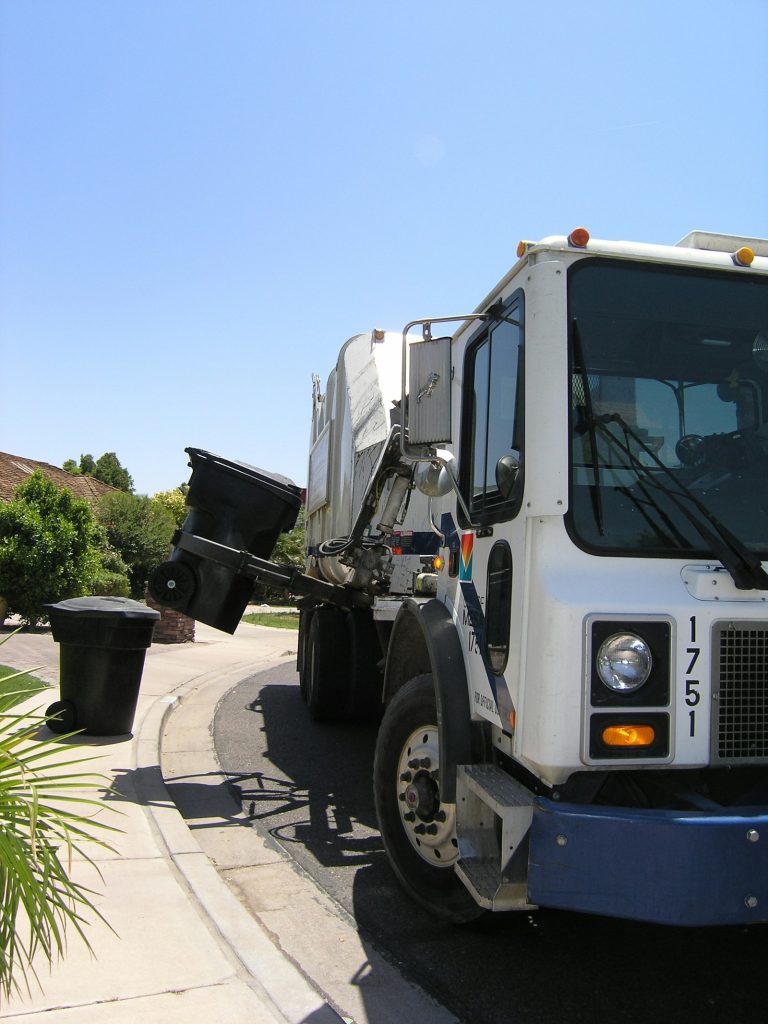
In a garbage truck crash, the first question is whose truck it was. Residential trash and recycling in New York City is collected by the Department of Sanitation, whose trucks are city vehicles. Many businesses, on the other hand, hire private carting companies to haul commercial waste, and those trucks are owned and operated by private firms. The NYC Department of Sanitation runs one of the largest municipal fleets in the country, and its trucks are on nearly every residential street in Queens on collection days.
Why it matters: a claim against a DSNY truck is a claim against the City of New York, which triggers a separate set of procedural rules. A claim against a private carter looks more like a commercial truck case. And sometimes both kinds of trucks are on the same block at the same time, especially along commercial strips like Main Street in Flushing, 37th Avenue in Jackson Heights, or Jamaica Avenue.
Difference Two: The 90-Day Clock That Ordinary Crashes Don’t Have
In an ordinary car crash, the main lawsuit deadline is generally three years under CPLR 214(5). There is no requirement to notify the other driver before suing.
In a garbage truck crash involving a city vehicle, the rules change sharply. Under General Municipal Law §50-e, a Notice of Claim generally must be served within 90 days of the incident. The notice describes the time, place, and nature of the claim and the injuries. After it is served, the City may demand an examination under General Municipal Law §50-h, a sworn question-and-answer session about the accident and your injuries. The lawsuit itself generally must then be filed within one year and 90 days of the incident.
Courts have some discretion to allow a late notice in certain circumstances, but relying on that is risky. The safe approach is to treat the 90-day deadline as absolute. For a person recovering from serious injuries, ninety days can pass very quickly.
In a crash involving a private carting truck, the 90-day notice requirement generally does not apply, because the defendant is a private company. The three-year statute of limitations usually governs. Because people often don’t know at first which kind of truck hit them, we treat every garbage truck case as a potential 90-day case until the ownership is confirmed.
Difference Three: How Fault Is Analyzed in a Garbage Truck Accident in Queens
In an ordinary car crash, fault often turns on familiar rules: following too closely under VTL §1129, failing to yield, running a red light, or using a phone while driving.
In a garbage truck crash, those rules still apply, but the truck’s job creates additional fault questions:
- Reversing. Collection trucks back up constantly, into alleys, around corners, and down dead-end blocks. Backing without a spotter or without checking cameras and mirrors can be negligent.
- Wide right turns. A long truck swinging right from Queens Boulevard or Northern Boulevard can trap a cyclist or pedestrian along its side.
- Stop-and-go in travel lanes. A truck stopping every few yards forces cars to pass, sometimes into oncoming traffic.
- Workers on foot. Sanitation workers walking alongside or behind the truck can be struck by passing vehicles, and the truck’s movements affect their safety too.
The driver’s general duty under VTL §1146 to exercise due care to avoid pedestrians, bicyclists, and others applies to sanitation drivers like everyone else. In some cases involving city vehicles engaged in work on the roadway, a defendant may argue that a different legal standard applies to its conduct. Whether such an argument fits a particular garbage truck crash depends on the facts and on how courts have treated similar situations, which is one reason these cases benefit from careful review early on.
Difference Four: The Insurance Picture
In an ordinary car crash, your no-fault benefits come from your own policy if you were in a car, and any claim beyond no-fault goes against the other driver’s liability insurer.
In a garbage truck crash, no-fault still applies. Basic economic loss is paid regardless of fault up to $50,000 per person, covering necessary medical expenses, 80% of lost earnings up to $2,000 a month, and up to $25 a day for other reasonable expenses. The no-fault application is generally due within 30 days. If you were a pedestrian or cyclist hit by the truck, you generally claim no-fault through the coverage applicable to that vehicle. Motorcycle riders, as in any New York crash, are not covered by no-fault.
Beyond no-fault, the source of payment for a claim differs. A claim against the City is paid by the City, after the notice and filing requirements are met. A claim against a private carting company generally runs through the company’s commercial liability coverage. In both cases, establishing the right defendant at the outset avoids delays and missed deadlines.
Difference Five: The Serious Injury Threshold Applies to Both, but the Injuries Often Differ
In an ordinary car crash, many injuries are soft-tissue sprains and strains. Those cases often turn on whether the injured person can prove a “serious injury” under Insurance Law §5102(d), which is required to recover pain and suffering damages after a motor vehicle crash.
In a garbage truck crash, the same threshold applies, because a garbage truck is a motor vehicle. But the size of the truck means injuries are often more severe: fractures, crush injuries, traumatic brain injuries, amputations, and, tragically, deaths. A fracture or significant disfigurement can satisfy the threshold on its own. Objective medical documentation is still essential, and consistent treatment remains the backbone of proof.
2026 update: For motor-vehicle personal injury actions commenced on or after May 26, 2026, New York’s amended CPLR 1411 applies modified comparative fault: a claimant more than 50% at fault recovers nothing, and a claimant at 50% or less has recovery reduced by their share. The “90/180-day” category was also removed from the serious injury definition in §5102(d). These changes apply to garbage truck crashes just as they do to ordinary car crashes, because both are motor-vehicle cases. Actions commenced earlier follow prior law.
The modified rule under CPLR 1411 can matter in garbage truck cases, where defendants sometimes argue that a pedestrian walked behind a reversing truck or a driver tried to pass a stopped truck unsafely. The percentage of fault assigned to each side can decide whether recovery is reduced or barred.
Difference Six: Where the Evidence Lives
In an ordinary car crash, the key evidence is usually the police report, photos, witness statements, and sometimes a traffic camera or dashcam.
In a garbage truck crash, there is often more evidence, but less of it is in your hands:
- Route schedules and assignment sheets showing which truck and crew were on the block;
- GPS and vehicle data showing speed, stops, and reversing;
- Backup camera and other onboard camera footage, where equipped;
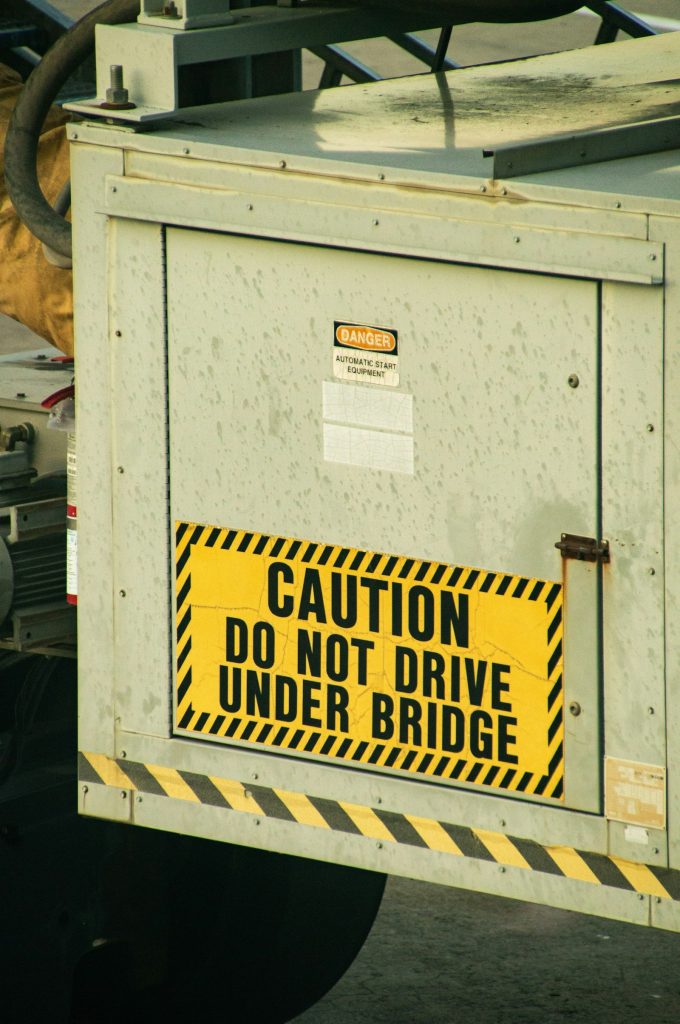
- Maintenance and inspection records for brakes, mirrors, lights, and backup alarms;
- Driver training, licensing, and safety records;
- Statements from crew members riding or working alongside the truck.
Because collection often happens early in the morning or overnight, there may be fewer independent witnesses. Neighbors’ doorbell cameras and storefront security cameras can fill that gap, but only if someone asks before the footage is overwritten.

Difference Seven: When a Crash Becomes a Wrongful Death Case
Garbage truck crashes are, unfortunately, more likely than ordinary fender-benders to be fatal, particularly for pedestrians and cyclists. A wrongful death claim in New York generally must be filed within two years of the death under EPTL §5-4.1, and damages are limited mainly to pecuniary, or economic, losses. If the death involved a city truck, the 90-day Notice of Claim requirement also applies. Our page on wrongful death claims in Queens explains how families can protect both the death claim and the estate’s survival claim.
Where Garbage Truck Cases Look Like Other Commercial Truck Cases
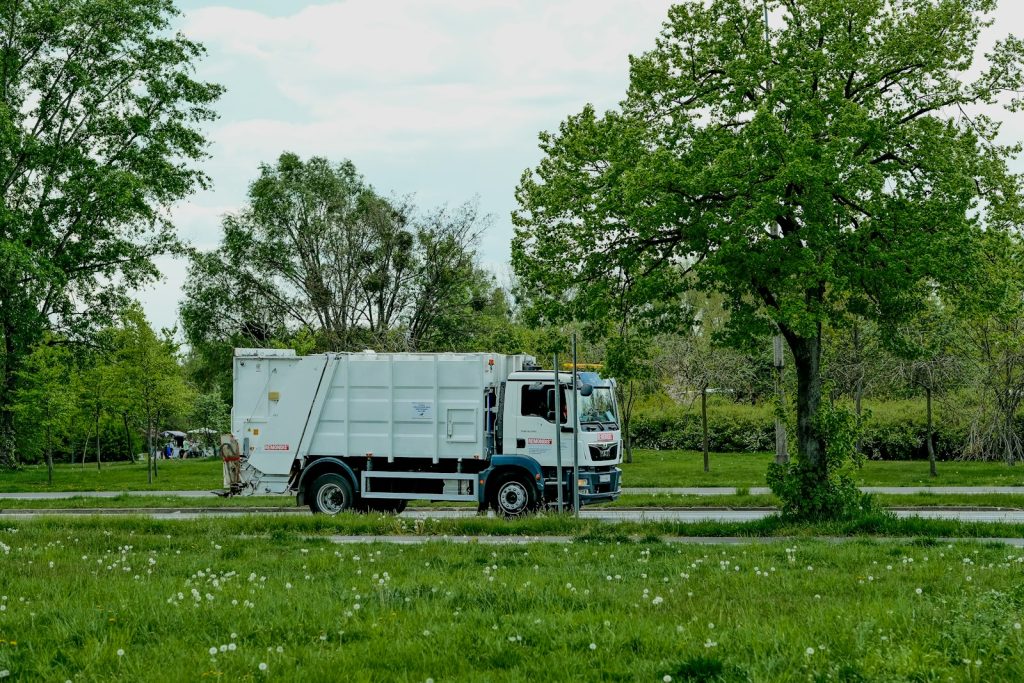
When the truck belongs to a private carter, the case shares a lot with other commercial vehicle claims: company policies, driver qualifications, maintenance practices, and pressure to finish routes quickly. Commercial vehicles are also barred from parkways like the Grand Central, Cross Island, Belt, and Jackie Robinson, so carting trucks moving between Queens neighborhoods and transfer stations travel the expressways and surface arteries such as the Van Wyck, the LIE, Woodhaven Boulevard, and Rockaway Boulevard. Our guide to commercial truck accidents in Queens covers that framework, and our statewide resource on truck accident claims throughout New York goes deeper on federal and state rules. If you are in eastern Queens near the Nassau line, see also our page for garbage truck crash victims in Bellerose.
Three Queens Landmarks, Compared by the Traffic Around Them
Citi Field
Citi Field, home of the New York Mets, sits beside Flushing Meadows Corona Park near the Willets Point area. On game days, crowds pour out of the 7 train and the Long Island Rail Road stop and cross toward parking lots near the Grand Central Parkway, Northern Boulevard, and the Van Wyck Expressway. The surrounding area has long been home to auto shops and industrial businesses, and redevelopment has brought construction traffic. Commercial trucks, including carting trucks, use Northern Boulevard, Roosevelt Avenue, and the Van Wyck rather than the parkway, mixing heavy vehicles with fans on foot.
JFK International Airport
John F. Kennedy International Airport occupies a vast stretch of southeastern Queens along Jamaica Bay, a short drive from our Rosedale office. Beyond passenger traffic, the airport area is a hub of cargo facilities, warehouses, and freight forwarders, which means a steady stream of trucks on the Van Wyck, Rockaway Boulevard, the Nassau Expressway, and the surrounding service roads. Commercial waste from airport-area businesses is hauled by private carters, and garbage trucks share these roads with taxis, rideshare vehicles, and airport shuttles at all hours.
Idlewild Park Preserve
Idlewild Park Preserve is a large natural area of salt marsh, wetlands, and woodland in southeast Queens, near Springfield Gardens and Rosedale on the eastern edge of JFK Airport. It takes its name from Idlewild, the original name of the airport, and it is valued for birdwatching and environmental education. The residential blocks around the preserve are served by DSNY collection trucks on regular routes, and nearby roads like Rockaway Boulevard and Brookville Boulevard carry trucks moving between the airport area and Nassau County.
Directions to Our Rosedale Office from Citi Field
From Citi Field, take the Van Wyck Expressway south past Kew Gardens and Jamaica toward JFK Airport. Near the airport, follow signs for the Belt Parkway eastbound and continue to the Cross Island Parkway interchange by the Nassau border. Our office at 1 Cross Island Plaza, Suite 325, in Rosedale sits just off that interchange; the drive is typically under half an hour outside rush hour.
Garbage Truck Accident FAQs: How These Cases Differ
How do I know if the garbage truck was a city truck or a private one?
Look at the markings. DSNY trucks carry Department of Sanitation branding and city fleet numbers, while private carting trucks usually display a company name and license information. The police report should also identify the vehicle and its owner. If you aren’t sure, assume it may be a city truck and act within 90 days, since the Notice of Claim deadline for city vehicles is short and strict.
What is a Notice of Claim, and why does it matter?
A Notice of Claim is a formal written notice to the City describing the incident, where and when it happened, and the injuries claimed. Under General Municipal Law §50-e, it generally must be served within 90 days for claims against the City of New York and its agencies, including DSNY. Without a timely notice, a lawsuit against the City can be dismissed. The lawsuit itself generally must follow within one year and 90 days.
What is a 50-h hearing?
After a Notice of Claim is served, the City may demand an examination under General Municipal Law §50-h. It is a sworn interview, usually transcribed, in which the City’s lawyers ask about how the accident happened, your injuries, and your treatment. It happens before a lawsuit is filed. Preparing for it carefully matters, because your answers can be used later in the case.
Is the deadline the same if a private carting truck hit me?
Generally no. Claims against private carting companies and their drivers usually follow the ordinary three-year statute of limitations under CPLR 214(5), without a 90-day notice requirement. But the no-fault application is still generally due within 30 days, and evidence still needs to be preserved quickly. If a city vehicle or city road condition also contributed, the 90-day rule may apply to that part of the claim.
Do I need to meet the serious injury threshold after a garbage truck crash?
Yes, to recover pain and suffering damages. Garbage trucks are motor vehicles, so Insurance Law §5102(d) applies just as it does after an ordinary car crash. Many garbage truck injuries, such as fractures, satisfy a threshold category. Economic losses above no-fault limits can be pursued regardless of the threshold.
I was walking behind a reversing garbage truck. Can I still recover?
Possibly. Drivers must exercise due care to avoid pedestrians under VTL §1146, and reversing without proper lookout, alarms, or a spotter may be negligent. Your own conduct will also be evaluated. For motor-vehicle cases commenced on or after May 26, 2026, if you are found more than 50% at fault you recover nothing; at 50% or less, your recovery is reduced by your share.
Are garbage truck crashes more common at certain times in Queens?
Collection routes often run early in the morning and overnight, when visibility is lower and drivers are working through tight schedules. Residential blocks see trucks on scheduled collection days, while commercial strips like Main Street, Steinway Street, and Jamaica Avenue see private carters after businesses close. Low light and few witnesses make preserving video evidence especially important.
What if a sanitation worker was the one injured?
Workers injured on the job are generally covered by workers’ compensation, which usually bars suing their own employer. However, a worker struck by a passing driver or injured because of another company’s negligence may have a third-party claim against that driver or company. The rules for these claims differ from an ordinary passenger or pedestrian claim.
Can I file the Notice of Claim myself?
You can, but mistakes in a Notice of Claim, such as a wrong date, location, or incomplete description, can create problems later. Because the notice shapes the entire claim against the City, many people choose to have a lawyer prepare and serve it. Our general frequently asked questions page covers more on how claims proceed.
How do I learn more about your firm?
Our firm background page describes who we are and how we approach injury cases. When you call, have the date and location of the crash, any truck number you noted, the police report number, and your medical paperwork handy so we can quickly assess which deadlines apply.
Related: For a full overview of how our firm handles these claims, visit our Garbage Truck Accident Lawyer in Queens page.
Speak With a Garbage Truck Accident Lawyer in Queens Before the 90 Days Pass
A garbage truck crash may look like any other collision from the outside, but the rules underneath are different: a possible municipal defendant, a 90-day notice deadline, a 50-h hearing, and evidence held by the City or a carting company. A garbage truck accident lawyer in Queens can determine whose truck was involved and keep every deadline in view. Call Yakov Mushiyev & Associates, P.C. at 718.775.3110 or reach our Rosedale office online. We are located at 1 Cross Island Plaza, Suite 325, Rosedale, NY 11422.
General information, not legal advice. Attorney Advertising. Prior results do not guarantee a similar outcome.