
Insurance companies that cover trucking fleets handle crash claims every day. The people hurt in those crashes usually handle one, ever. That imbalance is where myths take root, and some of them are repeated so often that injured people treat them as fact. As a truck accident lawyer in Queens, we hear the same misconceptions from clients, from family members, and sometimes from adjusters themselves. This article takes the most common ones apart, one at a time, using New York law and the federal rules that govern commercial trucking.
Each section below starts with a myth, then lays out the facts. If you were hurt by a tractor-trailer, box truck, dump truck, delivery truck or garbage truck anywhere in the borough, at least a few of these will apply to you.
Myth 1: “A Truck Crash Is Just a Bigger Car Accident”
Fact: A crash with a commercial truck sits inside a different regulatory world. Interstate motor carriers are governed by the Federal Motor Carrier Safety Regulations, which control how long drivers can be on the road, how trucks must be inspected and maintained, who is qualified to drive, and how records are kept. Federal law also sets minimum liability insurance for interstate carriers. For general freight, that minimum is $750,000, under 49 CFR 387.9, with higher minimums for hazardous materials.
That changes the case in two practical ways. First, there is usually far more evidence: electronic logs, engine data, dispatch records, inspection reports and driver files. Second, there is usually more insurance, and more lawyers on the other side defending it. Treating a truck crash like an ordinary fender-bender means leaving both of those facts on the table.
The physics matter too. A loaded tractor-trailer can weigh many times more than a passenger car, needs far more distance to stop, and has large blind spots along both sides and directly behind. The injuries in these crashes tend to be more severe: fractures, spinal injuries, head trauma. That has consequences for the legal threshold discussed below.
Myth 2: “The Driver Is the Only One You Can Hold Responsible”
Fact: Truck cases frequently involve several parties, each with its own insurance. Depending on the facts, responsibility may extend to:
- The motor carrier that employed or contracted with the driver
- The truck’s owner, who under VTL §388 is generally liable for the negligence of a permissive driver
- A leasing company that owns the tractor or trailer
- A shipper or loader if improperly secured or overweight cargo contributed to the crash
- A maintenance company if brakes, tires or lights were negligently serviced
- A parts manufacturer if a defect played a role
Delivery networks add another layer. Amazon commonly uses third-party Delivery Service Partners to run its delivery routes. FedEx Ground uses independent contractor service providers. UPS drivers are generally UPS employees. Whether the driver, the contractor company, the brand, or some combination may be responsible depends on the specific facts and contracts. We do not assume; we investigate.
Some of these cases involve tractor-trailers on the highways and some involve box trucks on side streets. For the heavy commercial side, see our guide for a commercial truck accident lawyer in Queens.
Myth 3: “The Evidence Will Still Be There When I Am Ready”
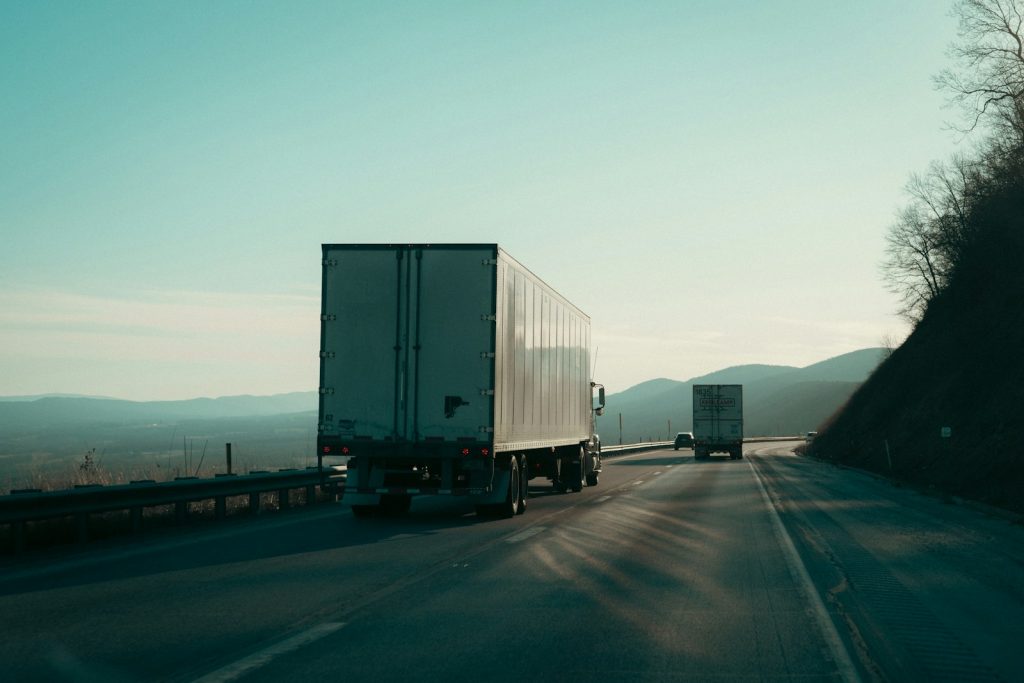
Fact: The most important evidence in a truck case is electronic, and it does not wait for you to recover. Key sources include:
- Electronic logging device (ELD) records showing driving and on-duty time
- Engine control module (ECM) or “black box” data, which may capture speed, braking and throttle in the moments before impact
- Forward-facing and driver-facing dashcam video
- GPS and dispatch communications showing route and schedule pressure
- Maintenance and inspection records for brakes, tires and lights
- Driver qualification files, including licensing, medical certification and history
- Cell phone records showing whether the driver was distracted
Some of this data can be overwritten, and the truck itself may be repaired and back on the road quickly. The standard step is a preservation letter, sometimes called a spoliation letter, sent as early as possible to the carrier and other parties, demanding that they keep the evidence. When a party destroys evidence after being on notice, courts have tools to address it. But the best result is that the evidence is never lost in the first place.
Myth 4: “Truckers Can Drive as Long as the Load Requires”
Fact: Federal hours-of-service rules limit how long property-carrying drivers can operate. Under the FMCSA hours-of-service regulations:
- A driver may drive up to 11 hours after 10 consecutive hours off duty.
- Driving is not permitted beyond the 14th hour after coming on duty.
- A 30-minute break is required after 8 cumulative hours of driving.
Fatigue is hard to see at a crash scene but easy to find in the logs, if you look. When ELD records, fuel receipts, toll data and delivery timestamps do not line up, that inconsistency can become one of the most important facts in the case. Delivery deadlines and dispatch pressure can also show why a driver was pushing beyond safe limits.
Myth 5: “Trucks Can Use Any Road in Queens”
Fact: Commercial vehicles are banned from New York’s parkways, including the Grand Central Parkway, the Cross Island Parkway, the Belt Parkway and the Jackie Robinson Parkway. The parkways were designed for passenger cars, with low overpasses and tight curves. Trucks are expected to use the expressways instead, like the Long Island Expressway, the Van Wyck, the Brooklyn-Queens Expressway and the Clearview Expressway, along with the city’s designated truck routes on local streets.
Why does that matter for your case? Because a truck that was somewhere it was not allowed to be is a fact that bears on negligence and on how the carrier trained, routed and supervised its driver. Routing evidence, from GPS data to dispatch instructions, can show whether the driver was told to take a shortcut, followed a consumer navigation app, or simply ignored the signs.
On the legal routes, Queens has its own pressure points: the merges on the Long Island Expressway, the Van Wyck’s heavy airport-bound traffic toward JFK, the BQE’s narrow lanes in western Queens, and local truck corridors through industrial areas in Long Island City, Maspeth and near the airports. Each comes with different camera sources and different likely defenses.
Myth 6: “No-Fault Will Take Care of My Truck Accident Injuries”
Fact: New York no-fault pays basic economic loss up to $50,000 per person, covering necessary medical bills, 80% of lost earnings up to $2,000 per month, and up to $25 per day for other reasonable expenses. The application is generally due within 30 days. For a serious truck crash, $50,000 can be exhausted quickly by hospital care, surgery and months of missed work.
No-fault also pays nothing for pain and suffering. To recover those damages from the responsible parties, your injury must meet the serious injury threshold in Insurance Law §5102(d), which includes fractures, significant disfigurement, permanent loss of use, permanent consequential limitation, significant limitation of use, and death, among other categories. Because truck crashes so often cause fractures and spinal injuries, many truck cases clear this threshold, but each one has to be proven with medical evidence. Economic loss beyond no-fault can be pursued regardless.
And a reminder for riders: motorcycle operators and passengers are not covered by New York no-fault. Coverage after a moped crash depends on the vehicles and policies involved; our page for a moped accident lawyer in Queens explains those situations.
Myth 7: “If I Was Partly to Blame, a Truck Accident Lawyer in Queens Cannot Help Me”
Fact: Partial fault does not automatically end a case, but the rule depends on when the lawsuit is commenced.
2026 update: For motor-vehicle personal-injury actions commenced on or after May 26, 2026, amended CPLR 1411 provides that a claimant whose fault is greater than the defendants’ combined fault (more than 50%) recovers nothing; at 50% or less, recovery is reduced by the claimant’s share. The same changes removed the “90/180-day” category from the serious-injury definition. Actions commenced earlier remain under the prior pure comparative fault rule.
Truck defense teams often argue that the car driver cut in front of the truck, lingered in a blind spot, or braked suddenly. With a 50% line now in play for many cases, those arguments carry higher stakes. The answer is the same electronic evidence discussed above: ECM speed data, dashcam footage, and the driver’s own logs and phone records.
Myth 8: “A Garbage Truck Crash Works Like Any Other Truck Case”
Fact: If the truck belonged to New York City, including the Department of Sanitation, the timeline is different. Under General Municipal Law §50-e, a Notice of Claim is generally due within 90 days, and a lawsuit generally must be commenced within one year and 90 days. The city may demand a 50-h hearing first.
Private carting companies also operate garbage trucks in the city, and those cases follow the ordinary rules. Knowing which kind of truck hit you is one of the first things to establish.
Myth 9: “The First Offer Shows What My Case Is Worth”
Fact: Early offers usually arrive before anyone knows the full extent of your injuries. If you settle, you sign a release, and the case is over even if you later need surgery. A sound valuation looks at medical treatment and prognosis, lost earnings and future earning capacity, the available insurance, and the strength of the liability evidence. That takes time and documentation.
You can review settlements our firm has listed for a sense of the kinds of cases we handle, with the reminder that every case is different and prior results do not guarantee a similar outcome.
Myth 10: “I Have Three Years, So There Is No Rush”
Fact: The general statute of limitations for personal injury in New York is three years under CPLR 214(5). But that is the outer limit, not the plan. The truck may be repaired and sold. Electronic data may be overwritten. Witnesses move. And if a public vehicle was involved, the 90-day Notice of Claim deadline arrives long before the three-year mark. For a death caused by a truck crash, a wrongful death action is generally due within two years of the death.
Other deadlines arrive even sooner: the no-fault application within 30 days, and the DMV MV-104 report within 10 days when someone is injured or property damage exceeds $1,000.

The Fact Behind All the Myths
Every myth above shares the same root: the assumption that a truck crash will sort itself out. It rarely does. The carrier and its insurer start investigating right away. The injured person should have someone doing the same.
If you were hurt in eastern Queens, our page for a truck accident lawyer in Bellerose covers that area. For trucking claims across the state, see our overview for a New York truck accident lawyer. And if a passenger car rather than a truck caused your injuries, our page for a car accident attorney in New York may be a better starting point.
Three Queens Landmarks Near Busy Truck Routes
From the waterfront to the beach, these three places sit close to roads where large trucks and everyday drivers share space.
Socrates Sculpture Park
Socrates Sculpture Park is an outdoor museum and public park on the East River at Broadway and Vernon Boulevard, where Long Island City meets Astoria. Artists and community members created it in 1986 on an abandoned riverside lot that had been used as an illegal dumpsite, and it now hosts rotating large-scale sculpture exhibitions, outdoor movies and community events. Vernon Boulevard serves a mix of warehouses, big-box retail and industrial businesses along the waterfront, so box trucks and tractor-trailers making deliveries share the road with park visitors, cyclists and families. Watch for wide right turns and trucks backing into loading docks.
Queens College
Queens College is a senior college of the City University of New York, founded in 1937, with a large campus in Flushing bounded by Kissena Boulevard and the Long Island Expressway. Thousands of students commute to campus by car, bus and on foot. The Long Island Expressway alongside it is one of the main truck routes through Queens, since commercial vehicles are barred from the nearby parkways, and its service roads carry trucks exiting toward local deliveries. Pedestrians crossing near Kissena Boulevard and the expressway service roads should be especially alert to turning trucks and their blind spots.
Rockaway Beach and Boardwalk
Rockaway Beach is the long stretch of Atlantic Ocean beach on the Rockaway Peninsula, and its boardwalk was rebuilt in concrete after Hurricane Sandy damaged the old wooden structure in 2012. The beach draws crowds in summer by subway, ferry and car, filling Shore Front Parkway, Beach Channel Drive and Cross Bay Boulevard. Because the Belt Parkway is closed to commercial vehicles, trucks serving the peninsula’s businesses, construction sites and homes rely on local routes such as Cross Bay and Woodhaven Boulevards and Beach Channel Drive. Summer traffic, cyclists and beachgoers carrying gear make those roads more crowded than they look.
Directions to Our Rosedale Office from Socrates Sculpture Park
From Socrates Sculpture Park in Long Island City, head east on Broadway or 31st Avenue toward the Grand Central Parkway, then drive east on the parkway past LaGuardia Airport and Flushing Meadows–Corona Park. Continue onto the Cross Island Parkway south and follow it to the Belt Parkway and Southern State interchange. Our office at 1 Cross Island Plaza, Suite 325, in Rosedale is just off the parkway near the Nassau line.
Truck Accident FAQs
Who can be held responsible for a truck accident in Queens?
Depending on the facts, the truck driver, the motor carrier, the truck or trailer owner, a leasing company, a cargo loader, a maintenance provider, or a parts manufacturer may share responsibility. For delivery trucks, the driver, a contractor company and the brand may be involved depending on how the work is structured. Identifying every responsible party matters because each may carry separate insurance.
What is a preservation or spoliation letter?
It is a written demand sent to the trucking company and other parties instructing them to preserve evidence related to the crash, such as ELD logs, engine data, dashcam video, maintenance files and driver records. Sending it early reduces the risk that electronic data is overwritten or the truck is repaired before it can be inspected. It is one of the first steps in a truck case.
How much insurance do trucking companies carry?
Federal law requires interstate carriers of general freight to carry at least $750,000 in liability coverage, with higher minimums for hazardous materials. Many carriers carry more, and other parties may have their own policies. Local and intrastate trucks may be subject to different requirements. The actual coverage in your case is something your lawyer confirms through investigation.
Are trucks allowed on the Grand Central or Belt Parkway?
No. Commercial vehicles are banned from New York’s parkways, including the Grand Central, Cross Island, Belt and Jackie Robinson Parkways. Trucks are supposed to use expressways like the Long Island Expressway, Van Wyck and BQE, plus designated truck routes. If a truck that hit you was on a parkway, that fact may be relevant to negligence and to how the carrier routed and supervised its driver.
How do hours-of-service rules affect my case?
Federal rules limit property-carrying drivers to 11 hours of driving after 10 consecutive hours off, prohibit driving beyond the 14th hour on duty, and require a 30-minute break after 8 hours of driving. Electronic logs record this time. If a driver exceeded these limits, or the records do not match other data, that can be strong evidence of fatigue and of a carrier’s failure to supervise.
Does no-fault apply if a truck hit my car?
Yes, generally. Your medical bills and lost wages usually start with no-fault through the policy on the car you were in, up to $50,000 per person, and the application is generally due within 30 days. For pain and suffering and larger economic losses, you pursue the responsible parties, subject to the serious injury threshold for pain and suffering.
What if I was hit by a DSNY garbage truck?
Claims against New York City and its agencies, including the Department of Sanitation, generally require a Notice of Claim within 90 days and a lawsuit within one year and 90 days. The city may require a 50-h hearing. If the garbage truck belonged to a private carting company, ordinary rules apply instead. Note the truck’s markings and number at the scene if you can.
How is a truck accident different from a car accident claim?
The basic New York rules on no-fault, the serious injury threshold and comparative fault apply to both. But truck cases add federal safety regulations, more potential defendants, larger insurance policies, and electronic evidence like ELD logs and engine data that must be preserved quickly. Injuries also tend to be more severe, and the defense usually invests more in fighting the claim.
What should I do at the scene of a truck crash?
Call 911 and get medical help. If you are able, photograph the truck, the trailer, the company name, the USDOT number on the cab door, the plates, and the scene. Get the driver’s information and any witnesses’ contacts. Do not discuss fault with the driver or a company representative, and do not give a recorded statement to the carrier’s insurer before getting legal advice.
Where in Queens do truck crashes tend to happen?
Often on the truck routes: the Long Island Expressway, the Van Wyck near JFK, the BQE in western Queens, and the Clearview, as well as local truck corridors in industrial areas like Long Island City and Maspeth and around the airports. Boulevards such as Northern, Queens, Woodhaven and Rockaway see heavy delivery traffic, where wide turns and blind spots cause frequent conflicts.
Related: For a full overview of how our firm handles these claims, visit our Truck Accident Lawyer in Queens page.
Speak With a Truck Accident Lawyer in Queens
Myths are useful to insurers because they make injured people wait, settle early, or give up. The facts point the other way: act quickly, preserve the evidence, and understand every source of coverage before you decide anything.
Call Yakov Mushiyev & Associates, P.C. at 718.775.3110 or get in touch with our office online. We are located at 1 Cross Island Plaza, Suite 325, in Rosedale, and we help people across the borough who need a truck accident lawyer in Queens.
General information, not legal advice. Attorney Advertising. Prior results do not guarantee a similar outcome.