
You were riding, something went wrong, and now someone is asking whether your e-bike was even legal. That question matters more than most riders expect. New York e bike laws decide which bikes are allowed, who can ride them, where and how fast. After a crash, those same rules shape the fault argument, the insurance picture and how much you can recover. Here is the practical rundown of New York e bike laws and what they mean for your claim.
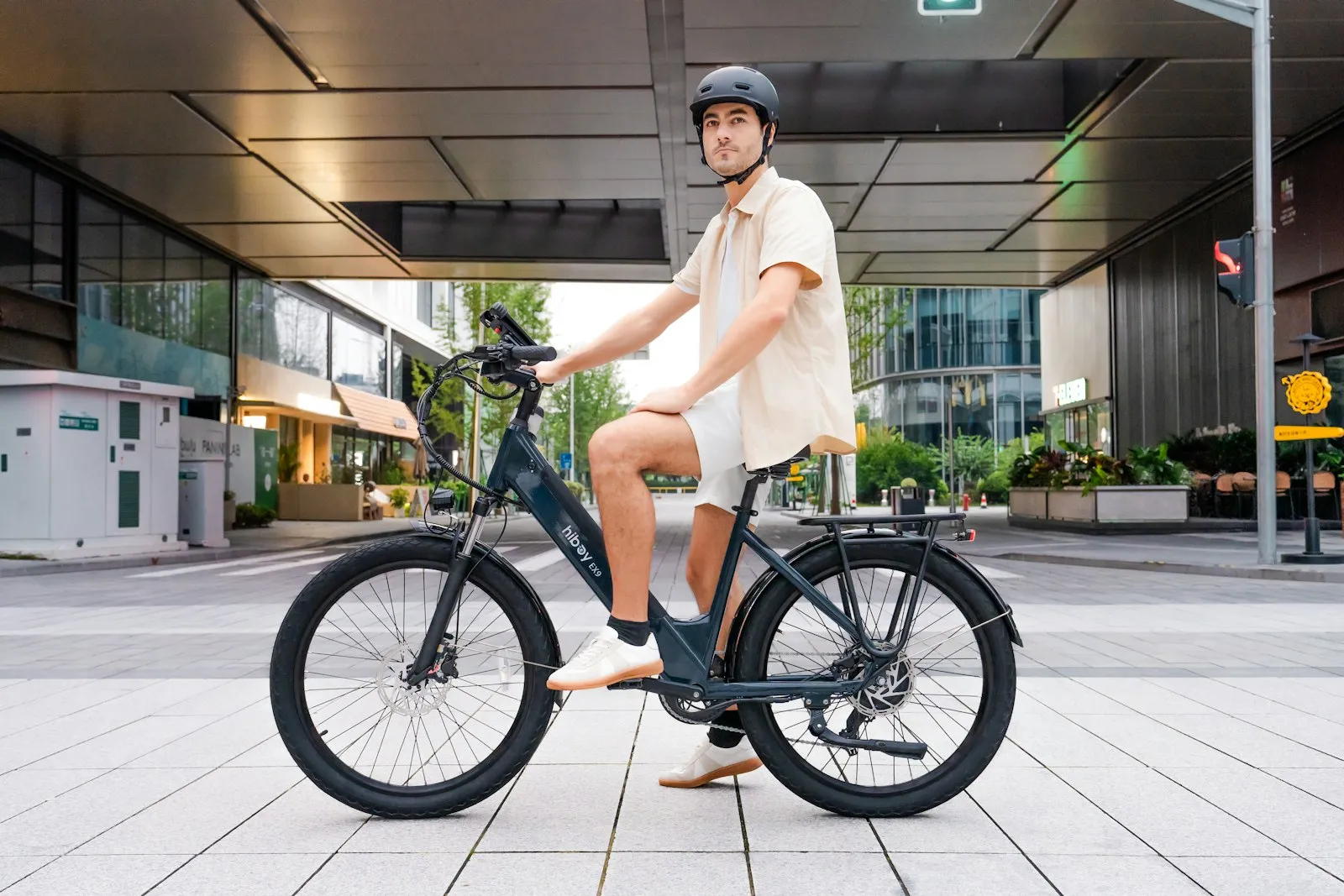
Are E Bikes Legal in NYC? The Short Answer
Yes. Are e bikes legal in NYC? For the three recognized classes, they are, as long as the rider follows the rules. State law set up the classes. The city layered its own rules on top. You need both to get the full picture.
Two things to keep in mind from the start:
- An e-bike that fits a recognized class is treated differently from a moped or motorcycle.
- Breaking a rule does not erase your claim. It can reduce it.
Three Classes, Defined by State Law
Vehicle and Traffic Law § 102-c sorts e-bikes into three classes:
| Class | How the motor works | Top assisted speed |
|---|---|---|
| Class 1 | Pedal-assist only | 20 mph |
| Class 2 | Throttle | 20 mph |
| Class 3 | Higher-speed assist | 25 mph, allowed only in a city of 1 million or more people, which means New York City |
Class matters for two reasons. First, it sets the baseline for what is legal. Second, a bike that does not fit any class may be treated as something else entirely, which changes the insurance and liability analysis. If you are not sure what you were riding, find the label, the receipt or the manufacturer listing. Your lawyer will want it.
Age, Speed and Helmets: Where Riders Get Tripped Up
Under VTL § 1242, you must be at least 16 to operate an e-bike. That is state law, and it applies everywhere in New York.
The city adds its own layer. According to NYC DOT’s e-bike rules:
- The maximum speed for e-bikes and e-scooters on city streets is 15 mph, even if your bike can go faster.
- Helmets are required on Class 3 bikes.
- Helmets are also required for anyone riding for work, which covers delivery riders.
- No riding on sidewalks.
Notice the gap between what a bike can do and what the city allows. A Class 3 bike may be capable of 25 mph, but on a Queens street the posted rule is 15. Insurers know this. If a crash report or a witness puts you above 15, expect that to come up.
Delivery riders face the helmet rule no matter which class they ride. If you work for an app, our article on delivery rider accident claims in NYC covers the extra issues you face.
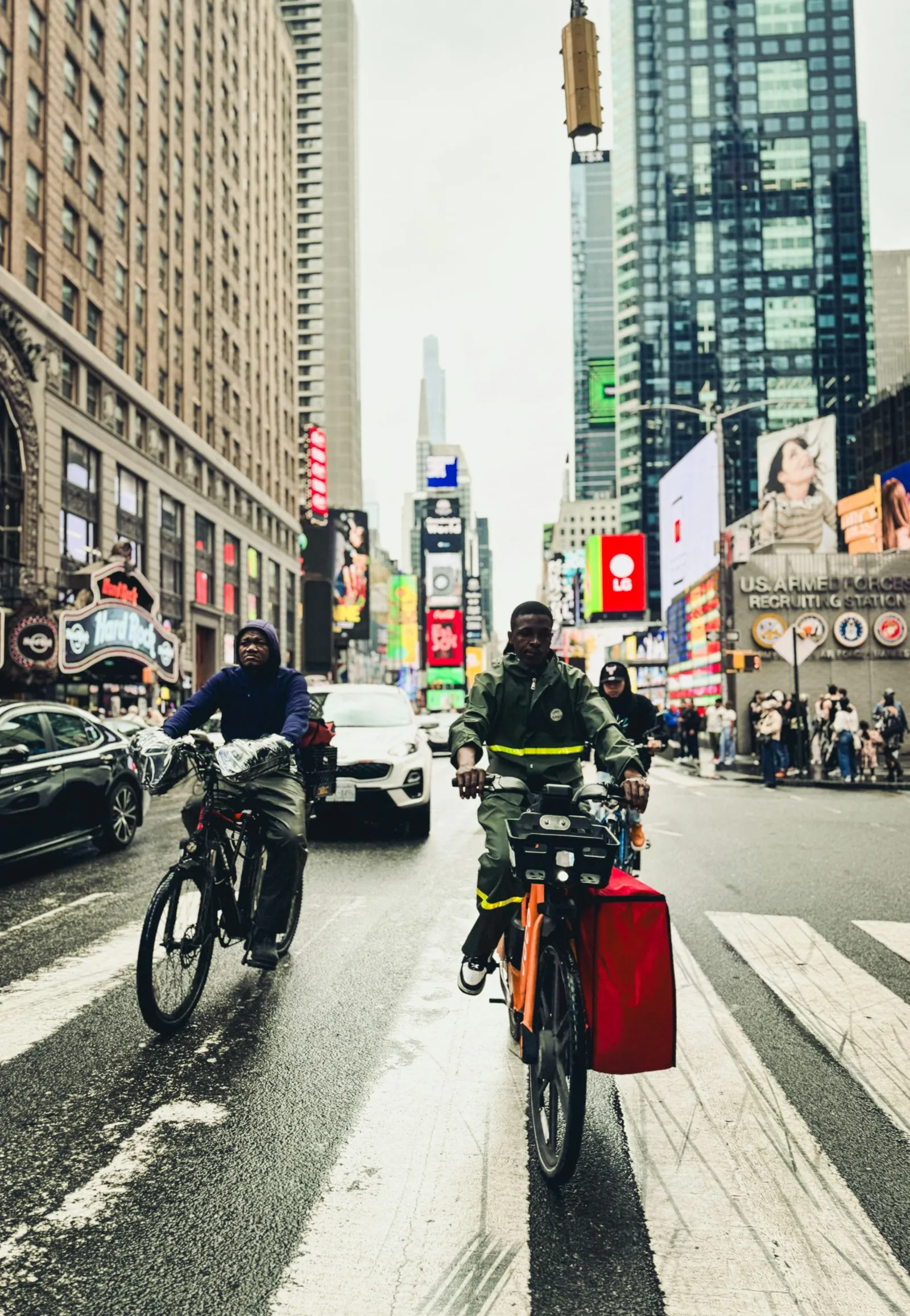
Where You Can Ride and Where You Can’t
The short list of permitted places, per the state and city rules:
- Streets posted at 30 mph or less, generally.
- Bike lanes.
- Bike lanes on bridges.
- Some park drives and greenways.
Sidewalks are off-limits unless a local law specifically allows them, and in New York City the DOT rule is plain: no sidewalk riding. A rider who hits a pedestrian on a sidewalk is in a weak spot. A rider who is struck by a car while in a bike lane is usually in a much stronger one.
Location also matters for evidence. Where you were when you got hit, which lane, which direction, which intersection, can carry a lot of weight. Write it down while you remember it.
Why an E-Bike Is Not a Motor Vehicle
Here is a detail that surprises a lot of riders. Under VTL § 125, the definition of “motor vehicle” excludes e-bikes. That has real consequences.
When a car hits you, you are generally treated as a non-occupant of that car for no-fault purposes. That means the car’s policy generally pays your no-fault benefits under Insurance Law § 5103, covering things like medical bills and some lost earnings, regardless of who caused the crash.
To go further and sue the driver for pain and suffering, you generally have to meet the “serious injury” threshold in Insurance Law § 5102(d). That threshold is a frequent battleground. Our New York no-fault insurance guide walks through the process.
Broke a Rule? Here Is How It Affects Fault
This is the question riders ask most, so here is the direct answer. New York e bike laws can be used against you, but not as an automatic bar.
New York follows pure comparative fault under CPLR § 1411. If you were 20 percent responsible for a crash, your recovery is reduced by 20 percent. You still recover the rest. That applies even if you were speeding, riding without a required helmet or in the wrong place.
Some practical examples of how rule-breaking can come up:
- Riding over 15 mph. The driver’s insurer may argue you could have stopped in time at a lower speed.
- No helmet when one was required. The defense may argue a head injury would have been less severe.
- Sidewalk riding. If you hit or were hit near a sidewalk, location becomes a central fault issue.
- Underage rider. A rider under 16 was not allowed to operate the bike, and that will be raised.
None of these ends a case on its own. They shift the percentages. A driver who ran a red light or turned across a bike lane without looking still carries the larger share in many crashes. For more, see our explainer on comparative negligence in New York.

Proving You Rode by the Book
If you followed New York e bike laws when you crashed, make that easy to prove. Insurers assume the worst about riders unless the record says otherwise. Useful evidence includes:
- Photos of your bike’s class label, motor and battery, taken before anything is repaired.
- Your helmet, especially if it is cracked or scuffed. Keep it.
- Ride data from a bike app, a fitness tracker or your phone showing speed and route.
- Video from nearby storefronts, buses or doorbell cameras. This disappears fast, often within days.
- Names and numbers of anyone who saw the crash.
- Delivery app records showing your location and timing, if you were working.
A cracked helmet does two jobs. It shows you were wearing one, and it shows how hard your head hit. A screenshot of your speed can shut down the argument that you were flying through the intersection. Small items like these change how an adjuster values a file.
Uninsured Drivers and Hit-and-Runs
Drivers flee. Some have no insurance. If that happens, two places to look:
- Uninsured motorist coverage on your own household’s auto policy, if there is one.
- The Motor Vehicle Accident Indemnification Corporation (MVAIC), which may apply when no other coverage exists.
Act fast on either route. Report the crash, get the police report number and check NYC Open Data crash records later if you need to confirm a crash was logged.
When the E-Bike Rider Is the One at Fault
Flip it around. A pedestrian struck by an e-bike generally has no no-fault coverage from the e-bike, because the bike is not a motor vehicle. The claim runs against the rider directly. Sometimes the rider’s homeowners or renters policy may respond, though coverage varies policy to policy. A business responsible for the rider may also be part of the picture.
Here, e bike laws NY riders ignore become evidence for the injured pedestrian. Sidewalk riding, speeding and running lights all point toward the rider’s fault. Our page on pedestrian accident claims covers that side.
Rentals and Citi Bike
Not your bike? Different paperwork. Citi Bike is the city’s bike share system, operated by Lyft, and it offers both pedal bikes and e-bikes. Every rider agrees to a rental agreement first. Those terms can matter after a crash, so pull up the agreement you accepted and read it, or have a lawyer read it with you.
The same street rules apply to a rented e-bike as to one you own: 15 mph on city streets, bike lanes yes, sidewalks no. A crash on a shared bike still raises the usual questions about the driver who hit you and whether the bike itself failed. Our article on Citi Bike accident claims goes further.
Myths Riders Repeat
Some bad information circulates in group chats and at delivery pickup spots. Quick corrections:
- “If I was speeding, I can’t sue.” Wrong. Fault is shared, and your recovery is reduced, not barred.
- “My e-bike has no insurance, so nobody pays.” If a car hit you, the car’s no-fault coverage generally pays your medical bills.
- “Helmets are only for Class 3.” Not if you are riding for work. Then a helmet is required regardless of class.
- “The sidewalk is safer, so it’s fine.” In the city, it is not allowed, and it will hurt you in a fault dispute.
The common thread: New York e bike laws rarely end a case outright, but they move the numbers. Know them before an adjuster quotes them to you.
Battery Fires and Defective Bikes
Not every injury comes from a collision. Lithium-ion batteries can fail, and the FDNY has issued warnings about battery fire risks.
New York City’s Local Law 39 requires e-bikes sold, leased or rented in the city to meet the UL 2849 safety standard, and batteries to meet UL 2271. If a defective battery or bike caused your injury, you may have a product liability claim against the maker or the seller. Keep the bike, the battery, the charger and any packaging. Do not throw anything away. Read more in our article on e-bike fire and battery injury claims.
Deadlines You Cannot Miss
Most New York injury lawsuits must be filed within three years under CPLR § 214. If a city vehicle or city road defect was involved, the clock is much shorter: a notice of claim is generally due within 90 days, and the lawsuit within one year and 90 days. Our guide to deadlines for suing the city explains the steps.
The first few days matter for evidence. Our checklist on what to do in the first 72 hours after an e-bike accident lays it out.
How We Handle E-Bike Cases
Yakov Mushiyev & Associates represents riders and pedestrians in scooter and e-bike accident cases across Queens and the rest of the city, along with traditional bicycle accident claims. Over $80 million has been recovered by the firm on behalf of injured New Yorkers. Consultations are free, there is no fee unless we win, and we work in English, Russian and Spanish. Meetings happen wherever works: your place, a hospital room or a video call. Send us your details and we will review what happened.
Rider Questions, Answered
Why does it matter that an e-bike is not a motor vehicle?
Because it changes who pays. When a car hits you, you are generally a non-occupant under the car’s no-fault policy. When an e-bike hits a pedestrian, there is generally no no-fault coverage from the bike at all.
I was riding over 15 mph when a car hit me. Can I still recover?
Often, yes. Under pure comparative fault, your recovery may be reduced by your share of responsibility, but it is not wiped out. The driver’s conduct still matters.
Who pays my medical bills if a car hit me on my e-bike?
Generally the car’s insurer, through no-fault, because you are treated as a non-occupant. If the driver was uninsured or fled, your household’s uninsured motorist coverage or MVAIC may apply.
Is a helmet required for every rider?
Not for every rider. In New York City, helmets are required on Class 3 e-bikes and for anyone riding for work. Wearing one in all cases is a good idea, and it removes an argument the other side might use.
Can I ride my e-bike in a park?
On some park drives and greenways, yes. Check the posted rules for the specific location before you ride.
Visit Yakov Mushiyev & Associates
Our office is at 1 Cross Island Plaza, Suite 325, Rosedale, NY 11422, just off the Cross Island Parkway on the Queens–Nassau border. If you can’t come to us, we’ll come to you: at home, in the hospital or by video.

Talk to a Queens e-bike accident lawyer today
Yakov Mushiyev & Associates has recovered over $80 million for injured New Yorkers across the five boroughs and Nassau County. Consultations are free, available in English, Russian and Spanish, and there is no fee unless we win.
Call 718.775.3110 or contact us online for a free case review.
This article is general information, not legal advice. Every case is different. Attorney Advertising.