
You were mid-delivery, the order was on your back, and a car cut across the bike lane. Now you are hurt, the app is still pinging, and nobody has told you who pays. This post covers a Grubhub accident, a DoorDash crash and the same situation on Uber Eats or any other platform: what coverage usually applies, who can be held responsible, where workers’ comp fits, and what evidence to grab before it disappears.
Short version: the app is rarely the whole answer. Most of the money in these claims comes from somewhere else.
First Things, In Order
If you can still read this, you are past the scene. Good. Here is what matters now.
- Get treated and say how it happened. Tell the doctor you were riding an e-bike and were hit by a car (or whatever happened). That sentence in the chart matters later.
- Screenshot the app. Active order, pickup and drop-off times, route, your status at the moment of the crash.
- Get the driver’s details. Name, plate, insurance company, policy number if you can.
- Photograph everything. Your bike, the car, the street, your injuries, your helmet.
- Keep the bike as it is. Do not fix it or toss it yet.
- Write down witnesses. Other riders, restaurant staff, people on the corner.
We have a longer checklist in our post on what to do in the first 72 hours after an e-bike crash.
Hit by a Car? Start With No-Fault
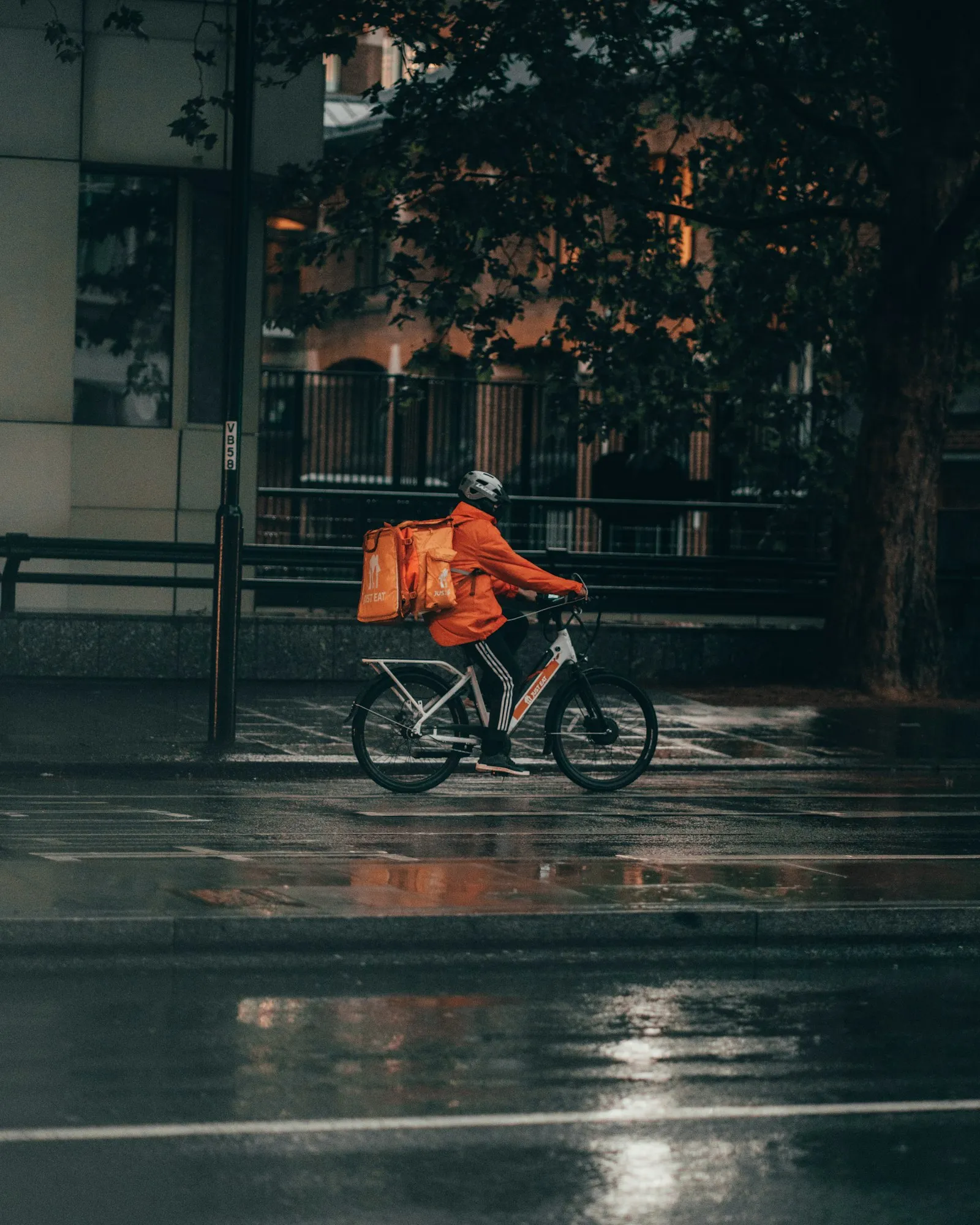
This is the piece most riders miss. An e-bike is not a “motor vehicle” under VTL § 125. So when a car hits you, you are generally treated as a non-occupant, and the car’s policy pays your no-fault benefits under Insurance Law § 5103.
No-fault is not tied to who caused the crash. It covers basic economic losses such as medical bills and a portion of lost earnings, up to the policy’s limits. The application has short deadlines, so move fast. Our New York no-fault claims guide explains the paperwork.
No car involved? Different story. If you hit a pothole, got doored by a parked car, or crashed avoiding a pedestrian, no-fault from a car’s policy may not apply the same way. Each of those needs its own look.
Uninsured driver or hit-and-run
Drivers flee. Some have no insurance. If that happens, uninsured motorist coverage on a policy in your household may apply. If there is none, the Motor Vehicle Accident Indemnification Corporation (MVAIC) may step in. Report the crash to police right away; a hit-and-run claim needs that record.
Suing the Driver for Pain and Suffering
No-fault pays bills. It does not pay for pain, for the months you could not ride, or for a knee that never quite comes back. For those losses you need a claim against the driver who caused the crash.
To get there, New York requires a “serious injury” as defined in Insurance Law § 5102(d). That threshold is where many claims are won or lost. Fractures often qualify. Soft-tissue injuries can, but they need solid medical proof. Our article on fracture claims and the serious injury threshold breaks down how that proof is built.
Common ways drivers cause a delivery rider accident:
- turning right across a bike lane without looking;
- opening a door into the lane;
- double-parking and then pulling out;
- running a light or stop sign;
- following too close or passing too tight.
The Fault Fight You Should Expect
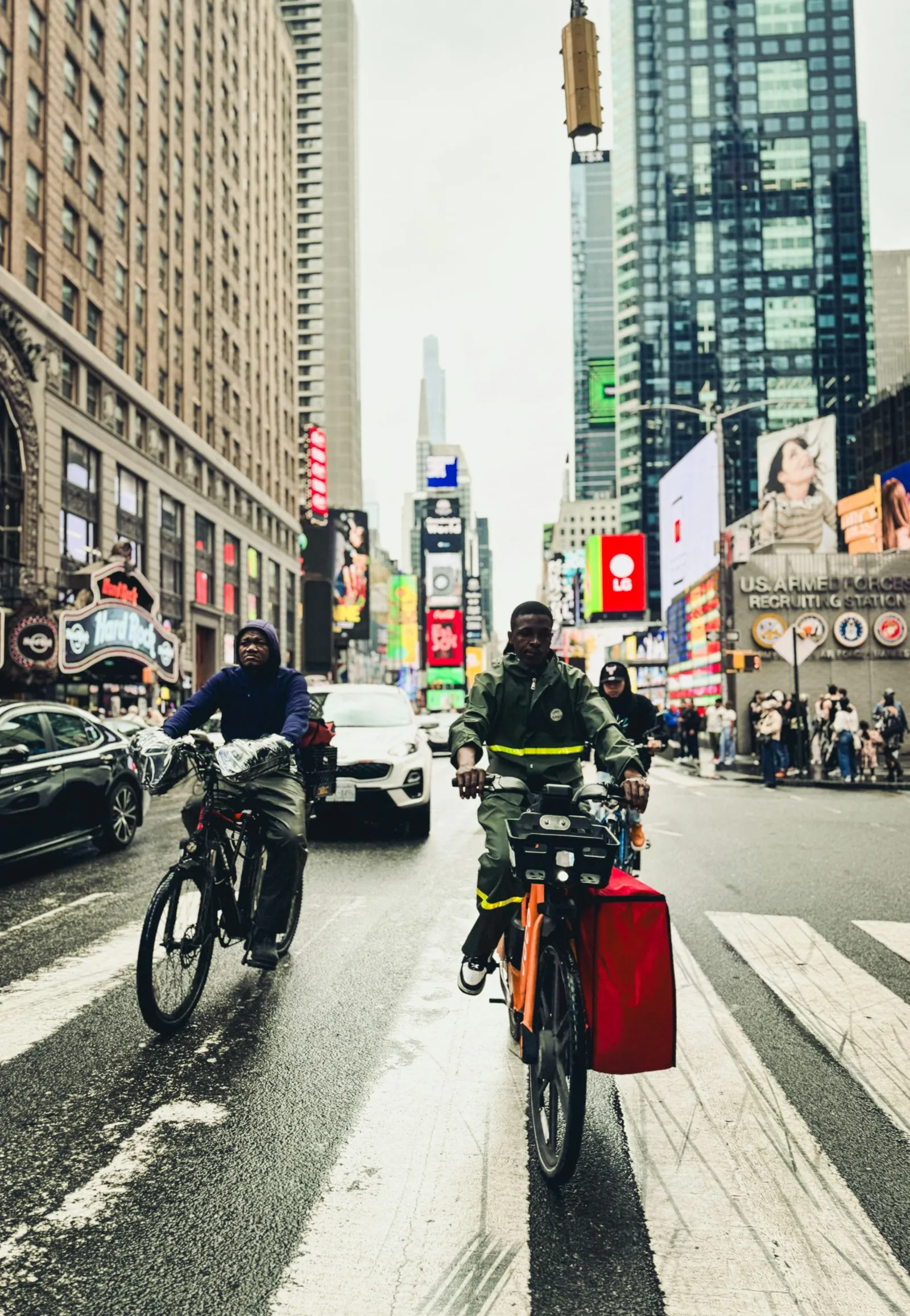
The driver’s insurer will look for ways to blame you. Were you riding on the sidewalk? Going too fast? Wrong way? Expect those questions.
Know the rules they will measure you against. Per NYC DOT, e-bikes and e-scooters have a 15 mph maximum on city streets, sidewalk riding is not allowed, and helmets are required for Class 3 riders and for anyone riding for work. That last point covers delivery riders. E-bikes may use bike lanes, bike lanes on bridges, and some park drives and greenways.
Broke a rule? Your claim is not dead. New York uses pure comparative fault under CPLR § 1411. Your recovery gets reduced by your share of blame, not wiped out. A rider found partly at fault can still recover the rest. For the full set of e-bike rules, see our post on New York e-bike laws after a crash.
Contractor or Employee? Why It Matters
Workers’ compensation generally comes through an employer. App delivery workers are often classified as independent contractors, and that label affects whether workers’ comp is available.
Classification is not always the end of the question, though. How the work is actually controlled can matter, and some riders work for a restaurant directly rather than through an app. If a restaurant pays you as staff and sends you out on deliveries, the workers’ comp picture may look very different. The New York Workers’ Compensation Board has information for workers on how claims are filed.
Two takeaways:
- Do not assume you have no workers’ comp because an app called you a contractor. Get it checked.
- Do not assume workers’ comp is your only claim. If a driver caused the crash, a separate claim against that driver may exist either way. Our work injury practice handles how those two tracks fit together.

What the App Itself May Cover
Some apps may offer accident coverage for riders in some situations. The terms vary by platform and can change. We are not going to tell you what Grubhub, DoorDash or Uber Eats covers, because the answer depends on the current terms and on your circumstances.
What to do instead:
- Check your app and any rider account emails for anything about accident or injury coverage.
- Report the crash through the app’s support channel and save the confirmation.
- Keep copies of anything the app sends back.
- Do not sign a release or accept a payment from any insurer before someone reviews it.
Any app benefit, if one exists, is usually one piece. No-fault, a claim against the driver and possibly workers’ comp are often bigger pieces.
Evidence the App Already Has
Your phone is a witness. A Grubhub accident or DoorDash accident usually leaves a digital trail that can back up your account of the crash.
Useful records include:
- order history showing you were on an active delivery;
- GPS route and timestamps;
- earnings history, which helps prove lost income;
- chat logs with customers or support around the time of the crash.
Export or screenshot these early. Accounts get deactivated, and data does not always stay available forever. Earnings records matter a lot when you are out of work. Our guide to proving inability to work shows how lost income is typically documented.
Outside the app: look for cameras on storefronts and buildings near the crash. Footage gets overwritten, so someone needs to ask quickly. City crash records are also published on NYC Open Data, which can help confirm a reported collision.
When the Bike or Battery Is the Problem
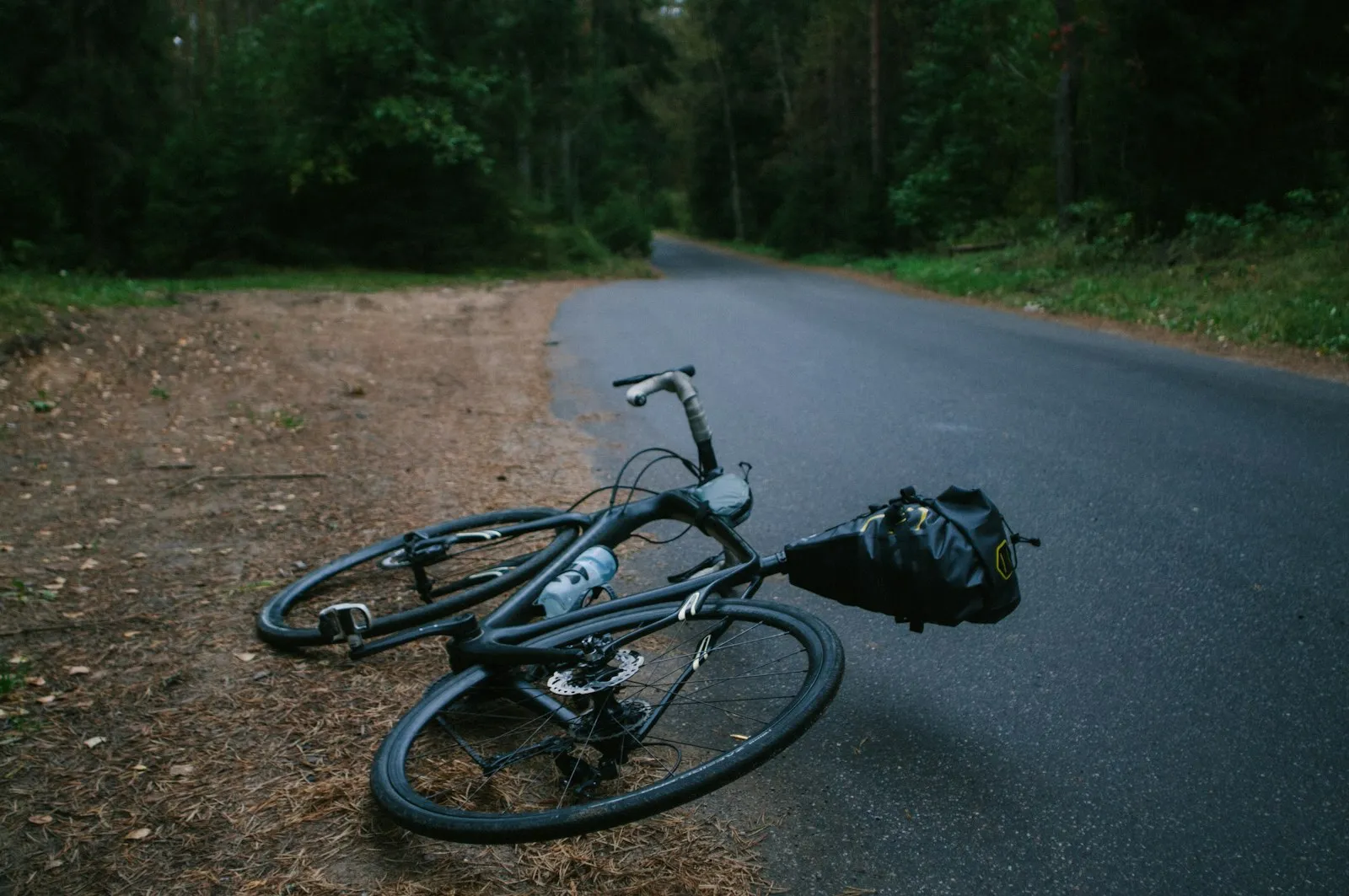
Not every crash is a driver’s fault. Brakes fail. Frames crack. Batteries catch fire. A defective bike or battery can support a product liability claim against the maker or seller. Keep the bike and battery, and keep the receipt. Our post on lithium-ion battery fire injuries covers that type of claim.
Talking to Insurers: Keep It Short
After a Grubhub accident, expect calls. The driver’s insurer may call. Your own no-fault carrier will want forms. The app’s support team may send questions. Each conversation creates a record.
Ground rules that protect you:
- Give the basic facts: where, when, what vehicle. Skip guesses about speed or distance.
- Do not agree to a recorded statement for the driver’s insurer before getting advice.
- Do not say “I’m fine.” Injuries from a crash often feel worse days later.
- Do not post about the crash, your injuries or your recovery on social media.
- Write down the name of everyone you speak with and the date.
An adjuster for the driver is paid to limit what the company pays out. That is not personal; it is the job. Treat the call that way.
Injuries Riders Commonly Report
A rider has no steel cage, no airbag and no seat belt. When a car makes contact, the body takes the hit. Typical injuries after an e-bike crash include:
- broken wrists, arms and collarbones from bracing the fall;
- knee and ankle injuries, including torn ligaments;
- head injuries and concussions, even with a helmet;
- back and neck injuries;
- road rash and deep cuts that can scar.
Two practical points. First, do not skip follow-up appointments. Gaps in treatment are exactly what an insurer points to when arguing the injury was not serious. Second, keep a simple daily log of pain, sleep, and what you could not do, including shifts you could not ride. Our guide to keeping an injury diary makes that easy. For back and neck injuries that do not lead to surgery, our post on back and neck claims without surgery explains how those cases are typically proven.
What a Full Claim Can Include
Add it up and a delivery rider accident claim can have several layers, each from a different source:
| Source | What it may cover |
|---|---|
| Car’s no-fault policy | Medical bills and part of lost earnings, regardless of fault, up to limits. |
| Claim against the driver | Pain and suffering and losses beyond no-fault, if the serious-injury threshold is met. |
| Uninsured motorist or MVAIC | Coverage when the driver had no insurance or fled. |
| Workers’ comp | Possibly, depending on how your work is classified and controlled. |
| App coverage | Possibly, depending on the platform’s current terms. |
| Product liability | Losses from a defective bike or battery, against the maker or seller. |
Not every layer applies to every crash. Sorting out which ones apply to yours, and in what order, is most of the work early on. A DoorDash accident where the driver fled looks nothing like a Grubhub accident where the driver stayed, apologized and handed over a valid insurance card.
Deadlines That Can Sink a Good Claim
- Most injury lawsuits: generally three years under CPLR § 214.
- City vehicle involved: a notice of claim is generally due within 90 days, and the lawsuit within one year and 90 days.
- No-fault: the application deadline is short. Do it now.
Miss one and a strong case can become no case.
How We Handle Delivery Rider Cases
Our scooter and e-bike accident practice represents riders across Queens and the rest of the city. We have written about delivery and bike-lane crashes in Queens and about food delivery driver injuries in Springfield Gardens. The firm has recovered over $80 million for injured New Yorkers. The consultation is free, and there is no fee unless we win. We speak English, Russian and Spanish, and we can meet at your home, in the hospital or by video. Reach us through our contact page.
Delivery Rider Questions, Answered Fast
Does Grubhub pay for my injuries after a Grubhub accident?
Possibly in some cases, depending on the platform’s current terms. Check your app and account messages. Most riders hit by a car look first to the car’s no-fault coverage and a claim against the driver.
I was hit on an e-bike. Whose no-fault applies?
Generally the car’s. E-bikes are not motor vehicles under New York law, so a rider hit by a car is usually a non-occupant covered by that car’s policy.
Can I get workers’ comp as an app rider?
It depends. Many apps classify riders as independent contractors, which affects eligibility. How the work is controlled, and whether you also work for a restaurant, can matter. Have it reviewed.
I was riding over the speed limit. Can I still recover?
Often, yes. New York’s pure comparative fault rule reduces recovery by your share of fault rather than barring it.
Does it matter what class of e-bike I ride?
It can. Under VTL § 102-c, Class 1 bikes are pedal-assist up to 20 mph, Class 2 bikes use a throttle up to 20 mph, and Class 3 bikes reach 25 mph and are allowed only in a city of one million or more, which includes New York City. Riders must be at least 16. Insurers sometimes raise the bike’s class when arguing about fault, so know which one you ride and keep any paperwork that came with it.
The driver drove off. Now what?
Report it to police right away. Uninsured motorist coverage in your household, or MVAIC, may cover your claim.
Visit Yakov Mushiyev & Associates
Our office is at 1 Cross Island Plaza, Suite 325, Rosedale, NY 11422, just off the Cross Island Parkway on the Queens–Nassau border. If you can’t come to us, we’ll come to you: at home, in the hospital or by video.

Talk to a Queens e-bike accident lawyer today
Yakov Mushiyev & Associates has recovered over $80 million for injured New Yorkers across the five boroughs and Nassau County. Consultations are free, available in English, Russian and Spanish, and there is no fee unless we win.
Call 718.775.3110 or contact us online for a free case review.
This article is general information, not legal advice. Every case is different. Attorney Advertising.