
Parents rarely think about risk when a yellow bus pulls up at the corner, and almost none expect to search for a School Bus Accident Lawyer in Queens. That is a reasonable instinct: by the standards of road travel, the school bus is one of the most protected seats a child can occupy. But “low risk” is not “no risk,” and when something does go wrong, the injuries, the insurance picture, and the deadlines look very different from an ordinary fender-bender. This guide approaches the subject the way a safety analyst would. First we map where the danger actually concentrates, then we look at what reduces it, and only then do we turn to what an injury lawyer examines when a child, a driver, or a pedestrian has been hurt.
A note on numbers before we start. You will see plenty of school-bus statistics online, many of them unsourced or out of date. We only point to figures and conclusions published by federal safety regulators, and we link to them so you can read the source yourself. Where reliable local data is not published, we say so rather than fill the gap with guesses.
What the Safety Data Says About School Bus Risk
The National Highway Traffic Safety Administration describes the school bus as the safest way for students to get to and from school, and its school bus safety guidance explains why. Large buses are heavy, tall, and highly visible. Their seats use “compartmentalization,” closely spaced, high-backed, energy-absorbing seats that work a bit like an egg carton, cushioning passengers in a frontal crash. They are driven by licensed commercial drivers and are subject to inspection regimes that private cars never face.
The same federal guidance makes a second point that matters more for Queens families: a large share of the danger is outside the bus, not inside it. Children are most vulnerable while they are walking to the stop, waiting at the curb, crossing in front of the bus, or walking away after being dropped off. NHTSA refers to the area around a stopped bus as the “danger zone,” roughly ten feet on every side, where a driver sitting high above the road may not see a small child, and where passing motorists may not see the child either.
So the risk profile has two layers:
- Occupant risk (inside the bus): generally low per trip, but real in rollovers, side impacts, sudden braking, and collisions with heavy trucks. Smaller “Type A” buses and vans, which carry many special-education students, behave more like passenger vehicles in a crash.
- Loading-zone and pedestrian risk (outside the bus): concentrated in the minutes of boarding and drop-off, and driven heavily by the behavior of other drivers who ignore the red lights and stop arm.
Any honest analysis of a Queens school bus case starts by asking which layer the injury came from, because that answer largely determines who is responsible and which rules apply.
Risk Factors That Concentrate in Queens
Queens is a difficult operating environment for a forty-foot vehicle. Routes thread through dense residential blocks in Flushing and Jackson Heights, run along wide arterials such as Queens Boulevard, Northern Boulevard, Woodhaven Boulevard, and Hillside Avenue, and cut across commercial strips on Jamaica Avenue and Merrick Boulevard where double-parked delivery trucks and turning cars compete for the same lane. A few recurring patterns stand out when we review the facts of these incidents.
| Risk factor | Where it shows up in Queens | Who is usually examined |
|---|---|---|
| Motorists passing a stopped bus | Multi-lane boulevards (Queens Blvd, Woodhaven Blvd, Francis Lewis Blvd) where drivers in far lanes assume they can keep moving | The passing driver; their insurer |
| Blind-spot strikes during pull-away | Tight residential stops in Astoria, Ridgewood, Corona, and Richmond Hill | Bus driver; bus contractor |
| Right-turn conflicts | Intersections along Northern Blvd, Jamaica Ave, and Merrick Blvd with heavy crosswalk traffic | Bus driver; contractor; sometimes the City (signal timing, design) |
| Rear-end and side impacts to the bus | Expressway feeders and service roads near the Van Wyck, the LIE, and Conduit Avenue | The other driver; possibly a trucking company |
| Onboard injuries without a crash | Hard braking, unsecured wheelchairs, aisle falls on crowded routes | Bus contractor; driver and matron training |
| Fatigue and scheduling pressure | Long multi-school routes crossing the borough | Contractor dispatch, staffing, and maintenance practices |
Notice what is not on that list: Queens parkways. Commercial vehicles, including buses not specifically permitted, are generally barred from the Grand Central, Cross Island, Belt, and Jackie Robinson Parkways, so school routes rely on boulevards, expressways, and local streets. That channels bus traffic onto exactly the corridors where pedestrian volume is highest.
The illegal pass: the factor drivers control completely
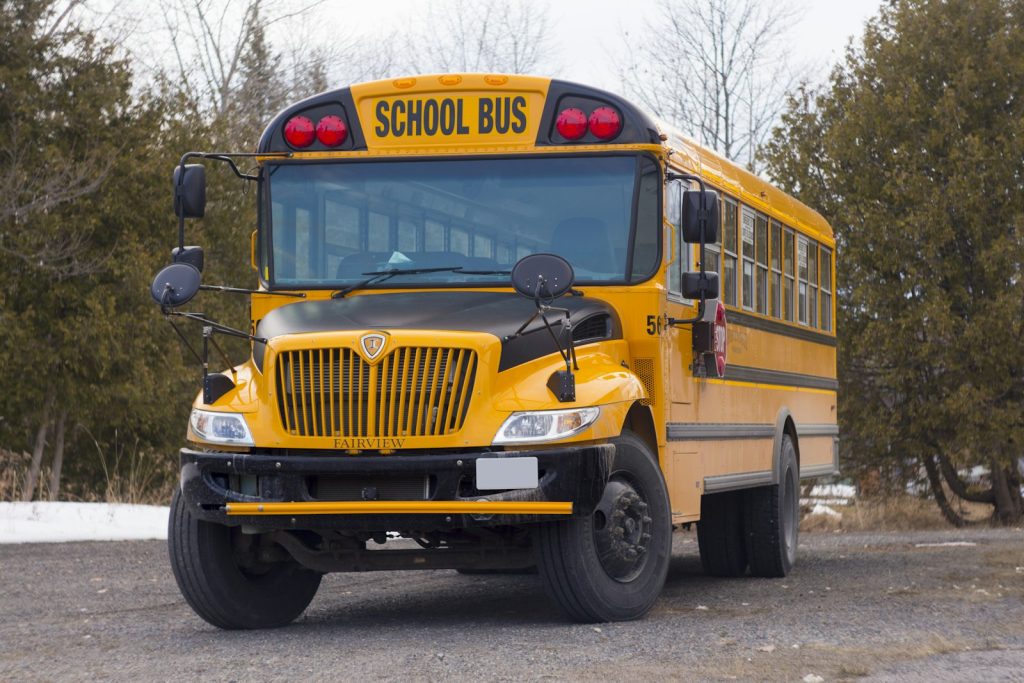
Under Vehicle and Traffic Law §1174, a driver meeting or overtaking a school bus that has stopped with its red lights flashing must stop and stay stopped until the bus resumes motion or the lights are turned off. That rule applies in both directions on an undivided road. It is the single most preventable cause of serious loading-zone injuries, and it leaves the clearest liability trail, because the violation itself is strong evidence of negligence. Some buses now carry stop-arm cameras; when they do, that footage can be decisive.
Contractor operations: the factor families never see
Most New York City school bus routes are run by private bus companies under contract with the Department of Education. That arrangement adds a layer of analysis. Hiring and training of drivers and attendants, maintenance schedules, route design, and staffing levels are all decisions made by companies the family never meets. When those decisions contribute to an injury, the company that operates the bus, and in some circumstances other entities, may share responsibility.
Prevention: What Actually Lowers the Risk
Because most of the hazard sits in the loading zone, the most effective safety habits are simple and repeatable. These come straight from the federal guidance and from the patterns described above.
- Arrive early and wait well back from the curb. Children who rush to catch a moving bus are the ones who end up in the danger zone. Five minutes of margin removes most of that pressure.
- Teach the “ten giant steps” rule. When crossing in front of a bus, a child should walk far enough ahead that the driver can see them and should make eye contact with the driver before stepping out.
- Never retrieve dropped items near the wheels. Tell the driver instead. A child bending down to pick up a paper or toy disappears from view.
- Watch for the far-lane driver. On wide Queens roads, the biggest threat is often the car two lanes over that does not stop. Children should look both ways even when the stop arm is out.
- Drivers: treat yellow lights as a warning to slow down. Flashing amber means the bus is preparing to stop. Red lights and an extended stop arm mean you stop, period.
- Parents of children with special needs: ask about securement. Wheelchair tie-downs, harnesses, and seat belts on smaller buses only protect when used correctly every trip.
Prevention reduces the odds. It does not eliminate them. When a crash or loading-zone injury happens anyway, the analysis shifts from probability to responsibility.
How a School Bus Accident Lawyer in Queens Maps Liability
School bus cases tend to involve more potential defendants than a typical two-car collision. Depending on the facts, the parties that may be examined include:
- The bus driver and the bus company. Under VTL §388, a vehicle owner is generally liable for the negligence of a driver using the vehicle with permission, and an employer is usually responsible for an employee driver acting within the job.
- Another motorist. The driver who passed the stopped bus, ran a light, or rear-ended the bus, along with the owner of that vehicle.
- A commercial truck operator. Collisions between school buses and box trucks or tractor-trailers on the LIE service roads or the Van Wyck raise their own federal-regulation questions, similar to those discussed in our guide to a commercial truck accident in Queens.
- Public entities. If the City, the Department of Education, or another public body owned the vehicle, employed the driver, or created a dangerous road condition, special notice rules come into play.
- Maintenance vendors or manufacturers. Brake, door, or stop-arm failures can point to the company that serviced or built the equipment.
Hurt in a crash involving a city transit bus rather than a yellow school bus? The rules overlap but are not identical; our overview of bus accident claims in New York explains the differences.
Deadlines: The Variable With the Least Margin for Error
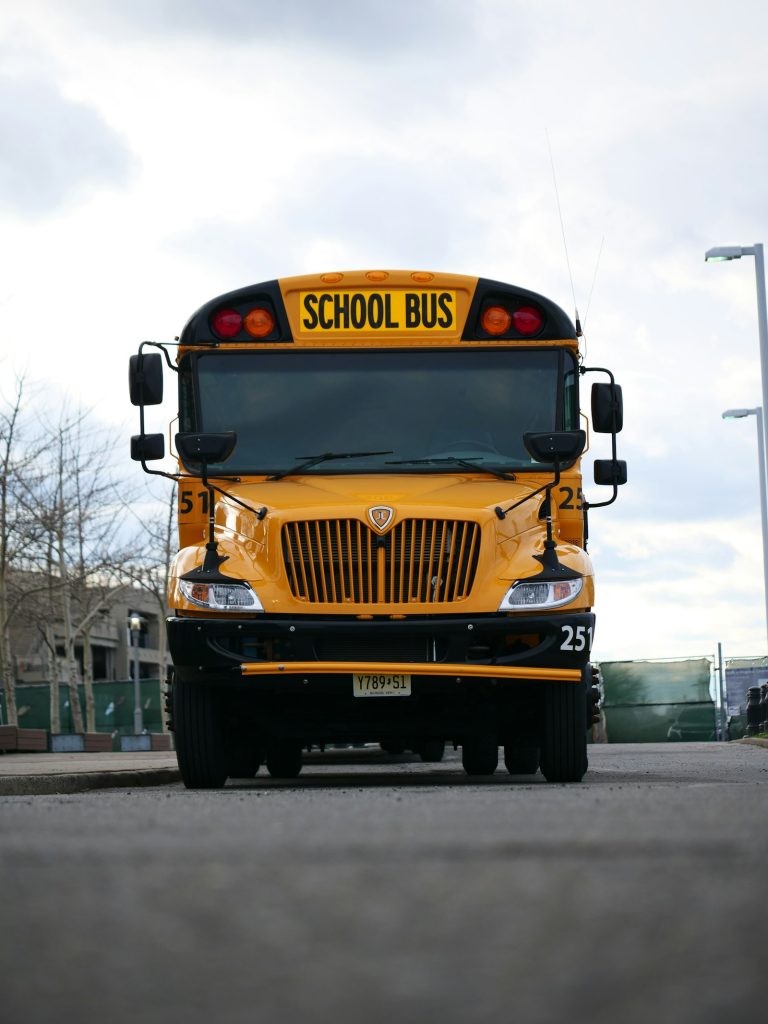
In risk terms, missed deadlines are a catastrophic, unrecoverable failure. They are also the most avoidable one. Three timelines matter most:
- Private parties. The general personal injury deadline in New York is three years under CPLR 214(5). That generally covers claims against a private bus contractor or another driver.
- The City and public authorities. A claim against New York City or many public authorities generally requires a written Notice of Claim within 90 days under General Municipal Law §50-e, followed by a lawsuit generally within one year and 90 days. The City may also demand a pre-suit examination, known as a 50-h hearing.
- No-fault benefits. The application for no-fault benefits is generally due within 30 days of the accident.
Children’s claims can involve additional rules that sometimes extend certain deadlines, but families should never assume extra time is available. The 90-day notice requirement in particular is treated strictly, and identifying early whether any public entity is involved is the safest course.
Insurance: No-Fault First, Then the Serious Injury Question
New York is a no-fault state. After a motor vehicle accident, basic economic loss, meaning medical bills, 80 percent of lost earnings up to $2,000 a month, and up to $25 a day in other reasonable expenses, is paid up to $50,000 per person regardless of who caused the crash. For a child passenger, the relevant policy may be the bus’s coverage or a household auto policy depending on the circumstances, and sorting out the right carrier early prevents delays. A child or adult pedestrian struck by a vehicle near a bus stop generally claims no-fault through that vehicle’s insurer.
To recover for pain and suffering against the at-fault party, the injured person must meet the “serious injury” threshold in Insurance Law §5102(d), for example a fracture, significant disfigurement, or a permanent or significant limitation of a body function. Economic losses beyond the no-fault limit can be pursued regardless.
2026 update: For motor-vehicle personal injury actions commenced on or after May 26, 2026, New York changed two rules. Under amended CPLR 1411, a claimant found more than 50 percent at fault recovers nothing, while a claimant at 50 percent or less has recovery reduced by their share. The “90/180-day” category was also removed from the serious-injury definition. Both changes apply to school bus crashes, since they are motor-vehicle cases.
How fault is assigned to a young child is its own fact-specific question, and very young children are generally treated differently from adults. For the adult driver of a car struck by a bus, however, the new modified comparative fault rule can be outcome-determinative, which makes early evidence collection even more important.
The Evidence Set: What Gets Collected and Why
A good analysis depends on good data, and school bus cases generate more of it than most crashes. The challenge is that much of it is controlled by others and can be overwritten or discarded if no one asks for it promptly.
- Video. Interior and exterior bus cameras, stop-arm cameras, nearby storefront and residential cameras, and traffic cameras. Many systems record over themselves on a rolling basis.
- Route and dispatch records. Scheduled stops, actual GPS tracks, delays, and any changes made that day.
- Driver and attendant files. Licensing, training, prior incidents, and hours worked before the shift.
- Maintenance and inspection records. Brakes, doors, mirrors, lights, and stop-arm function.
- The police report and MV-104. Drivers must file DMV form MV-104 within 10 days when anyone is injured or property damage exceeds $1,000.
- Medical documentation. Children often under-report pain. A pediatric evaluation the same day, and follow-up visits, create the record the serious-injury analysis depends on.

A practical checklist for parents
- Get your child evaluated by a doctor the same day, even if they say they feel fine.
- Write down the bus number, route number, school, time, and location while it is fresh.
- Ask the school and the Office of Pupil Transportation for an incident report in writing.
- Photograph injuries over several days, plus the stop location and any visible damage.
- Save texts, app notifications, or messages from the bus company or school about the incident.
- Do not sign releases or give recorded statements to a bus company’s insurer before you understand your rights.
If your family lives near the Nassau line, our page for a school bus accident lawyer in Bellerose discusses routes and schools in that part of eastern Queens. And if a parent was injured on a job site the same week, which happens more often than people expect, our guide to working with a construction accident lawyer in Queens covers that separate set of laws.
Three Queens Landmarks Along Busy School Routes
School buses cross every corner of the borough. These three well-known places sit near corridors where buses, cars, and pedestrians mix every weekday.
The Jamaica Performing Arts Center
The Jamaica Performing Arts Center occupies a restored nineteenth-century former church building on Jamaica Avenue in downtown Jamaica, and today it hosts concerts, theater, dance, and community programs, including many school-group performances. The surrounding blocks are some of the busiest in Queens: Jamaica Avenue, Parsons Boulevard, and Archer Avenue funnel city buses, commuter traffic heading to the Jamaica LIRR and AirTrain hub, and heavy foot traffic into the same lanes. When yellow buses unload students for a matinee here, the combination of crowded sidewalks, double-parked vehicles, and impatient through traffic creates exactly the loading-zone conditions safety regulators warn about.
The Poppenhusen Institute in College Point
Founded in 1868 by industrialist Conrad Poppenhusen, the Poppenhusen Institute in College Point is a landmarked building known for housing one of the earliest free kindergartens in the United States, along with the village’s early courtroom and jail cells. It remains a community cultural center. That educational history makes it a fitting stop for local field trips. College Point’s streets are narrow, and traffic to and from the Whitestone Expressway and College Point Boulevard can be heavy, so drivers sharing these blocks with buses dropping off children need to slow down and expect students crossing mid-block.
Kaufman Astoria Studios
Kaufman Astoria Studios in Astoria opened in the 1920s as a major silent-film studio and later became home to productions such as Sesame Street. Its campus near 35th Avenue and 36th Street sits next door to the Museum of the Moving Image, a frequent school field-trip destination. The surrounding area mixes residential side streets with production trucks, equipment vans, and commuter traffic heading to Steinway Street and Northern Boulevard. Large vehicles maneuvering in tight space are a recurring blind-spot hazard, and students walking between a bus and a museum entrance need extra care.
Directions to Our Rosedale Office from Downtown Jamaica
From the Jamaica Performing Arts Center, head south to the Van Wyck Expressway and continue to the Belt Parkway eastbound, then exit toward Francis Lewis Boulevard; 1 Cross Island Plaza sits just off the parkway at the Rosedale and Laurelton border. If you prefer local streets, Merrick Boulevard runs southeast through St. Albans and Springfield Gardens toward the same area. The map below shows the current best route from Jamaica based on live traffic.
School Bus Accident Questions Queens Parents Ask
Who is responsible when a school bus crashes in Queens?
It depends on what caused the crash. Many New York City school routes are run by private bus companies under contract with the Department of Education, so the bus company and its driver are often examined first. Another motorist who ran a light or passed a stopped bus may be responsible, as can a truck company, a maintenance vendor, or a public entity. Several parties can share responsibility, and each may have a different insurer.
How long do we have to file a claim?
Claims against private parties generally must be filed within three years under CPLR 214(5). If the City, the Department of Education, or another public authority may be involved, a Notice of Claim is generally required within 90 days, with a lawsuit generally due within one year and 90 days. Some rules for children can extend certain deadlines, but relying on that is risky, so act early.
Does no-fault insurance cover my child’s medical bills?
Generally, yes. New York no-fault pays basic economic loss up to $50,000 per person regardless of fault, including medical bills. Which policy pays depends on the circumstances, such as whether your child was a bus passenger or a pedestrian struck by another car. The no-fault application is generally due within 30 days of the accident, so file promptly even while other questions are being sorted out.
What if a driver passed the bus while its red lights were flashing?
Passing a stopped school bus with red lights flashing violates VTL §1174 and is strong evidence of negligence. If that driver struck your child, their insurance generally provides no-fault benefits and may face a liability claim for pain and suffering if the serious-injury threshold is met. Stop-arm camera footage, where available, and witness statements can be very important, so ask about video quickly.
My child says they feel fine. Should we still see a doctor?
Yes. Children often do not describe pain clearly, and some injuries, such as concussions or soft-tissue damage, become apparent only after a day or two. A same-day evaluation protects your child’s health first. It also creates a medical record connecting the injury to the incident, which matters later if no-fault or the serious-injury threshold is questioned.
Can a child injured without a crash, such as from hard braking, bring a claim?
Possibly. Not every school bus injury involves a collision. Children can be hurt by sudden stops, falls in the aisle, doors closing on them, or improperly secured wheelchairs. Whether a claim exists depends on whether the driver, attendant, or bus company failed to act with reasonable care and on how the insurance rules apply to that type of incident.
Does the 2026 change to comparative fault affect school bus cases?
For motor-vehicle injury lawsuits started on or after May 26, 2026, New York uses modified comparative fault: a claimant more than 50 percent at fault recovers nothing, and one at 50 percent or less has recovery reduced. School bus crashes are motor-vehicle cases, so the rule can apply, particularly to adult drivers. How fault is assessed for young children is a separate, fact-specific question.
Where are school bus crashes most common in Queens?
Reliable route-level crash data is not published in a way that supports precise rankings, so we avoid naming a single worst spot. The recurring risk settings are wide arterials such as Queens Boulevard, Woodhaven Boulevard, and Francis Lewis Boulevard, where far-lane drivers fail to stop, and dense commercial strips on Jamaica Avenue and Northern Boulevard, where turning and double-parked vehicles crowd stops.
Should we talk to the bus company’s insurance adjuster?
You can report the incident, but be careful about recorded statements, broad medical authorizations, or settlement papers before you understand your child’s rights. Early offers may not reflect future treatment needs. Speaking with a lawyer first helps you decide what to share and what to hold back while the facts are still being gathered.
How do I reach your office from elsewhere in Queens?
Our office is at 1 Cross Island Plaza, Suite 325, in Rosedale, close to the Belt Parkway and Francis Lewis Boulevard near the Nassau County line. From most of Queens, the Van Wyck or Cross Island Parkway connects to the Belt eastbound. You can also call first at 718.775.3110 and we can discuss your situation by phone before you travel.
Related: For a full overview of how our firm handles these claims, visit our School Bus Accident Lawyer in Queens page.
Talk With a School Bus Accident Lawyer in Queens
When a child is hurt on or around a school bus, the most valuable thing you can do in the first weeks is protect the deadlines and the evidence. Video gets overwritten, route records get archived, and a 90-day notice period passes quickly while a family is focused on recovery. A School Bus Accident Lawyer in Queens can identify every party and policy involved, send preservation requests, and explain how no-fault, the serious-injury threshold, and the 2026 fault rules apply to your situation.
Call Yakov Mushiyev & Associates, P.C. at 718.775.3110 or contact our office online to talk through what happened. Our office is in Rosedale, Queens. You can also learn more about Yakov Mushiyev and our team, or browse answers to common questions on our personal injury FAQ page.
General information, not legal advice. Attorney Advertising. Prior results do not guarantee a similar outcome.