
Think of the body’s nerves as household wiring: a cable carries a signal from a switch to a fixture, and a sheath of insulation keeps that signal from leaking or crossing into the wrong circuit. When a crash, a fall or a machine strips that insulation, crushes the cable or severs it outright, the result can be burning pain, numbness, weakness or a hand that no longer obeys. A nerve damage lawyer spends much of a case translating that electrical failure into proof an insurer cannot dismiss, because nerve injuries rarely show up on the outside of the body.

What follows covers how these injuries arise on Queens streets, Brooklyn job sites and Nassau parking lots, how physicians confirm them, and how New York law treats them. None of it is medical advice; new numbness or weakness after an accident calls for a doctor visit and steady follow-up.
The Wiring Diagram: How Nerves Carry Signals
The brain and spinal cord form the main panel. Branching from it are the peripheral nerves: roots exiting the spine between vertebrae, then long runs down each limb to the fingertips and toes. Motor fibers carry commands out to muscles; sensory fibers carry reports of touch, temperature and pain back in.
Many fibers are sheathed in myelin, a fatty coating comparable to the plastic jacket on copper wire. Strip the jacket and the signal slows or scatters; break the conductor inside (the axon) and it may stop altogether. Which layer failed often predicts how much function can return.
Where the Circuit Breaks: Common Accident-Related Nerve Injuries
Nerve damage is not one injury but a family of them. The categories below come up again and again in accident cases.
- Pinched nerve roots from a herniated disc. In a rear-end or side-impact collision, a spinal disc can bulge or rupture and press on the nerve root beside it. Compression of a root is called radiculopathy, and it typically sends pain, tingling or weakness down an arm (cervical) or a leg (lumbar), following a predictable path.
- Lacerations. Broken windshield glass, a shattered storefront door or an unguarded blade can cut a nerve the way snips cut a wire. A clean cut sometimes can be surgically repaired; a ragged one is harder.
- Crush injuries. When a hand or foot is caught between heavy objects, the nerve may be bruised, stretched or flattened along with the surrounding tissue.
- Fracture-related injuries. Nerves often run right alongside bones. A displaced fracture, or the swelling that follows it, can stretch or compress a nearby nerve. After a wrist fracture, for example, some people develop carpal-tunnel-like symptoms in the thumb and fingers.
- Facial nerve injuries. A blow to the face or skull can damage the nerves that control expression or feeling in the face, producing drooping, numbness or twitching. These sometimes accompany head trauma, discussed further in our guide to brain injury claims.
- Complex regional pain syndrome (CRPS). In a smaller group of cases, pain after an injury becomes far more intense and longer-lasting than the original trauma would suggest, sometimes with changes in skin color, temperature or swelling in the limb. CRPS is not fully understood, and its diagnosis is generally made by specialists applying recognized criteria. Its presence in a case usually draws close scrutiny from the defense.
Joint injuries can also involve nerves. A severe knee dislocation or a hip fracture may affect the nerves that pass nearby, which is one reason readers dealing with those injuries may find our companion pieces on knee injury claims and hip fracture cases useful.
A Short Glossary of Symptoms
Vague descriptions end up in charts and get quoted back by insurers. Precise vocabulary helps.
- Paresthesia: pins and needles, tingling or a “fizzing” sensation, like a limb that has fallen asleep.
- Hypoesthesia: reduced feeling; touch registers, but faintly.
- Allodynia: pain from something that should not hurt, such as a bedsheet brushing the skin.
- Radicular pain: pain that travels along a nerve root’s path, often described as shooting or electric.
- Weakness or atrophy: loss of strength, and over time, visible shrinking of a muscle that is not receiving signals.
- Loss of dexterity: dropping objects, trouble with buttons, keys or a pen.
Writing these symptoms down as they occur, with dates, is one of the most useful things an injured person can do. Our article on keeping a symptom diary explains a simple method.
Testing the Line: How Nerve Injuries Are Diagnosed
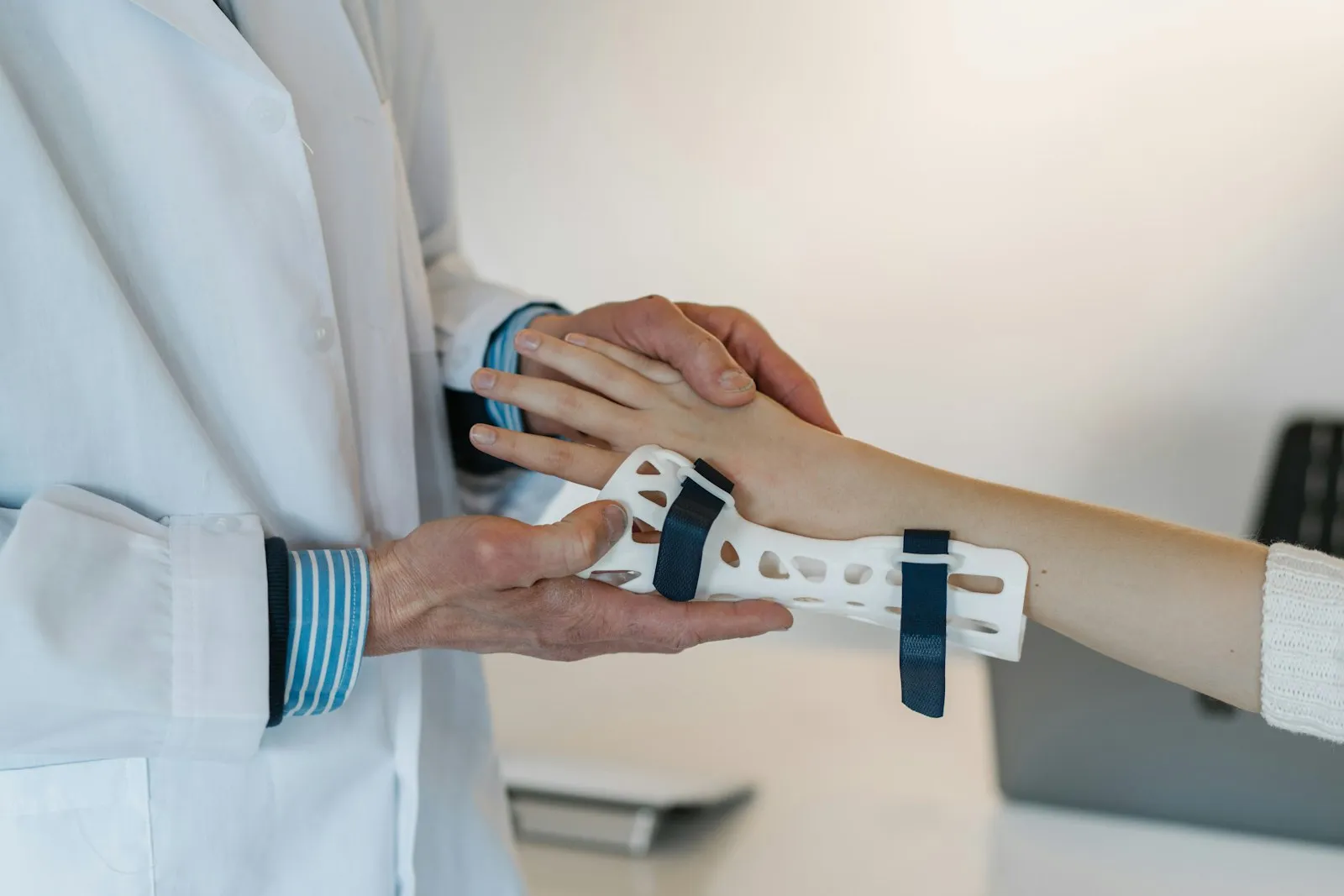
An electrician tracing a fault does not guess. They test the circuit at each junction until the reading drops. Physicians approach nerve injuries in a similar, stepwise way, and each step creates a record that matters later.
- Clinical neurological exam. A doctor, often a neurologist or physiatrist, checks reflexes, muscle strength graded on a standard scale, and sensation to light touch, pinprick and vibration. Measured findings, such as reduced grip strength or a diminished reflex on one side, are written down and can be compared over time.
- EMG and nerve conduction studies. A nerve conduction study sends a small electrical pulse along a nerve and measures how fast and how strongly it travels, much like testing voltage drop on a long cable. An EMG (electromyography) uses a fine needle to record the electrical activity in muscles, which can show whether a muscle is receiving normal signals from its nerve. Together, these tests can help confirm radiculopathy, locate where along the line the injury sits and gauge its severity. Timing matters, since some changes may not appear on an EMG until weeks after the injury.
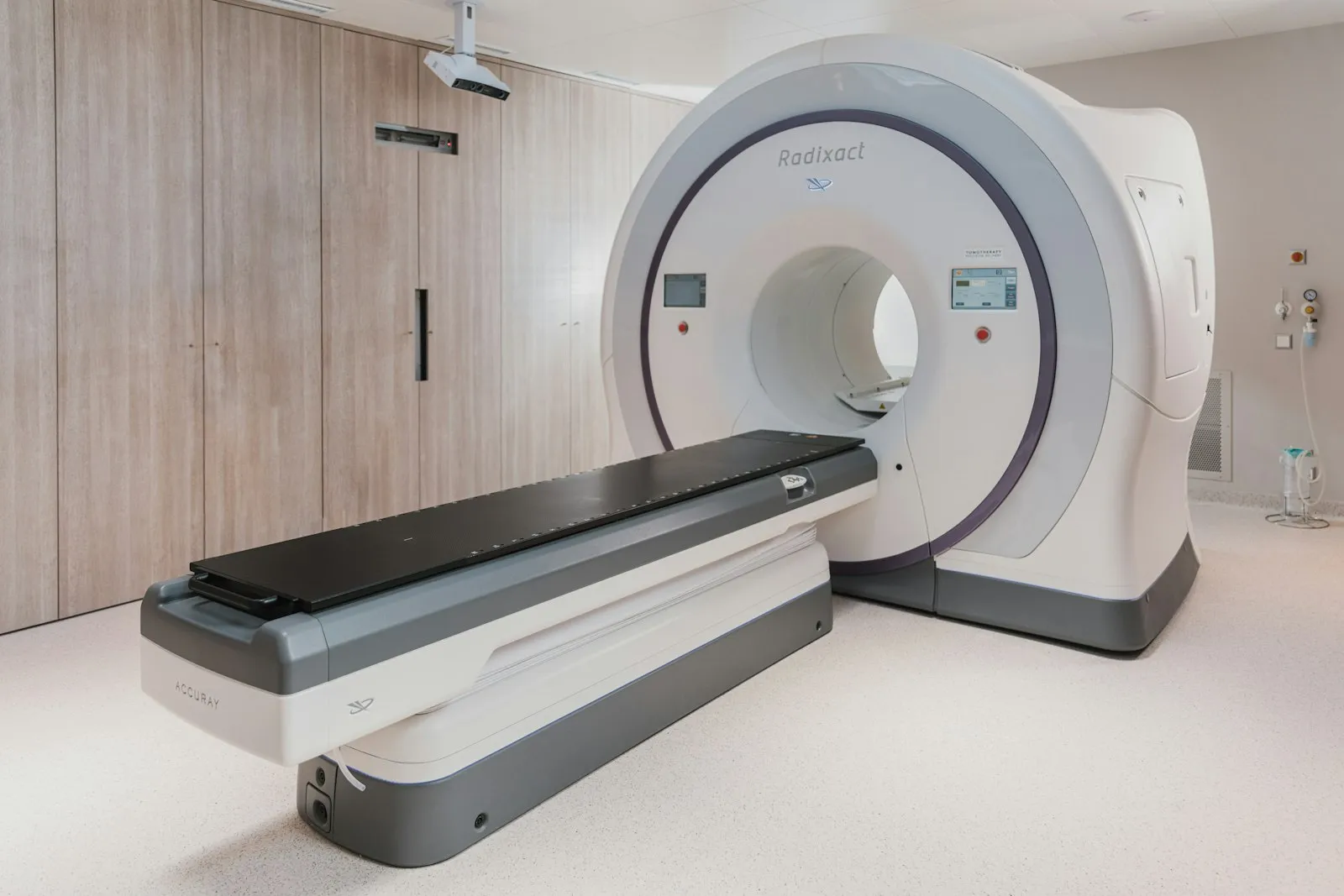
- Imaging. An MRI shows soft tissue, so it can reveal a herniated disc pressing on a root or swelling around a nerve. X-rays and CT scans help with fractures and hardware. Imaging shows the structure; the electrical tests show the function. Strong claims often have both.
- Follow-up and repeat testing. Because nerves heal slowly, if at all, doctors may repeat exams and studies over months to see whether function is returning. A record of steady, documented limitation over time is often more persuasive than a single visit.
Why Objective Evidence Carries So Much Weight
Nerve pain is invisible. There is no cast, no stitches, often no scar. Insurance adjusters and defense lawyers know this, and a common line in these cases is that the complaints are “subjective,” meaning they rest only on what the patient says. The answer to that argument is objective evidence: abnormal EMG and nerve conduction results, MRI findings that match the symptom pattern, and measured, numbered losses in strength, reflexes or sensation recorded by a treating doctor.
Insurers also send claimants to a doctor of their choosing, who may spend a few minutes and report a normal exam. Measured test results give treating physicians solid footing to rebut that report; see preparing for a defense medical exam.
Vehicle Collisions: Two Insurance Hurdles for Nerve Claims
Medical bills after a crash are first routed through no-fault coverage under Insurance Law § 5103, which also replaces a portion of wages, with blame set aside. An injured person typically has only 30 days to file that application, a short fuse for someone juggling specialists. Our no-fault walkthrough has the details.
Compensation for suffering, beyond those basic benefits, depends on clearing the threshold in Insurance Law § 5102(d). Nerve claims usually lean on its permanent consequential limitation and significant limitation categories, and courts generally want those losses backed by objective proof rather than reported pain alone. Abnormal EMG readings, quantified grip weakness and charted sensory loss fill that role. Because any fracture independently meets the definition, a nerve injury accompanying a broken bone may qualify by that path too.
Disc-related cases overlap with our pieces on herniated disc settlements and back and neck claims that do not involve surgery. More on vehicle cases generally is on our car accident practice page.
Workplace Nerve Injuries: Machinery, Comp and Third Parties
Factories, warehouses, kitchens and job sites produce many of the laceration and crush injuries described above. A press, a saw or a conveyor can damage the nerves of a hand in a fraction of a second. Against a direct employer, an injured worker is generally confined to comp benefits by Workers’ Compensation Law § 11. That statute also shields the employer from being dragged back in by outside defendants except after a “grave injury,” such as losing several fingers.
Comp rarely ends the inquiry. A manufacturer that shipped a machine without adequate guarding may answer in a product claim, and on construction sites owners and general contractors carry duties of their own. Our article on defective products at construction sites covers that overlap, and the machinery accidents page explains the firm’s approach to these cases.
Falls and Property Hazards
A fall on a broken stair or a slick floor can fracture a wrist, injure the spine or strike the elbow where the ulnar nerve runs close to the surface. Here the fight centers on notice: proof that the property owner caused the defect or that it sat visible for a stretch long enough that staff ought to have repaired it. The vehicle-only injury threshold plays no role. Our premises liability page discusses how notice is proven.
Damages: What a Damaged Line Costs Over a Lifetime
Nerve injuries often last. Even where healing occurs, it may take many months and leave residual symptoms. That durability shapes the damages picture:
- Chronic pain and its effects on sleep, mood and daily routines.
- Loss of grip and fine motor control, which can end careers that depend on the hands, from electricians and mechanics to hairstylists and dental hygienists.
- Lost earnings and earning capacity. Our guide to proving an inability to work explains the records that support this element.
- Future care, such as ongoing pain management, therapy, injections, bracing or surgery. See how future medical costs are projected.
Many people injured in accidents already had some degree of arthritis or disc wear. That does not end a claim. New York law generally holds a defendant responsible for aggravating a pre-existing condition, so the task becomes showing, through records from before and after, how the accident changed the person’s condition.
Time Limits and Shared Fault
Ordinary negligence actions carry a three-year window under CPLR § 214. When a municipality or public agency is responsible, the timetable compresses sharply: written notice usually within 90 days of the incident, and a filed case inside one year and 90 days. Families pursuing a death claim generally get two years. Since nerve symptoms often surface gradually, these dates deserve attention early.
Partial blame shrinks an award rather than erasing it under CPLR § 1411, which trims damages by the claimant’s percentage.
How Yakov Mushiyev & Associates Handles Nerve Injury Claims
Yakov Mushiyev & Associates keeps its office at One Cross Island Plaza, Suite 325, beside the parkway on the Rosedale side of the county line, and takes cases throughout the city and Nassau. The firm’s results for clients total over $80 million. Its attorneys speak Russian, Spanish and English and will meet at a hospital bedside, in a living room or on a video call. The first meeting costs nothing, and fees are charged only after a win. A nerve damage lawyer at the firm can review testing, coordinate with treating physicians and identify every responsible party. To start, use the contact form or call 718.775.3110.
Nerve Injury Questions Readers Ask
Do I need an EMG to bring a nerve damage claim?
Not in every case, but objective testing often makes a significant difference, particularly in car crash cases where the serious injury threshold applies. An EMG and nerve conduction study can confirm a problem that otherwise rests only on the patient’s description. Whether and when to test is a medical decision for the treating doctor.
What if the tingling began weeks later?
Late onset happens often with compressed nerves, since swelling and disc changes can develop over time. The defense may still argue that something else caused the symptoms, so prompt reporting to a doctor once symptoms appear, and consistent follow-up, helps a nerve damage lawyer connect the injury to the accident.
Can I recover if I had back problems before the crash?
Generally yes. New York law allows recovery for the worsening of a pre-existing condition. Prior records and current testing are compared to show what changed.
Is CRPS treated differently in a lawsuit?
CRPS claims tend to involve heavier expert involvement on both sides because the condition is complex and its diagnosis is often disputed. Careful documentation by specialists is usually the backbone of such a claim.
What if a machine at work caused my hand injury?
Workers’ compensation usually covers the claim against the employer, while a separate lawsuit may be possible against the machine’s manufacturer or another non-employer party. Speaking with a nerve damage lawyer early can help preserve the machine and its maintenance records before they disappear.
Visit Yakov Mushiyev & Associates
Our office is at 1 Cross Island Plaza, Suite 325, Rosedale, NY 11422, just off the Cross Island Parkway on the Queens–Nassau border. If you can’t come to us, we’ll come to you: at home, in the hospital or by video.

Talk to a New York nerve damage lawyer today
Yakov Mushiyev & Associates has recovered over $80 million for injured New Yorkers across the five boroughs and Nassau County. Consultations are free, available in English, Russian and Spanish, and there is no fee unless we win.
Call 718.775.3110 or contact us online for a free case review.
This article is general information, not legal advice. Every case is different. Attorney Advertising.